Bei einer Hütte weiden zwei Kühe und drei Schafe — History & Analysis
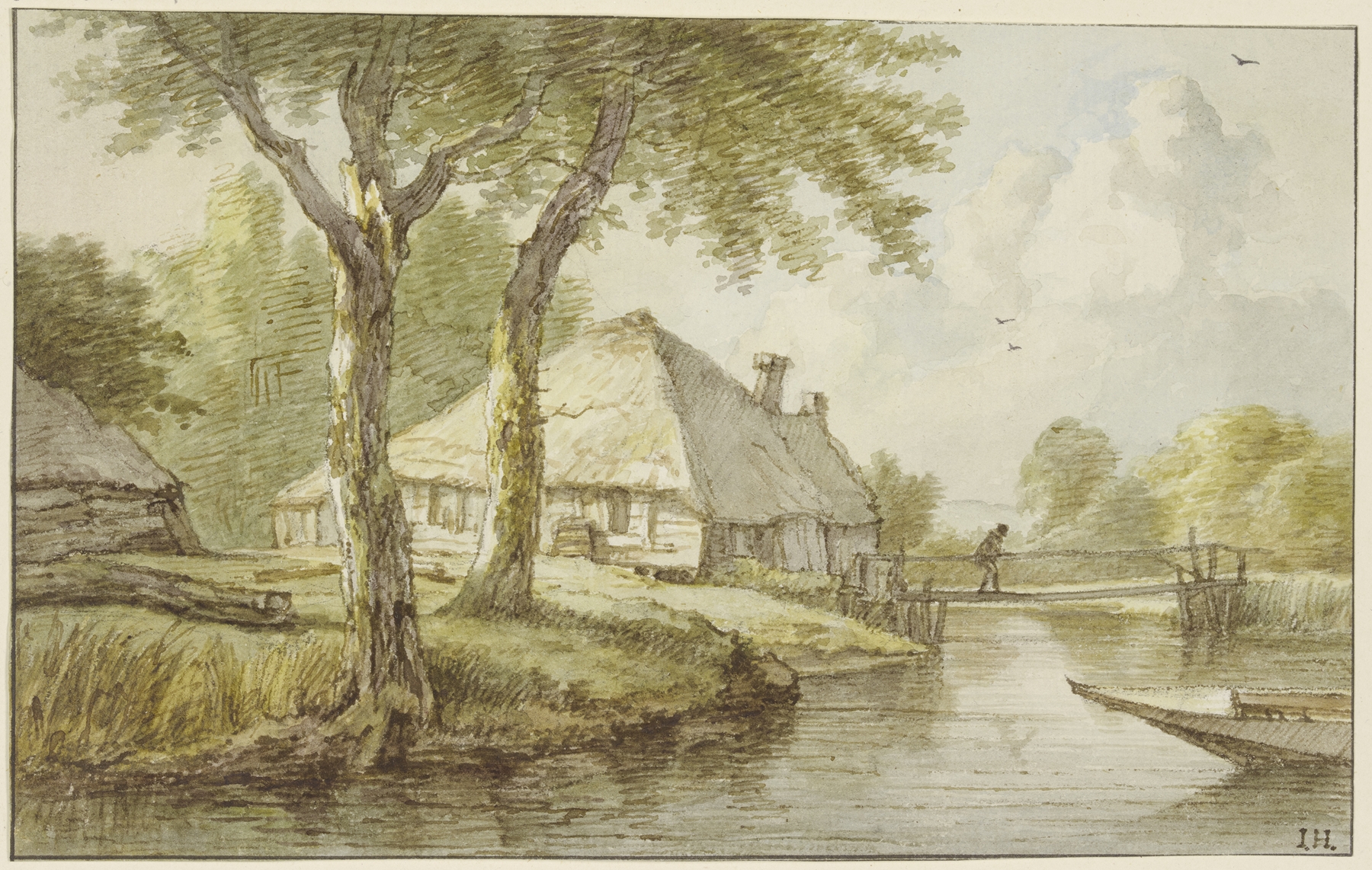
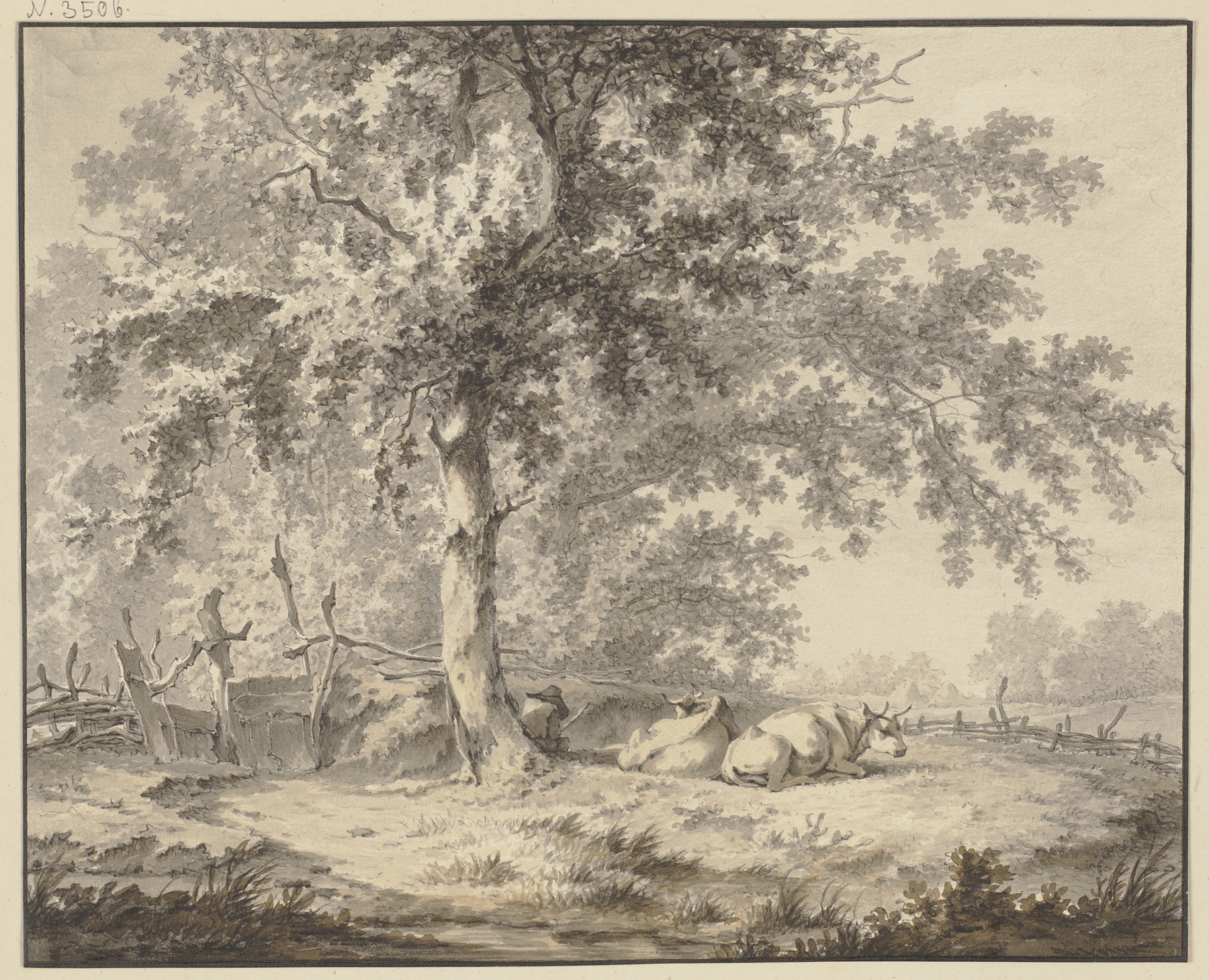
Could beauty survive in a century of chaos? In Bei einer Hütte weiden zwei Kühe und drei Schafe, a pastoral scene unfolds, hinting at both tranquility and the potential for betrayal lurking beneath its surface. Nature thrives, yet the idyllic setting invites a deeper introspection on the fragility of peace amid uncertainty. Look to the left at the gentle curve of the hills cradling the huddle of animals, their forms bathed in the soft, golden light of a waning day.
Notice the meticulous brushwork that brings texture to the cows’ coats and the sheep’s fleeces, creating a striking contrast against the tranquil backdrop of a simple wooden hut. The artist’s choice of muted greens and browns evokes a quiet harmony, yet the looming shadow of the hut suggests concealment, drawing the viewer's gaze toward the interplay of light and shadow that hints at both safety and the hidden dangers that lie just beyond. Within this pastoral beauty, there is a palpable tension between the serenity of rural life and the potential for betrayal inherent in nature's order. The animals, seemingly at peace, appear to trust their surroundings, yet their fate is tethered to the whims of an unforgiving world.
The juxtaposition of their calm demeanor against the looming presence of the hut reflects the duality of existence — the delicate balance between trust and treachery that weaves through the fabric of life. Jan Hulswit painted this work in a time of artistic exploration, likely in the late 17th century, amid the burgeoning interest in landscapes and rural scenes. While Europe was grappling with social and political upheaval, artists like Hulswit sought solace in the simplicity of country life. His focus on idyllic depictions served as a counterpoint to the chaos outside, allowing him to capture a fleeting beauty that nevertheless hinted at deeper underlying tensions.