
Beim Großvater — History & Facts
When Beim Großvater by Felix Schlesinger first appeared in German exhibitions in the late 19th century, it was immediately recognized for its warm portrayal of family intimacy—a theme that resonated with a public experiencing rapid social change. Unlike many of his contemporaries, Schlesinger specialized in genre scenes of everyday domestic life, and this work became one of his most beloved. The painting’s popularity led to frequent reproductions as prints and postcards, making it a familiar image in German households well into the 20th century.
Its enduring appeal lies in the way it captures a universal moment of childhood and intergenerational affection. At the heart of Beim Großvater is a tender encounter between a grandfather and his grandchild, set in a modest, sunlit room. The artist chooses the instant where the child, perched on the old man’s knee, listens intently or perhaps asks a question, while the grandfather leans in with a gentle smile. The clutter of everyday objects—a pipe, a well-worn chair, a basket of apples—grounds the scene in reality and suggests the rhythms of rural family life.
The warm palette and soft light envelop the figures, emphasizing the emotional bond. Unlike the more formal, didactic family scenes of Meyer von Bremen, Schlesinger’s approach is informal and affectionate, inviting the viewer to share in the private moment. The precise origins of Beim Großvater remain unclear; neither its commission nor its early provenance is well documented, and the date and medium are still debated among scholars. What is certain is that the painting reflects the broader 19th-century German taste for sentimental genre scenes, a tradition in which Felix Schlesinger played a significant role.
Today, works like this are found in both public and private collections, though the original Beim Großvater is not currently on permanent display in a major museum. It stands as a testament to Schlesinger’s skill in capturing the quiet poetry of everyday life, and continues to be cherished for its heartfelt depiction of family ties.
More Artworks by Felix Schlesinger

Fleißige Helfer in der Küche
Felix Schlesinger

Die Zeitungslektüre
Felix Schlesinger
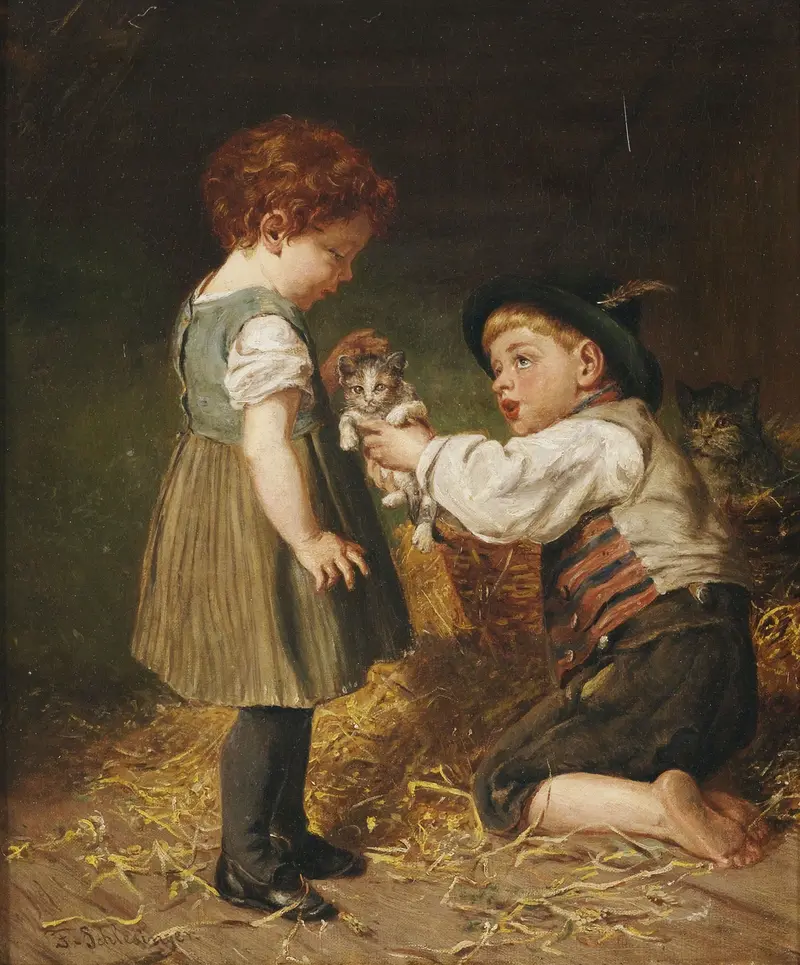
Zwei Kinder mit Kätzchen im Stall
Felix Schlesinger
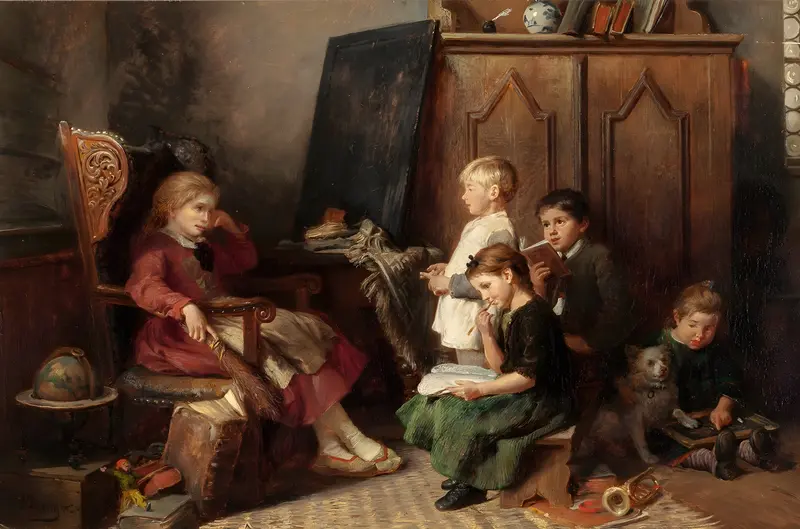
Children Reading
Felix Schlesinger
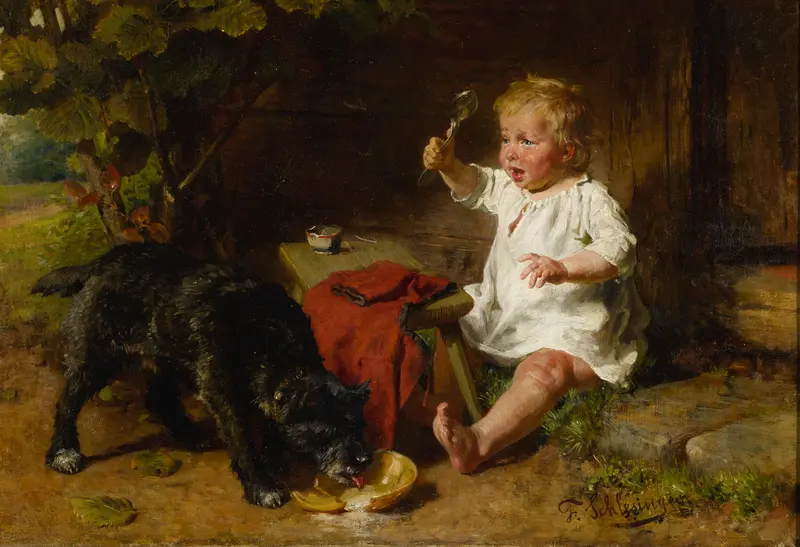
A Shared Meal
Felix Schlesinger
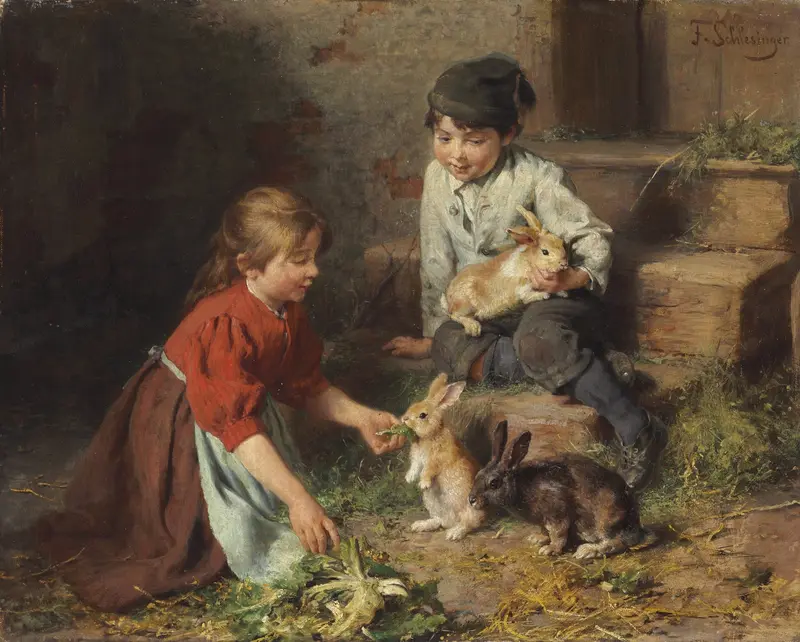
Fütterung Der Kaninchen
Felix Schlesinger
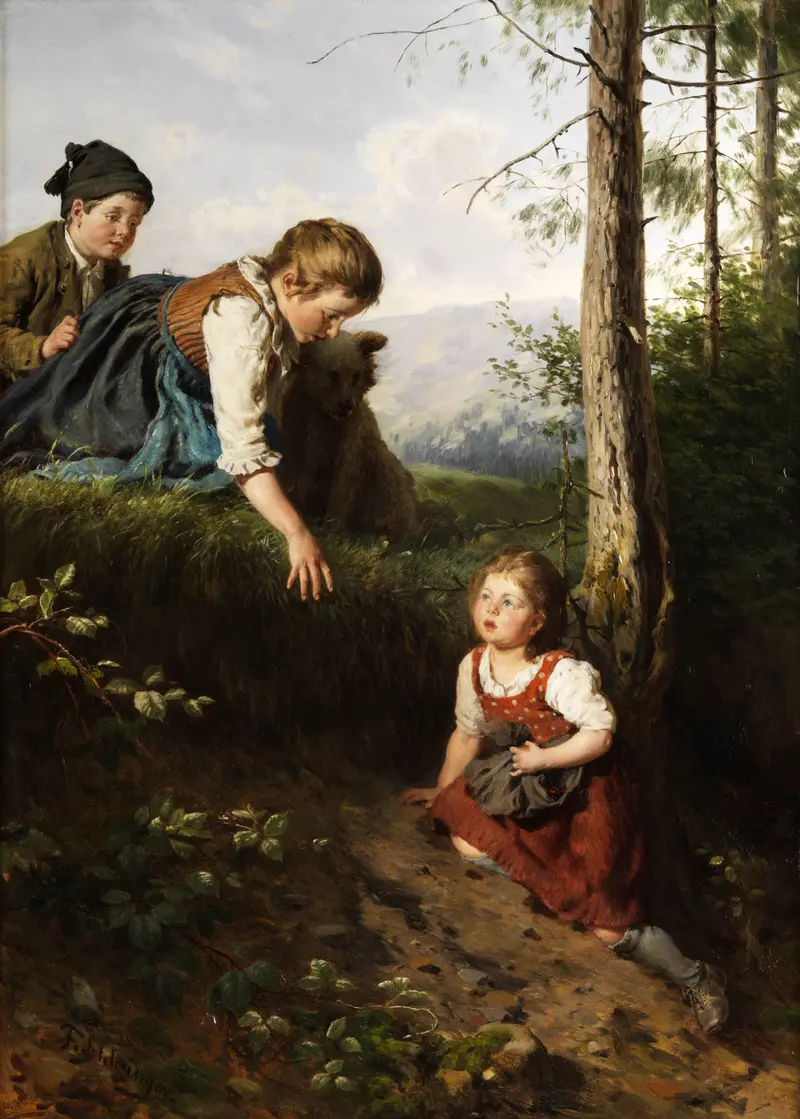
Drei Kinder im Wald beim Beerenpflücken
Felix Schlesinger
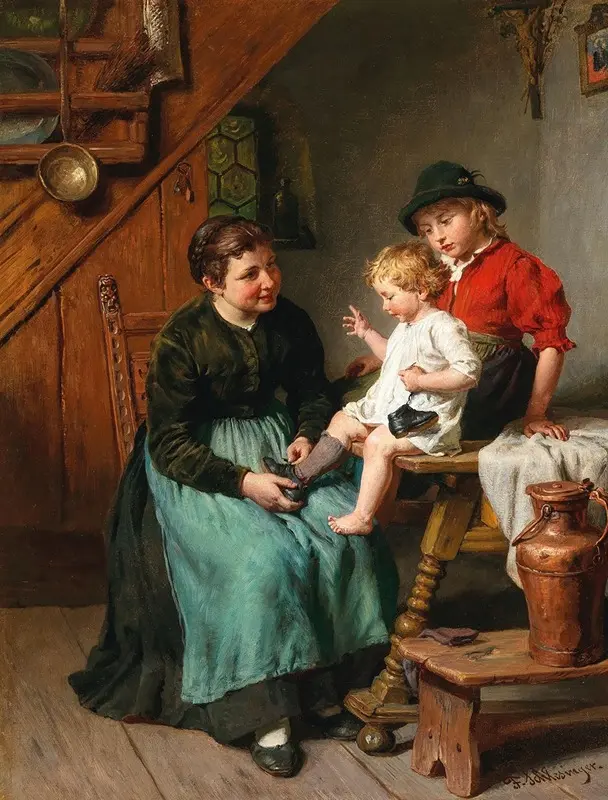
The First Shoe
Felix Schlesinger
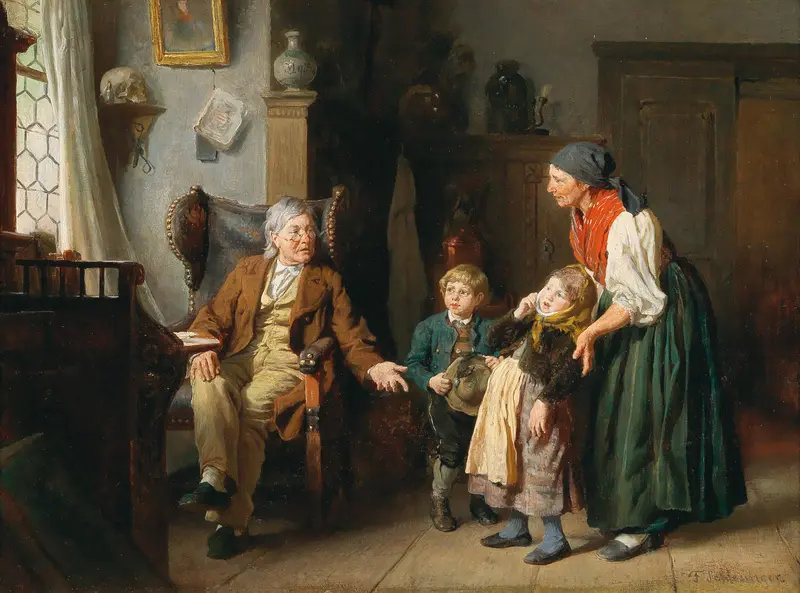
The village doctor
Felix Schlesinger
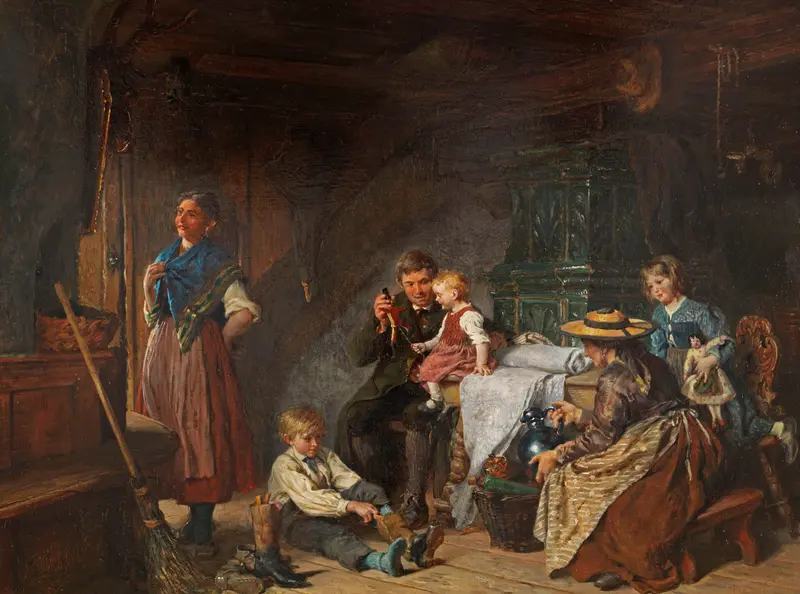
Familienszene
Felix Schlesinger
More Genre Scene Art

Banquet of the Officers of the St George Civic Guard
Frans Hals

Rembrandt and Saskia in the Scene of the Prodigal Son
Rembrandt van Rijn

Bal du moulin de la Galette
Pierre-Auguste Renoir

Quadrille at the Moulin Rouge
Henri de Toulouse-Lautrec

A Burial at Ornans
Gustave Courbet

When Will You Marry?
Paul Gauguin