
Berglandschaft mit Sennerin und Kind — History & Facts
In this delicate yet vibrant world, an awakening unfolds, inviting viewers to explore its serene beauty and the simplicity of rural life. Look to the left, where the towering peaks of the German Alps rise majestically against a clear blue sky, their rocky faces kissed by soft touches of sunlight. Focus on the figures of the shepherdess and her child, nestled amid the lush greenery, their posture relaxed yet purposeful. The artist’s deft brushwork creates a harmonious blend of colors — rich greens, warm earth tones, and hints of pastel that breathe life into the landscape while emphasizing the tranquil atmosphere. Beneath the surface, Berglandschaft mit Sennerin und Kind reveals deeper themes of maternal care and the cyclical nature of life.
The shepherdess, with her gentle gaze and protective stance, embodies not only a caretaker but also a link to the land, suggesting an unbroken bond between woman, child, and nature. The contrasting shadows cast by the mountains evoke a sense of both solitude and sanctuary, highlighting the balance between human existence and the wild beauty of the wilderness. In 1870, when it was painted, Carl Spitzweg was immersed in the Romantic movement, focusing on themes of everyday life and nature. He created this piece in a period marked by a fascination with the rural versus the industrial, reflecting his own experiences and the broader cultural shifts occurring in Germany.
The era was a pivotal time for landscape painting, as artists sought to capture the essence of the soul through the natural world.
More Artworks by Carl Spitzweg
Browse all →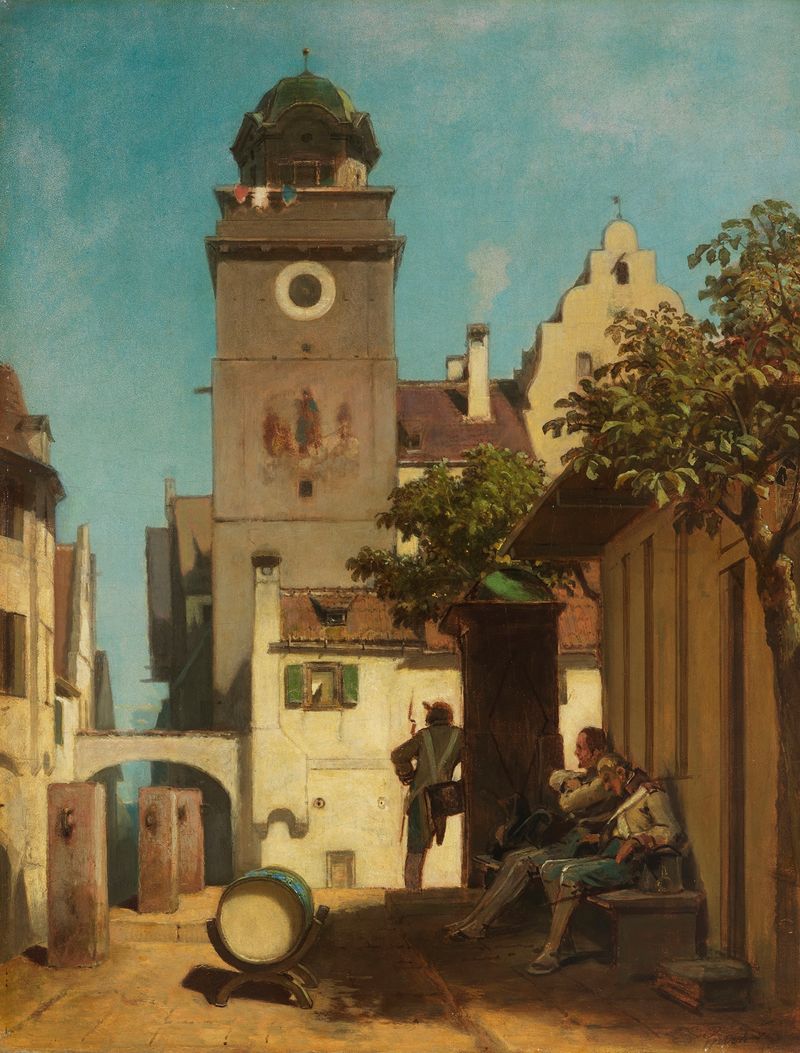
Die Stadtwache
Carl Spitzweg
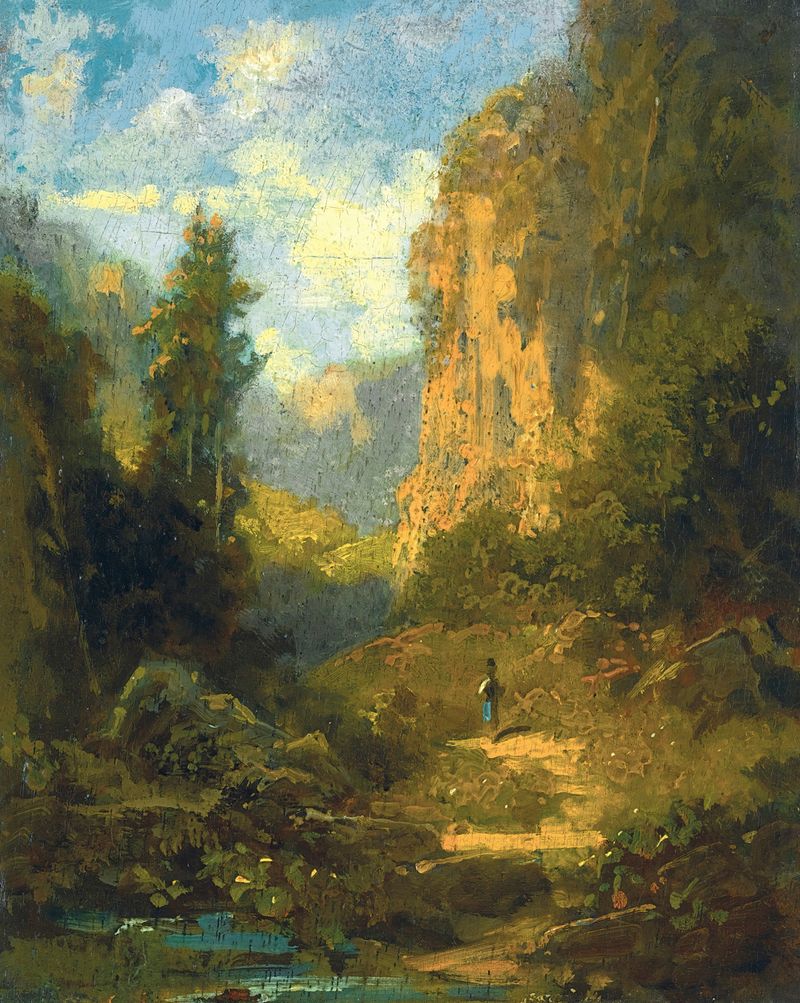
Gebirgslandschaft
Carl Spitzweg

In the Alpine High Valley (Landscape with Mt. Wendelstein)
Carl Spitzweg

Gebirgsmühle
Carl Spitzweg
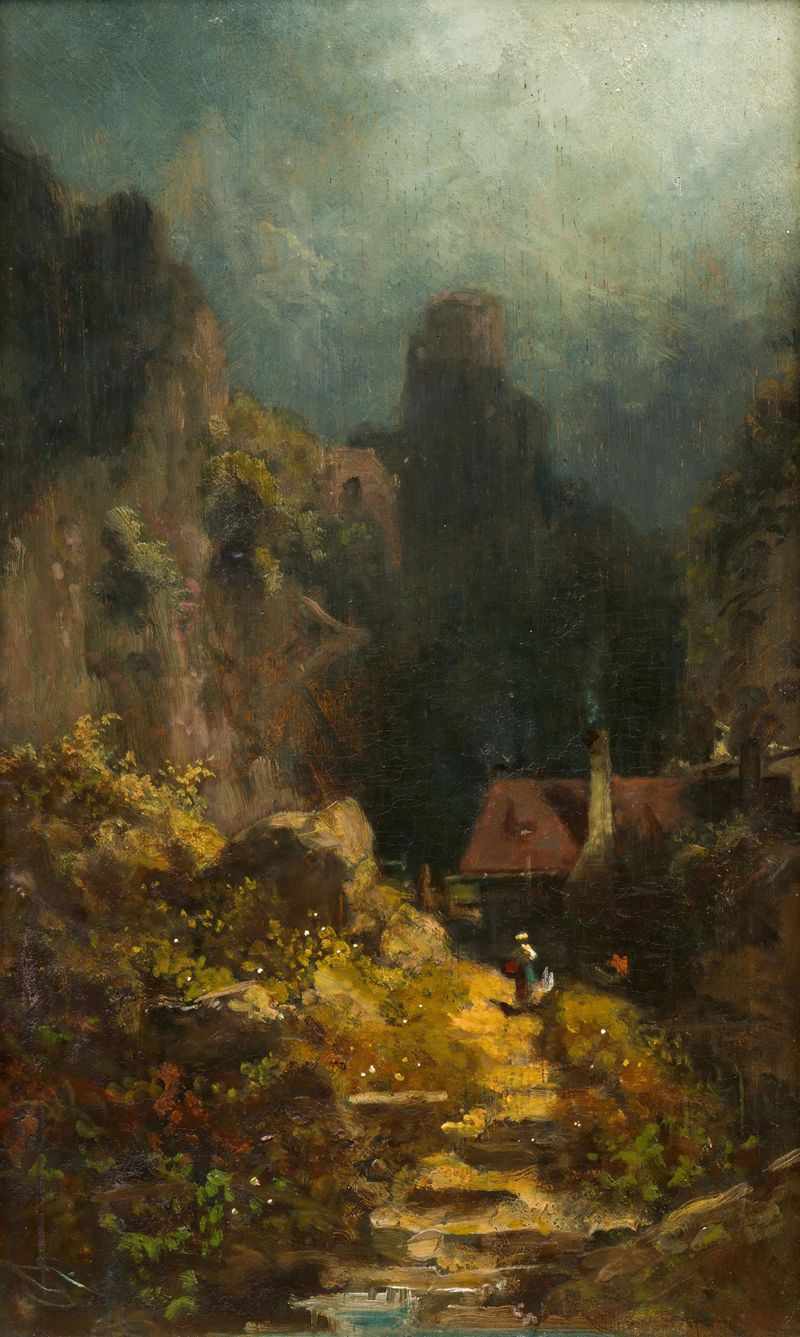
In der Schlucht
Carl Spitzweg
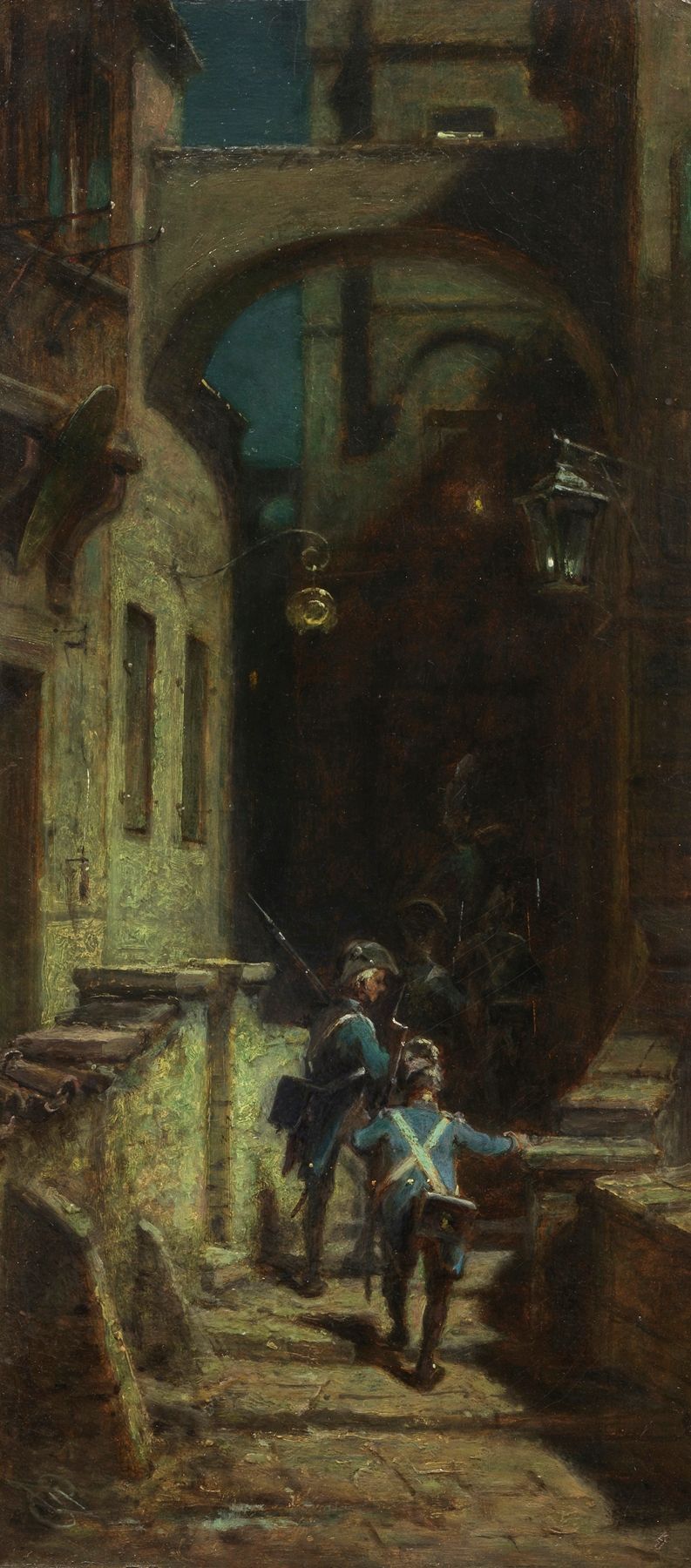
Die Scharwache
Carl Spitzweg

Einsiedler mit Mädchen
Carl Spitzweg

Lagernde Karrner (Rast der Streuner)
Carl Spitzweg
Im Walde
Carl Spitzweg
Moonlit Scene with Castle Ruins
Carl Spitzweg





