
Bifolium from the Nurse's Qur'an — History & Facts
This bifolium from the Nurse's Qur'an dates to approximately A.H. 410/A.D. 1019–20 and was created using ink, opaque watercolor, and gold on parchment.
The work is by an unknown calligrapher and is a double page from a manuscript of the Qur'an. The bifolium displays large, angular Kufic script arranged in horizontal lines across two pages. The script is rendered in dark brown ink, with diacritical marks in red and green, and occasional use of gold. The letters are bold and geometric, with pronounced vertical and horizontal strokes, and the parchment shows evidence of staining and wear.
The composition emphasizes clarity and grandeur, typical of Qur'anic manuscripts intended for public recitation or ceremonial use. Manuscripts such as this were produced in the Islamic world during the early medieval period, often commissioned for mosques or wealthy patrons. The Nurse's Qur'an is notable for its monumental script and luxurious materials, reflecting the importance of Qur'anic calligraphy in Islamic art. The Metropolitan Museum of Art, which owns this bifolium, places the manuscript's making in Tunisia, probably in Kairouan; its other leaves are divided among several collections.
More Artworks by Unknown Artist

The Tale of Genji Scroll: Yadorigi
Unknown Artist
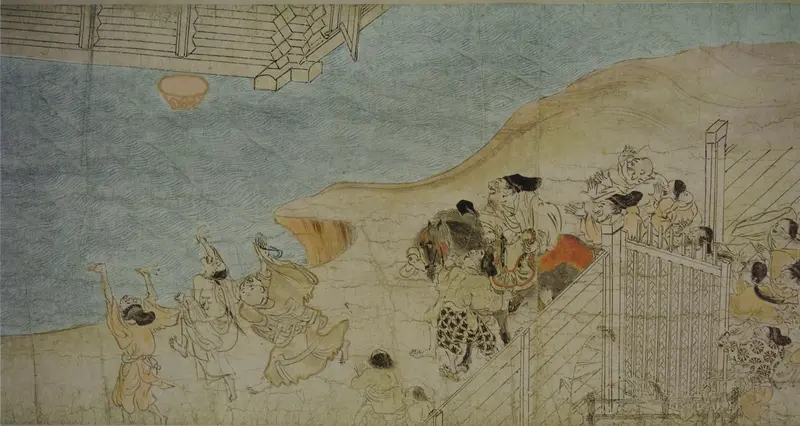
Legends of Mount Shigi: The Flying Granary
Unknown Artist
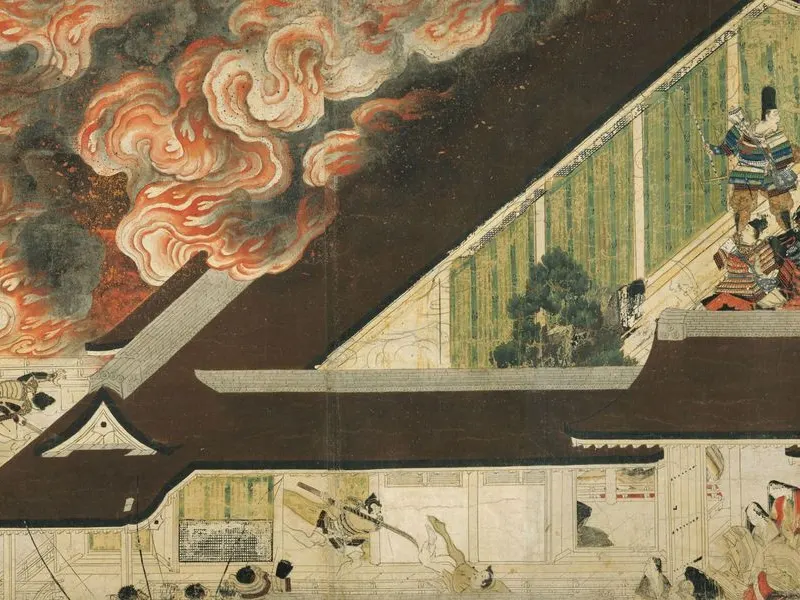
Night Attack on the Sanjō Palace
Unknown Artist
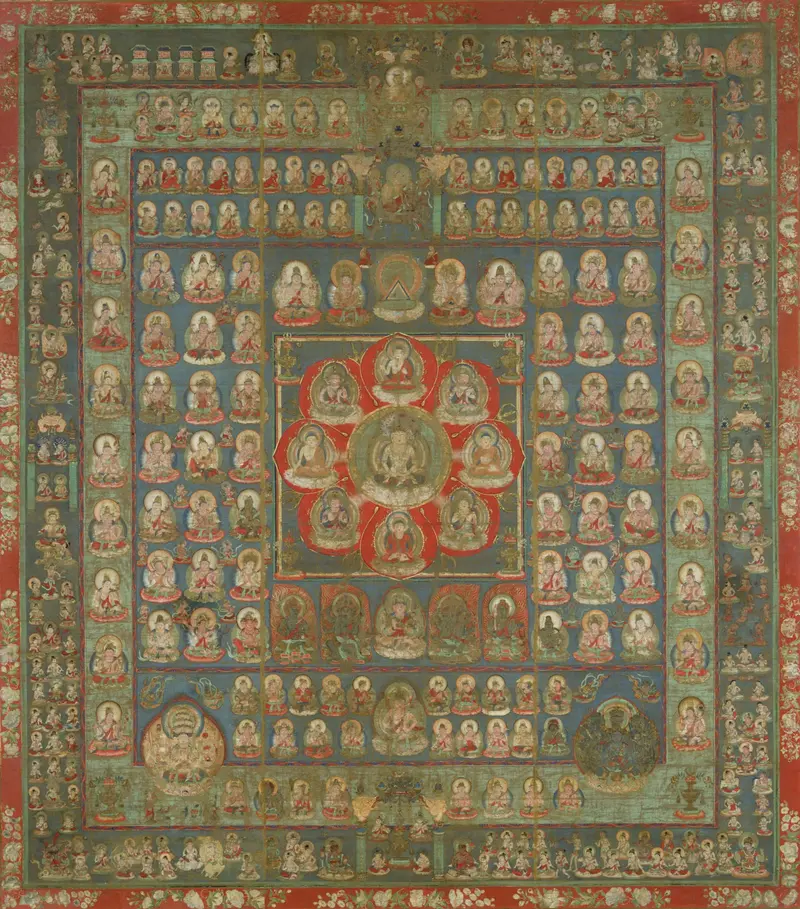
Womb World Mandala (Mandala of the Two Realms)
Unknown Artist
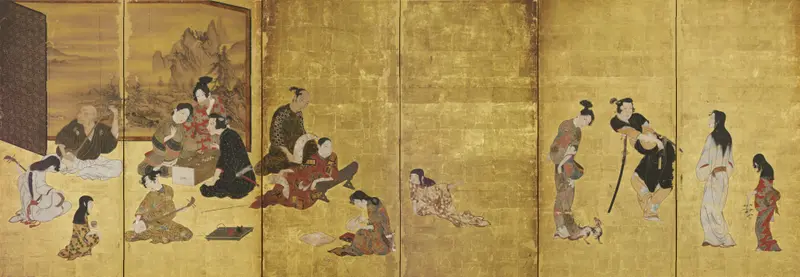
Hikone Screen
Unknown Artist
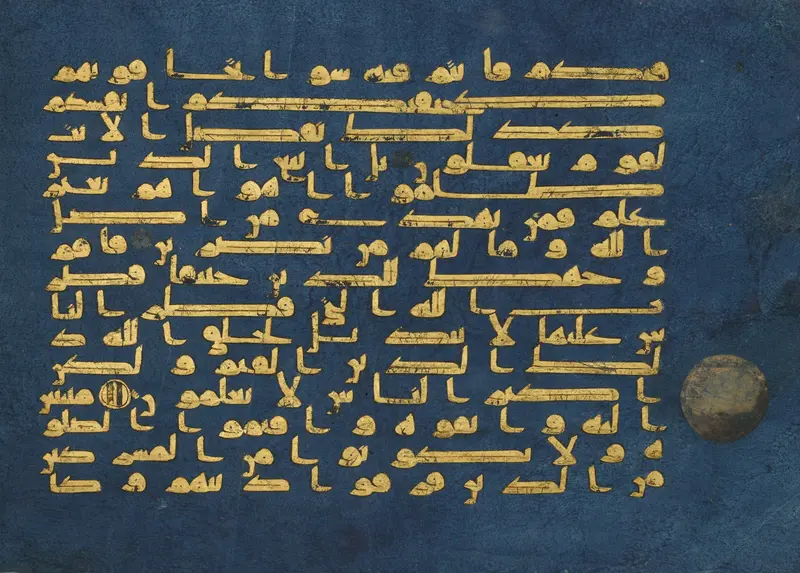
Folio from the Blue Qur'an
Unknown Artist
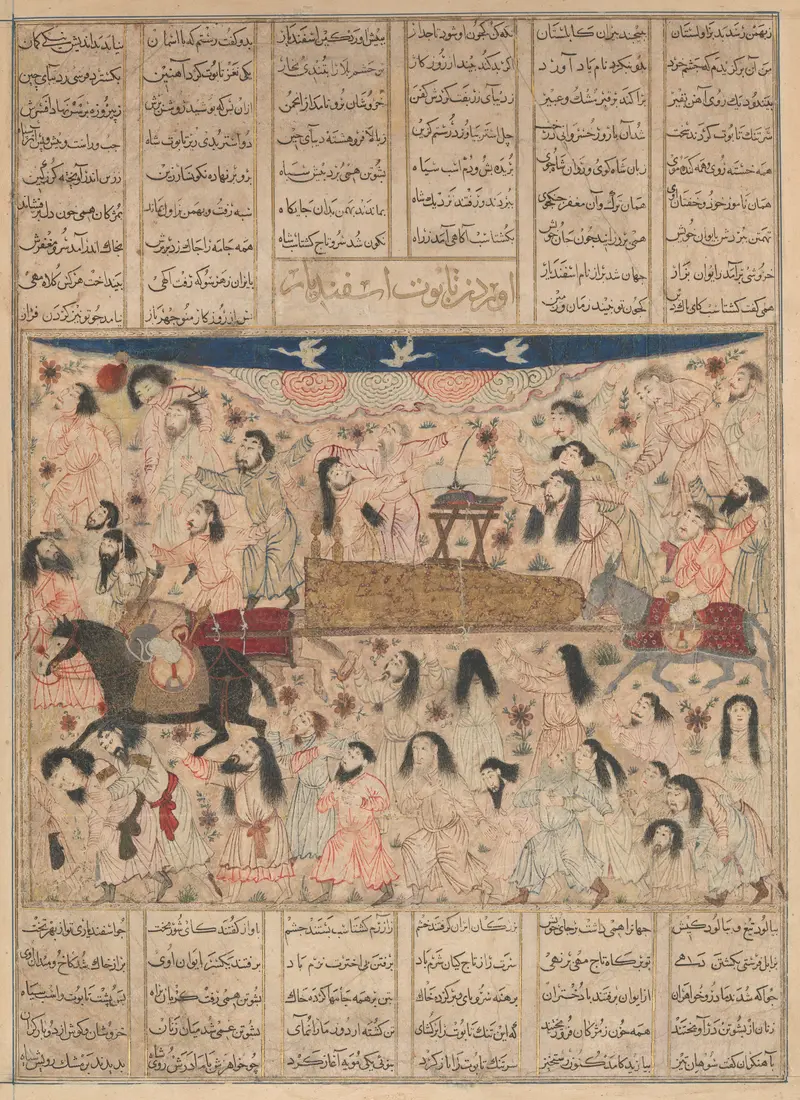
The Funeral of Isfandiyar (Great Mongol Shahnama)
Unknown Artist

The Ideal City
Unknown Artist
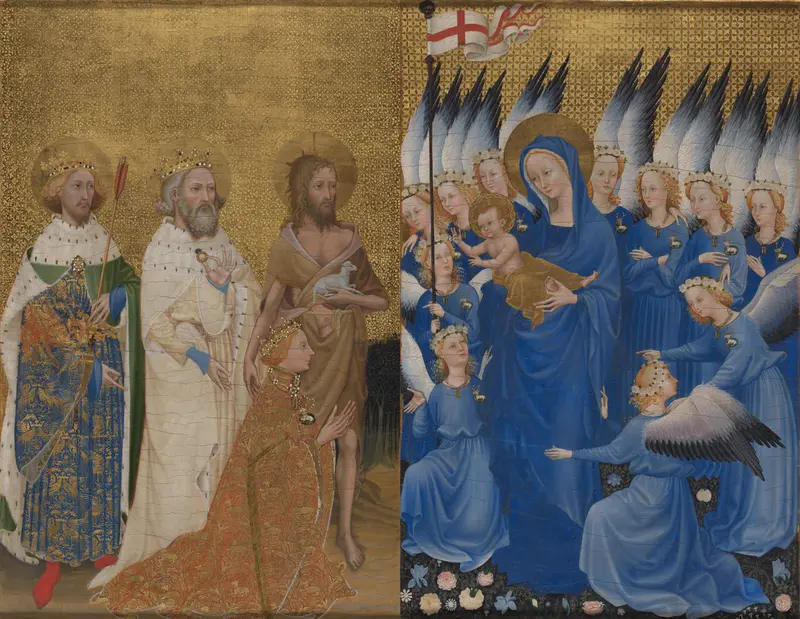
The Wilton Diptych
Unknown Artist

Ridder, Dood en Duivel
Unknown Artist





