
Art tradition · late 13th–17th century · Iran and Central Asia
Islamic Art and Paintings
Islamic art is the art tradition of the lands ruled by Muslims, made for Muslim patrons or by Muslim artists from the 7th century on: not only art for the faith, such as Qur'an manuscripts, but also palace art, books of poetry and history, carpets and tiles. Its painting is mostly miniature painting for books in Arabic, Persian and Ottoman Turkish, made from the 1200s to the 1600s by painters such as Yahya ibn Mahmud al-Wasiti, Behzad, Sultan Muhammad, Nakkaş Osman and Riza-yi 'Abbasi.
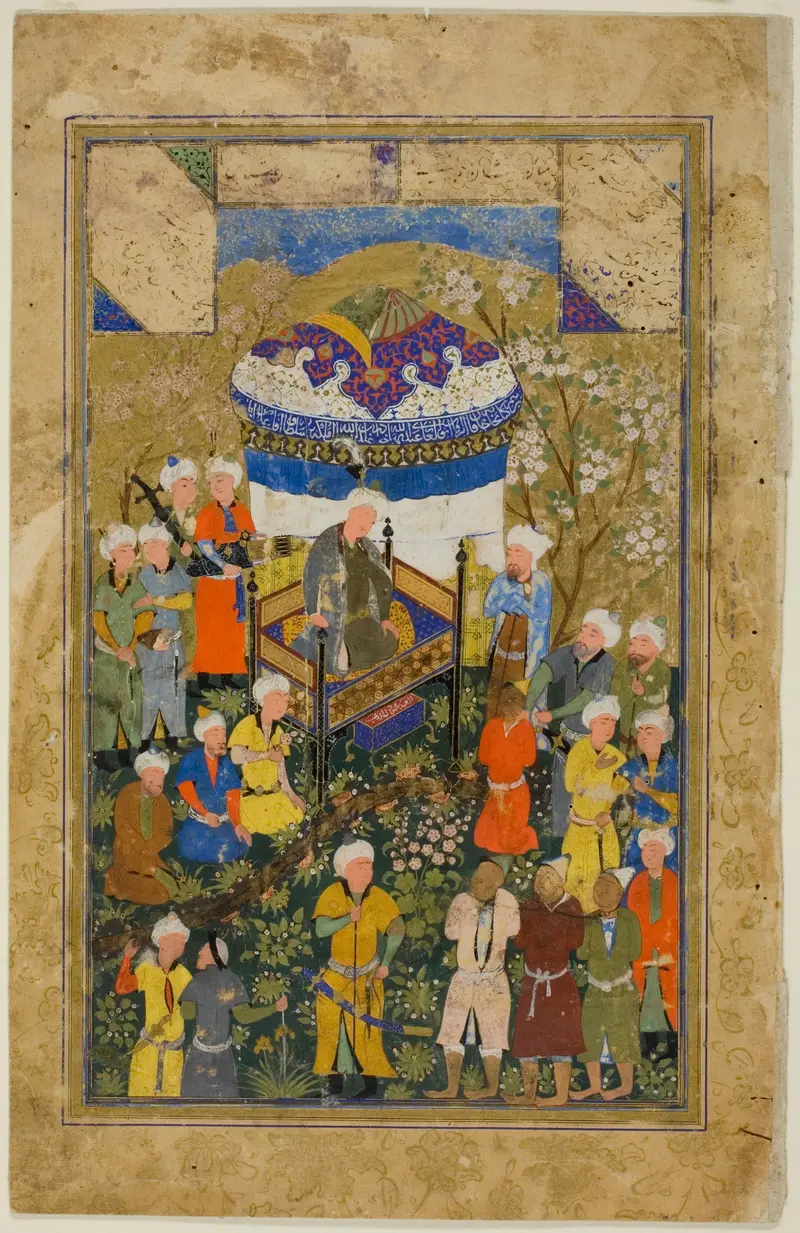
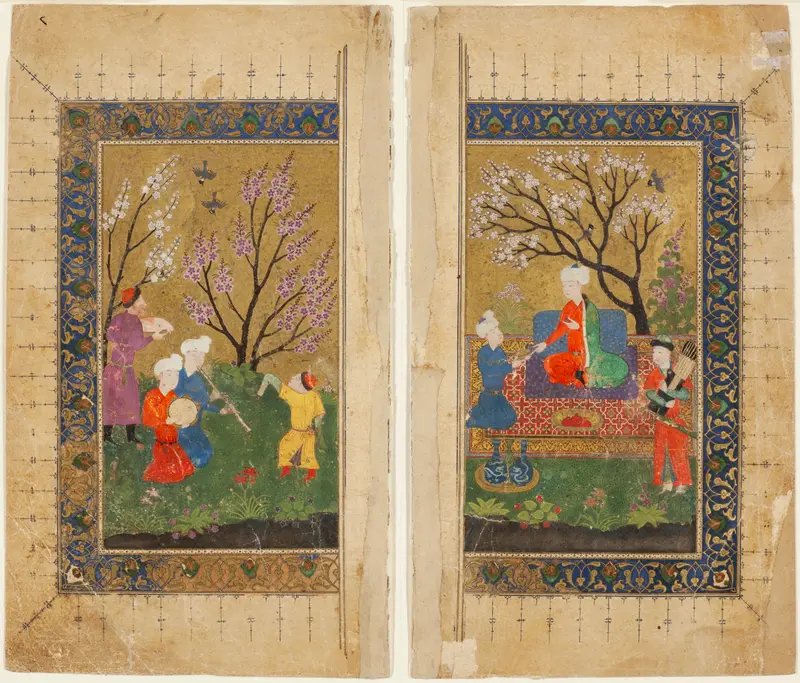
Calligraphy is its most highly regarded art, because the Qur'an was transmitted in Arabic; plant scrolls, geometric patterns and figures complete its ornament. Figures were kept out of religious art but filled books of poetry and history: Shah Tahmasp's copy of the Shahnama, the Persian Book of Kings, held 258 paintings, among them Sultan Muhammad's The Court of Gayumars.
Browse 214 Islamic paintings and artworks below, all public domain and free to download.
Selected and written by Pavel MazuelasUpdated November 5, 2026
Part of Art Movements and Painting StylesRelated: Mughal Painting, Orientalism, Chinese Painting
All Islamic paintings and artworks
Persian, Arabic and Ottoman manuscript pages, Qur'an leaves and calligraphy, carpets and tile designs, and 19th-century views of mosques. All public domain, free to download.
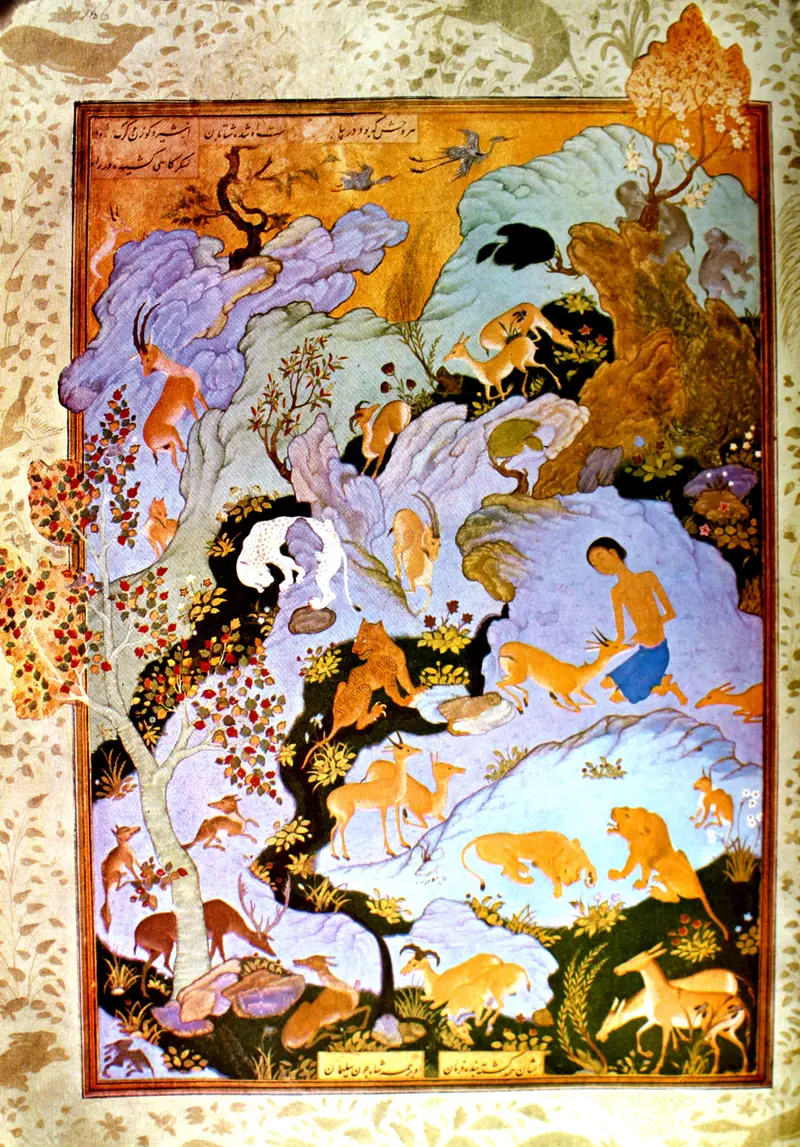
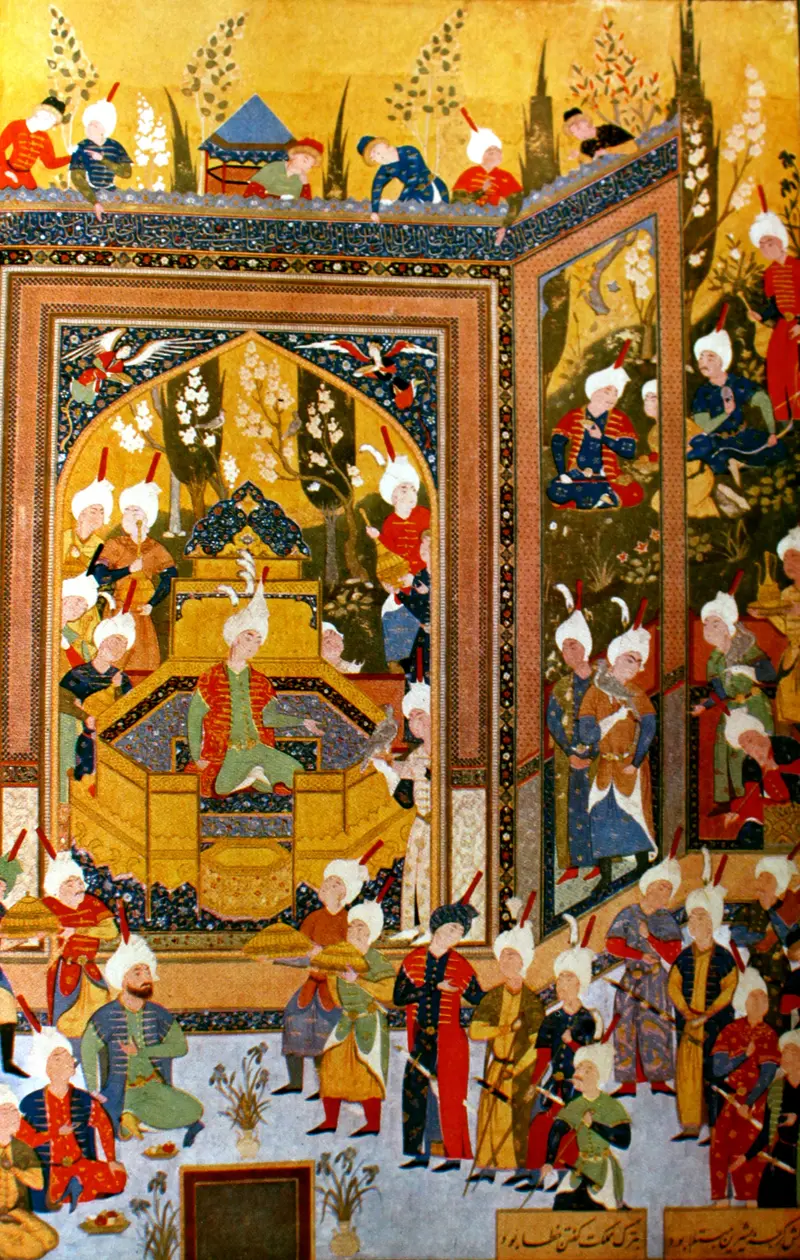






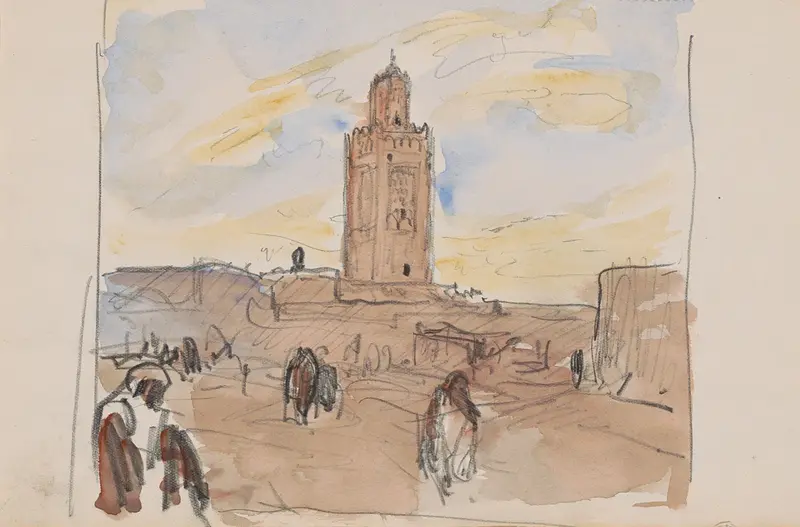
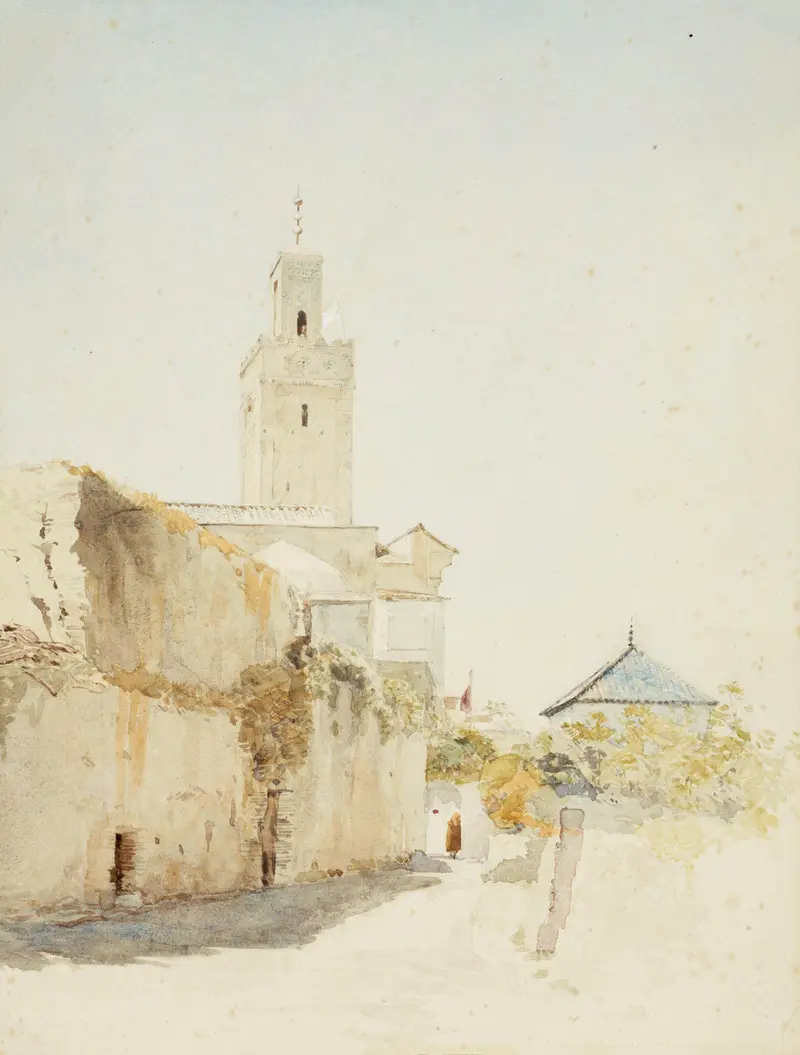
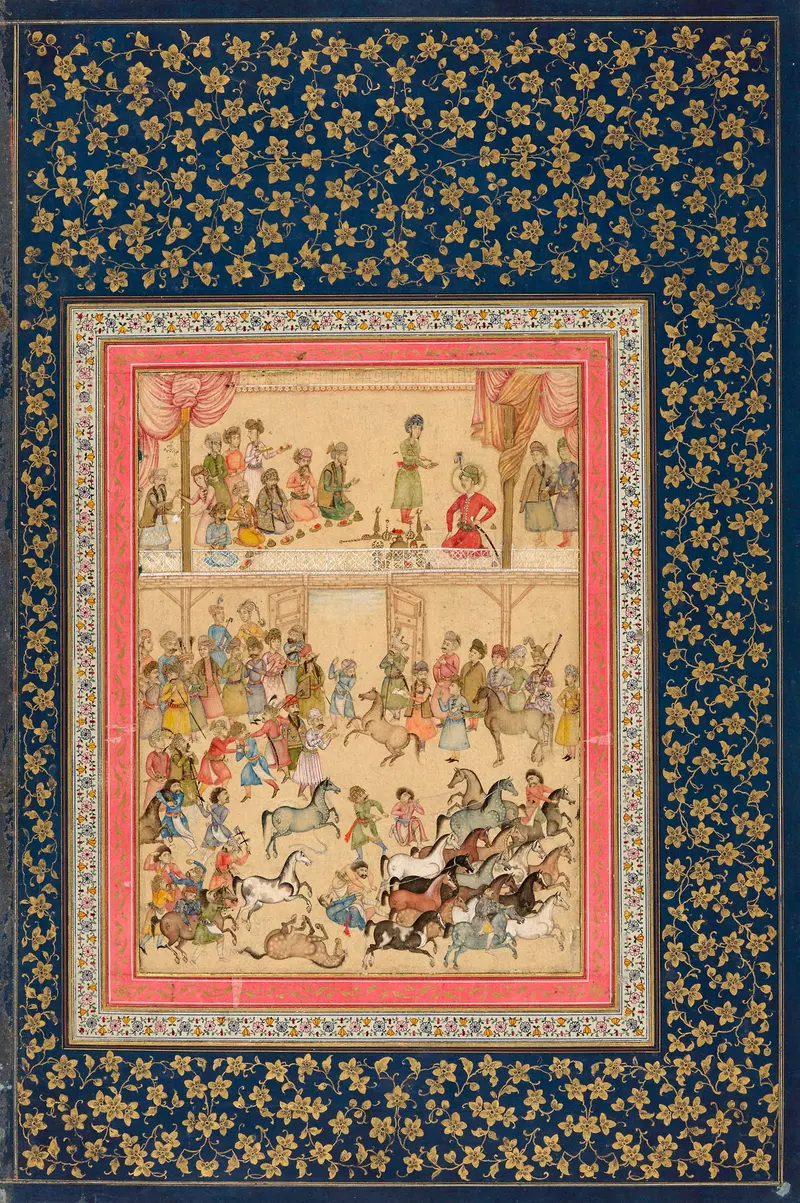
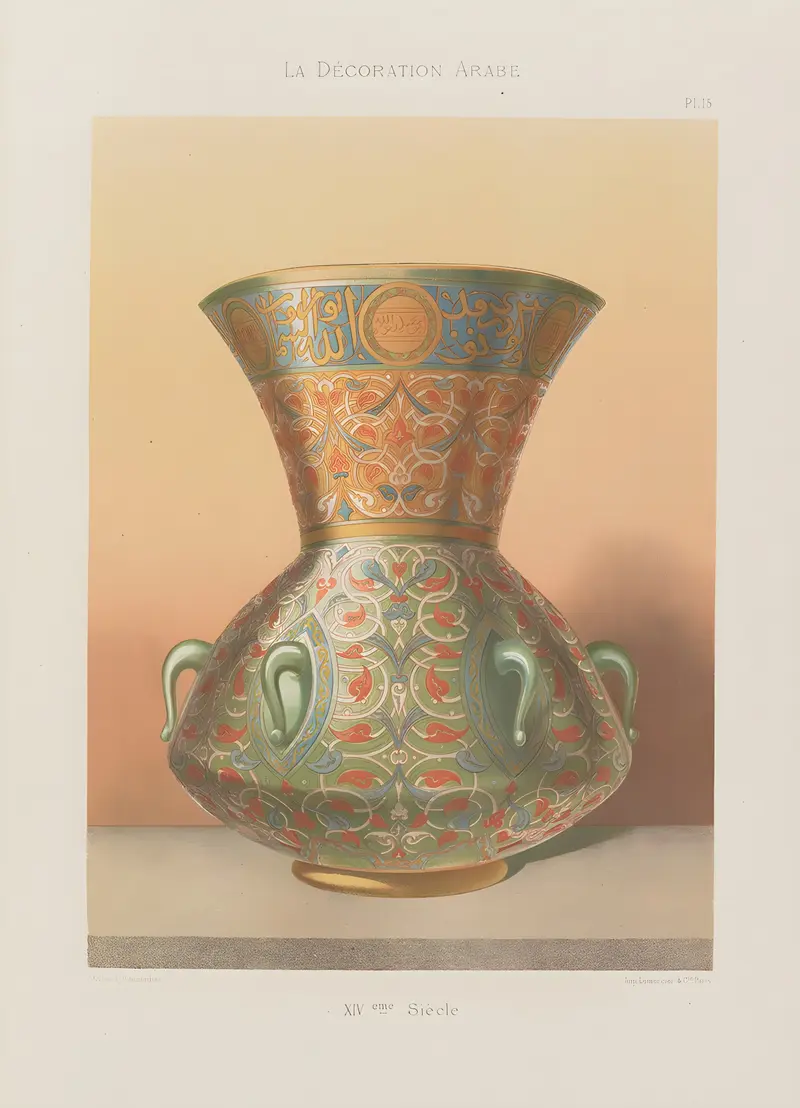
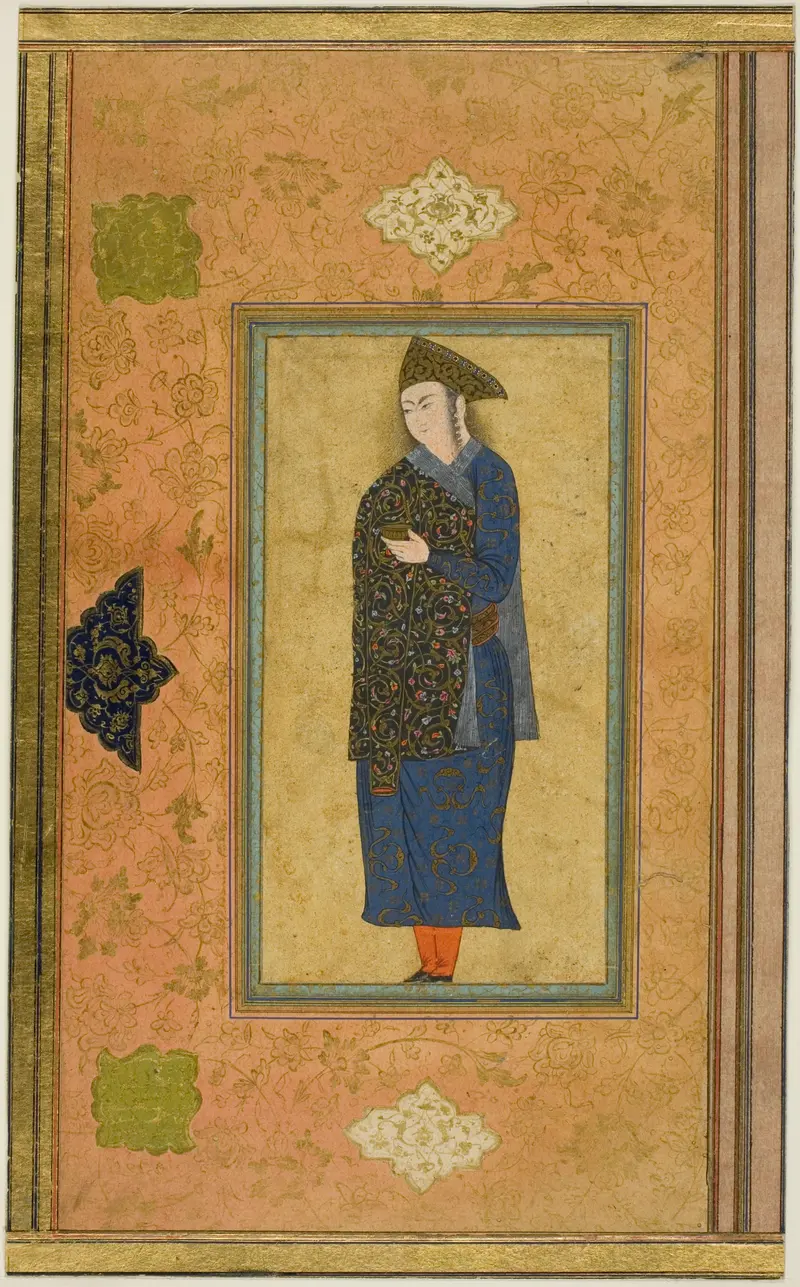

Famous Islamic paintings and calligraphy
Qur'an pages and painted manuscripts from North Africa, Iran, Central Asia and the Ottoman court. Click any work to see it up close and download it free.
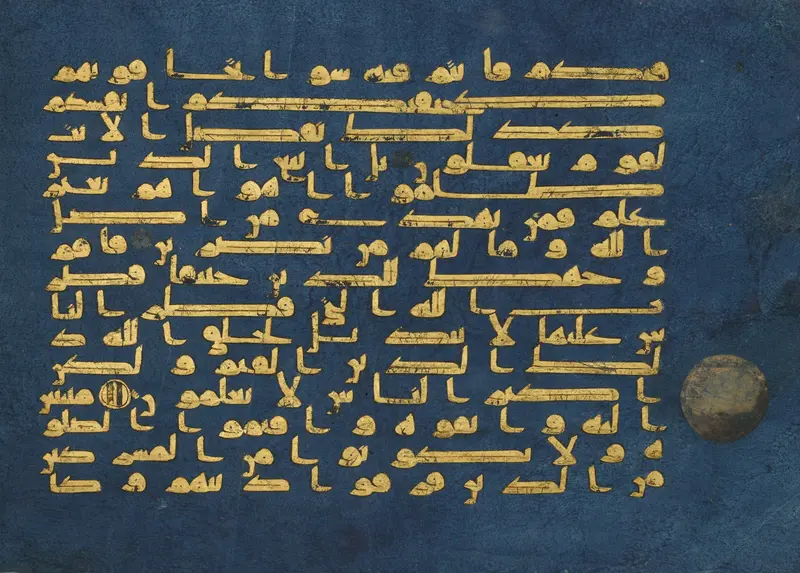 Folio from the Blue Qur'anUnknown calligrapher
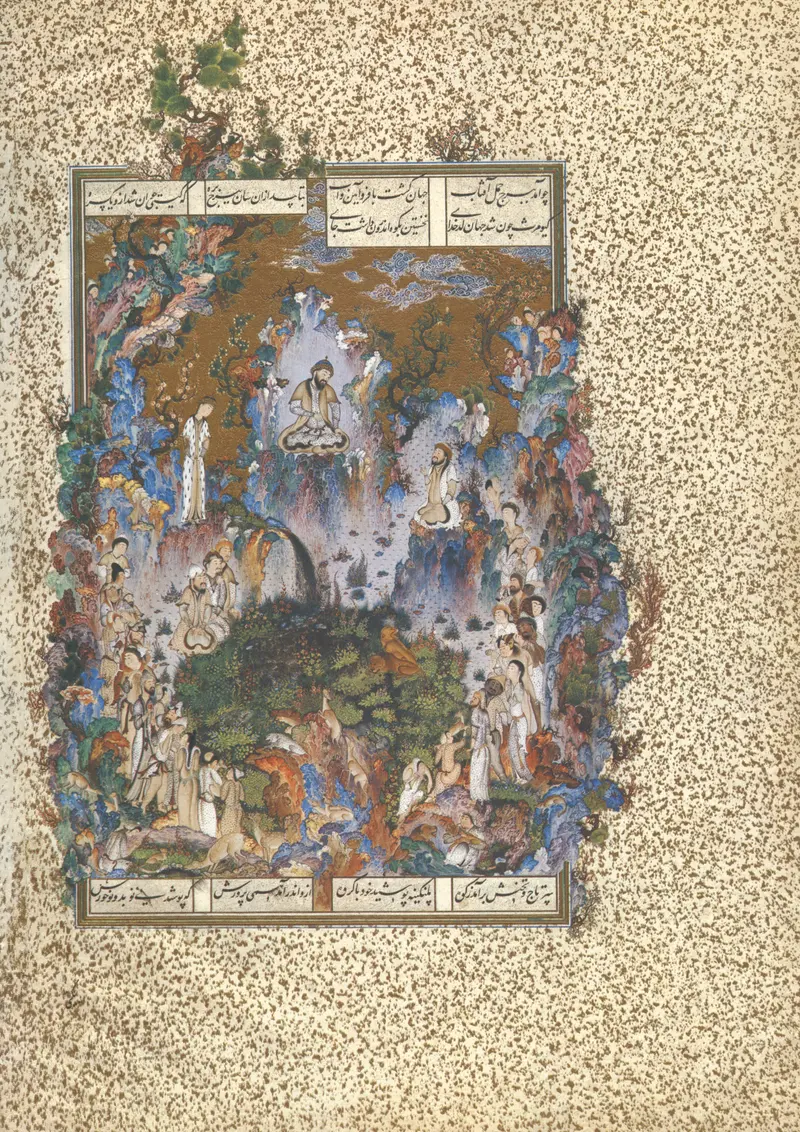 The Court of GayumarsSultan Muhammad
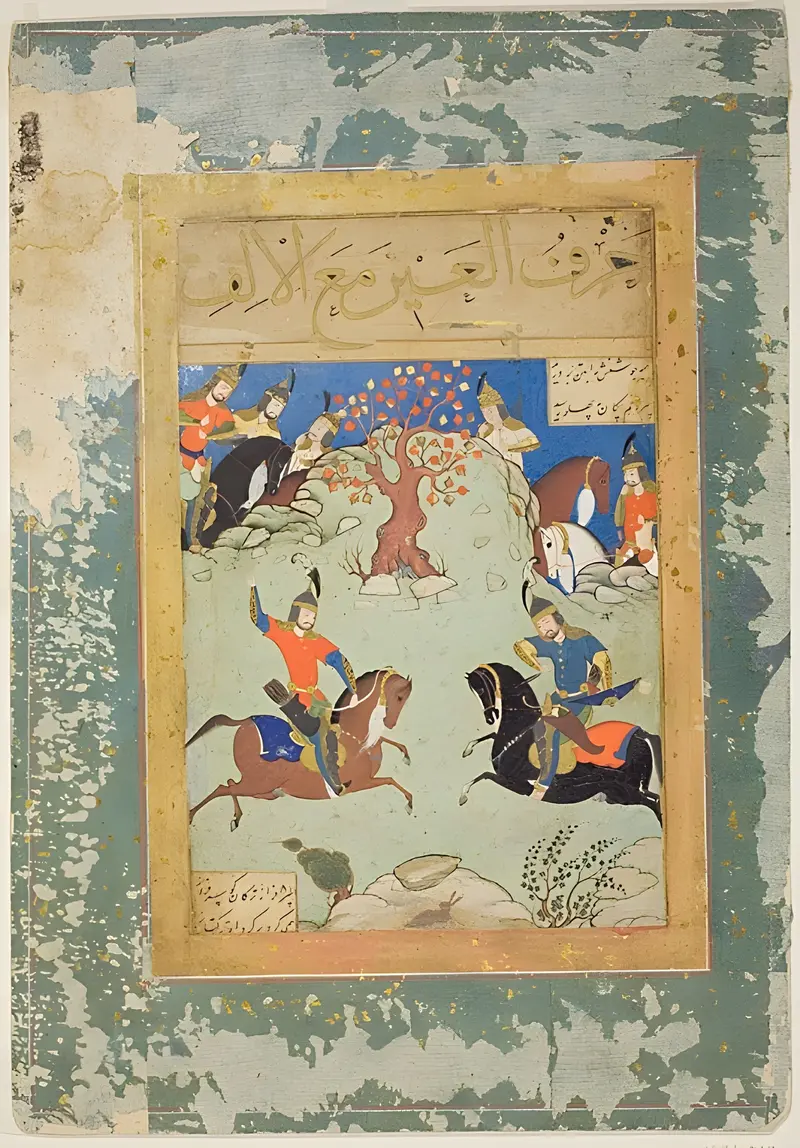
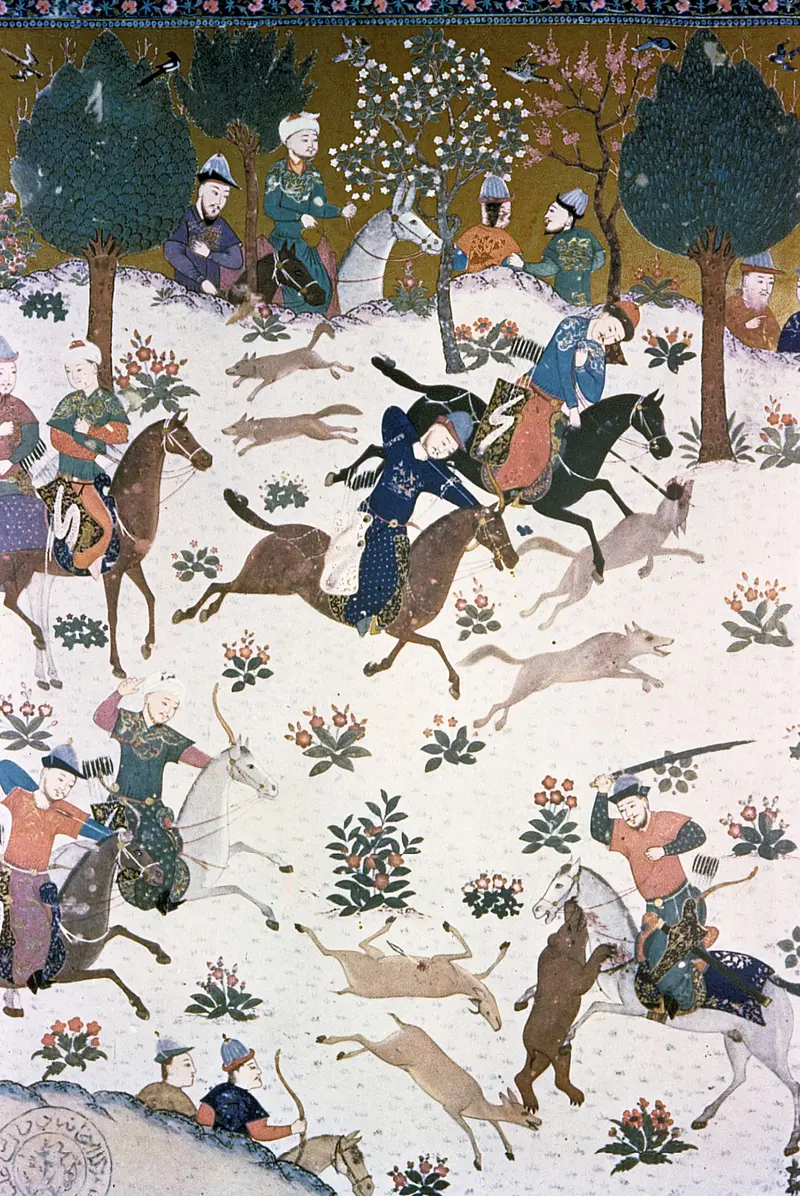 Baysonghor Shahnama: Frontispiece with a Hunting SceneUnknown painters
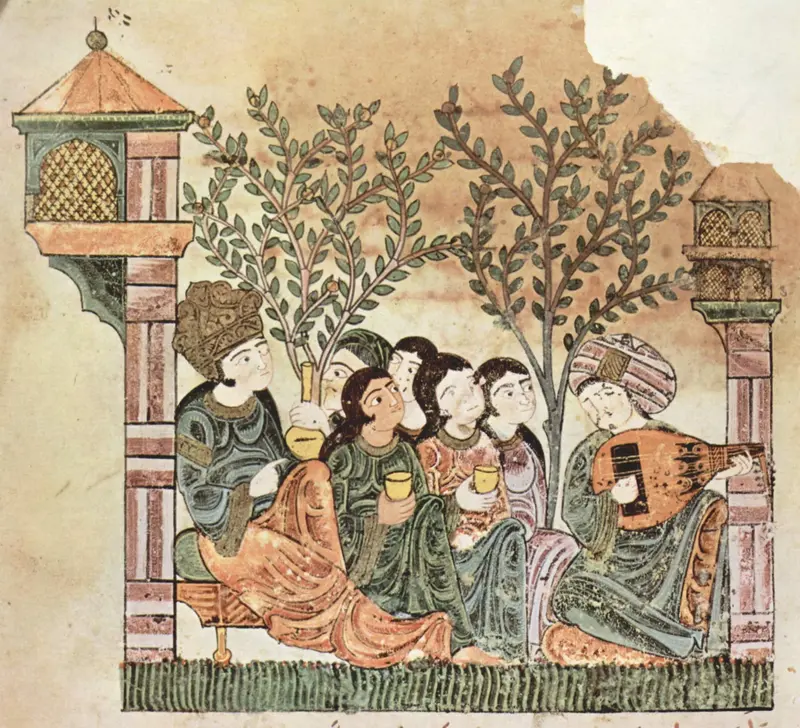 Bayad Playing the Oud before the LadyUnknown painter
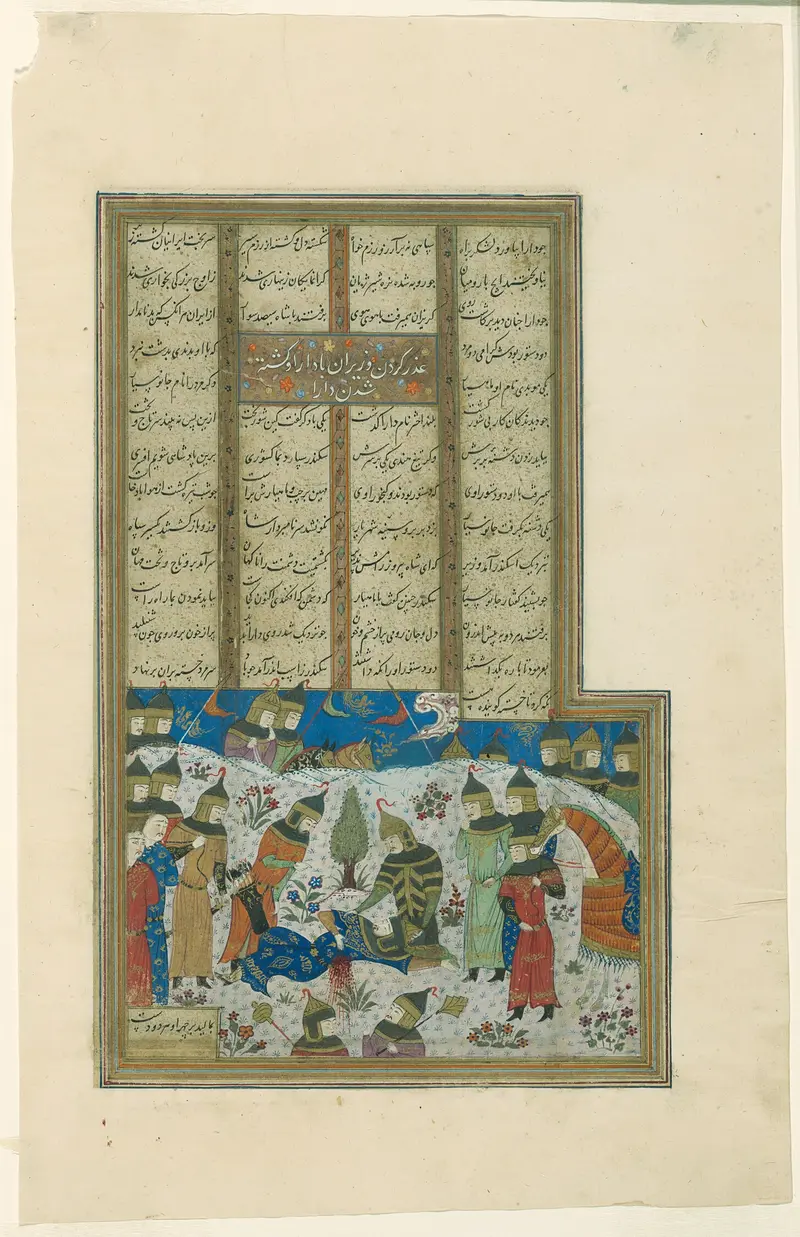
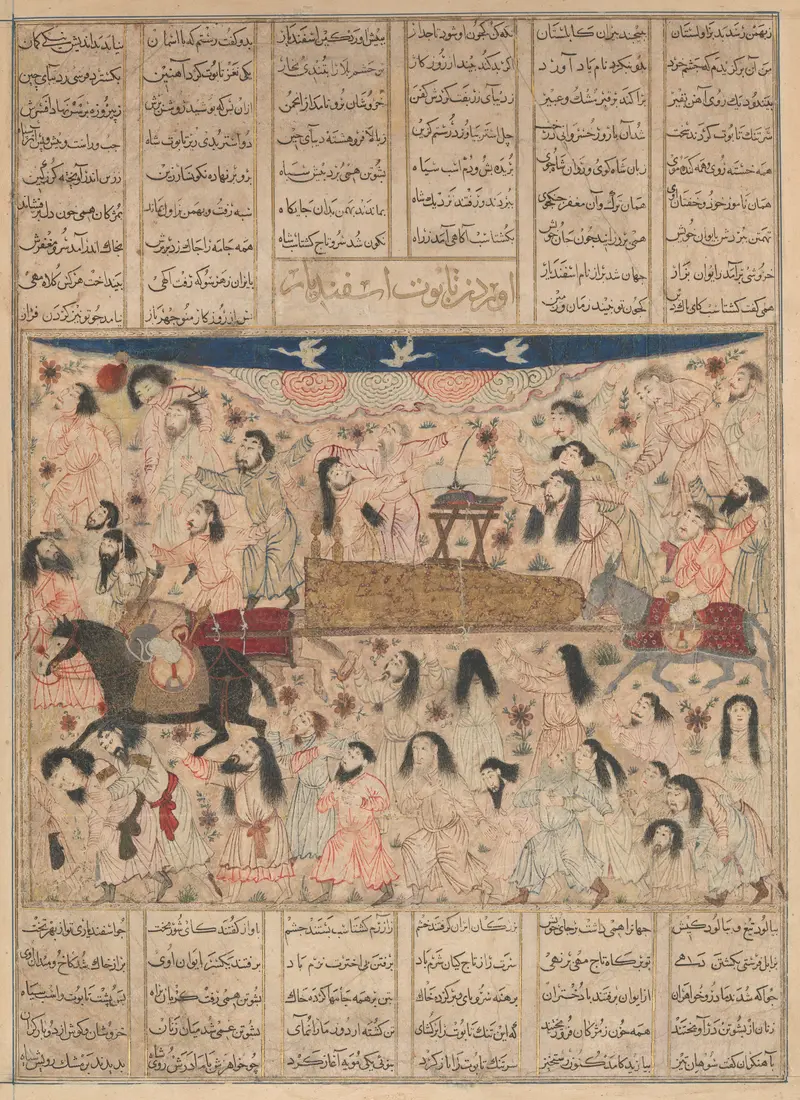 The Funeral of IsfandiyarUnknown painter
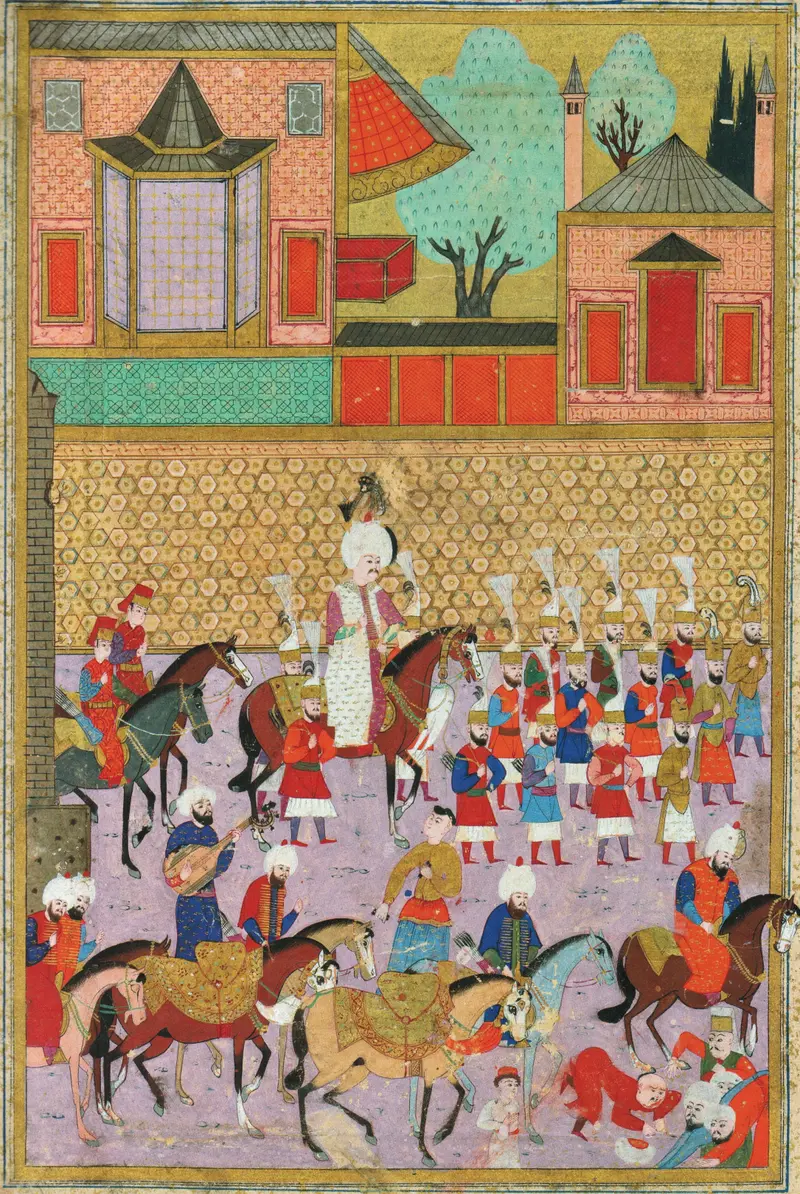 Hünername: The Circumcision Festival of 1530Nakkaş Osman
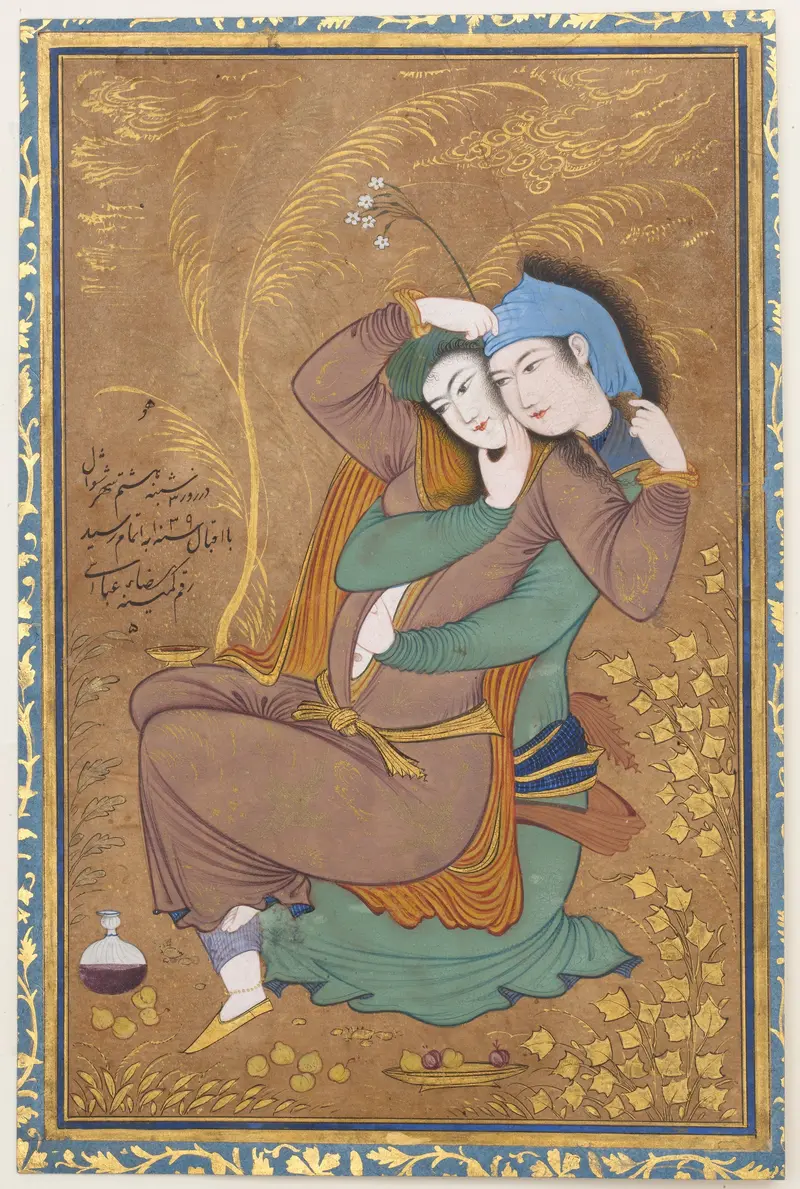 The LoversRiza-yi 'Abbasi
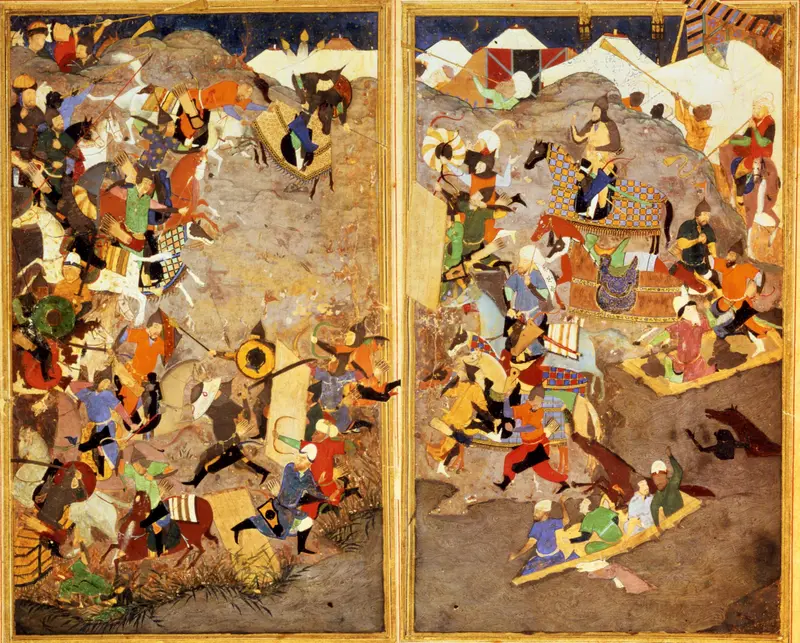 Battle on the River OxusUnknown painter
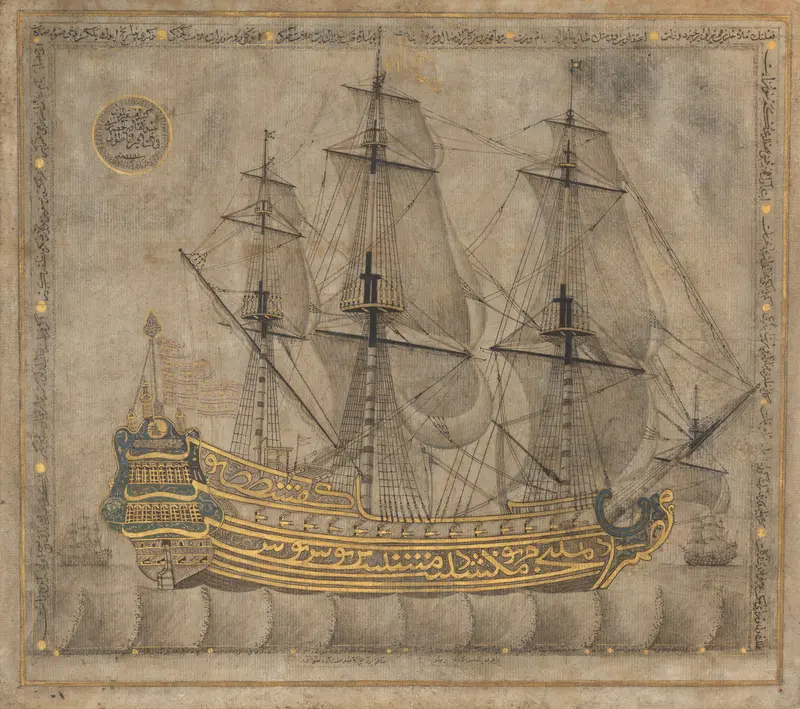 Calligraphic Galleon'Abd al-Qadir Hisari
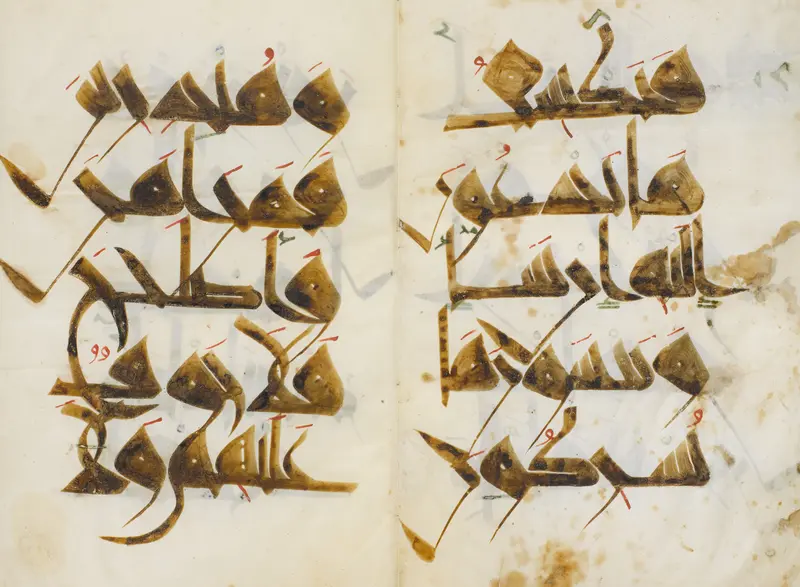 Bifolium from the Nurse's Qur'anUnknown calligrapher
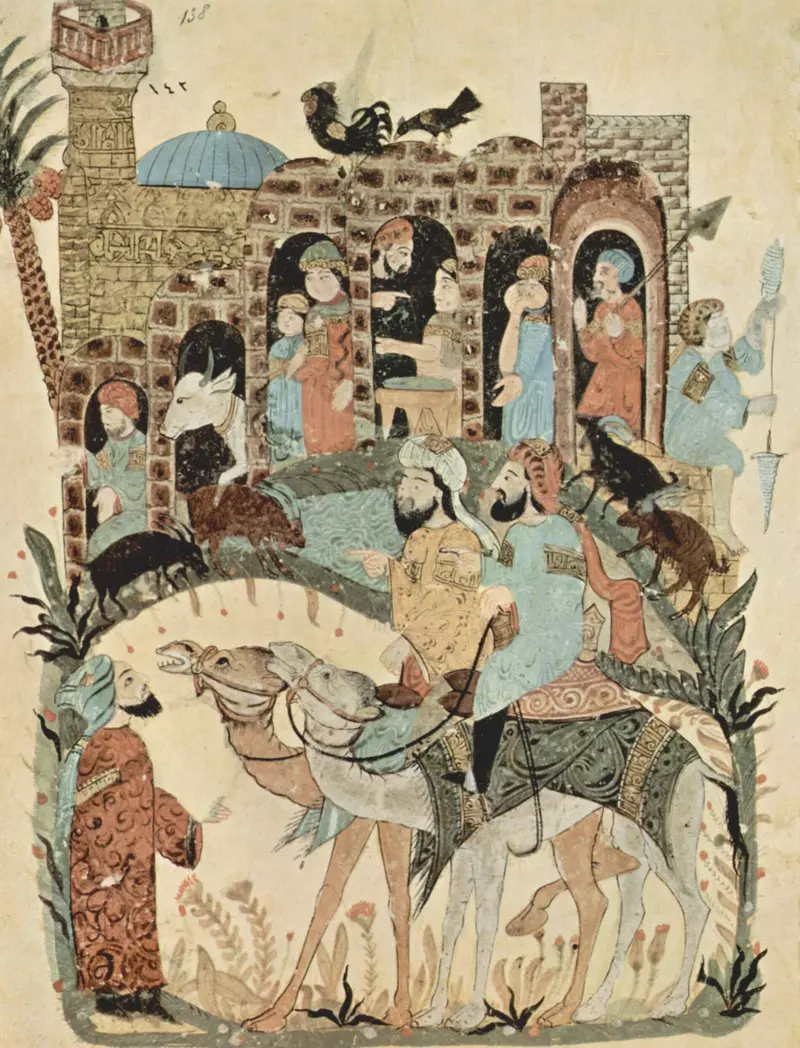 Maqamat of al-Hariri: Discussion near a VillageYahya ibn Mahmud al-Wasiti
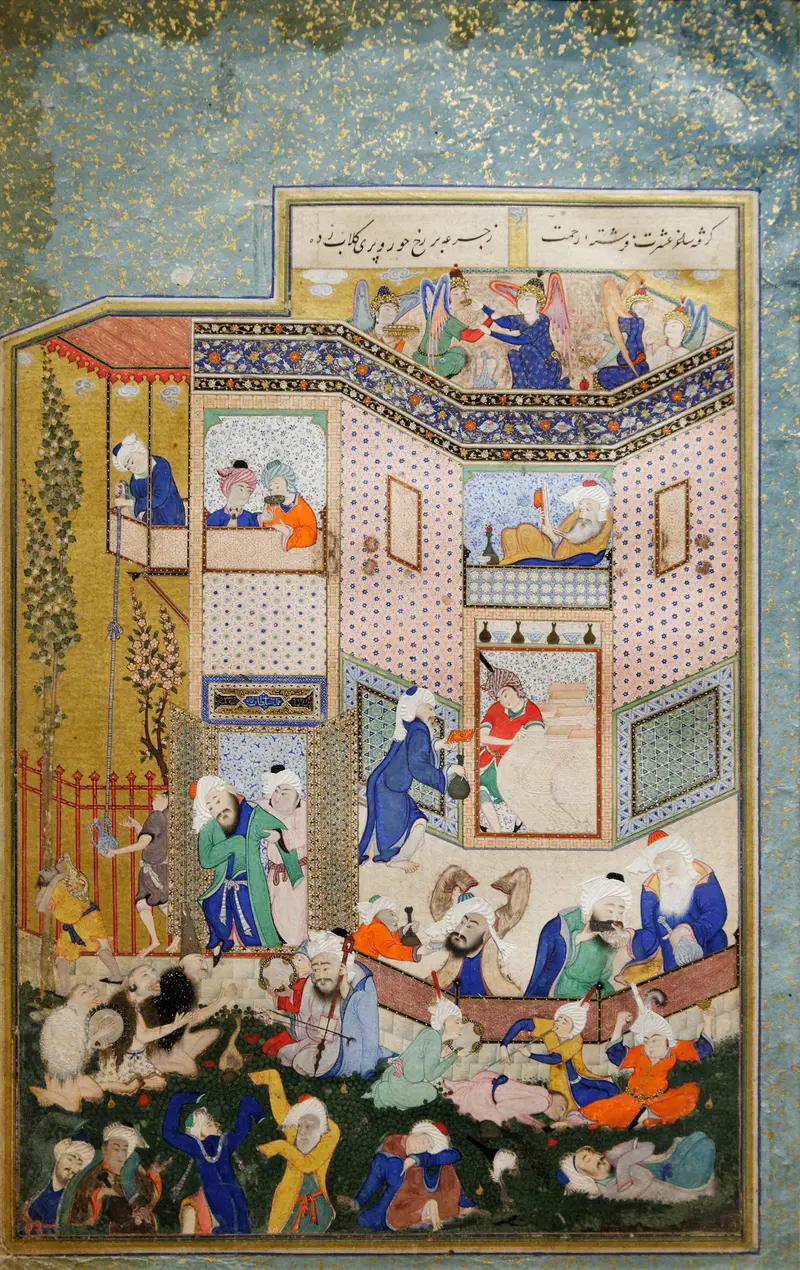 Allegory of Worldly and Otherworldly DrunkennessSultan Muhammad
Islamic painters and calligraphers
Ten painters and calligraphers whose work is in our collection, from al-Wasiti's Maqamat of 1237 to 'Abd al-Qadir Hisari's ship drawn in script of 1766–67. Each link opens all their works.
- Yahya ibn Mahmud al-WasitiArab painter and calligrapher of the 13th century from Iraq. Painted the copy of al-Hariri's Maqamat dated 1237 that is now in the Bibliothèque nationale de France in Paris.
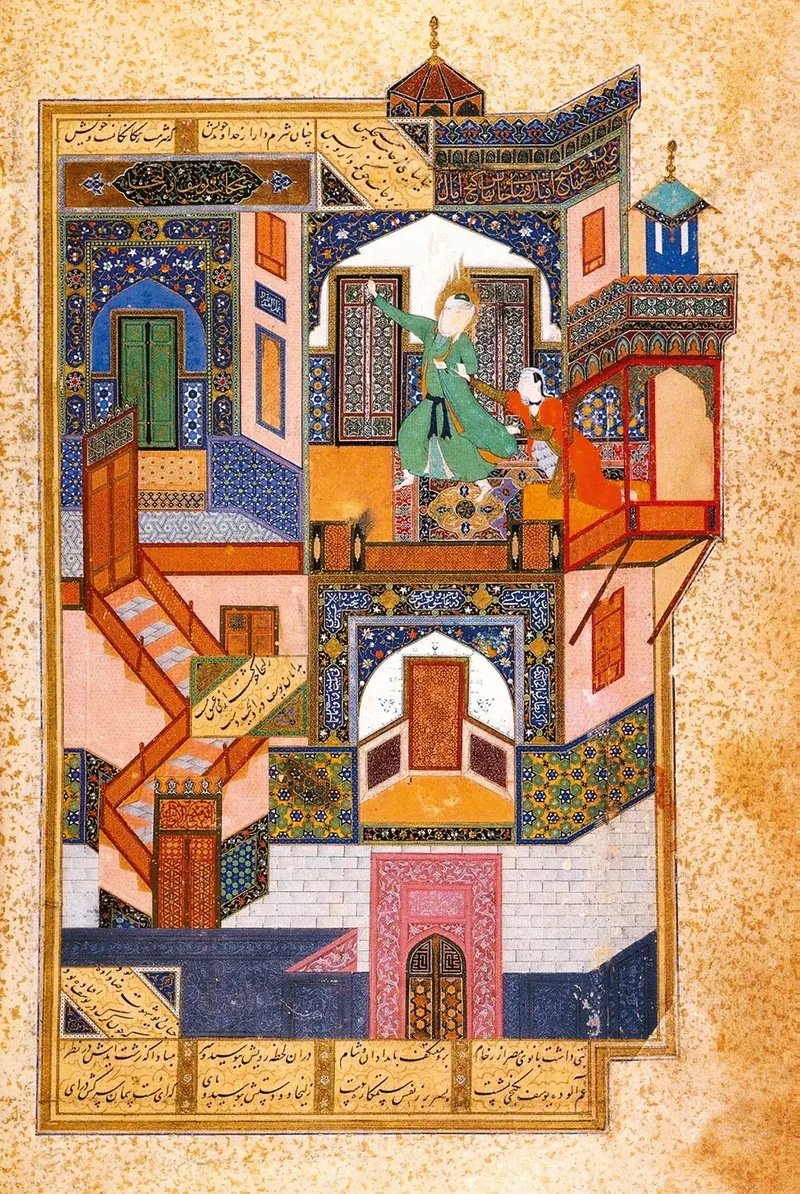 BehzadAbout 1450–1535. Painted in Herat for the Timurid sultan Husayn Bayqara, as in the Bustan of Sa'di of 1488 now in Cairo; the British Library considers six paintings of a Khamsa of 1494–95 possibly his work.
- Sultan MuhammadActive in Tabriz in the first half of the 1500s. The Met names him among the most renowned artists of the Safavid royal workshop who directed Shah Tahmasp's Shahnama in turn, and records him as the painter of the Allegory of Worldly and Otherworldly Drunkenness.
 Sadiqi Beg1533–1609/10. Painter, poet and royal librarian, the Cleveland Museum of Art says; his signed Shahnama painting there shows the simpler style of single figures of Shah 'Abbas's time. The Art Institute of Chicago attributes this ink drawing to him.
- Nakkaş OsmanOttoman court painter, active about 1560–1592, credited with the illustrated Hünername, a manuscript of the 1580s kept in the Topkapı Palace Museum Library in Istanbul.
 Mustafa ibn ValiOttoman artist credited by the Met with this page from a Siyer-i Nebi, an illustrated Life of the Prophet made in Istanbul around 1595.
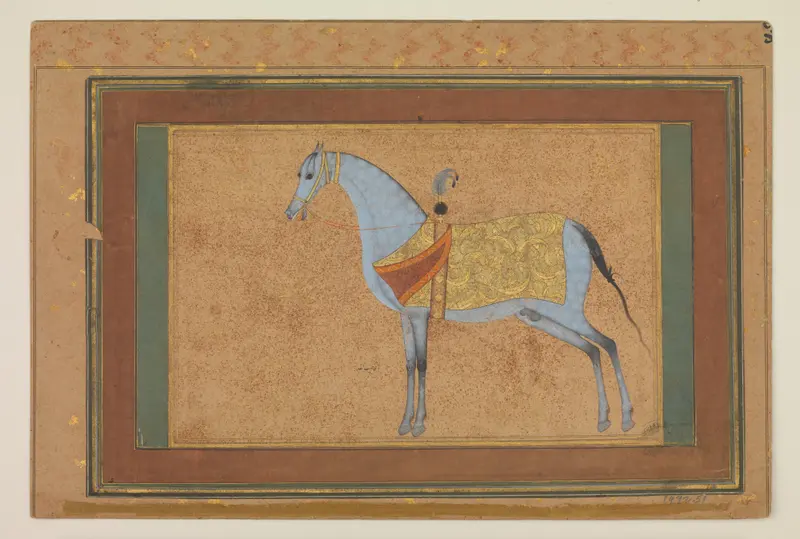 Habiballah of SavaActive about 1590–1610. Painted The Concourse of the Birds for a copy of Attar's Language of the Birds in Isfahan around 1600, and this horse study in Herat, the Met records.
- Riza-yi 'AbbasiAbout 1565–1635. Painted in Isfahan, the capital of Shah 'Abbas, under whom single-page paintings became more popular than book illustration; The Lovers is dated 1630.
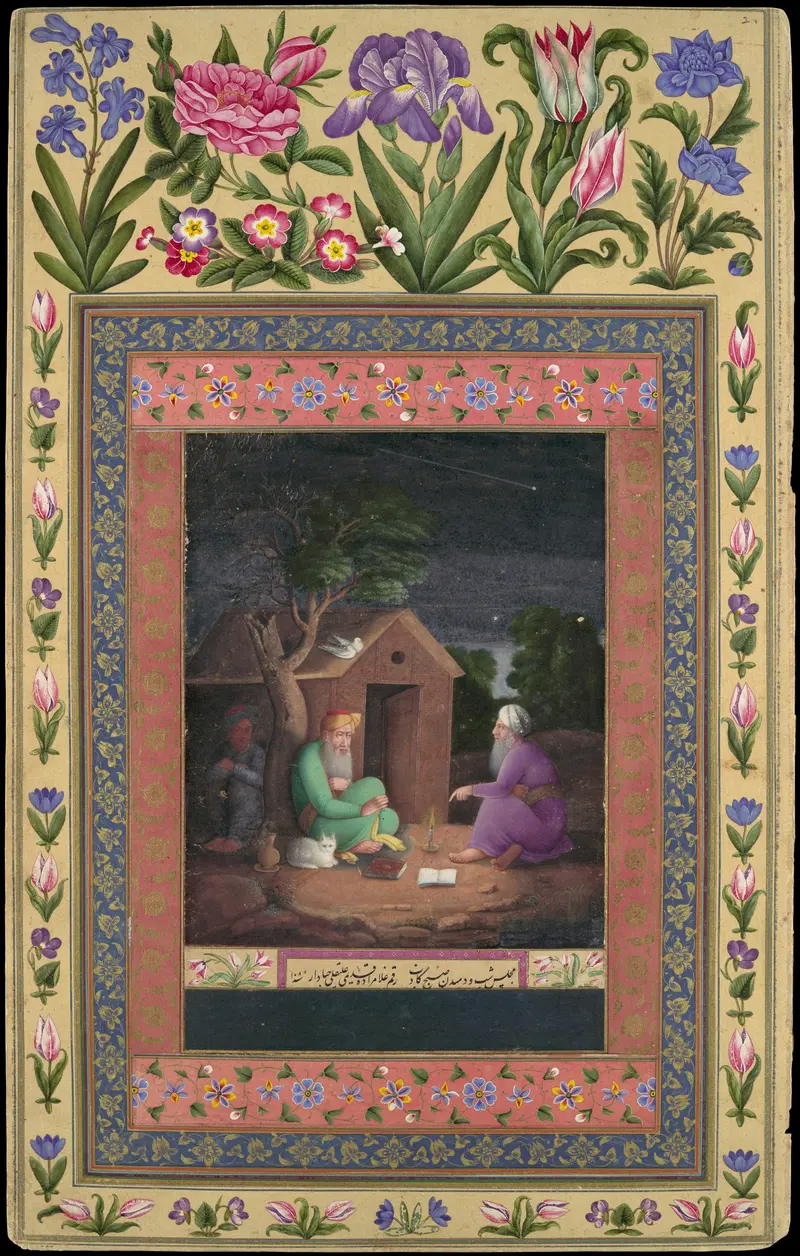 Ali Quli JabbadarActive in the second half of the 1600s in Iran. The Met's album page of two old men is dated 1674–75; the Art Institute of Chicago attributes a Royal Horse Inspection to him.
- 'Abd al-Qadir HisariOttoman calligrapher. He signed the Calligraphic Galleon in 1766–67 as "the poor sinner" living in Anatolia, the Met records, and wrote its hull with the names of the Seven Sleepers.
Persian miniature paintings
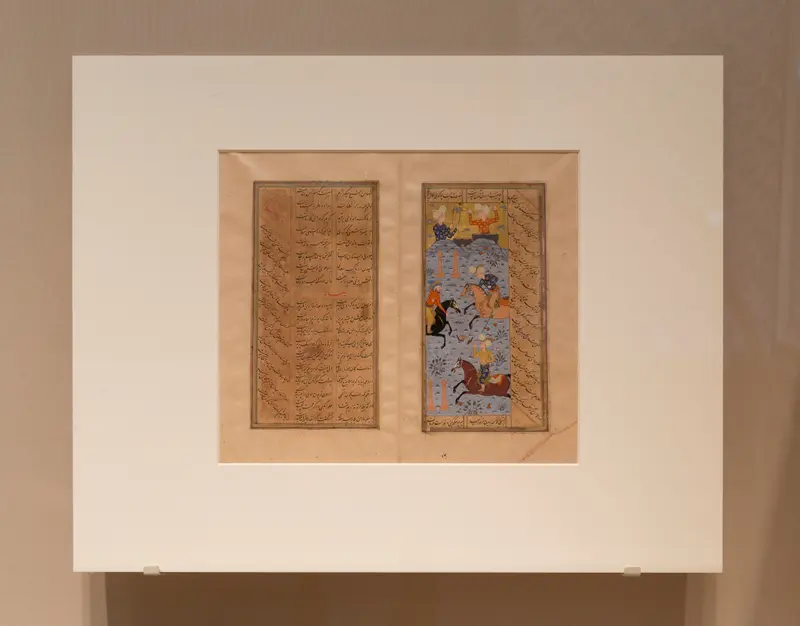
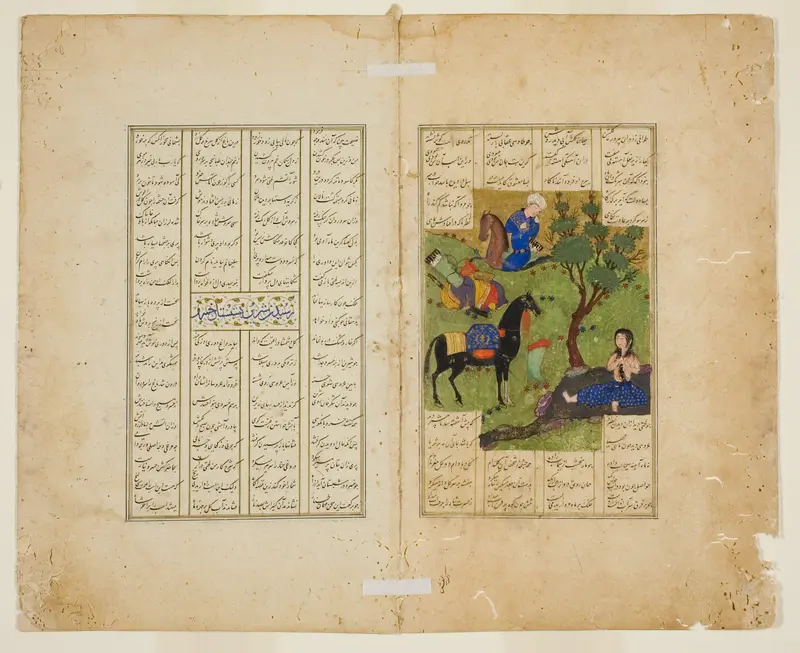
Persian miniatures are Islamic miniature paintings made for Persian books. They grew in the late 1200s, when the Mongol rulers of Iran gave new impetus to illustrated books, the Met says; Herat under the Timurids is often regarded as their high point, and the Safavid court in Tabriz joined both traditions. These pages come from copies of the Shahnama and of Nizami's Khamsa made between the 1480s and the 1590s.
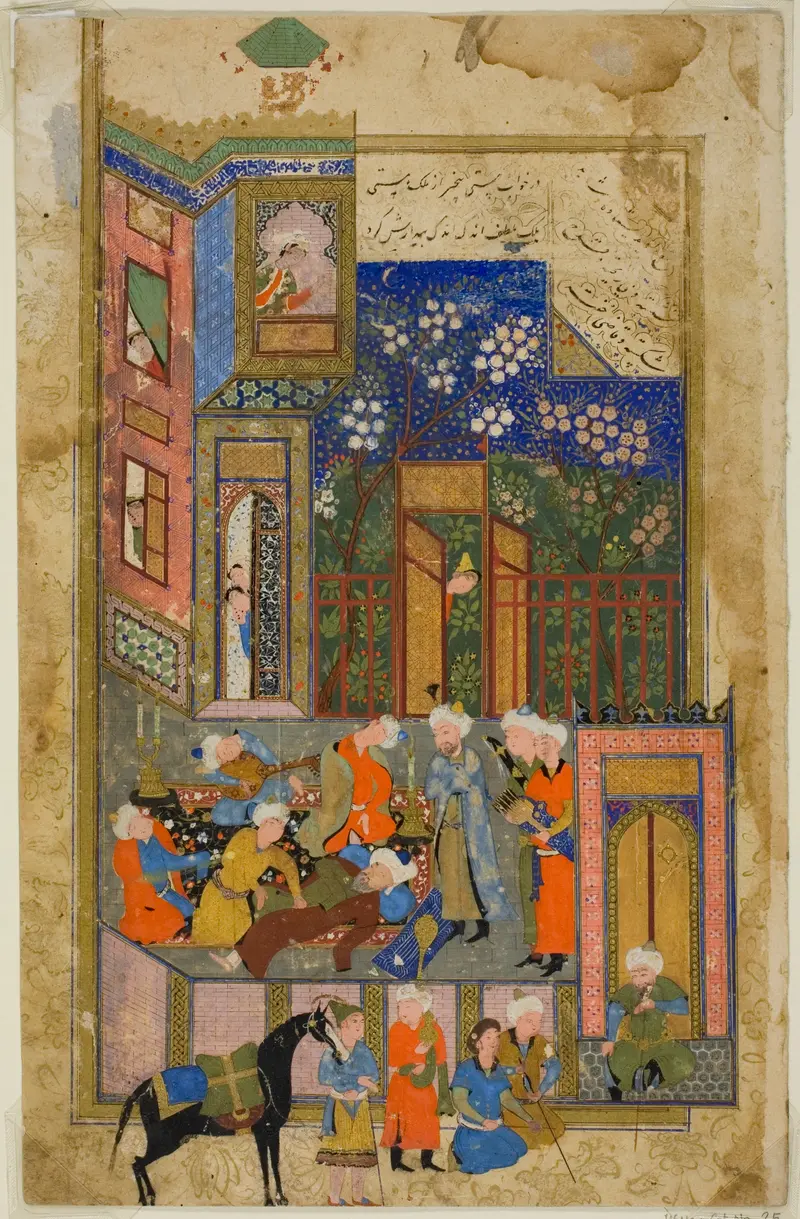
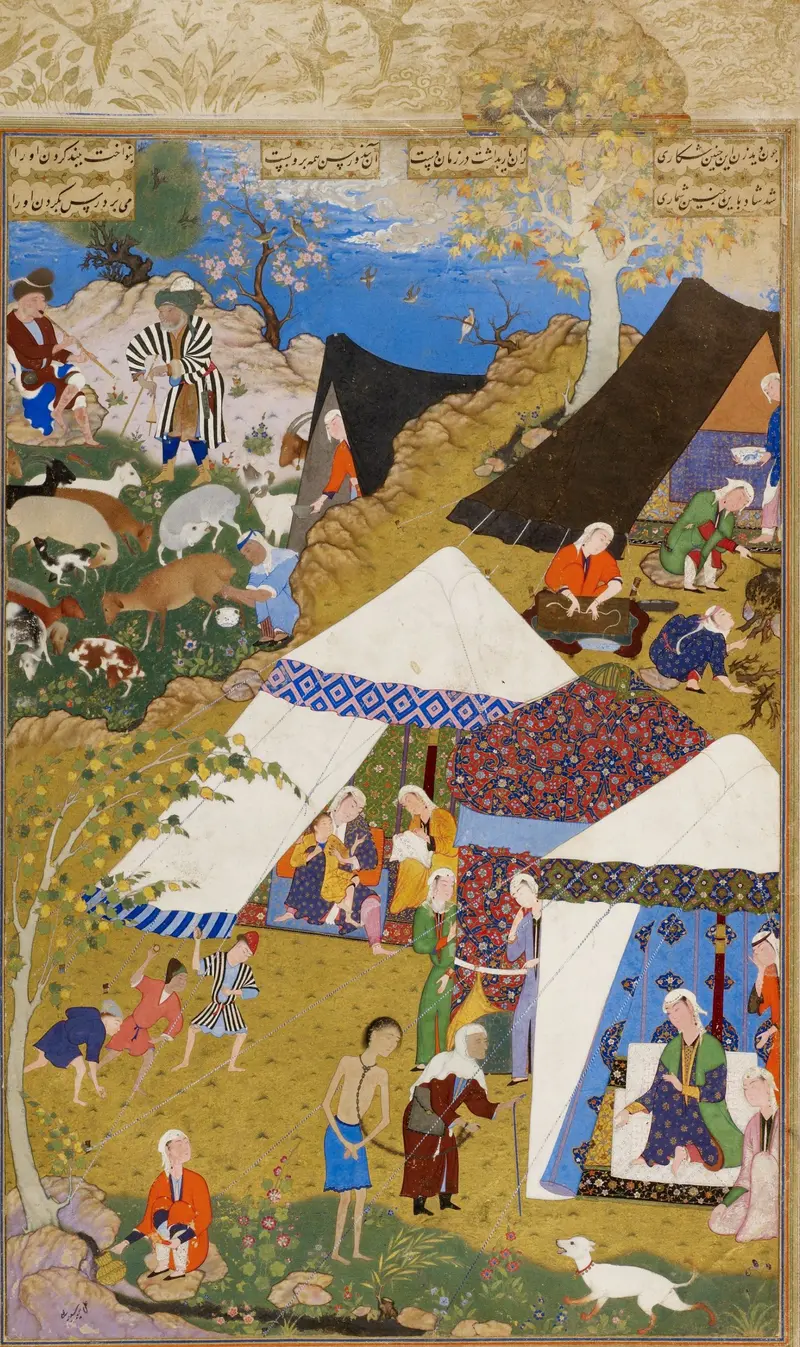 Majnun Brought in Chains to Layla's TentMir Sayyid Ali
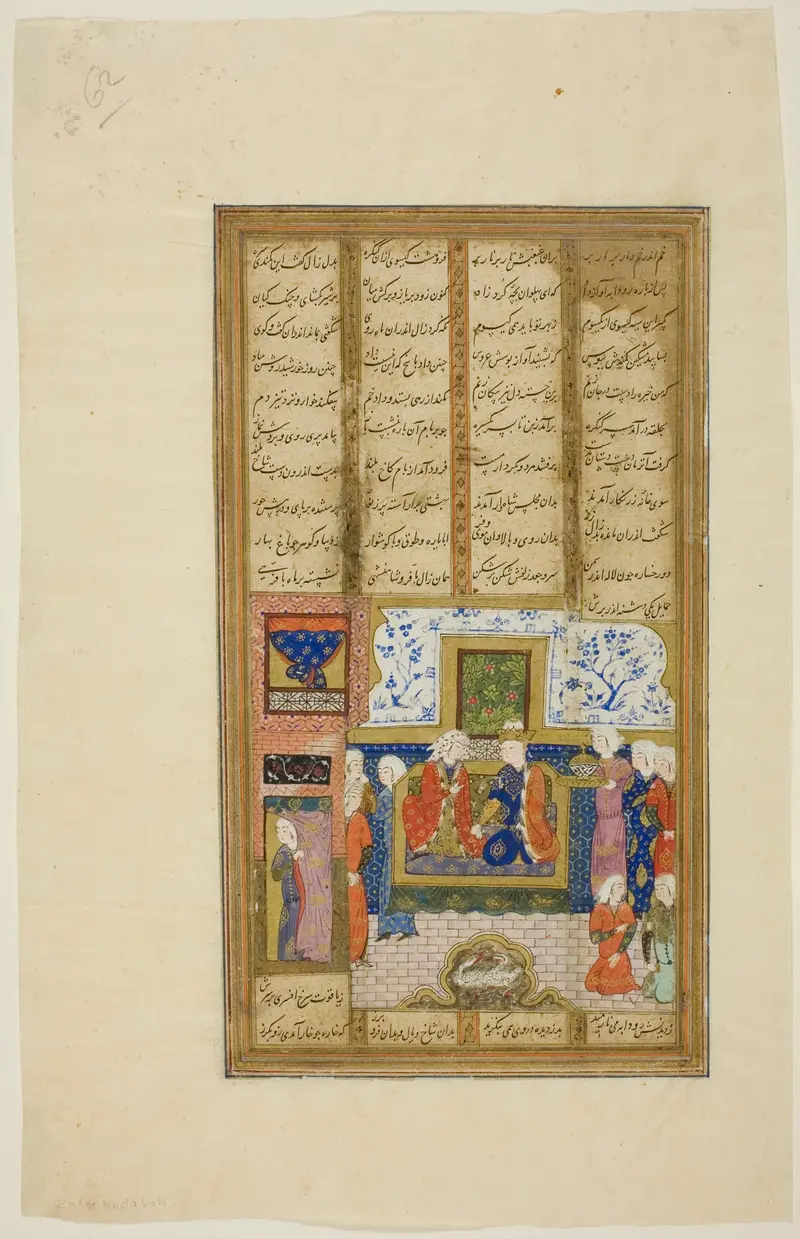 Zal and Rudaba in a PalaceUnknown painter, Iran
 Layla Visiting Majnun in the DesertUnknown painter, Iran
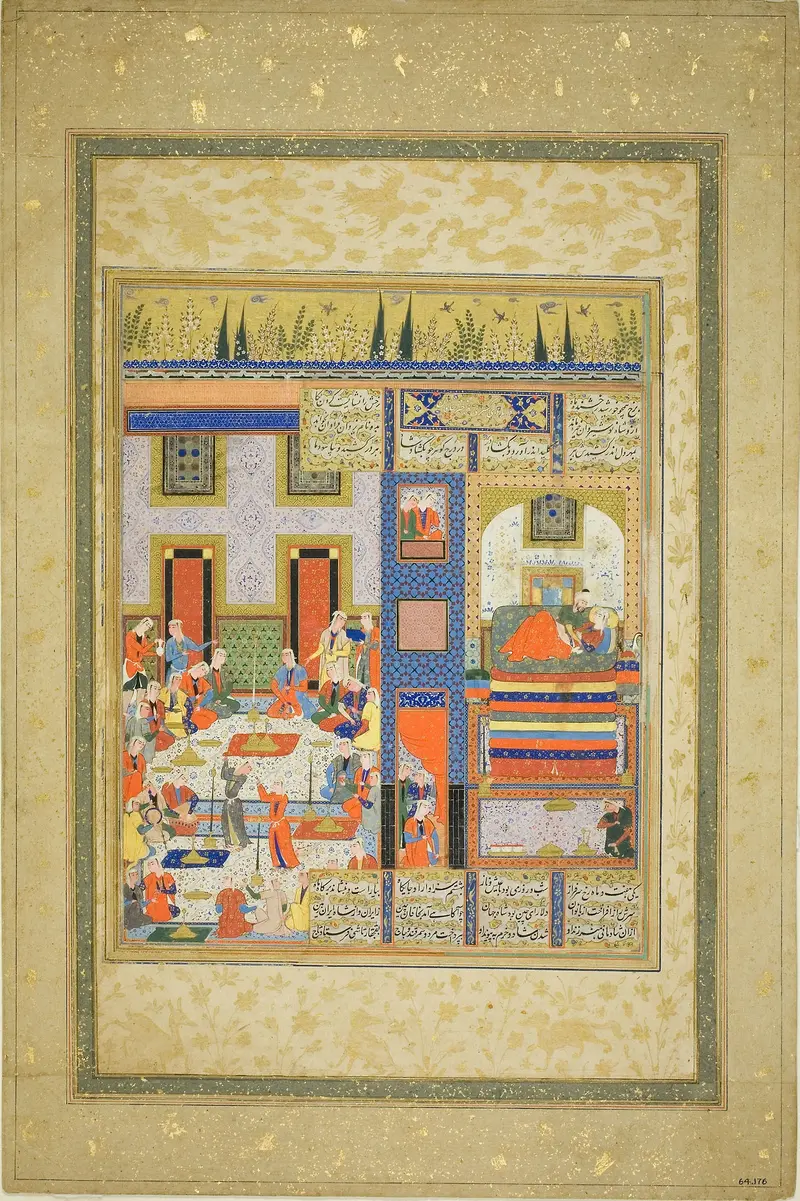 The Wedding Night of Anushirvan and the Khaqan's DaughterUnknown painter, Shiraz
 Manuchehr Kills TurUnknown painter, Shiraz
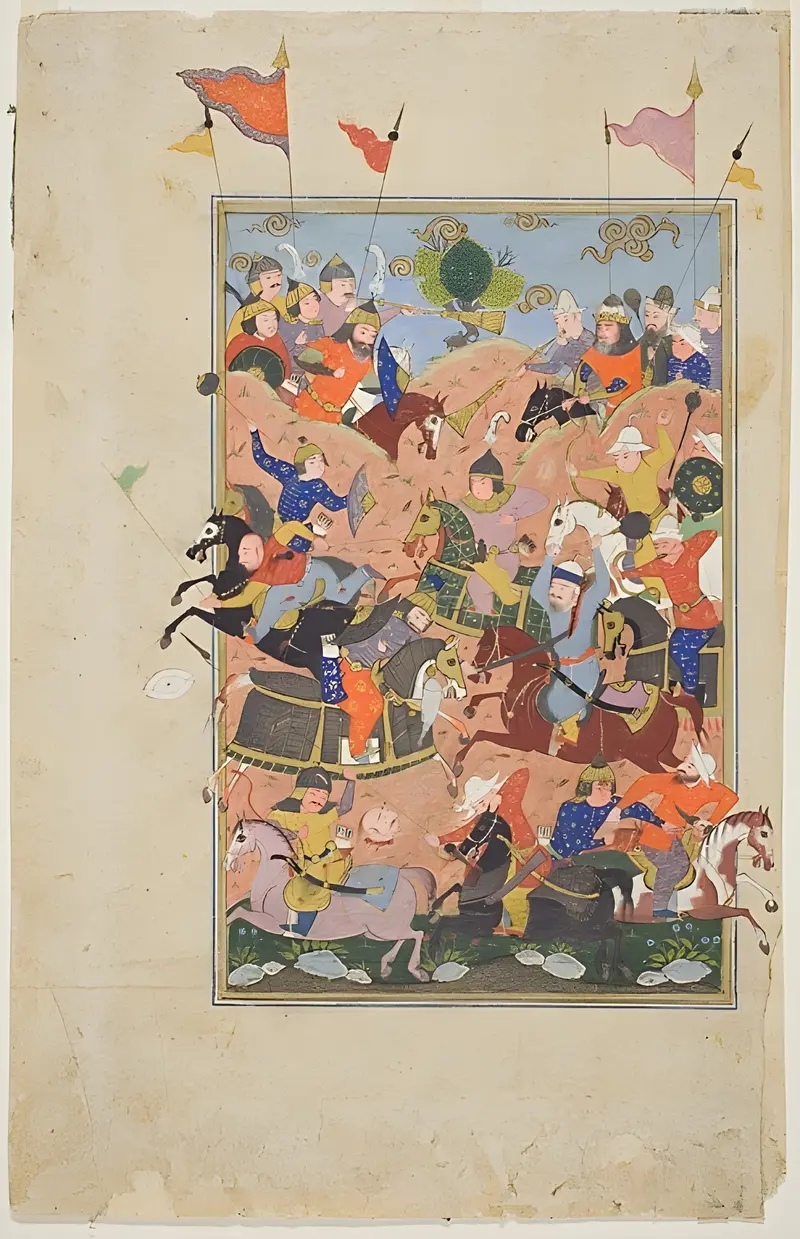 A Battle Scene from a ShahnamaUnknown painter, Iran
Islamic calligraphy and Qur'an pages
Calligraphy is the most highly regarded art of the Islamic world, the Met says, because the Qur'an was transmitted in Arabic. These pages run from an 11th-century Qur'an leaf in Eastern Kufic script to the illuminated title pages and colophons of 16th-century Persian books.
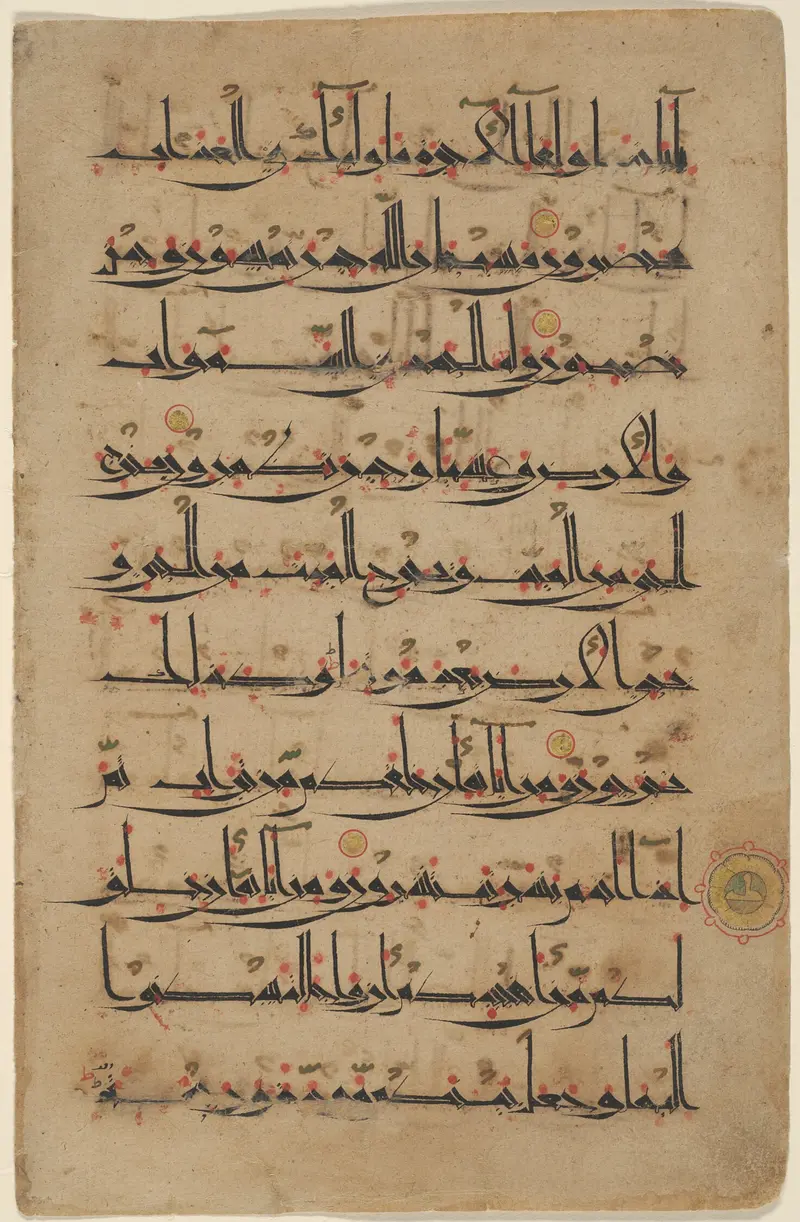 Qur'an Leaf in Eastern Kufic ScriptUnknown calligrapher, Iran
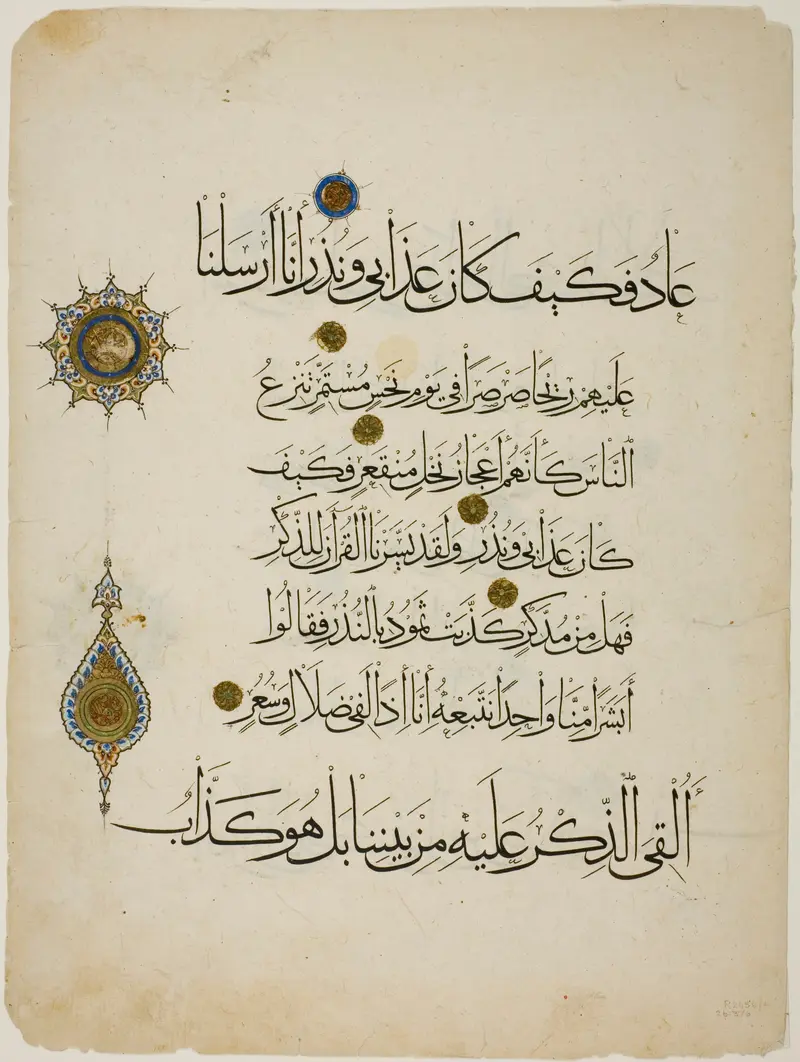 Qur'an Page in Muhaqqaq ScriptUnknown calligrapher, Iran
 Right-Hand Page from the Qur'anUnknown illuminator, Shiraz
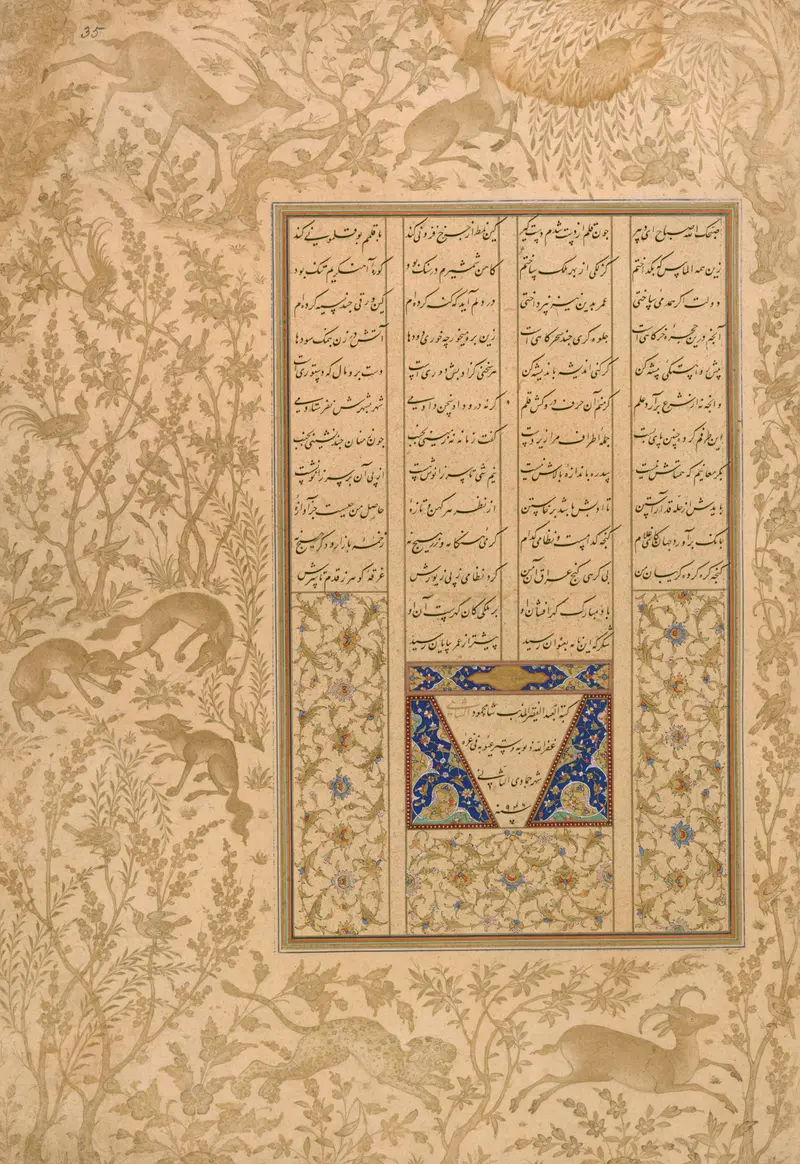 Illuminated Colophon, Shah Tahmasp's KhamsaShah Mahmud Nishapuri (calligrapher)
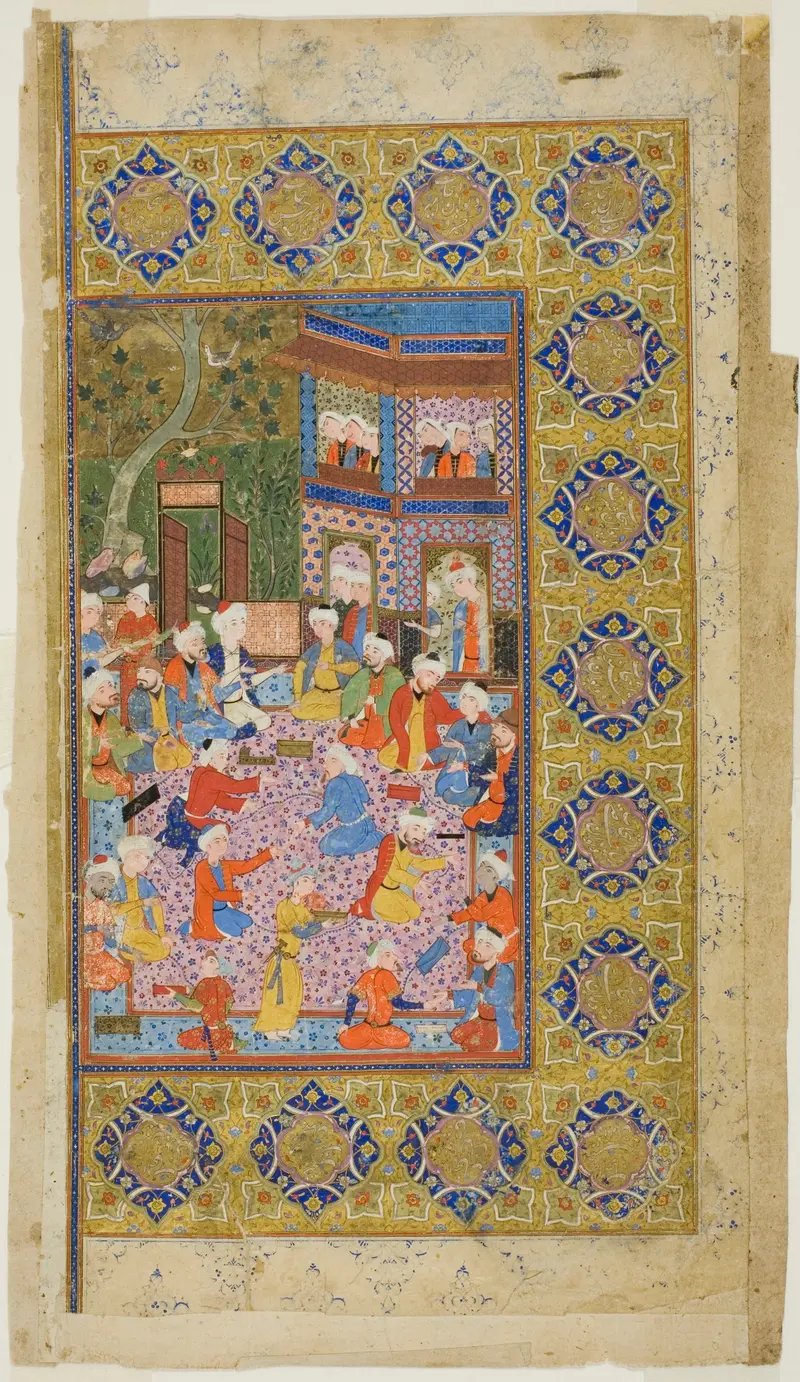
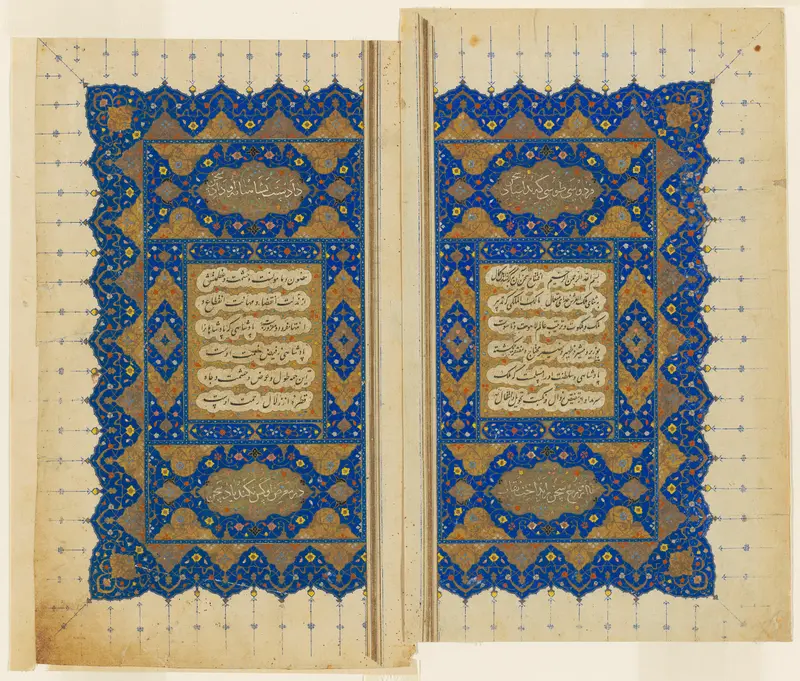 Double Title Page of a ShahnamaUnknown illuminator, Shiraz
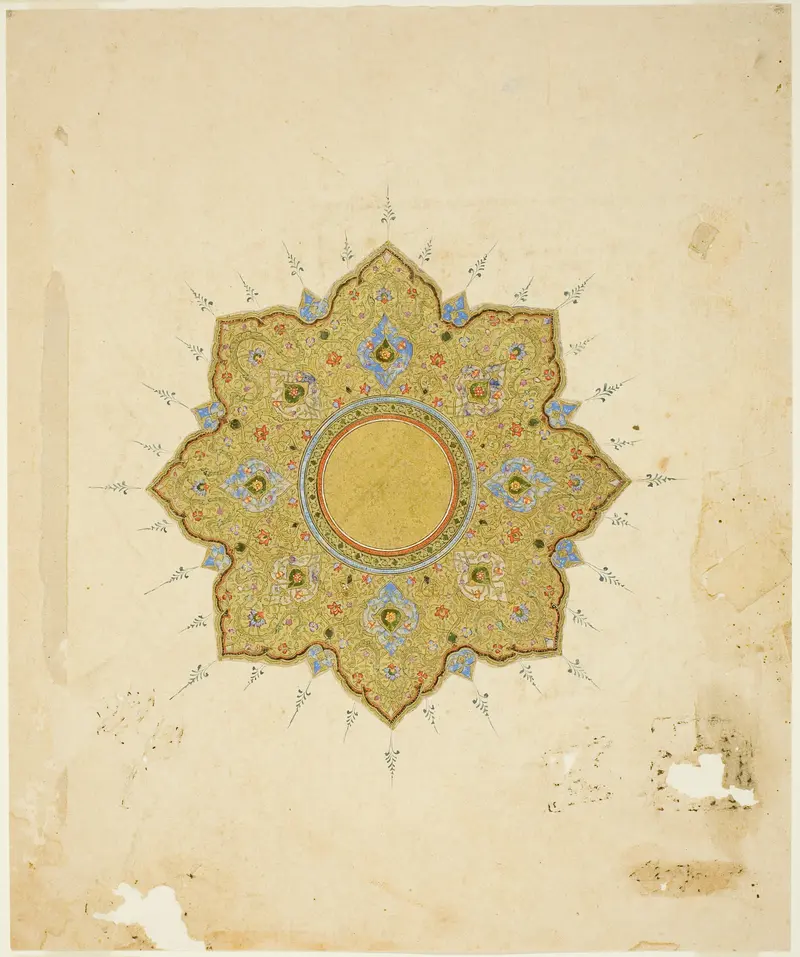 Shamsa MedallionUnknown illuminator, Iran
Islamic geometric patterns
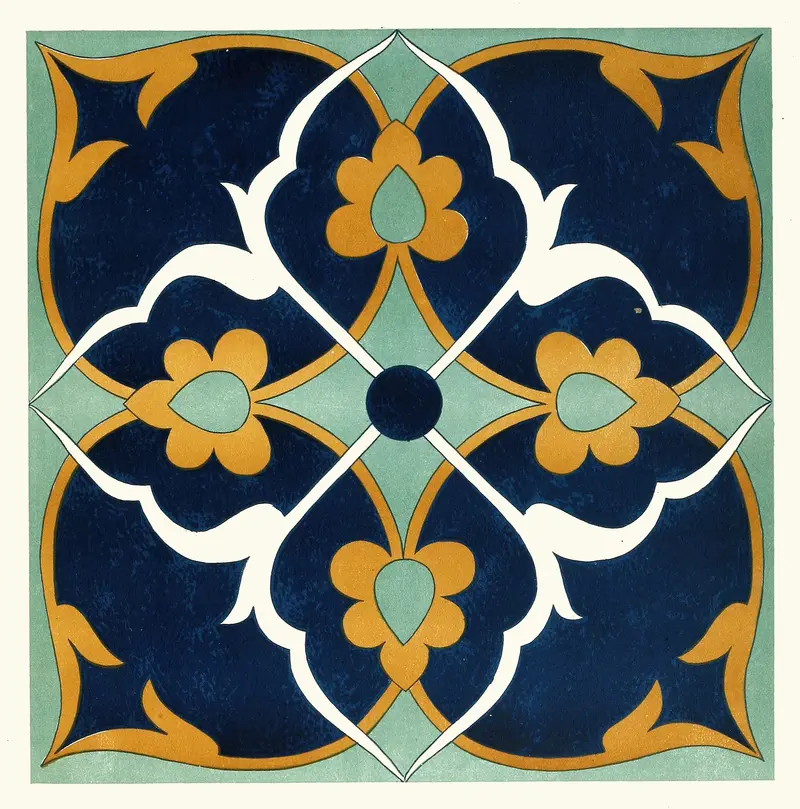
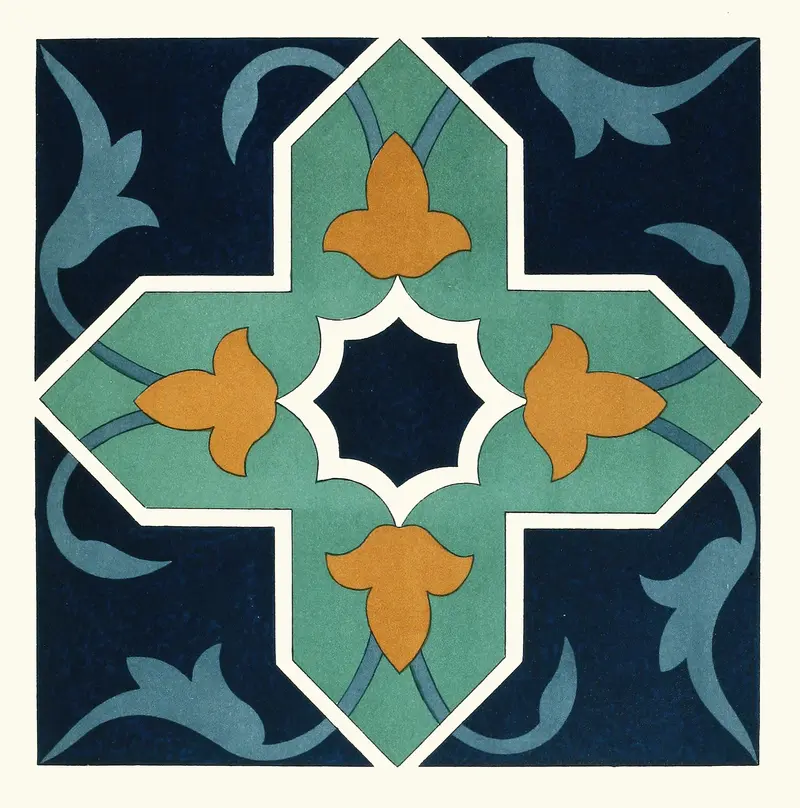
Stars, crosses and interlaced polygons repeat in these tile designs, from a set of 18 plates of ornamental tiles from the Afghan Boundary Commission, dated 1884. The Met calls such patterns, built from circles and squares that are combined, duplicated and interlaced, one of the most distinguishing features of Islamic art.
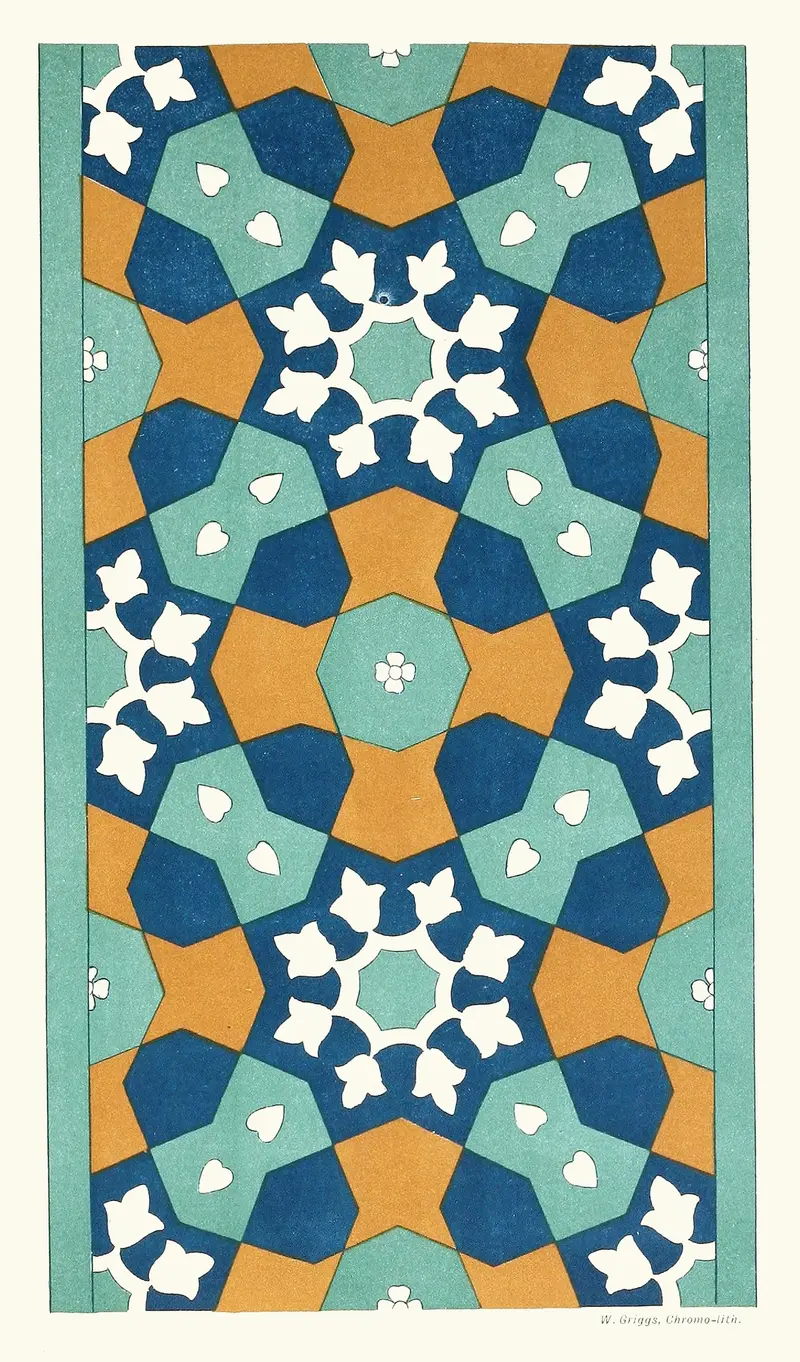 Ornamental Tiles, Plate 1Afghan Boundary Commission
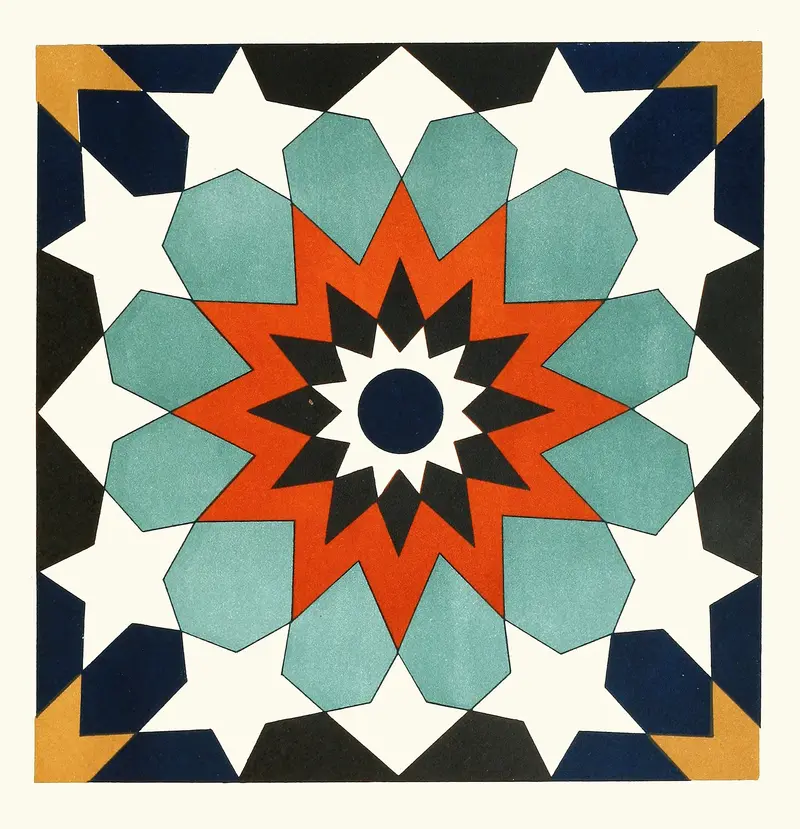 Ornamental Tiles, Plate 4Afghan Boundary Commission
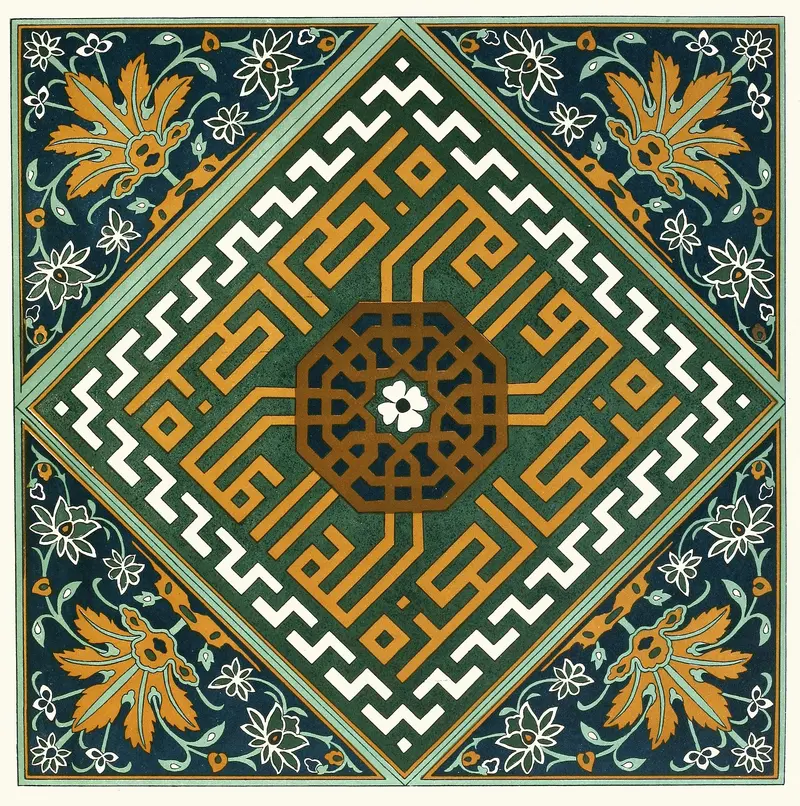 Ornamental Tiles, Plate 11Afghan Boundary Commission
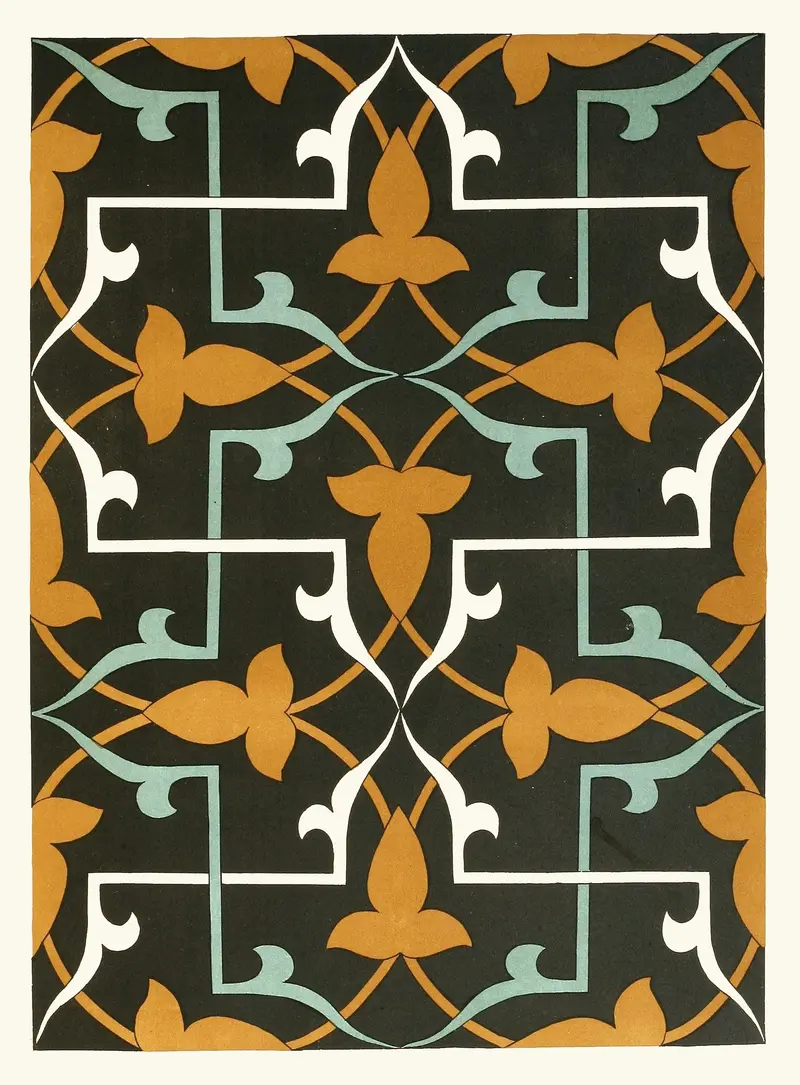 Ornamental Tiles, Plate 14Afghan Boundary Commission
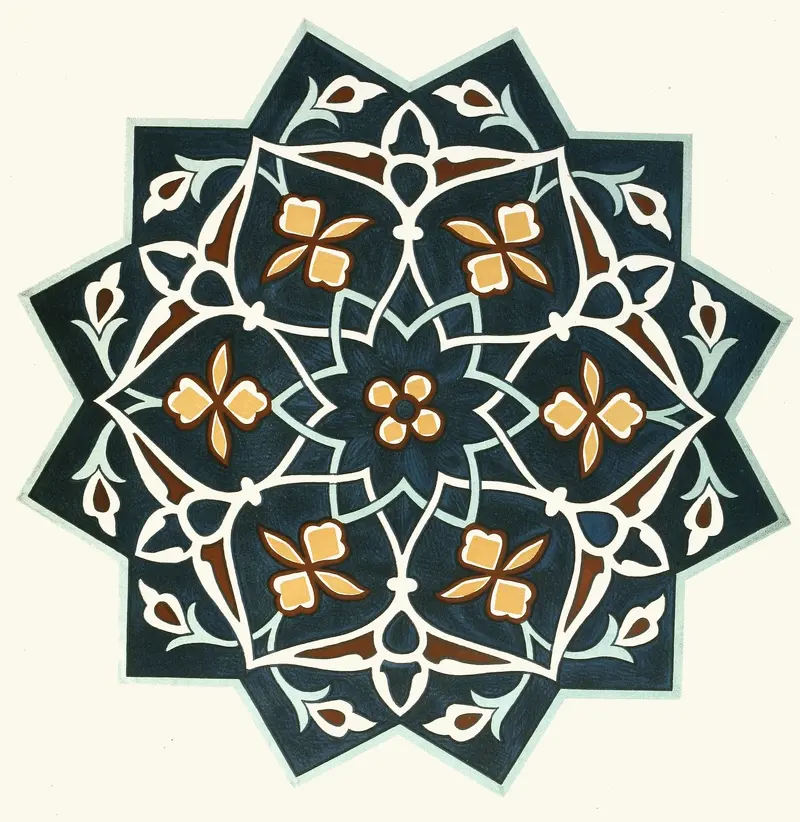 Ornamental Tiles, Plate 2Afghan Boundary Commission
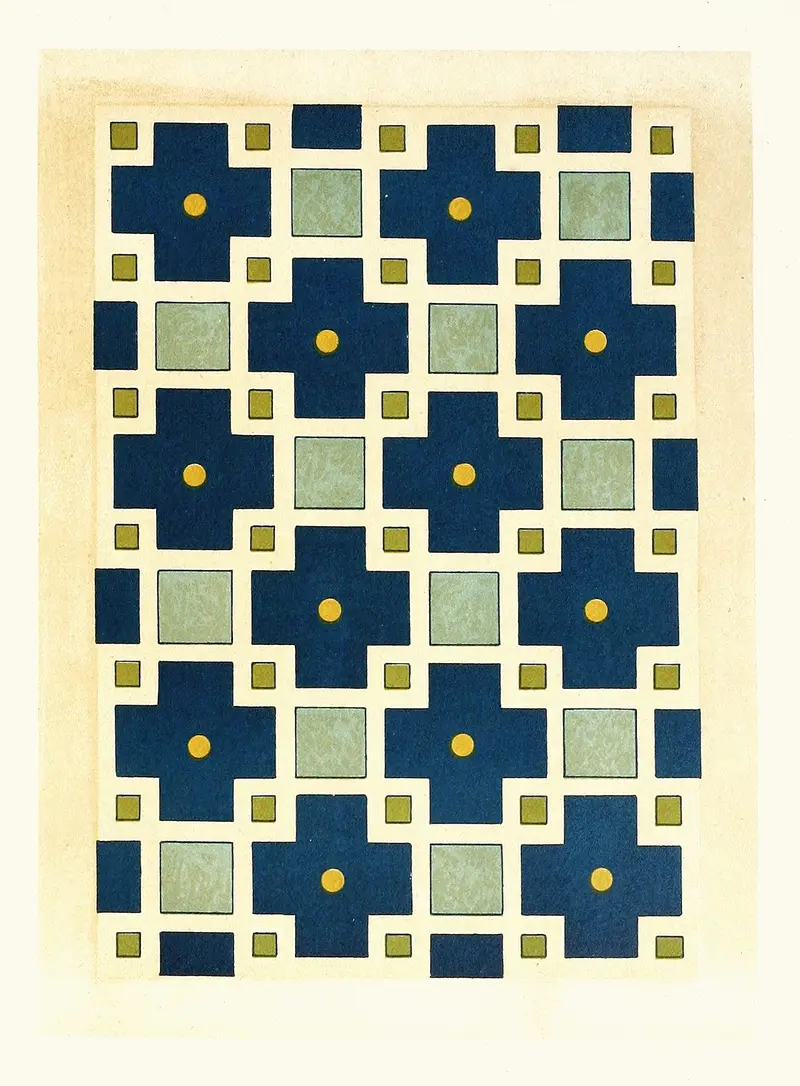 Ornamental Tiles, Plate 18Afghan Boundary Commission
Characteristics of Islamic art: how to recognize it
Calligraphy first
Bold lines of muhaqqaq script, with gold verse markers and a gold medallion in the margin, fill this Qur'an page from Iran, 13th–14th century. The Met calls calligraphy the most highly regarded element of Islamic art, because the Qur'an was transmitted in Arabic.
Qur'an Manuscript in Muhaqqaq, Islamic
Ornament that radiates and repeats
Pointed petals in gold and blue spread out from a round center in this illuminated medallion from Iran, 16th–17th century. The Met describes Islamic ornament as built from simple repeated forms, with patterns that offer the possibility of growing without end.
Shamsa Medallion, Islamic
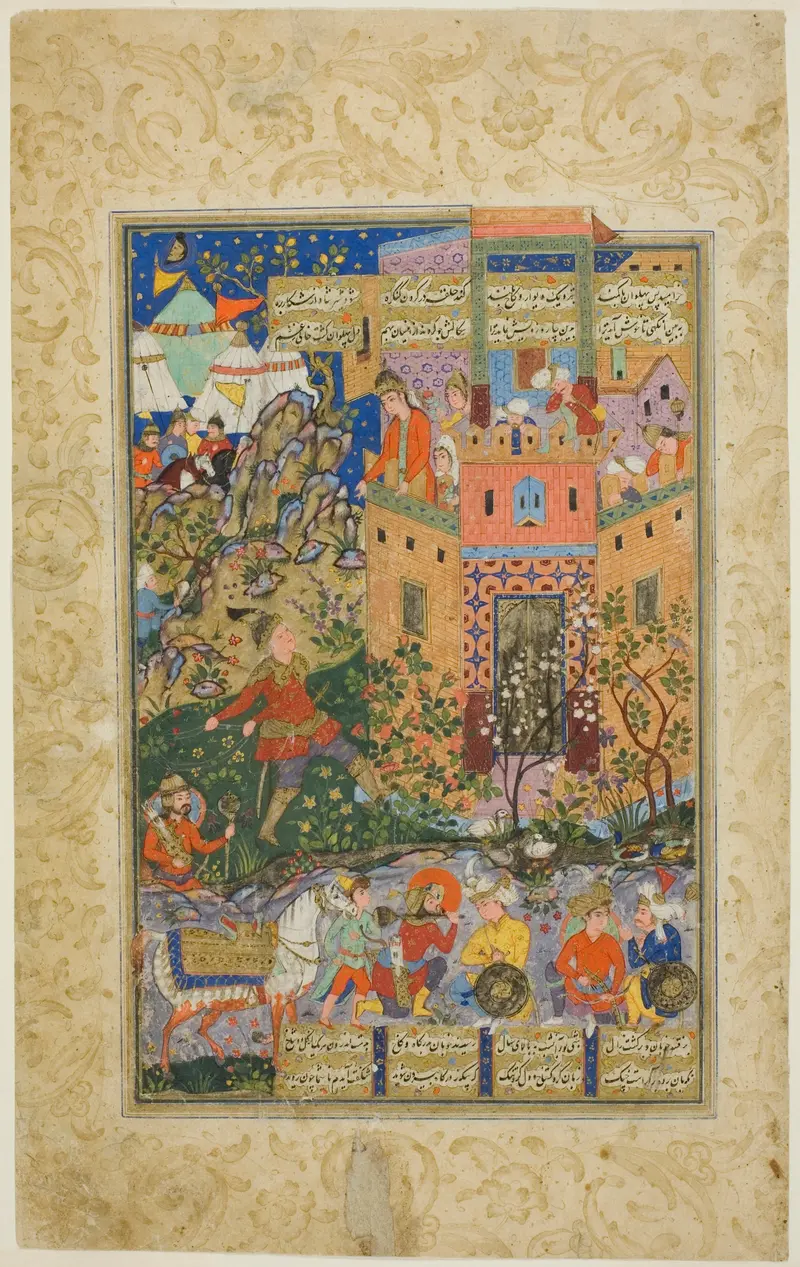
Painting set into the text
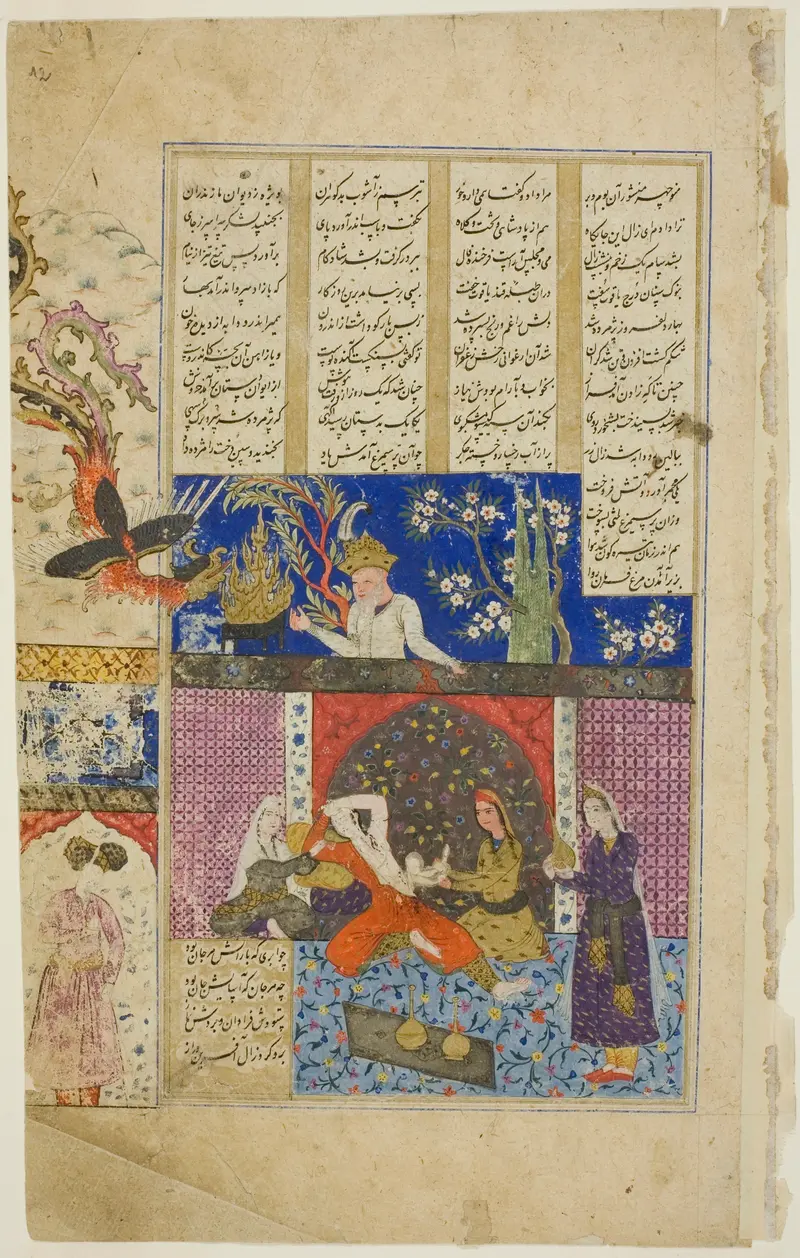
Panels of Firdausi's verses run above and below the scene on this page of a Shahnama made in Shiraz around 1580–90. The Met describes paintings in Islamic manuscripts as integral parts of the book, made as visual aids to the text.
Zal Climbing to Rudaba, page from a copy of the Shahnama of Firdausi, Islamic
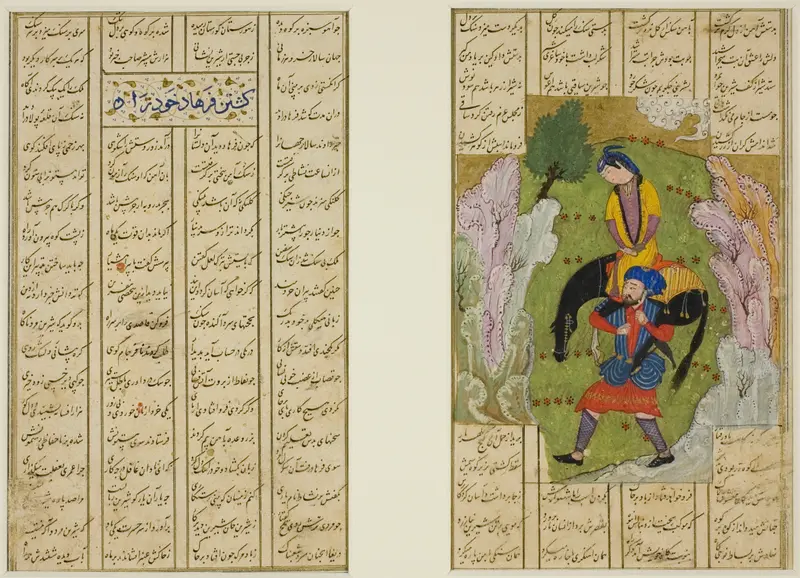
Figures for poetry, not for prayer
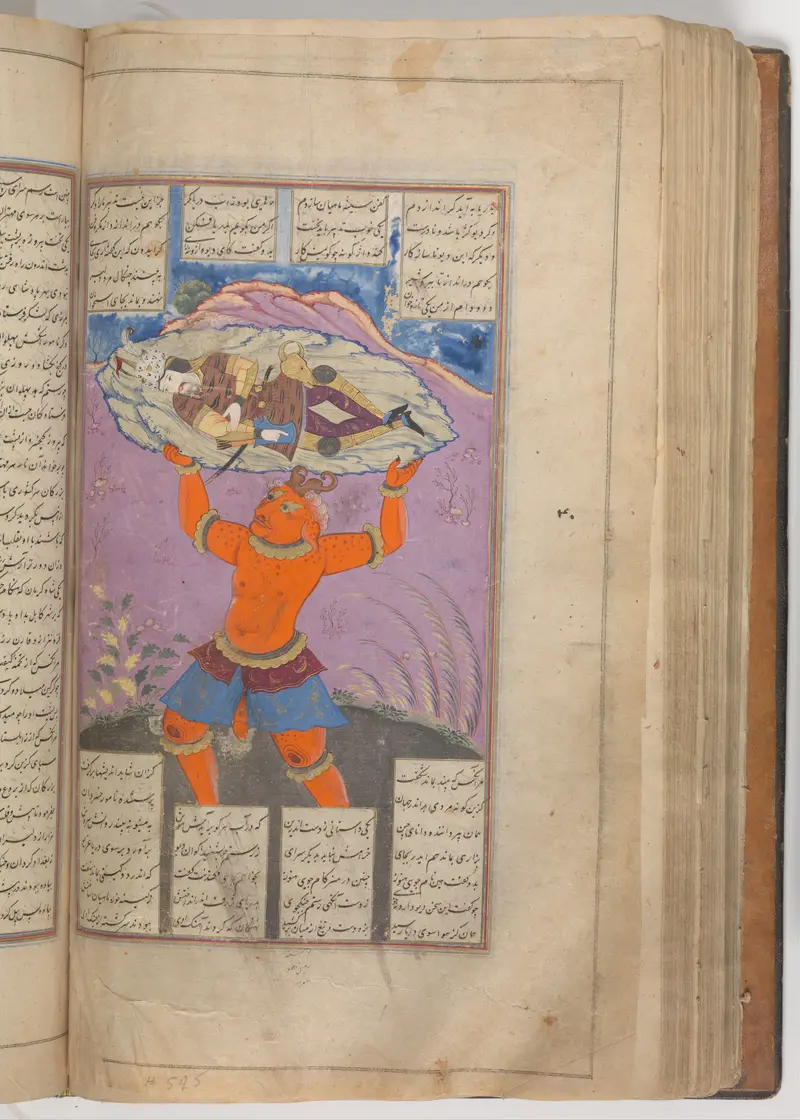
Farhad carries Shirin and her horse on his shoulders in this scene from Nizami's Khamsa, on a page dated 1485. The Met explains that the Islamic objection to images of people holds for religious art, while in books of poetry and history figures flourished.
Farhad Carrying Shirin and Her Horse, from a copy of the Khamsa of Nizami, Islamic
A painting on its own page
Riza-yi 'Abbasi painted The Lovers as a single page, not as a book illustration, in Isfahan in 1630. Under Shah 'Abbas, the Met says, single-page paintings and drawings became more popular than manuscript illustration.
The Lovers, Riza-yi 'Abbasi
Before and after Islamic art
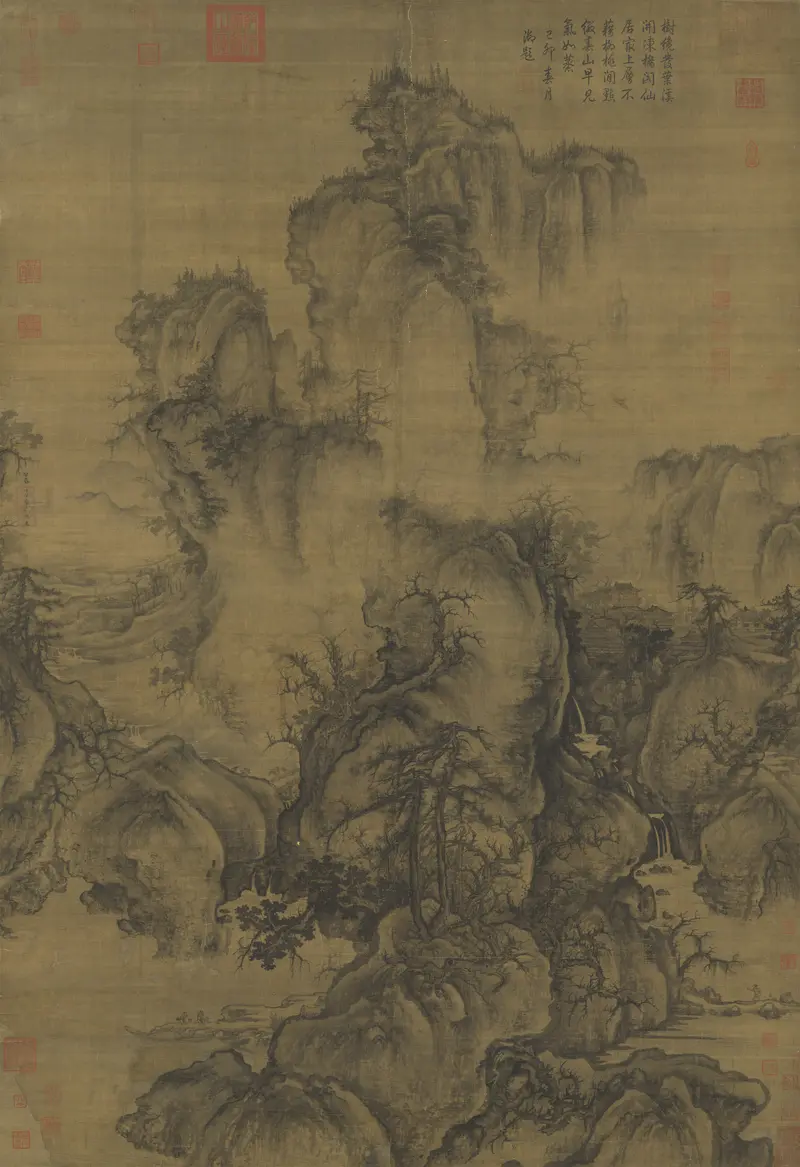 Chinese painting10th–19th century
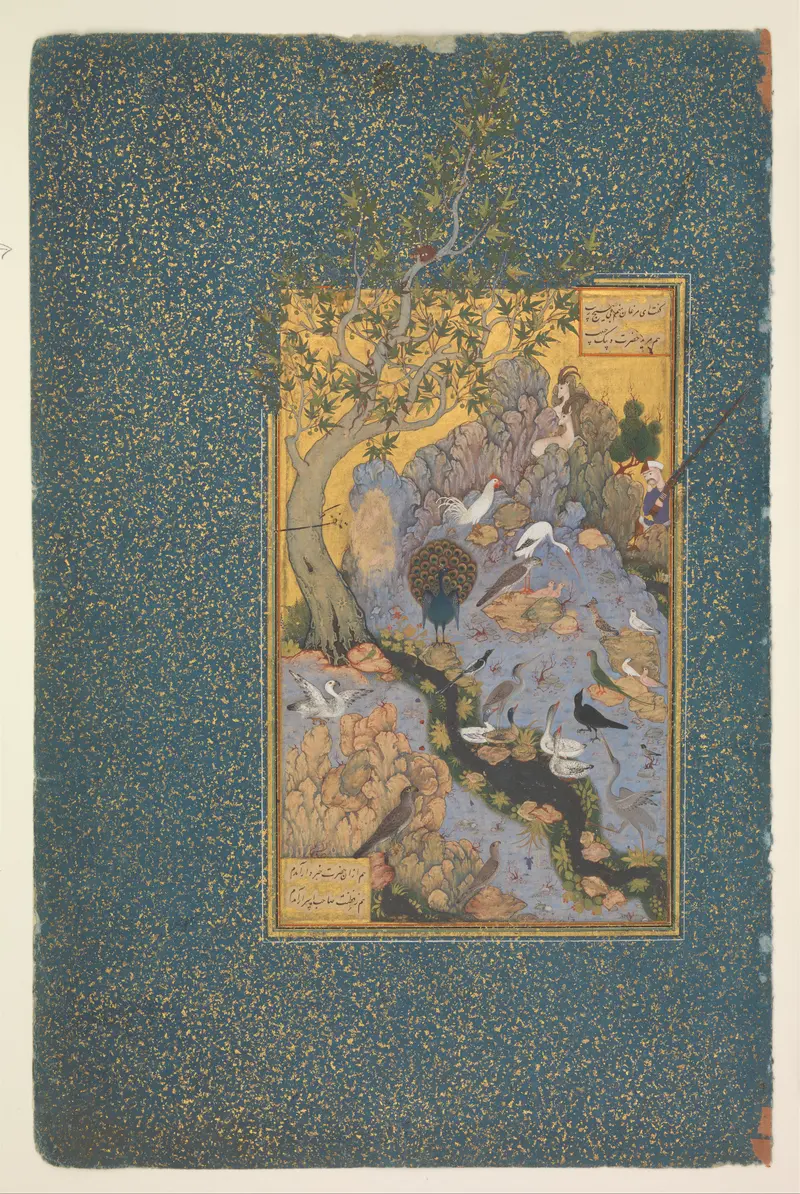 Islamic artlate 13th–17th century
 Mughal painting16th–18th century
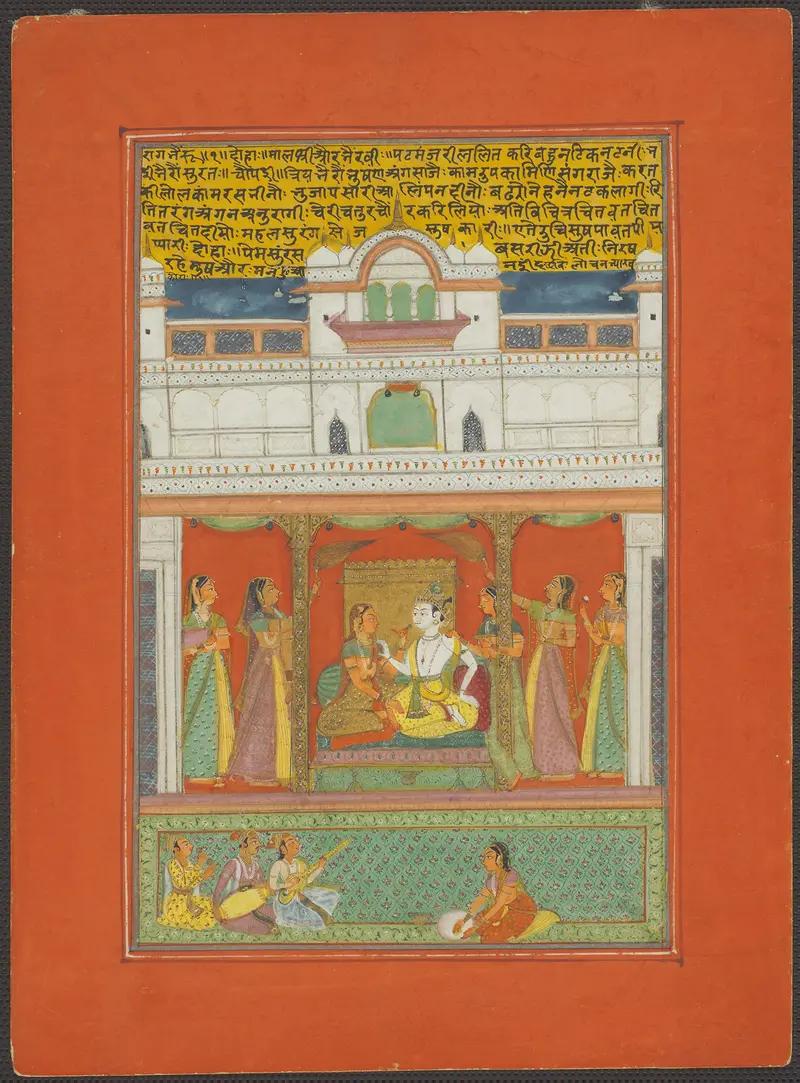 Indian painting16th–19th century
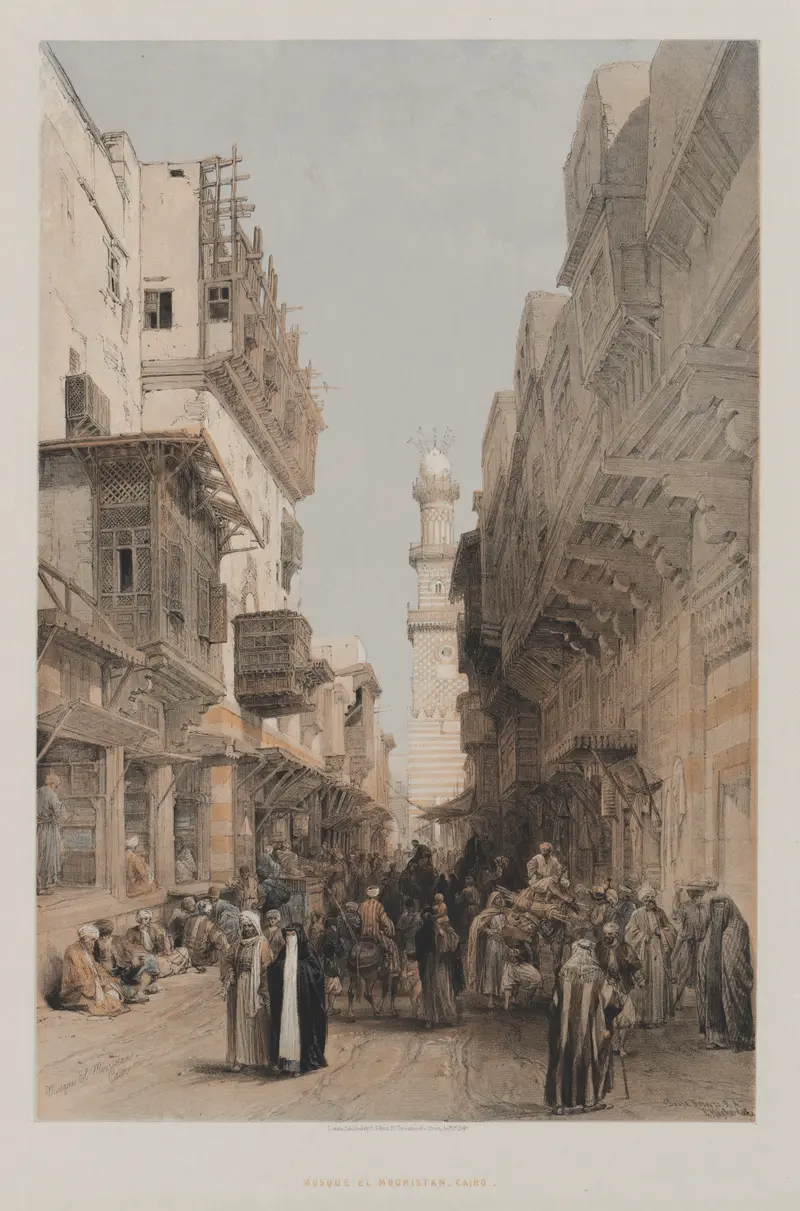
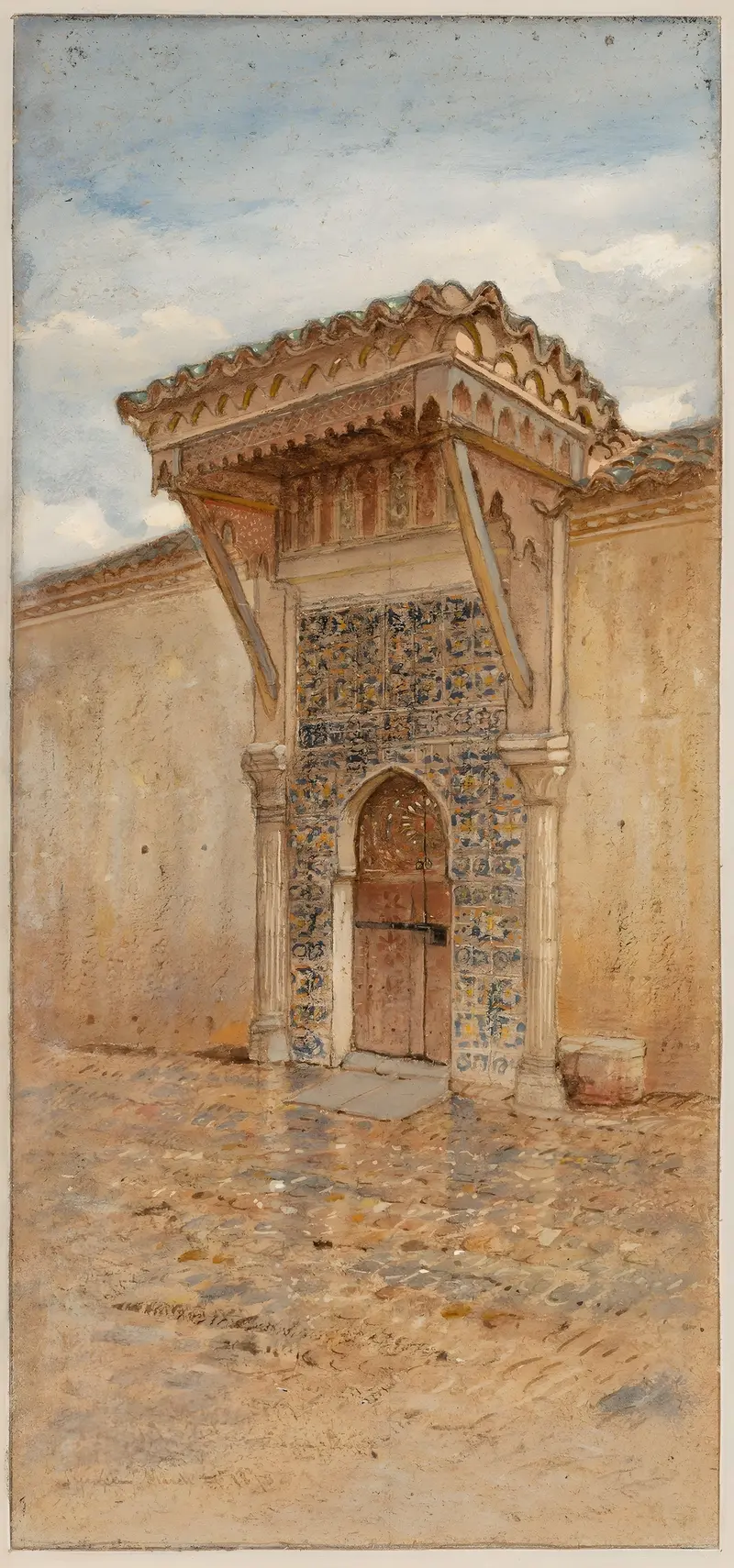
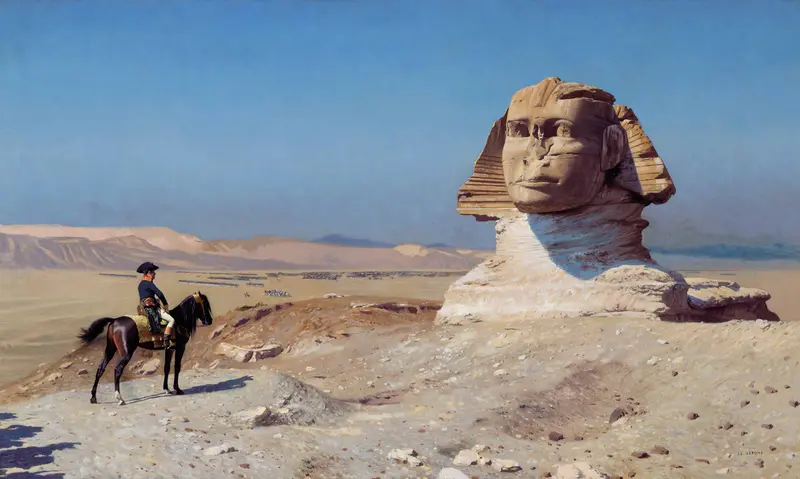 Orientalism19th century
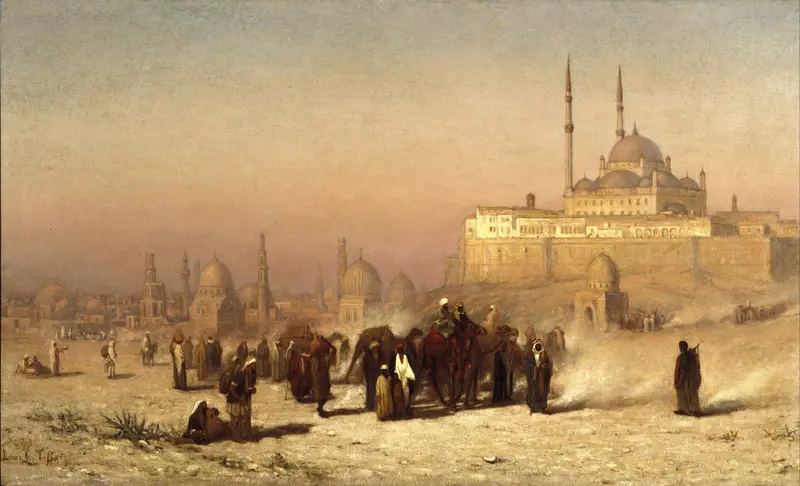
Islamic art vs Mughal painting and Orientalism
| Compared | Islamic art | Mughal painting | Orientalism |
|---|---|---|---|
| When | Late 13th–17th century (painting); from the 7th century overall | 16th–18th century | 19th century |
| Made by | Painters, calligraphers and illuminators working for courts in Iran, Central Asia and the Ottoman Empire | Persian, Indian Muslim and Hindu artists in the Mughal emperors' workshops | European painters, mostly French and British |
| Subject | Persian epics and poetry, the Qur'an, court life, single-figure studies | Court histories, imperial portraits, nature studies | Markets, mosques, deserts and imagined harems of North Africa and the Middle East |
| Look | Bright color and gold, paintings set into the written page, all-over ornament | Fine detail blending Persian, Indian and European elements | Oil paintings with intense, authentic-looking detail |
| Famous example | Sultan Muhammad, The Court of Gayumars | Abu’l Hasan, Emperor Jahangir Embraces Shah Abbas | Gérôme, Bonaparte Before the Sphinx |
| Key artists | Behzad, Sultan Muhammad, Riza-yi 'Abbasi, Nakkaş Osman | Basawan, Mansur, Abu’l Hasan, Govardhan | Gérôme, Delacroix, Lewis |
List of famous Islamic paintings and calligraphy and where to see them
The famous Islamic paintings and calligraphy: who made them, when, and where each one is today.
Show the listHide the list
| Work | Artist | Year | Medium | Size | Located in | City |
|---|---|---|---|---|---|---|
| Folio from the Blue Qur'an | Unknown calligrapher | 9th–10th century | Gold and silver on indigo-dyed parchment | 30.4 × 40.2 cm (12 × 15.8 in) | Metropolitan Museum of Art | New York |
| The Court of Gayumars | Sultan Muhammad | about 1522–1525 | Opaque watercolor, ink and gold on paper | about 48 × 32 cm (page) | Aga Khan Museum | Toronto |
| Baysonghor Shahnama: Frontispiece with a Hunting Scene | Unknown painters | 1430 | Opaque watercolor and gold on paper | 38 × 26 cm (15 × 10.2 in) (page) | Golestan Palace Library | Tehran |
| Bayad Playing the Oud before the Lady | Unknown painter | 13th century | Ink and opaque watercolor on paper | Vatican Library | Vatican City | |
| The Funeral of Isfandiyar | Unknown painter | 1330s | Ink, opaque watercolor and gold on paper | 58 × 40 cm (22.8 × 15.7 in) (page) | Metropolitan Museum of Art | New York |
| Hünername: The Circumcision Festival of 1530 | Nakkaş Osman | 1580s | Opaque watercolor and gold on paper | Topkapı Palace Museum | Istanbul | |
| The Lovers | Riza-yi 'Abbasi | 1630 | Opaque watercolor, ink and gold on paper | 17.5 × 11.1 cm (6.9 × 4.4 in) | Metropolitan Museum of Art | New York |
| Battle on the River Oxus | Unknown painter | about 1480 | Opaque watercolor and gold on paper | Johns Hopkins University Library | Baltimore | |
| Calligraphic Galleon | 'Abd al-Qadir Hisari | 1766–67 | Ink and gold on paper | 48.3 × 43.2 cm (19 × 17 in) | Metropolitan Museum of Art | New York |
| Bifolium from the Nurse's Qur'an | Unknown calligrapher | about 1019–20 | Ink, opaque watercolor and gold on parchment | 44.5 × 60 cm (17.5 × 23.6 in) | Metropolitan Museum of Art | New York |
| Maqamat of al-Hariri: Discussion near a Village | Yahya ibn Mahmud al-Wasiti | 1237 | Opaque watercolor and gold on paper | Bibliothèque nationale de France | Paris | |
| Allegory of Worldly and Otherworldly Drunkenness | Sultan Muhammad | about 1531–33 | Opaque watercolor, ink and gold on paper | 28.9 × 18.1 cm (11.4 × 7.1 in) (page) | Metropolitan Museum of Art | New York |
| The Seduction of Yusuf | Behzad | 1488 | Opaque watercolor, ink and gold on paper | Egyptian National Library | Cairo | |
| The Enthronement of Khusraw | Aqa Mirak | 1539–43 | Opaque watercolor, ink and gold on paper | 36.8 × 25.4 cm (14.5 × 10 in) (page) | British Library | London |
| Majnun in the Wilderness | Aqa Mirak | 1539–43 | Opaque watercolor, ink and gold on paper | 36.8 × 25.4 cm (14.5 × 10 in) (page) | British Library | London |
Islamic art: questions and answers
What is Islamic art, and what does the term mean?
Islamic art is the art of the lands ruled by Muslims, made for Muslim patrons or by Muslim artists, from the 7th century on. The Met stresses that the term covers not only art made for the faith, such as a mosque and its furnishings, but the art and architecture of those lands as a whole; the Getty's art vocabulary lists "Muslim" as another name for the style. The V&A's collection runs from the 7th to the early 20th century, chiefly from Iran, Turkey, Egypt, Iraq, Syria and North Africa.
Sources: The Met: The Nature of Islamic Art · Getty AAT: Islamic (culture or style) · Victoria and Albert Museum: Islamic Middle East collection
What are the characteristics of Islamic art?
The most salient characteristic of Islamic art, the Met says, is decoration that covers the whole surface, built from four elements: calligraphy, plant (vegetal) patterns, geometric patterns and figures. The four are often combined on one page, tile or carpet. In painting, the pages of Persian books add bright color and gold, and the scenes are set into the written text as parts of the book.
Sources: The Met: The Nature of Islamic Art · The Met: The Shahnama of Shah Tahmasp · The Met: Figural Representation in Islamic Art
Does Islamic art show people?
Yes, outside religious art. The Met explains that the often-cited Islamic opposition to images of people and animals holds for religious art and architecture, while figures flourished in secular art in nearly all Islamic cultures; in illustrated books, paintings were visual aids to the text and no restrictions were imposed. In Islamic religious art made for mosques, the V&A notes, artists usually leave out people and animals and turn to color, pattern, geometry and plants. Some Persian and Ottoman manuscripts also illustrate the life of the Prophet Muhammad, such as his Ascent to heaven in Shah Tahmasp's Khamsa.
Sources: The Met: Figural Representation in Islamic Art · Victoria and Albert Museum: Design and make your own Islamic tile (family activity) · British Library: Or 2265, Shah Tahmasp's Khamsah of Nizami
What is a Persian or Islamic miniature?
Islamic miniatures are paintings made for books, and later also as single pages; Persian miniatures were painted for books of Persian poetry and history. The Met traces their rise to the late 1200s, when the Mongol rulers of Iran gave new impetus to illustrated books and their painters absorbed influences from Chinese scrolls. Herat under the Timurids in the 1400s is often regarded as the high point of Persian painting, and under Shah 'Abbas (ruled 1587–1629) single-page paintings became more popular than manuscript illustration.
Sources: The Met: The Art of the Book in the Ilkhanid Period · The Met: The Art of the Timurid Period (ca. 1370–1507) · The Met: The Art of the Safavids before 1600
Why is calligraphy so important in Islamic art?
The Met calls calligraphy the most highly regarded and most fundamental element of Islamic art, because the Qur'an, the book of God's revelations to the Prophet Muhammad, was transmitted in Arabic, and the Arabic script lends itself to many ornamental forms. Leaves of the Blue Qur'an, written in gold on blue-dyed parchment in the 9th or 10th century, are among the Met's examples. Not all calligraphy is religious, the V&A adds: inscriptions also carry poems, praise for rulers and aphorisms.
Sources: The Met: Calligraphy in Islamic Art · Metropolitan Museum of Art: Folio from the Blue Qur'an · Victoria and Albert Museum: Calligraphy in Islamic art
What are Islamic geometric patterns?
Islamic geometric patterns are designs built from simple shapes, the circle and the square, which are repeated, interlaced and combined into stars and polygons. The Met names four basic repeat units, circles, squares, the star pattern and multi-sided polygons, and notes that such patterns can in principle grow without end. Islamic artists took the shapes from late antique Greek, Roman and Sasanian art and elaborated them, helped by the work of Islamic mathematicians, astronomers and scientists; because they show no living beings, they are popularly linked with Islamic art.
Sources: The Met: Geometric Patterns in Islamic Art · Victoria and Albert Museum: Design and make your own Islamic tile (family activity)
What is an arabesque?
Arabesque is the European name for the scrolling plant patterns of Islamic art. The Met explains that a highly abstract, fully developed version of this style emerged in the 10th to 12th centuries, and that the word, French for "in the Arab fashion", was coined in the early 19th century after Napoleon's expedition to Egypt; few scholars of Islamic art use it today. Apart from the garden, with its reference to paradise, these plant motifs are largely without symbolic meaning.
What is the Shahnama (Shahnameh, Book of Kings)?
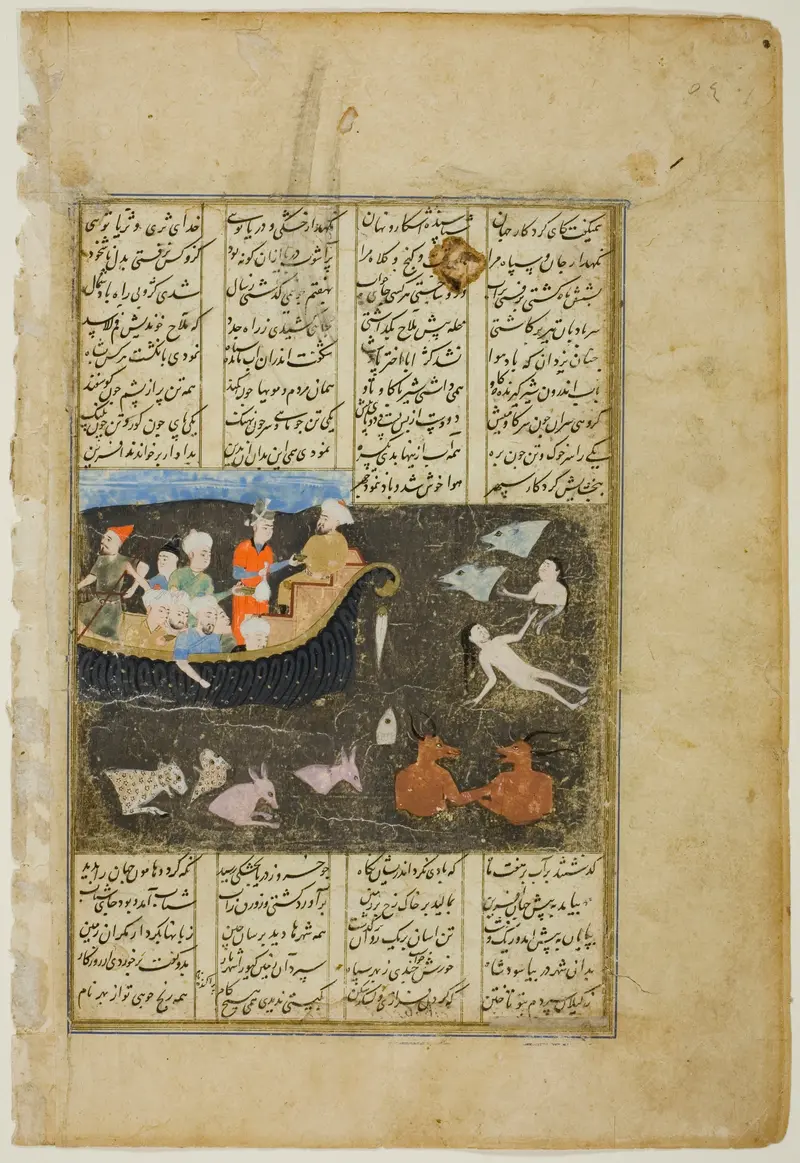
The Shahnama is the great Persian epic: about 50,000 rhyming couplets completed by the poet Firdausi around 1010, telling the history of Iran's kings from mythical times to the Arab conquest of 651, the Met explains. Rulers of Iran kept commissioning illustrated copies, among them the Great Mongol Shahnama of the 1330s, the Baysonghor Shahnama of 1430 and the Shahnama of Shah Tahmasp, begun in the early 1520s, whose 759 folios hold 258 paintings. Pages from all three are in our collection.
Sources: The Met: The Shahnama of Shah Tahmasp · The Met: The Art of the Book in the Ilkhanid Period · UNESCO Memory of the World: Bayasanghori Shâhnâmeh (Prince Bayasanghor's Book of the Kings)
Who were the great painters of Islamic art?
The great painters of Islamic art include al-Wasiti, Behzad, Sultan Muhammad, Aqa Mirak, Riza-yi 'Abbasi and Nakkaş Osman. Al-Wasiti painted a Maqamat of al-Hariri dated 1237. In Herat, Behzad painted for the Timurid sultan Husayn Bayqara, as in a Bustan of Sa'di of 1488. The Met names Sultan Muhammad, Mir Musavvir and Aqa Mirak among the most renowned artists of Shah Tahmasp's workshop in Tabriz. In Isfahan, Riza-yi 'Abbasi painted single pages such as The Lovers (1630), and at the Ottoman court Nakkaş Osman illustrated the Hünername.
Sources: The Met: The Shahnama of Shah Tahmasp · Metropolitan Museum of Art: The Lovers · British Library: Or 6810, Khamsah of Nizami (Herat, 1494–95) · Wikimedia Commons: Yusuf fleeing the advances of Zulaikha, by Bihzad (file record) · Wikimedia Commons: Maqamat of al-Hariri, painting by al-Wasiti (file record) · Wikimedia Commons: Hünername II, folio 103b (file record)


What is the difference between Persian and Mughal miniatures?
Persian miniatures were painted for courts in Iran and Central Asia; Mughal miniatures for the Mughal emperors in India from the later 1500s. The Met explains that Akbar (ruled 1556–1605) gathered Persians, Indian Muslims and Hindus in his workshop, and that their collaboration created a specifically Mughal style with Persian, Indian and even European elements, refined under Jahangir and Shah Jahan. Mughal painting has its own page: Mughal painting.
What is Islamic religious art?
Islamic religious art is the art made for the faith: copies of the Qur'an, and mosques with their furnishings. Because the Qur'an was transmitted in Arabic, the Met calls calligraphy the most highly regarded element of Islamic art, and it notes that the objection to images of people and animals holds for religious art and architecture. Qur'ans and mosques are therefore decorated with script, geometric patterns and plant scrolls rather than figures. Leaves of the Blue Qur'an and the Nurse's Qur'an in our collection are examples.
Sources: The Met: The Nature of Islamic Art · The Met: Calligraphy in Islamic Art · The Met: Figural Representation in Islamic Art · Metropolitan Museum of Art: Folio from the Blue Qur'an
When did Islamic art begin?
Islamic art began in the 7th century, as Islam spread from the Arabian Peninsula. At first, the Met explains, artists who had worked for Byzantine or Sasanian patrons kept their own styles while working for Muslim patrons, and the Umayyad caliphate (661–750) is often considered the formative period; even the Dome of the Rock in Jerusalem mixes Greco-Roman, Byzantine and Sasanian elements. The Met orders Islamic art by ruling dynasty, from the Umayyads and Abbasids to the Safavids, Ottomans and Mughals.
Sources: The Met: The Nature of Islamic Art · The Met: Figural Representation in Islamic Art
Where can you see Islamic art?
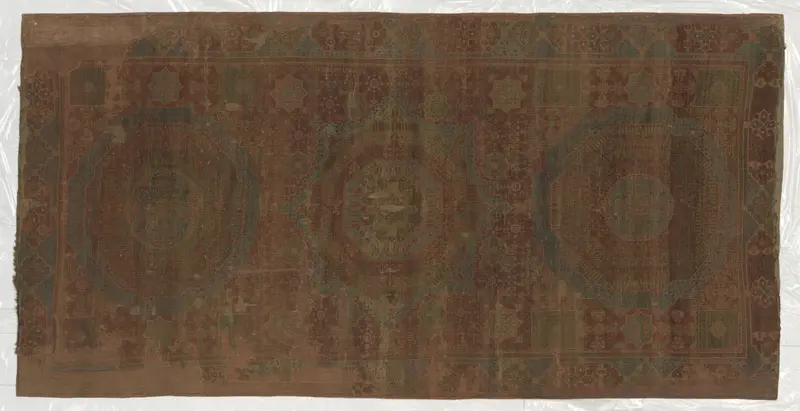
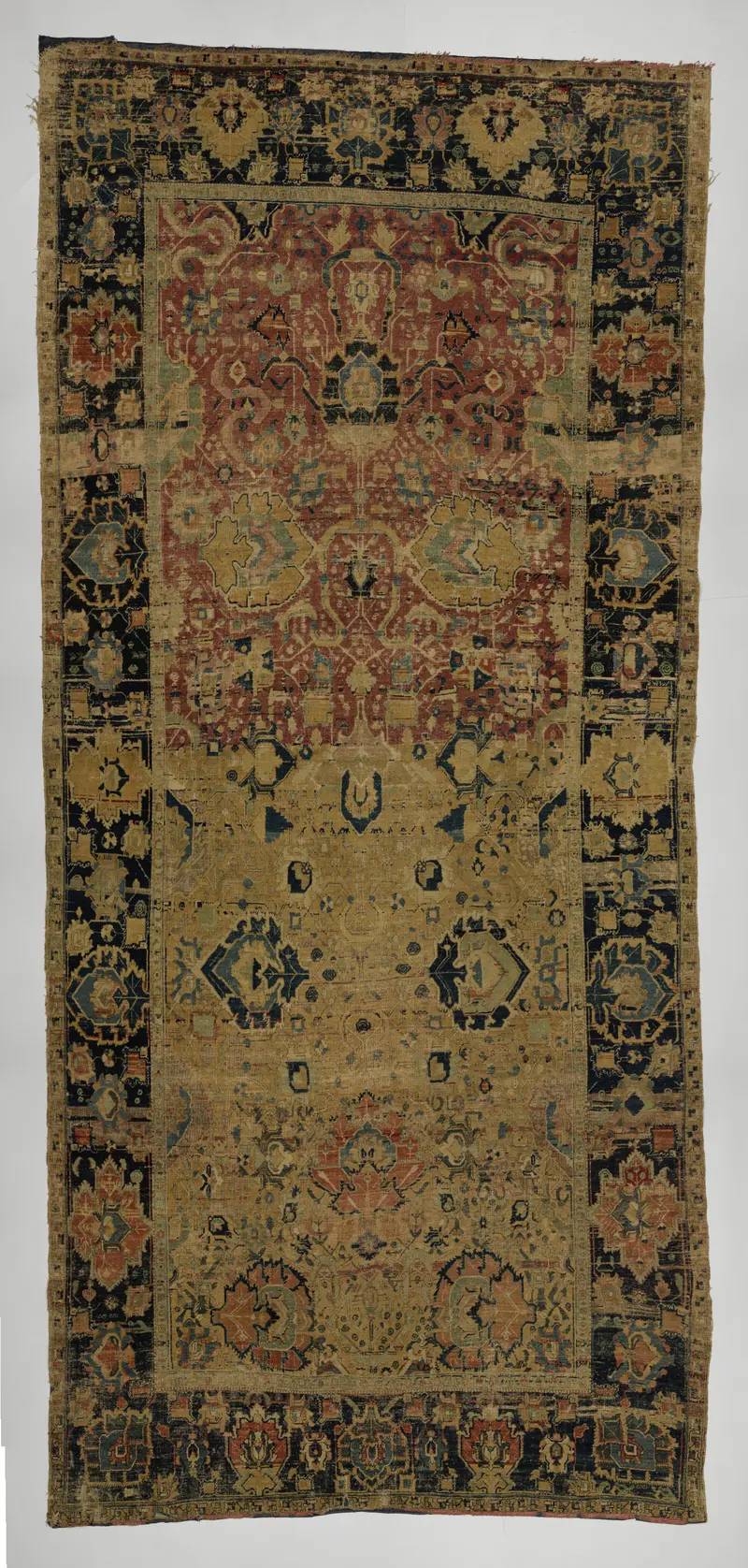
The Metropolitan Museum of Art in New York owns 78 painted pages from the Shahnama of Shah Tahmasp and leaves of the Blue Qur'an and the Nurse's Qur'an. The V&A in London holds over 19,000 items from the Middle East and North Africa, among them the Ardabil Carpet of 1539–40, the world's oldest dated carpet. The British Library keeps Shah Tahmasp's copy of Nizami's Khamsa, and the Golestan Palace in Tehran the Baysonghor Shahnama of 1430.
Sources: The Met: The Shahnama of Shah Tahmasp · Metropolitan Museum of Art: Folio from the Blue Qur'an · Metropolitan Museum of Art: Bifolium from the Nurse's Qur'an · Victoria and Albert Museum: Islamic Middle East collection · Victoria and Albert Museum: The Ardabil Carpet · British Library: Or 2265, Shah Tahmasp's Khamsah of Nizami · UNESCO Memory of the World: Bayasanghori Shâhnâmeh (Prince Bayasanghor's Book of the Kings)
Is Islamic art in the public domain, and can I download it free?
Yes, for historical works. The famous paintings and Qur'an pages in our collection were made between the 9th and the 18th century, and their makers died centuries ago, so they are in the public domain in the United States and in countries where copyright ends 70 years after the artist's death. You can download them free and use them for anything, including commercial projects; a few countries have their own rules on photographs of artworks, so check them if you publish outside the U.S.
Sources: Cornell University Library: Copyright Term and the Public Domain
How we chose the famous paintings and calligraphy
The famous paintings and calligraphy on this page are the works of Islamic art in our collection that have an encyclopedia entry in at least two languages, checked in November 2026. Most of them are pages from great manuscripts, such as the Blue Qur'an or the Shahnama of Shah Tahmasp; for those we count the entries on the manuscript the page comes from. Three are calligraphy rather than painting: two Qur'an pages and a ship drawn in script.
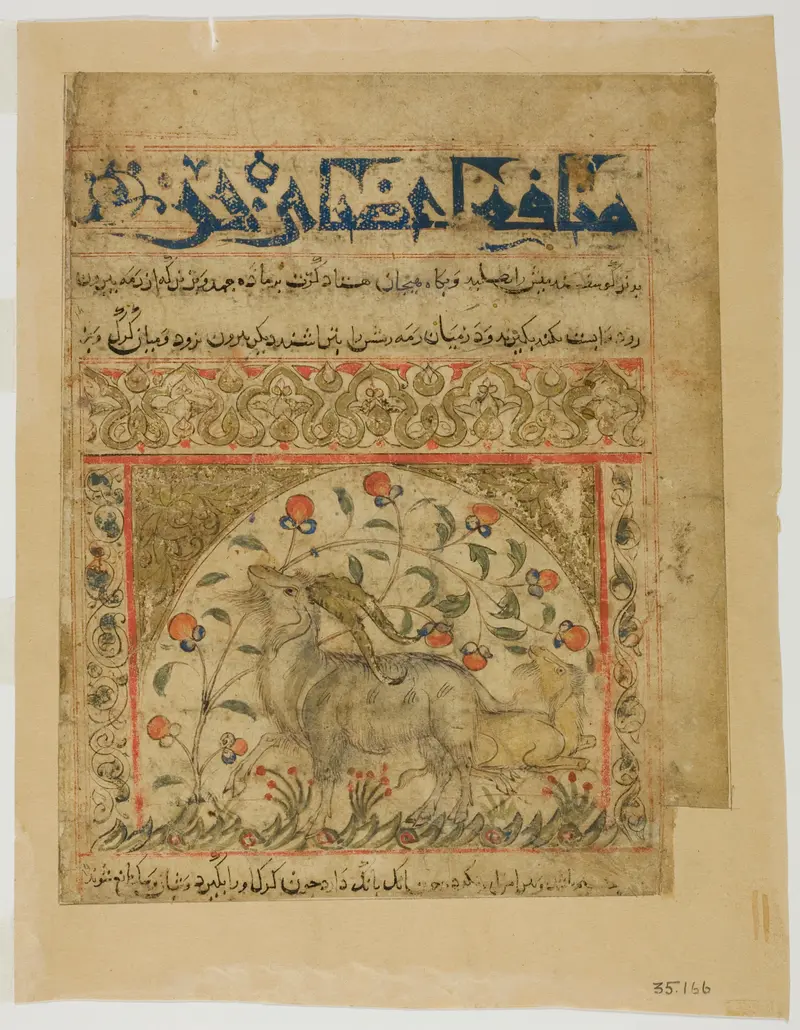
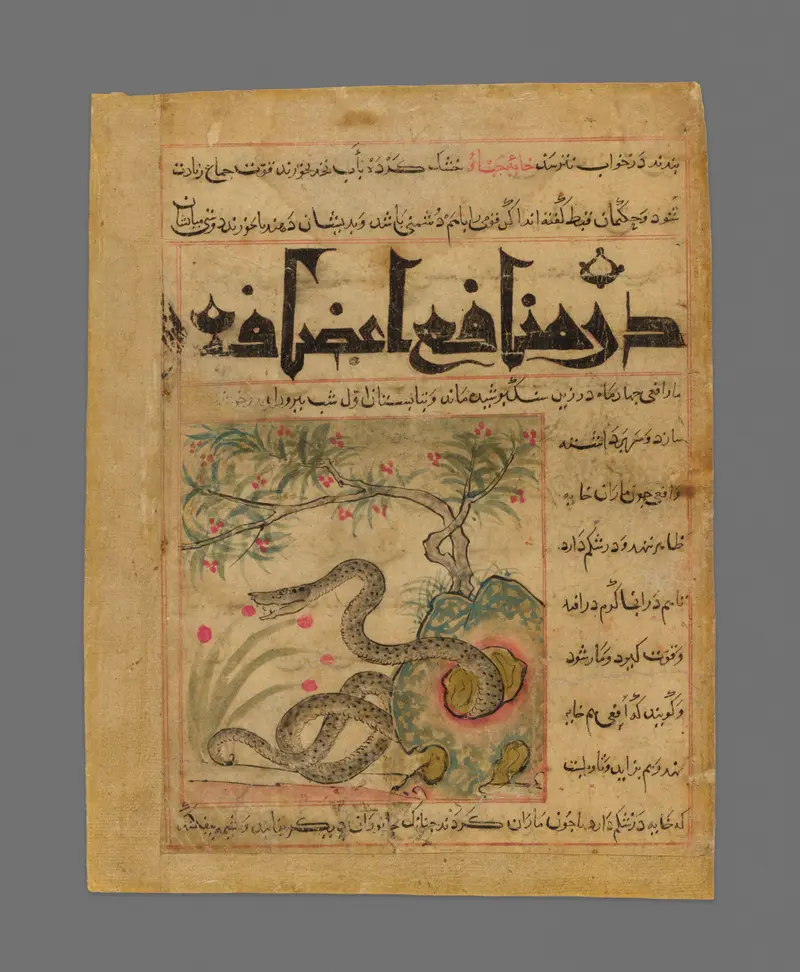
Some well-known manuscripts, such as the Book of Wonders and the Manafi' al-Hayawan, are not yet in our collection. Mughal painting from India has its own page, and European paintings of the Islamic world are on the Orientalism page.
Dates, sizes and locations come from the records of the Met, the British Library, the Vatican Library and UNESCO, and from Wikidata.
Spotted a mistake? Tell us and we will correct it.