
Bildnis des Kardinalkönigs Enrico I von Portugal — History & Facts
When the Portuguese throne stood on the brink of crisis in 1578, Enrico—known to history as Cardinal-King Henry I—found himself thrust into a role for which he was never intended. Bildnis des Kardinalkönigs Enrico I von Portugal by Tintoretto captures this unlikely monarch, whose brief reign (1578–1580) marked the end of the independent Aviz dynasty and set the stage for the Iberian Union under Philip II of Spain. The painting’s creation around 1600, two decades after Enrico’s death, reflects not only a posthumous fascination with the man who held both the mitre and the crown, but also the enduring anxiety over succession that haunted Portugal for generations. Tintoretto chooses to depict Enrico at a moment of introspection, his gaze distant, one hand resting on the red biretta of his cardinalate, the other lightly touching the golden orb of sovereignty.
The crimson robes, heavy with brocade, signal both his ecclesiastical authority and the burdens of kingship. A shaft of light falls across his face, sharpening the furrows of age and worry—an effect reminiscent of Titian’s late portraits, where psychological depth emerges from the interplay of shadow and illumination. The background is somber, almost funereal, underscoring the sense of a man caught between spiritual duty and the relentless demands of state. The painting’s early history is unclear; no contemporary record of its commission survives, and scholars debate whether it was painted for a Portuguese patron or as part of a series of royal portraits for a Venetian collector.
Over centuries, it passed quietly through private hands, escaping the wars and dispersals that scattered so many royal likenesses. Only in the nineteenth century did it re-emerge, attributed variously to Tintoretto and his workshop, before consensus settled on the master’s late hand. Today, Bildnis des Kardinalkönigs Enrico I von Portugal stands as a rare Venetian meditation on Iberian fate, its somber dignity a testament to both sitter and painter at the twilight of their eras.
More Artworks by Tintoretto
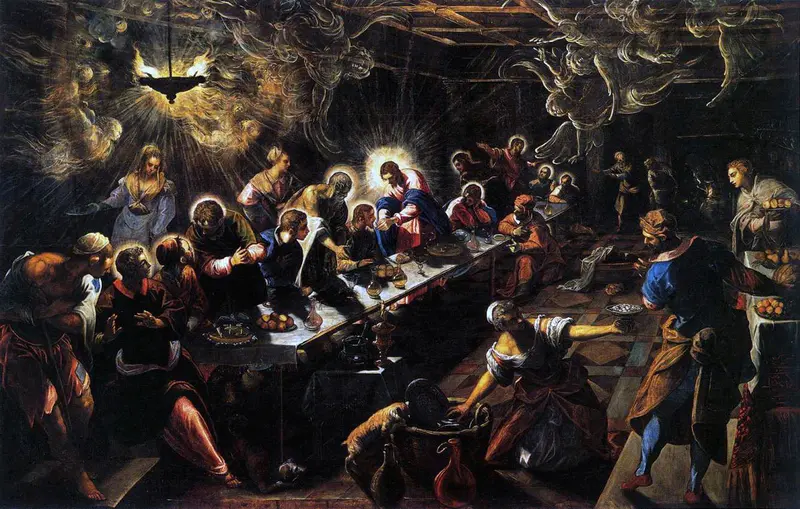
The Last Supper
Tintoretto
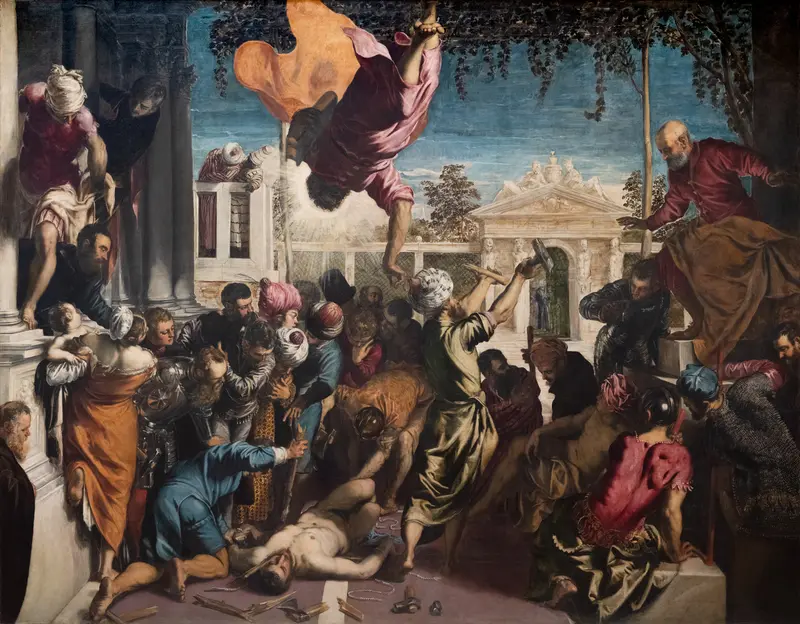
The Miracle of the Slave
Tintoretto
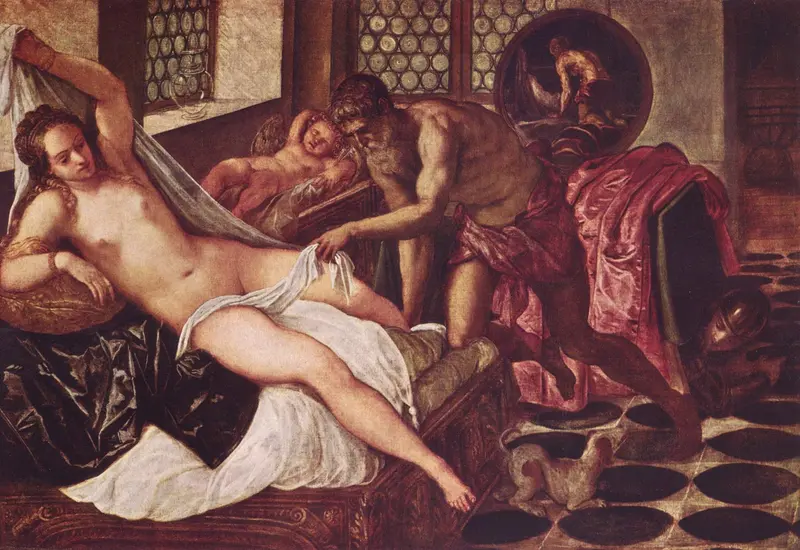
Venus and Mars Surprised by Vulcan
Tintoretto

Adoration of the Shepherds
Tintoretto
Adoration of the Magi
Tintoretto
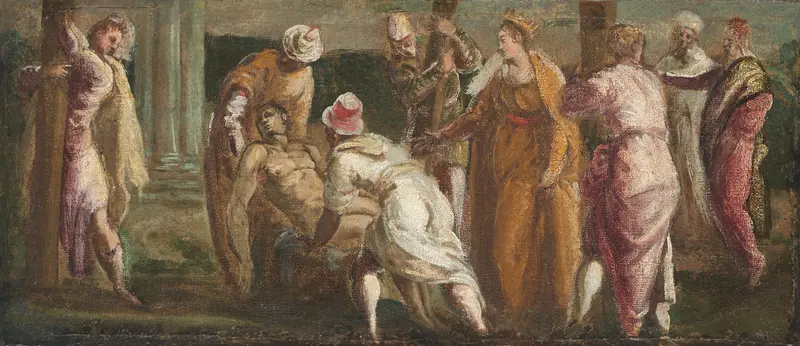
Saint Helen Testing the True Cross
Tintoretto
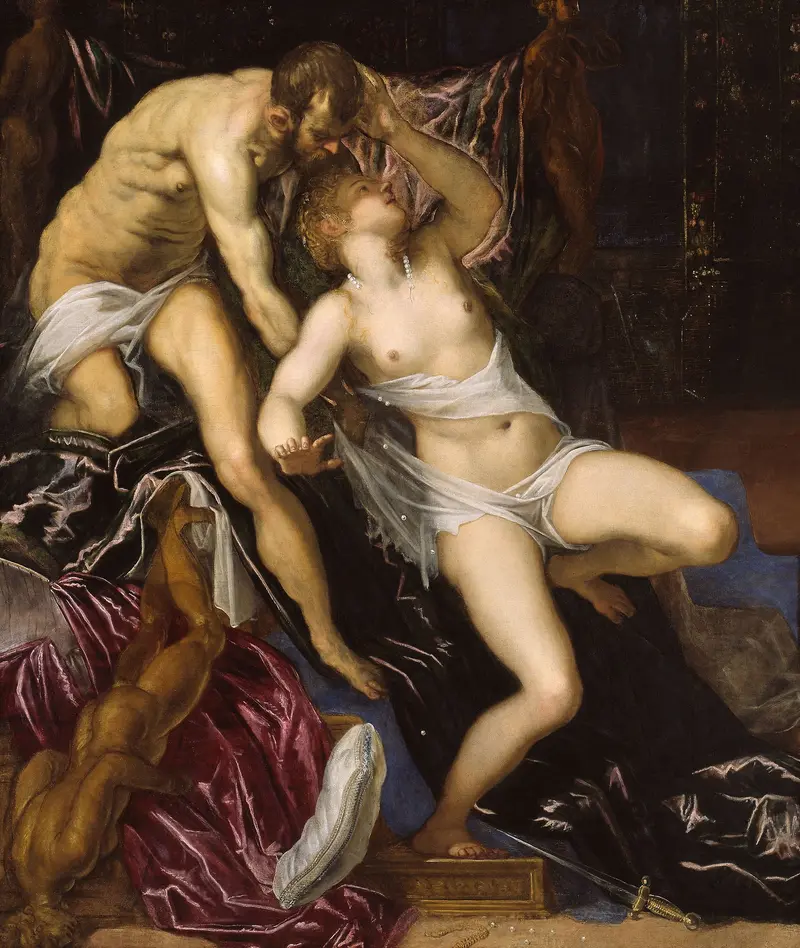
Tarquin and Lucretia
Tintoretto
Two Male Figures in Motion (verso)
Tintoretto
A Female Nude [verso]
Tintoretto
Veduta Kopra
Tintoretto





