
Black clouds. Death. Pestilence, triptych “Disaster”, sketch — History & Facts
A storm of color and shadow sweeps across this triptych, pulling the viewer into a world where threat and aftermath unfold in three acts. The eye is first caught by the leftmost panel: a lone figure and horse stand halted under a bruised sky, the figure’s pale form bathed in uneasy light, as if pausing before an oncoming calamity. At the center, the drama peaks—a skeletal rider astride a gaunt horse, spectral and unmistakably a harbinger, advances through a scorched, smoky landscape.
The right panel leaves only the memory of disaster: a barren field under a sky torn by black birds, the land emptied, the threat now past but not forgotten. Each panel uses light to guide the gaze and unsettle the mind, from the yellowed ground to the ominous clouds, the palette shifting from hope to dread. Painted in 1870 by Adam Chmielowski, this sketch belongs to a Europe still reeling from wars, epidemics, and the upheavals of the nineteenth century. Triptychs like this, once reserved for altarpieces, had by this era become vehicles for secular and allegorical subjects—here, the specter of pestilence and death.
The work’s presence in the National Museum in Warsaw roots it in a Polish context, where history’s shadows often fell long and dark. Little is recorded about this particular sketch, but its raw brushwork and urgent composition speak to a moment when artists grappled with disaster not as distant myth, but as lived experience. Let your eye linger on the horizon lines and the restless sky; the story is not only in the figures, but in the land itself.
More Artworks by Adam Chmielowski

Abandoned parsonage
Adam Chmielowski
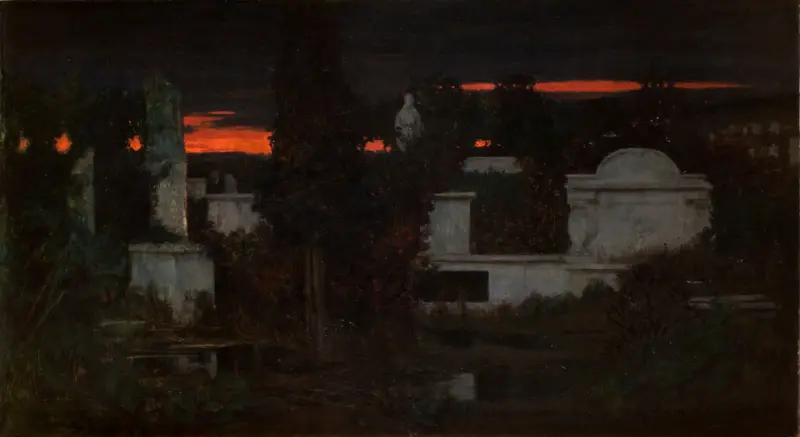
Italian Cemetery at Dusk
Adam Chmielowski
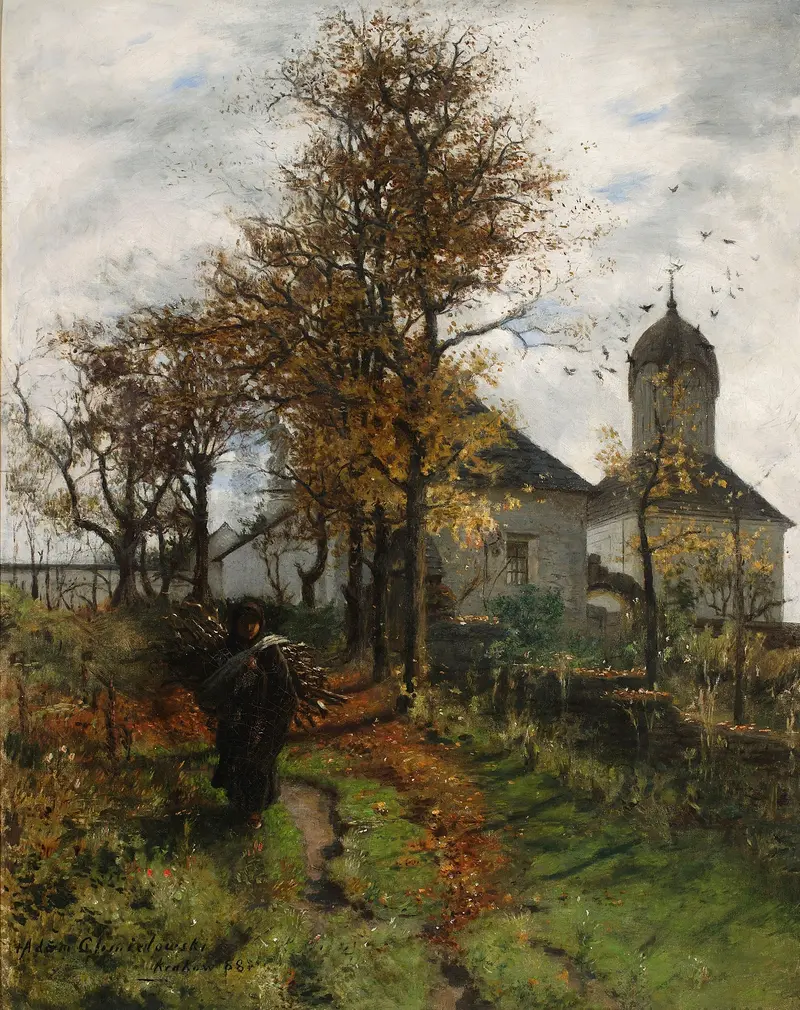
Deserted Presbytery
Adam Chmielowski
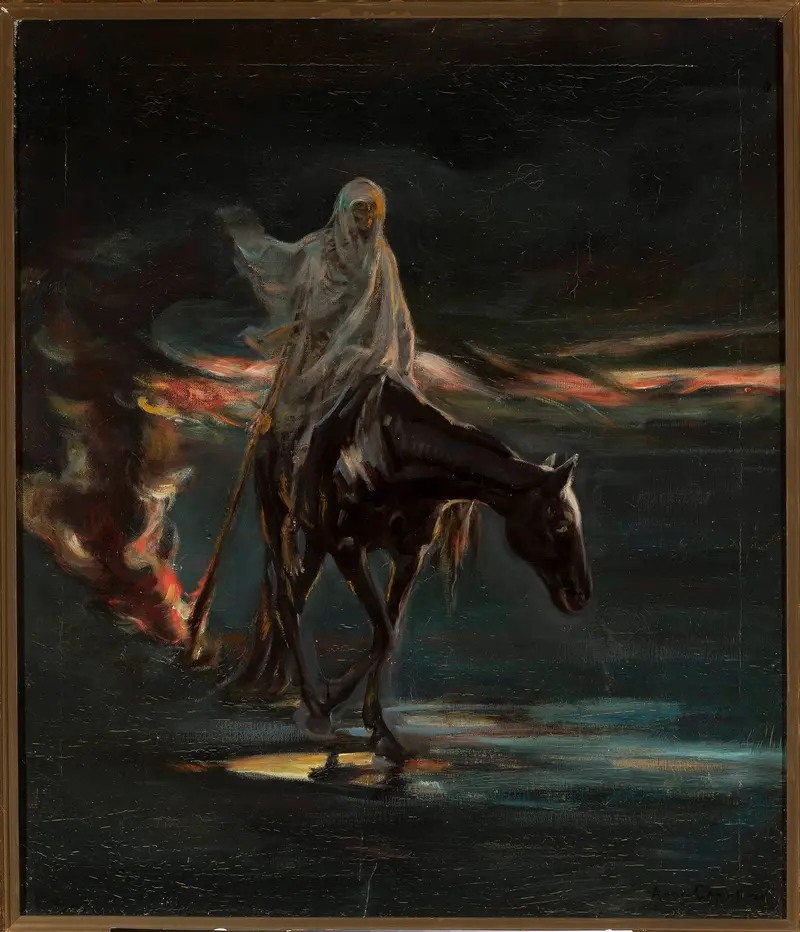
The Death and conflagration, central part of the triptych Disaster"."
Adam Chmielowski
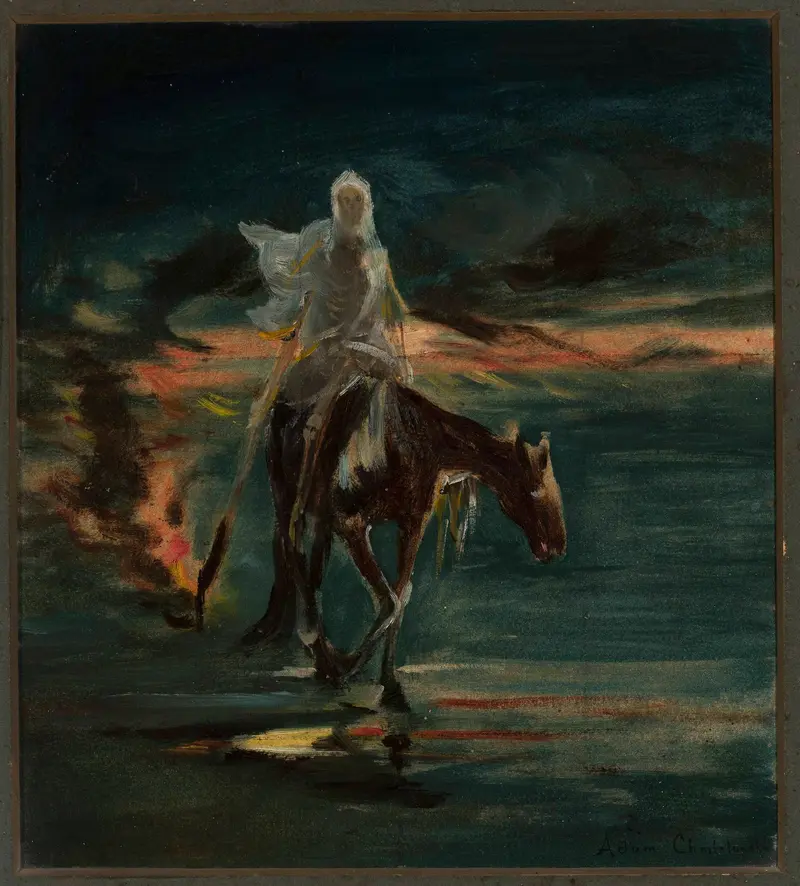
Death, central section of the triptych “Disaster”, sketch
Adam Chmielowski
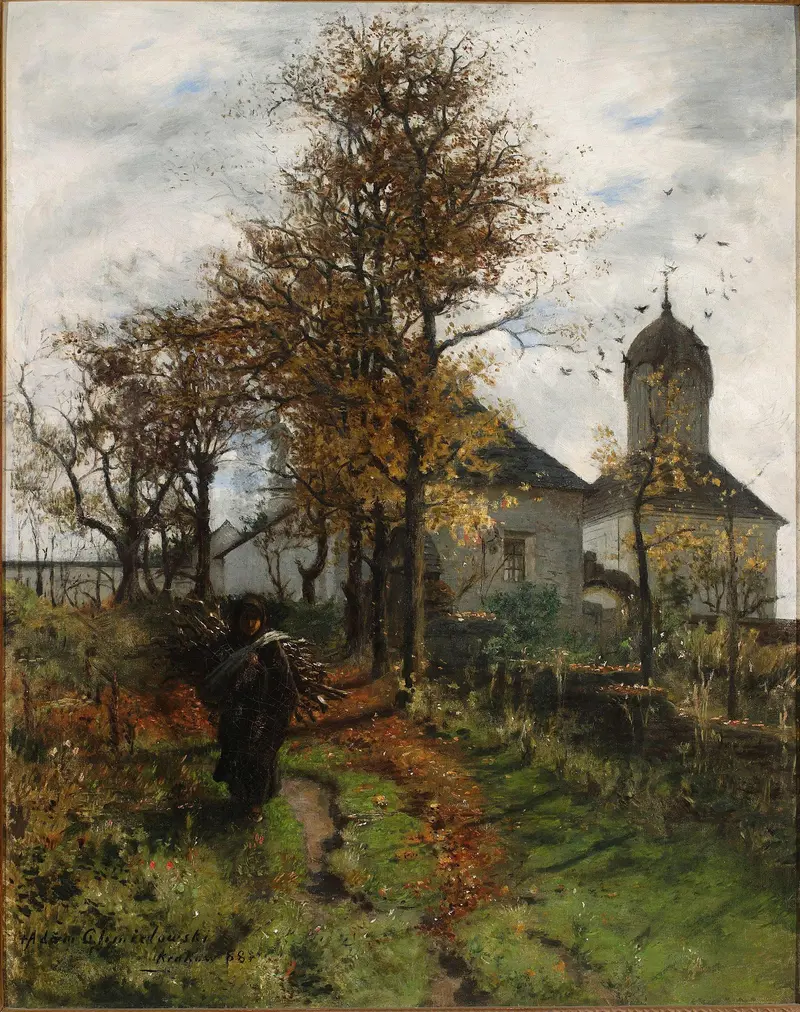
Abandoned clergy house.
Adam Chmielowski
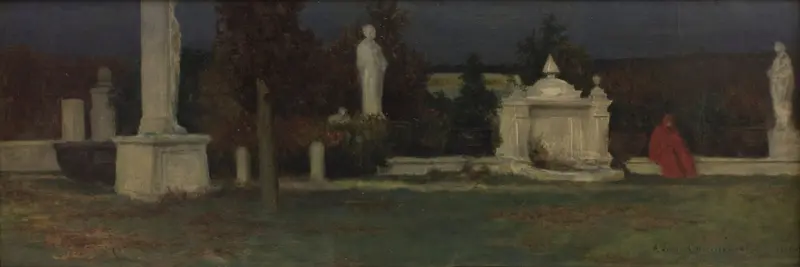
Grey Hour
Adam Chmielowski
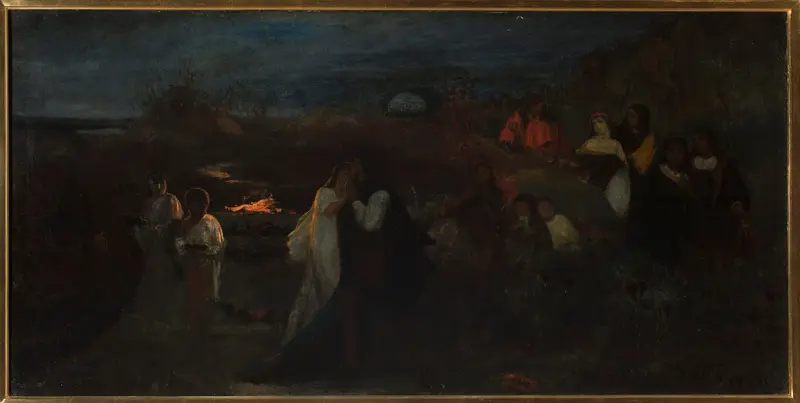
Garden of Love.
Adam Chmielowski
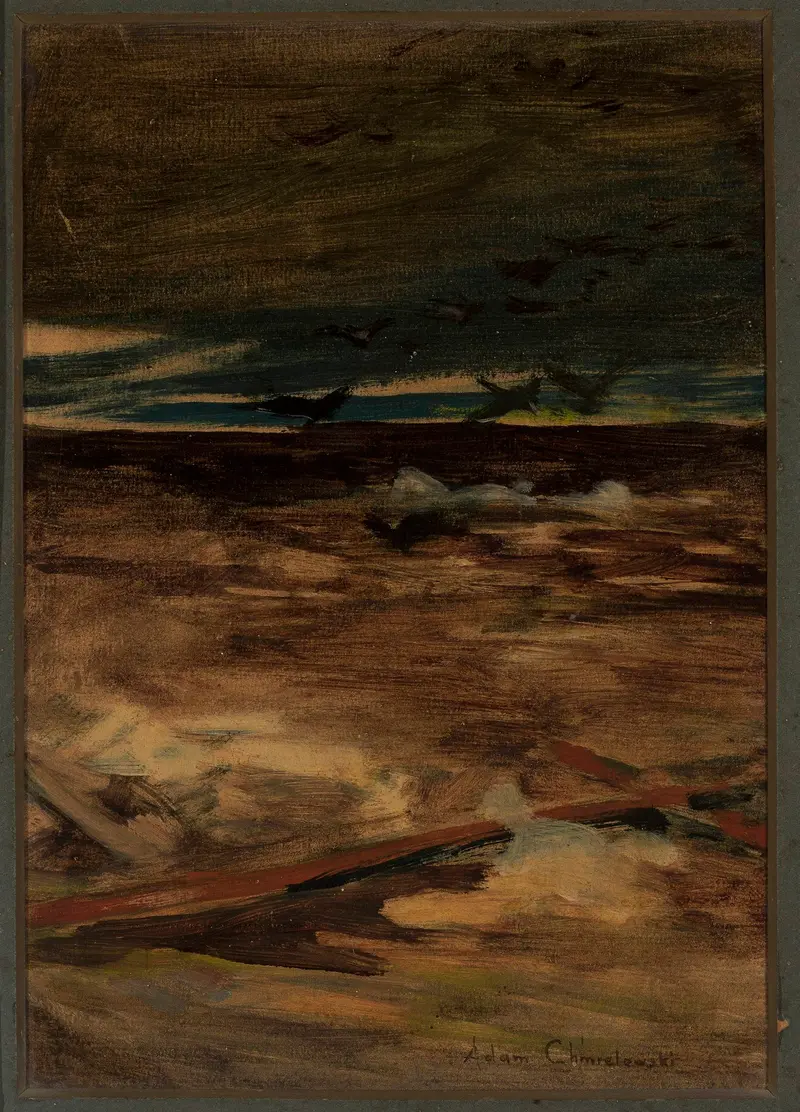
Pestilence, section of the triptych “Disaster”, sketch
Adam Chmielowski

Black clouds, section of the triptych “Disaster”, sketch
Adam Chmielowski





