
Grey Hour — History & Facts
A single figure in a vivid red cloak draws the eye immediately, seated in quiet isolation among pale monuments and statues. The hush of dusk settles over the scene, and the deepening sky presses close, lending weight to the silence. The figure’s posture is contemplative, almost withdrawn, as if the world of the living and the world of stone are separated only by the hour’s uncertain light.
Statues stand sentinel, their white forms catching what little glow remains, while the grass and earth seem to recede into shadow. Every element here is arranged to heighten the sense of pause—an in-between moment, unanchored from time, where memory and presence intermingle. Painted in 1880, Grey Hour belongs unmistakably to the late nineteenth-century fascination with mood and atmosphere, a period when artists across Europe turned their attention to the psychological charge of twilight and solitude. Works like this, often created for private patrons or small exhibitions, invited viewers to linger and reflect, rather than to marvel at grand narratives or heroic deeds.
The National Museum in Kraków now preserves this painting, a testament to both the era’s introspective spirit and the artist’s sensitivity to the quiet drama of everyday moments. Let your gaze return to the red figure—what thoughts might they be holding, and what stories do the statues keep?
More Artworks by Adam Chmielowski

Abandoned parsonage
Adam Chmielowski
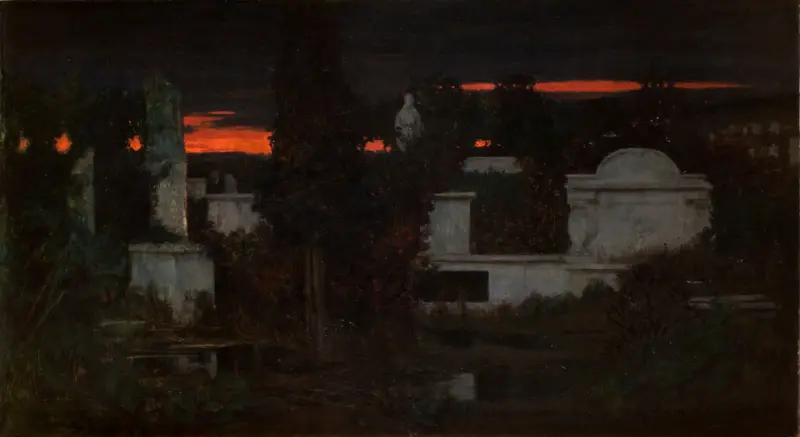
Italian Cemetery at Dusk
Adam Chmielowski
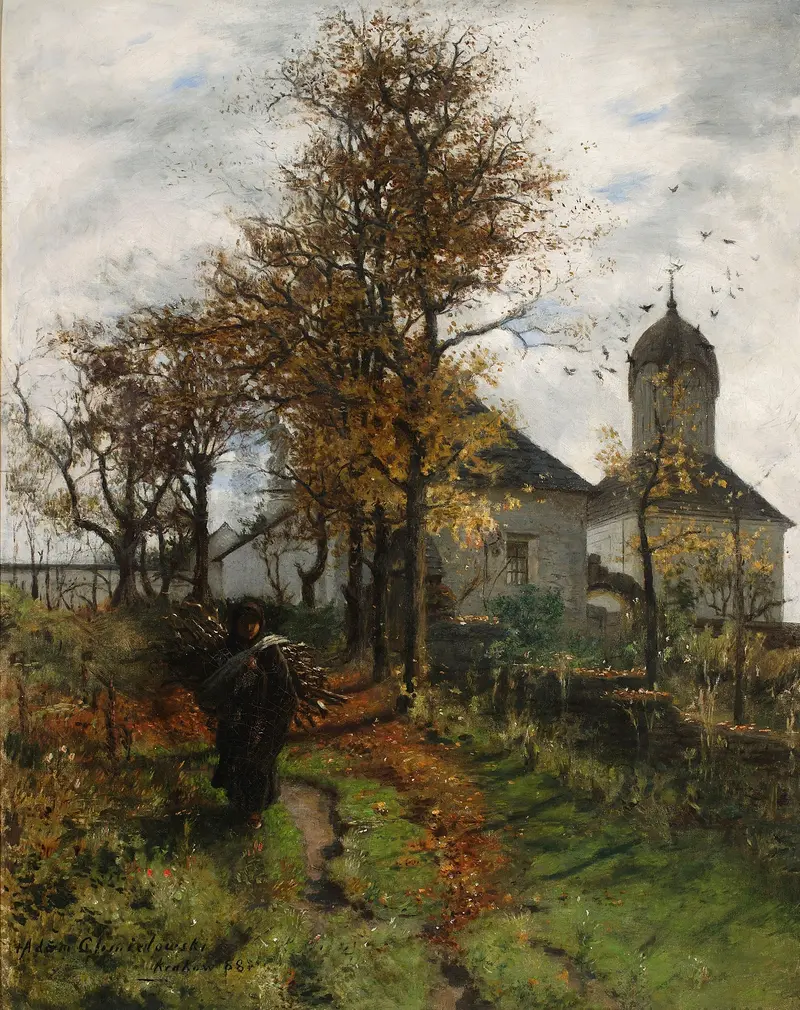
Deserted Presbytery
Adam Chmielowski
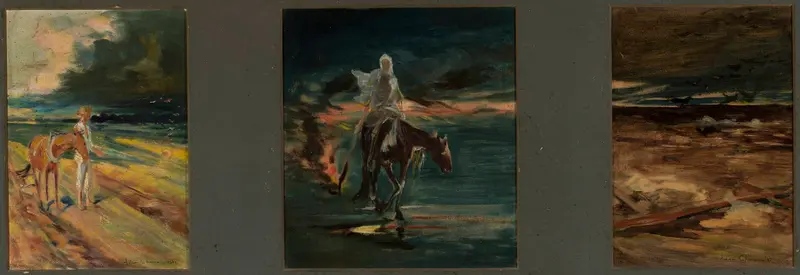
Black clouds. Death. Pestilence, triptych “Disaster”, sketch
Adam Chmielowski
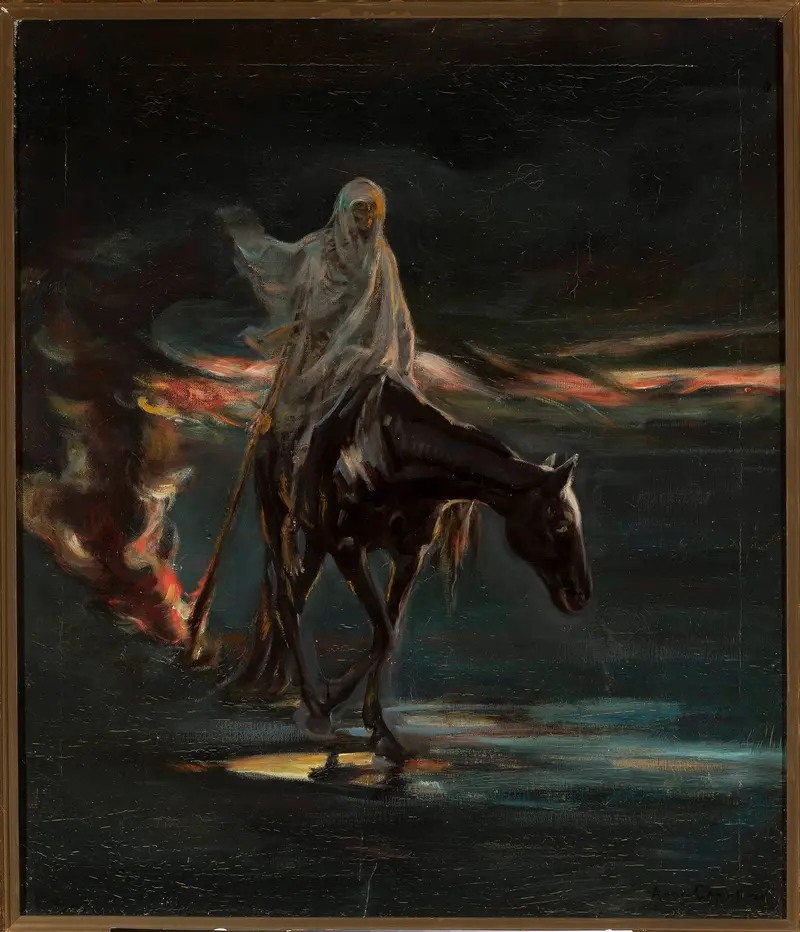
The Death and conflagration, central part of the triptych Disaster"."
Adam Chmielowski
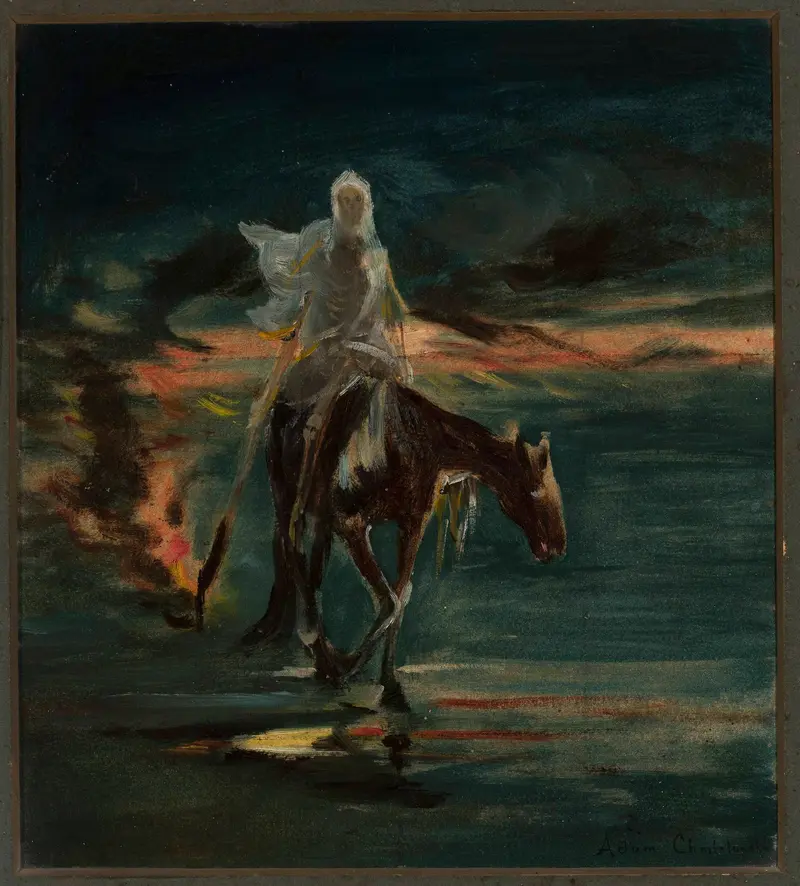
Death, central section of the triptych “Disaster”, sketch
Adam Chmielowski
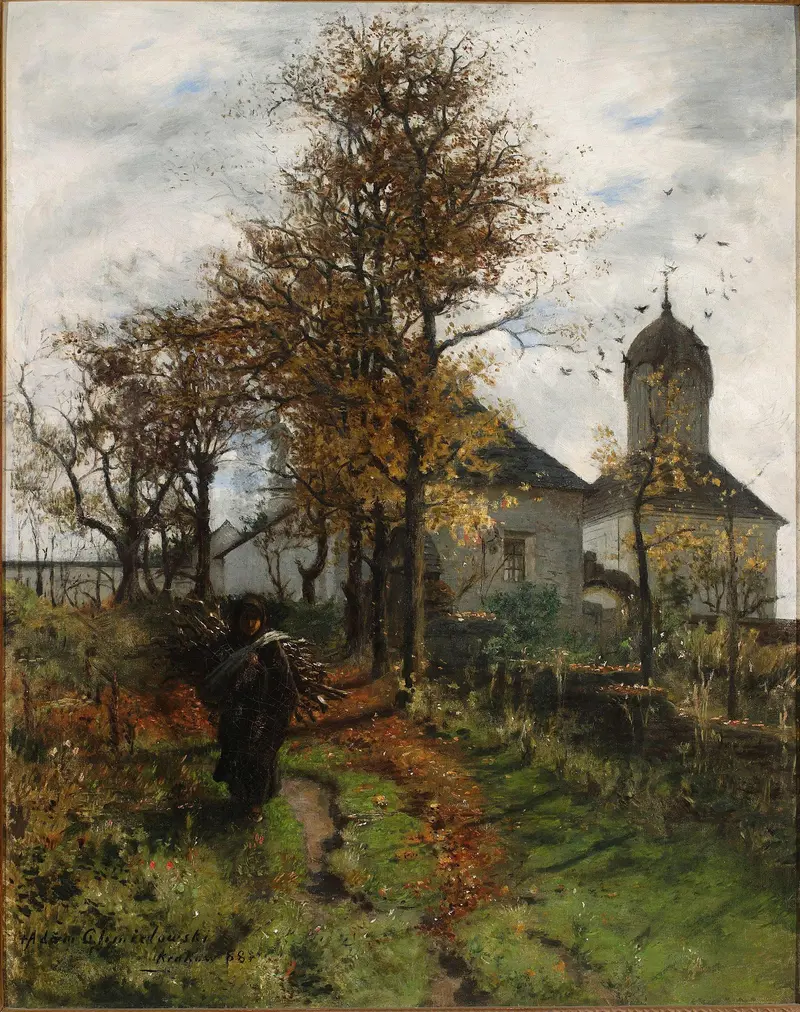
Abandoned clergy house.
Adam Chmielowski
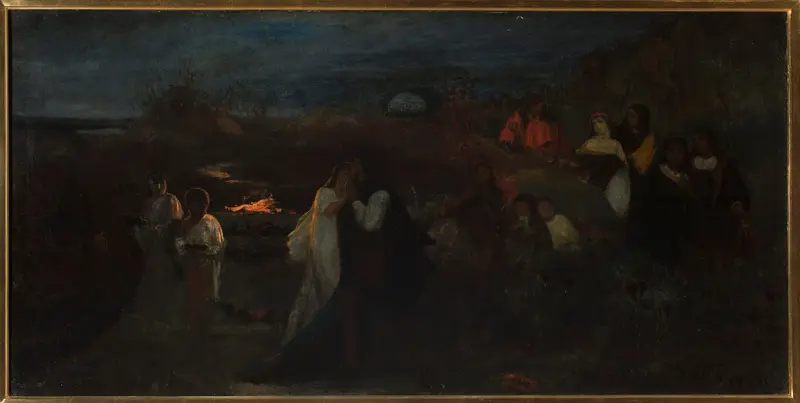
Garden of Love.
Adam Chmielowski
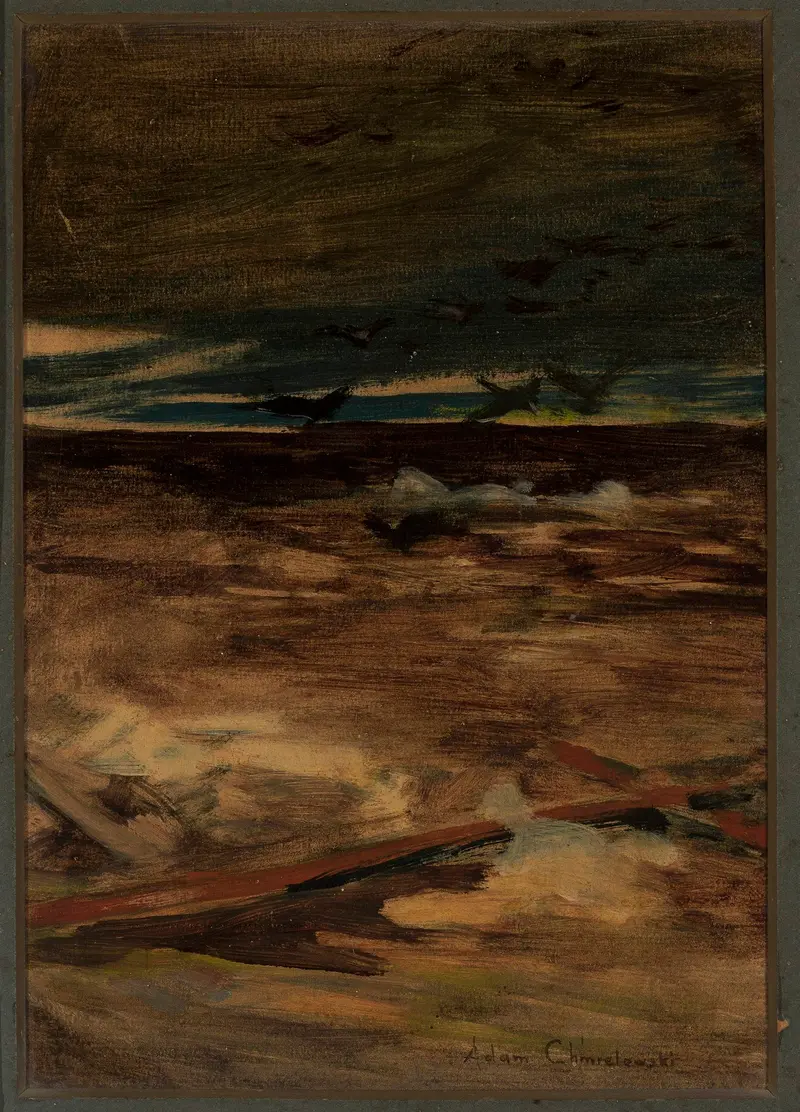
Pestilence, section of the triptych “Disaster”, sketch
Adam Chmielowski

Black clouds, section of the triptych “Disaster”, sketch
Adam Chmielowski



