
Pestilence, section of the triptych “Disaster”, sketch — History & Facts
A restless sky presses down on a barren, ochre earth, its darkness broken only by the jagged silhouettes of birds circling above. The sweep of Adam Chmielowski’s brush in this 1870 sketch, Pestilence, section of the triptych Disaster, draws the viewer into a world stripped to essentials: a raw, almost unfinished landscape where the horizon is a thin, uneasy band between storm and wasteland. The birds—harbingers of death or scavengers—are not just background detail; they are the painting’s pulse, their movement animating the stillness below.
The brushwork is urgent, almost feverish, as if the artist is racing to capture a fleeting vision of calamity before it slips away. Works like this emerged from a Europe grappling with upheaval—wars, epidemics, the collapse of old certainties. In the late nineteenth century, artists such as Chmielowski, later known for his spiritual journey and social activism, often turned to scenes of disaster not merely to record events, but to probe the emotional landscape of a continent in crisis. This sketch, now held by the National Museum in Warsaw, is a fragment of that wider search for meaning in chaos.
Its roughness and immediacy invite us to look again, to find the story not in grand gestures but in the uneasy silence after catastrophe.
More Artworks by Adam Chmielowski

Abandoned parsonage
Adam Chmielowski
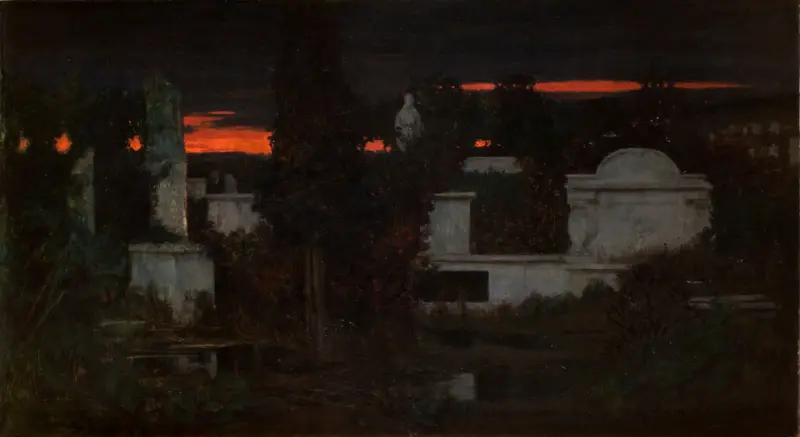
Italian Cemetery at Dusk
Adam Chmielowski
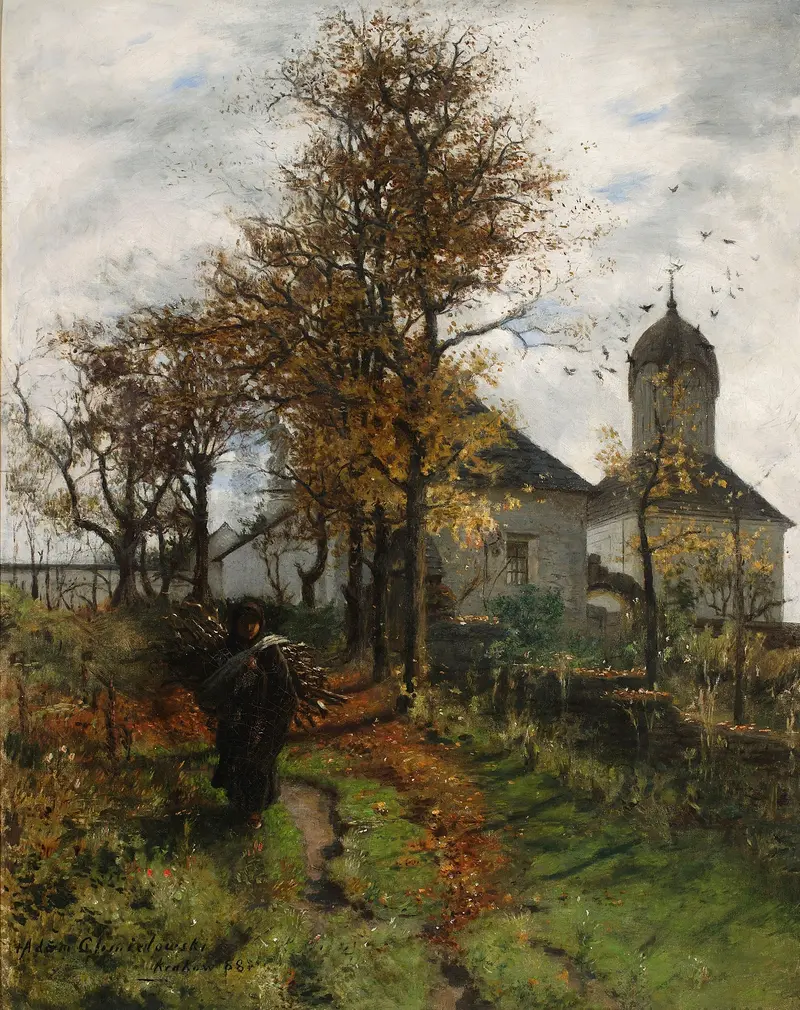
Deserted Presbytery
Adam Chmielowski
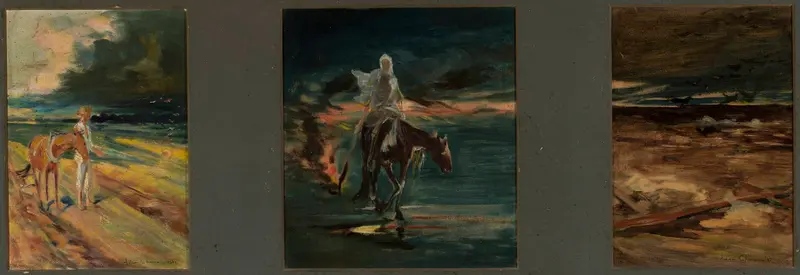
Black clouds. Death. Pestilence, triptych “Disaster”, sketch
Adam Chmielowski
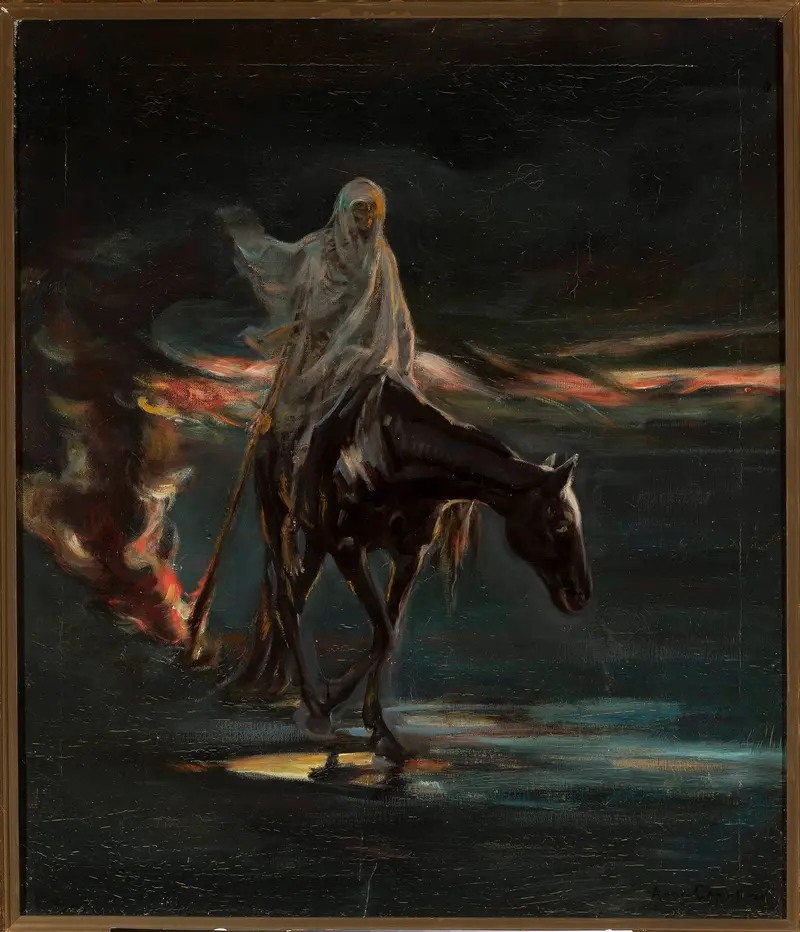
The Death and conflagration, central part of the triptych Disaster"."
Adam Chmielowski
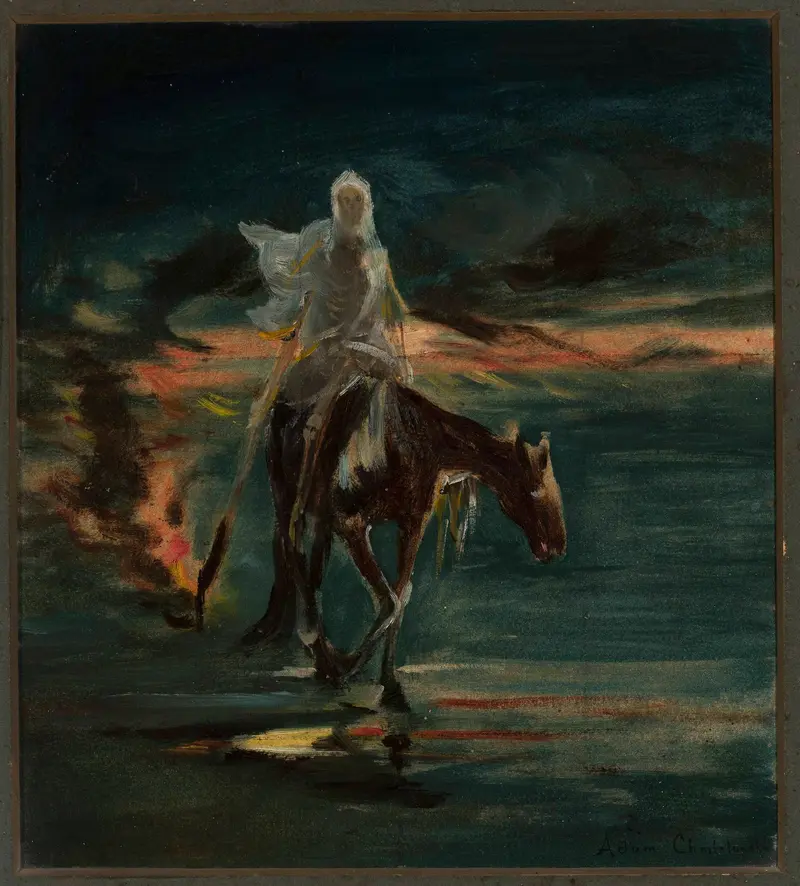
Death, central section of the triptych “Disaster”, sketch
Adam Chmielowski
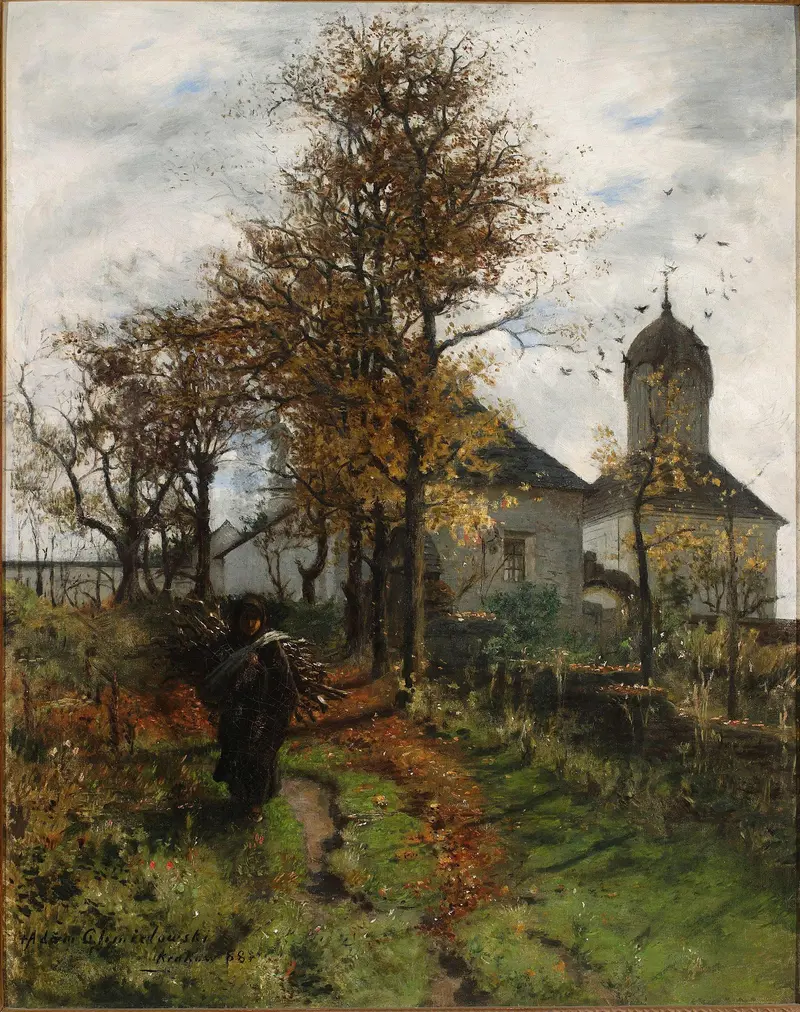
Abandoned clergy house.
Adam Chmielowski
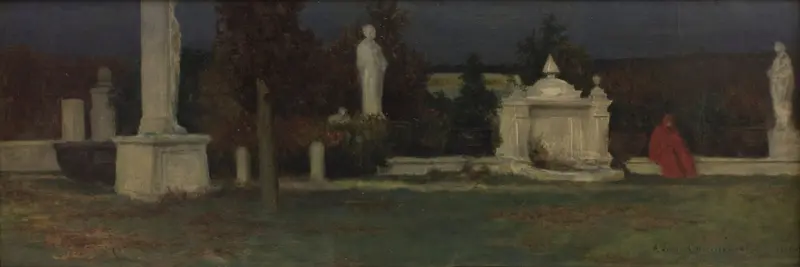
Grey Hour
Adam Chmielowski
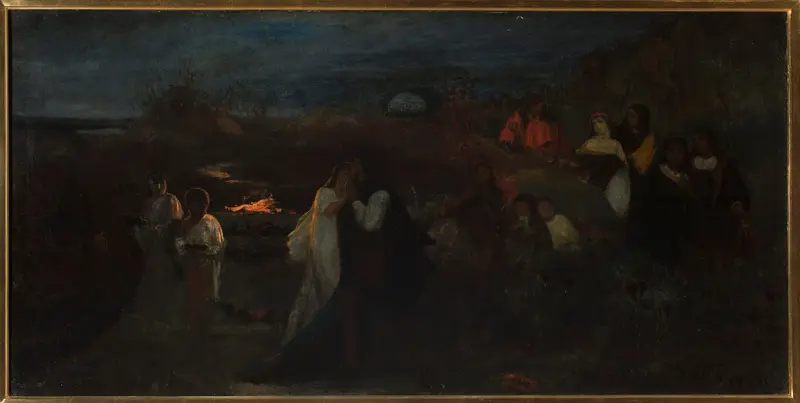
Garden of Love.
Adam Chmielowski

Black clouds, section of the triptych “Disaster”, sketch
Adam Chmielowski
More Landscape Art

The Starry Night
Vincent van Gogh

View of Delft
Johannes Vermeer

Water Lilies
Claude Monet

The Grand Canal, Venice, looking north-west from the Ca' Corner to the Ca' Contarini degli Scrigni, with the campanile of Santa Maria della Carità
Canaletto

Windsor Castle
Canaletto

The Grand Canal looking North-East from the Palazzo Dolfin-Manin to the Rialto Bridge
Canaletto