
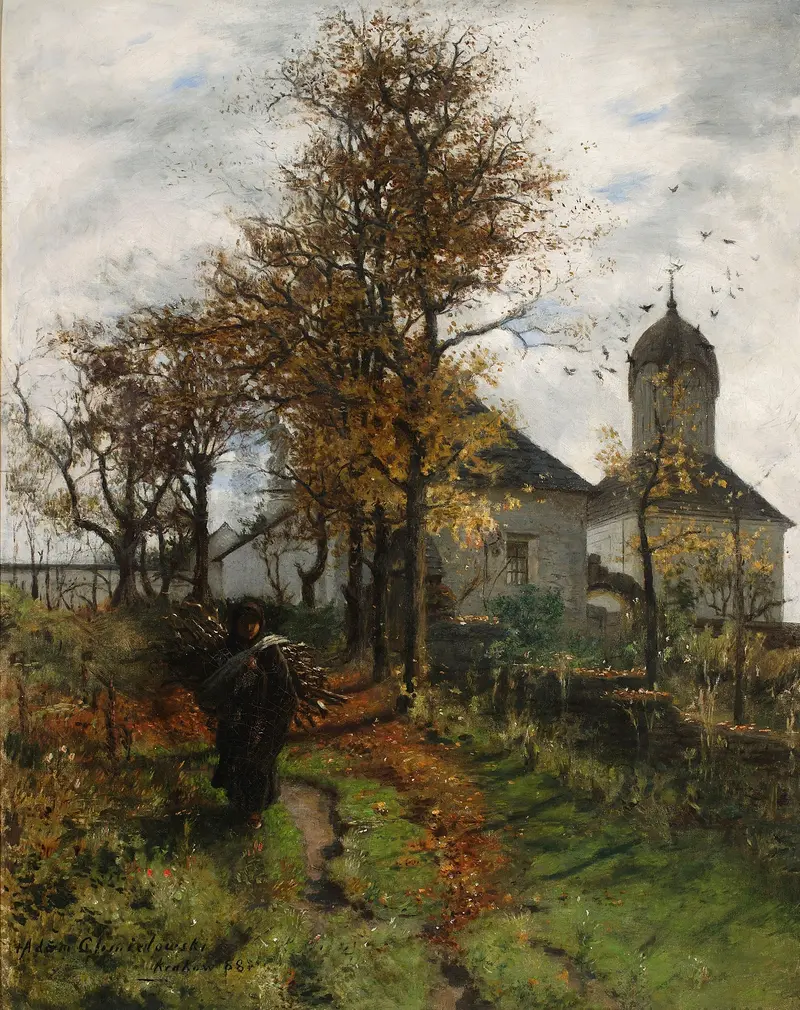
Abandoned clergy house. — History & Facts
A path winds through a tangle of autumn grass, drawing the viewer’s gaze toward the silent white building at the painting’s heart. The eye lingers on the solitary figure in dark clothing, her form nearly swallowed by the bundle of sticks she carries and the shadows beneath the trees. The church-like structure, partly veiled by bare branches and a scatter of golden leaves, stands both as a destination and a memory—its windows and steeple hint at a life once central, now receding into the background.
The birds circling above, the long shadows, and the patchwork of light on the ground all speak to a world in transition, where nature quietly reclaims what was once inhabited and purposeful. Painted in 1888 by Adam Chmielowski, this work belongs to a moment when artists across Europe turned their gaze to the rural and the overlooked, recording the slow erosion of old ways in the face of modernity. In the late nineteenth century, scenes like this—abandoned homes, fading churches, solitary laborers—became a kind of visual testimony to social and spiritual change. While little is recorded about the specific commission or journey of Abandoned clergy house., its presence today in the cyfrowe.mnw.art.pl collection lets us witness a crossroads of memory and loss.
The painting invites us to linger, to follow the path, and to wonder what stories the empty house and its silent grounds still hold.
More Artworks by Adam Chmielowski

Abandoned parsonage
Adam Chmielowski
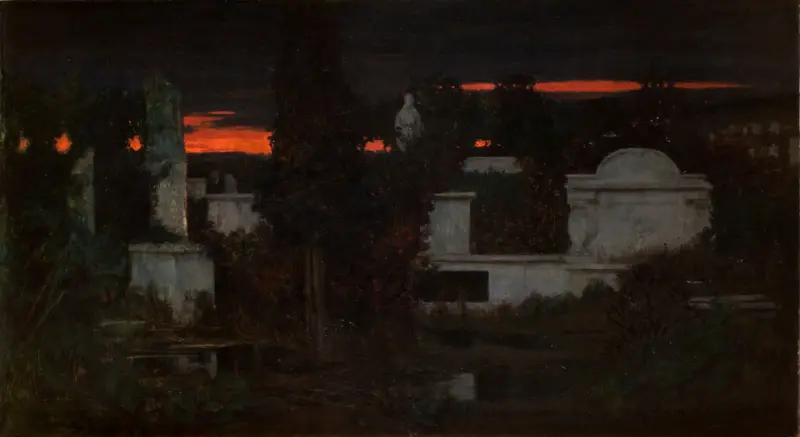
Italian Cemetery at Dusk
Adam Chmielowski
Deserted Presbytery
Adam Chmielowski
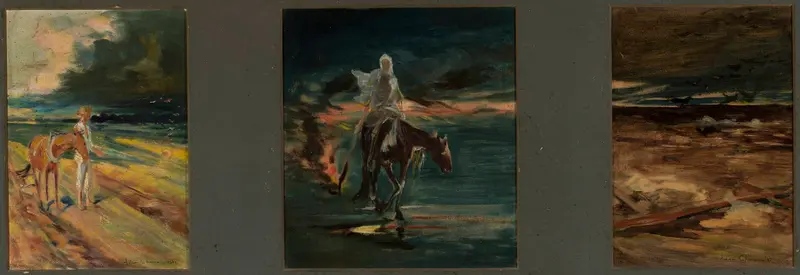
Black clouds. Death. Pestilence, triptych “Disaster”, sketch
Adam Chmielowski
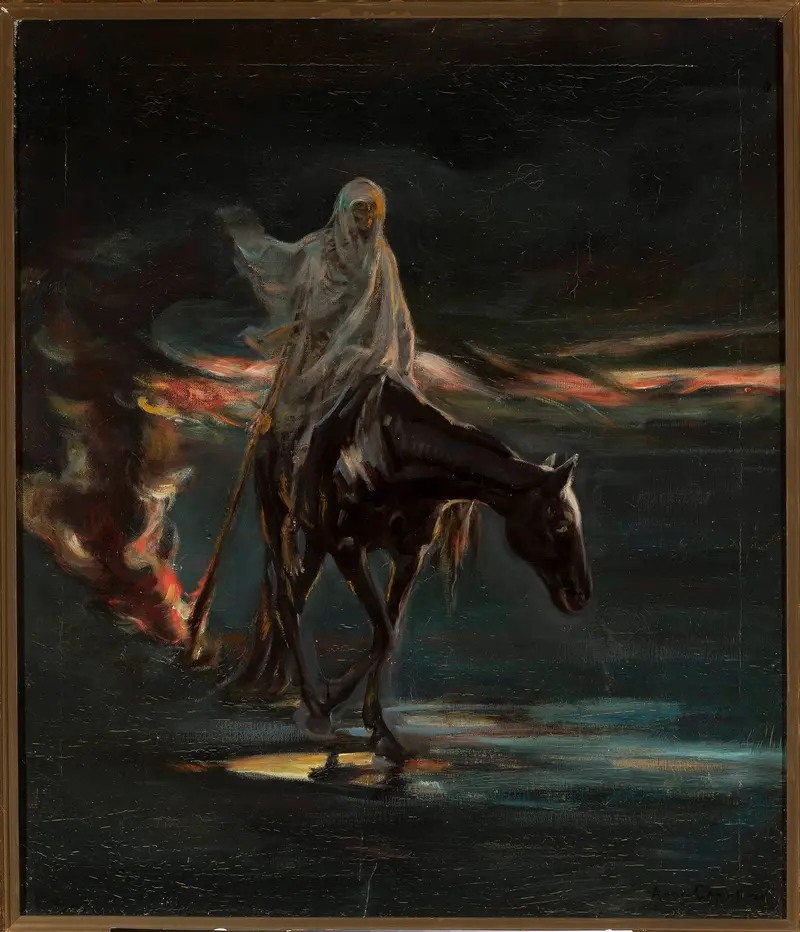
The Death and conflagration, central part of the triptych Disaster"."
Adam Chmielowski
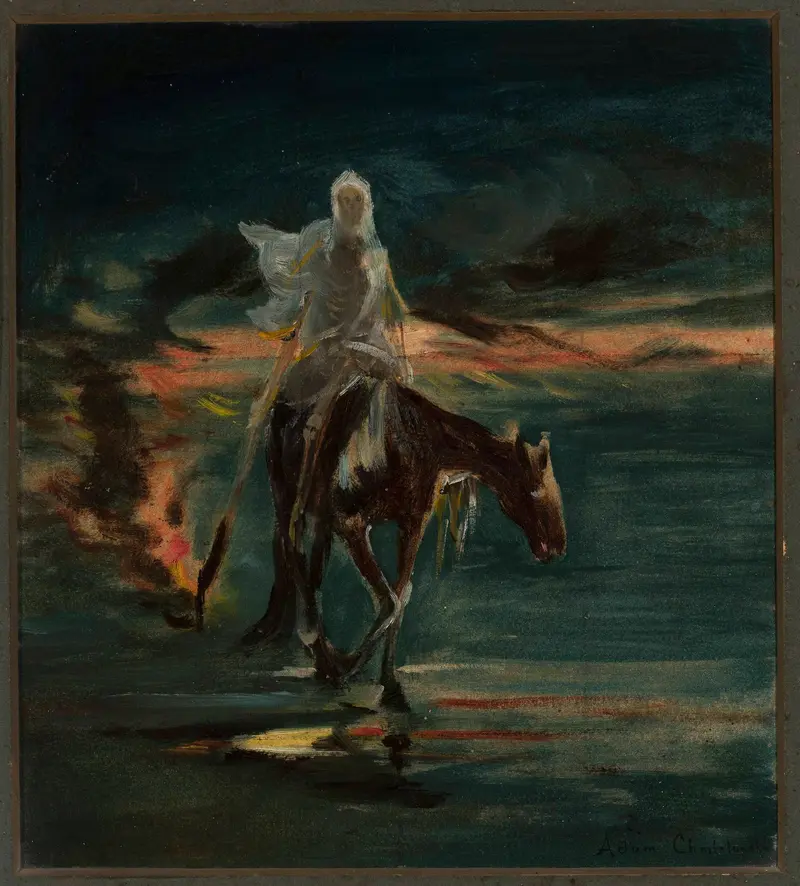
Death, central section of the triptych “Disaster”, sketch
Adam Chmielowski
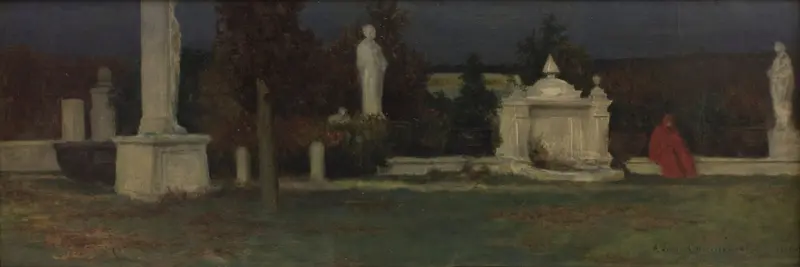
Grey Hour
Adam Chmielowski
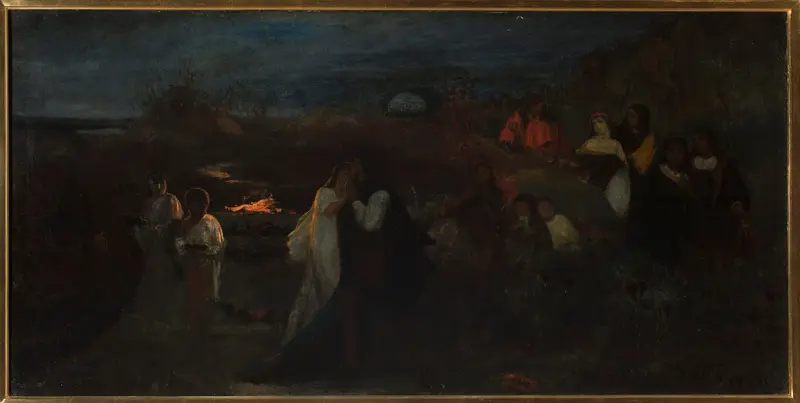
Garden of Love.
Adam Chmielowski
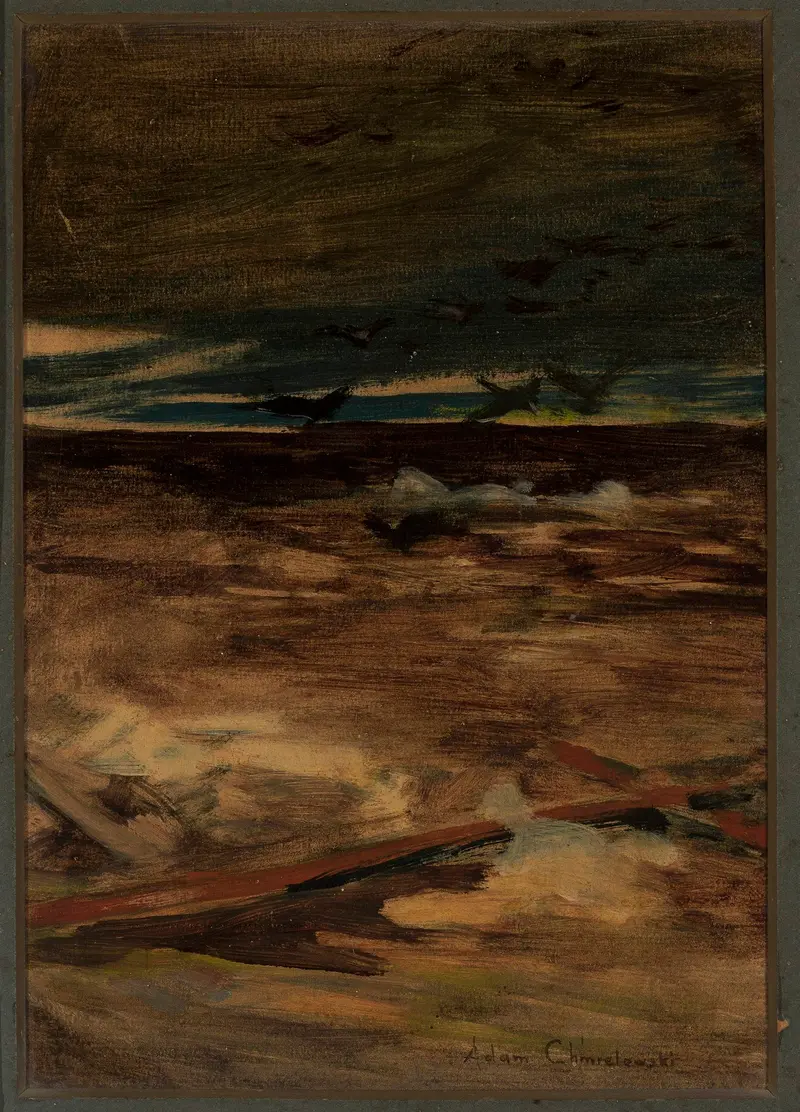
Pestilence, section of the triptych “Disaster”, sketch
Adam Chmielowski

Black clouds, section of the triptych “Disaster”, sketch
Adam Chmielowski
More Landscape Art

The Starry Night
Vincent van Gogh

View of Delft
Johannes Vermeer

Water Lilies
Claude Monet

The Grand Canal, Venice, looking north-west from the Ca' Corner to the Ca' Contarini degli Scrigni, with the campanile of Santa Maria della Carità
Canaletto

Windsor Castle
Canaletto

The Grand Canal looking North-East from the Palazzo Dolfin-Manin to the Rialto Bridge
Canaletto