
Death, central section of the triptych “Disaster”, sketch — History & Facts
A spectral rider emerges from the gloom, neither fully formed nor entirely vanished, drawing the viewer into the heart of Death, central section of the triptych Disaster, sketch by Adam Chmielowski. The figure, draped in pale, tattered cloth, seems to hover between worlds, its skeletal form barely distinct from the smoky darkness that trails behind. The horse, heavy-headed and weary, trudges forward through a landscape scoured by fire and shadow, its reflection caught in a pool of uncertain light.
The sky burns with an unnatural glow, suggesting catastrophe just out of frame, while the rider’s staff or scythe points to the age-old personification of death. Every brushstroke feels urgent, as if the artist was racing to capture a vision that might dissolve at any moment. Painted in 1870, this sketch belongs to a world still reeling from upheaval—Poland’s partitions, uprisings, and the broader European fascination with allegory and apocalyptic imagery. Works like this, often intended as studies for larger compositions or altarpieces, were rarely meant for public display; instead, they served as private meditations or proposals for patrons with a taste for the dramatic and the moralizing.
That this piece now resides in the National Museum in Warsaw is a reminder of how history sometimes preserves the artist’s rawest, most experimental moments. The unfinished quality invites us to linger, to search for meaning in every blurred edge and flicker of color, and to wonder what the final vision might have been.
More Artworks by Adam Chmielowski

Abandoned parsonage
Adam Chmielowski
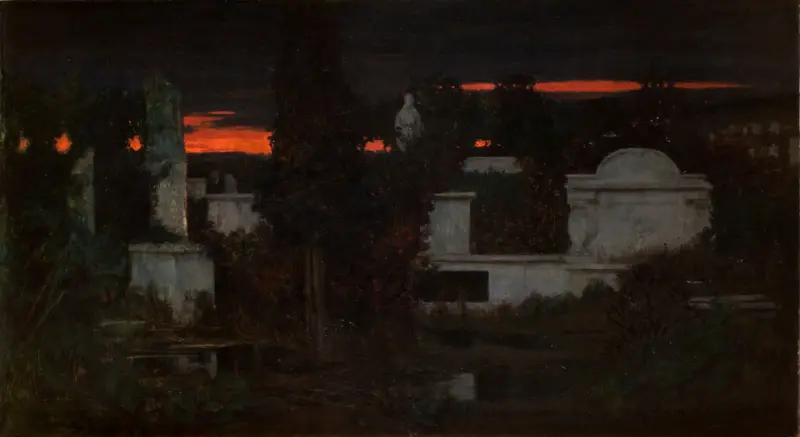
Italian Cemetery at Dusk
Adam Chmielowski
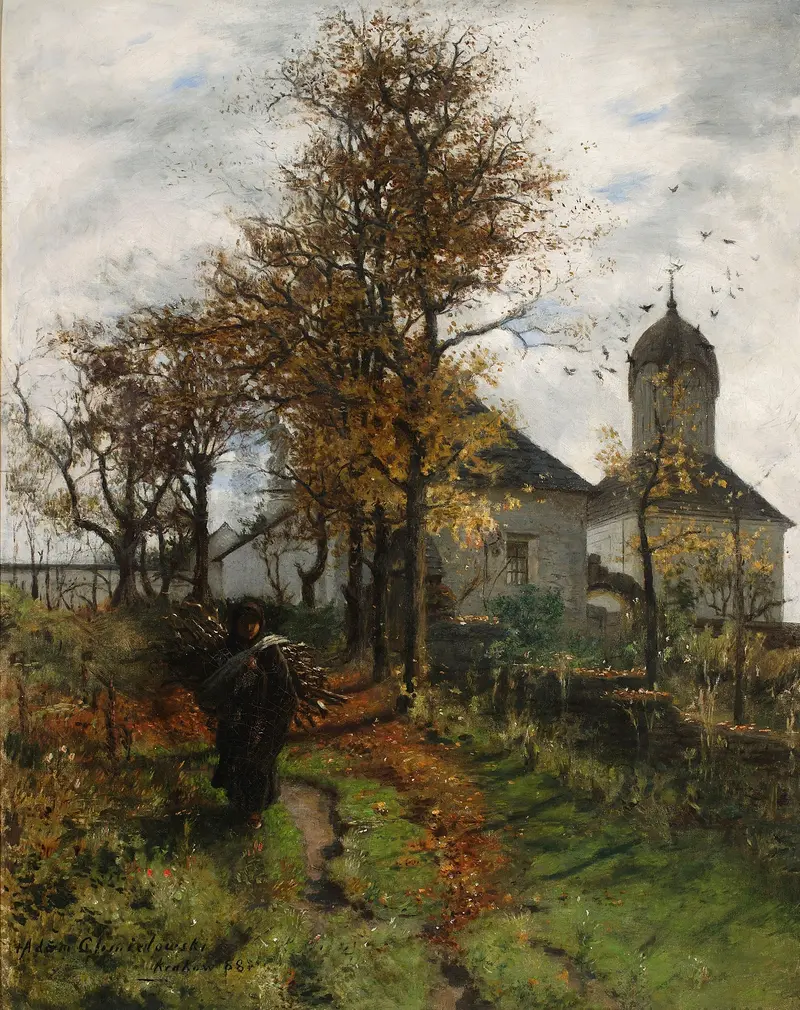
Deserted Presbytery
Adam Chmielowski
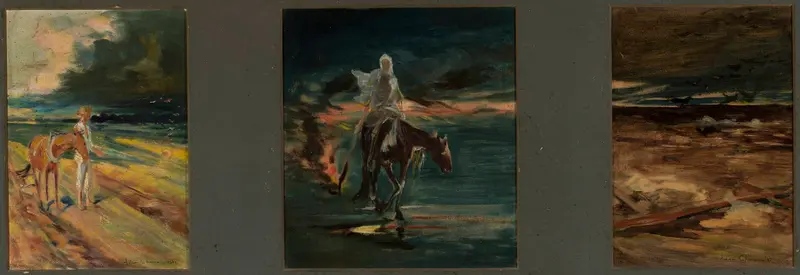
Black clouds. Death. Pestilence, triptych “Disaster”, sketch
Adam Chmielowski
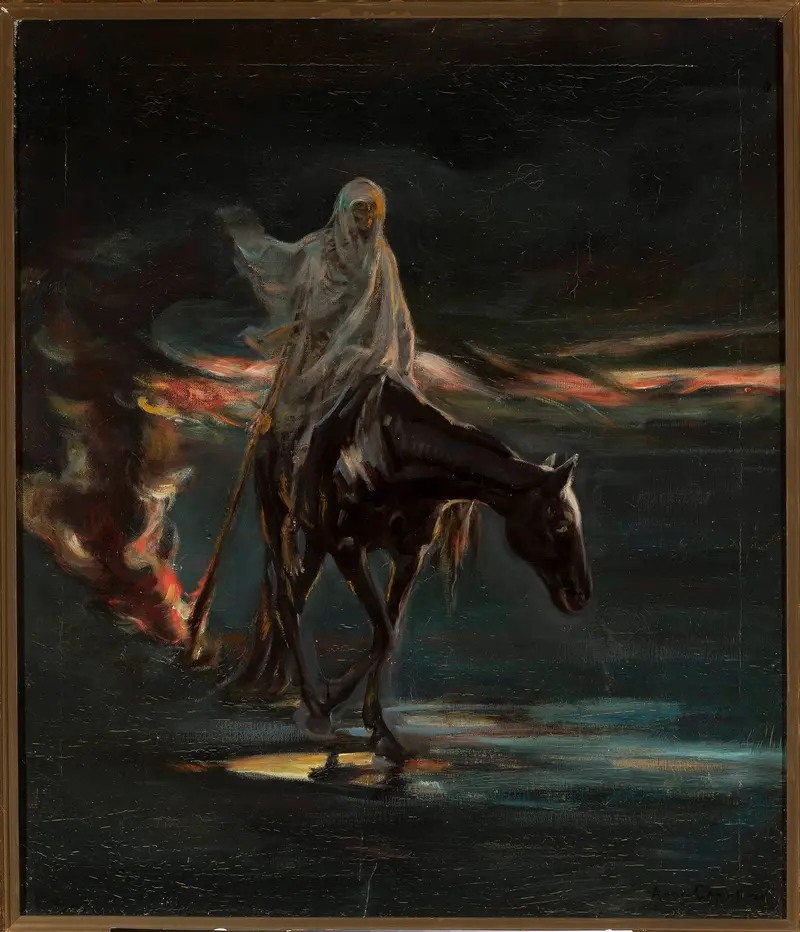
The Death and conflagration, central part of the triptych Disaster"."
Adam Chmielowski
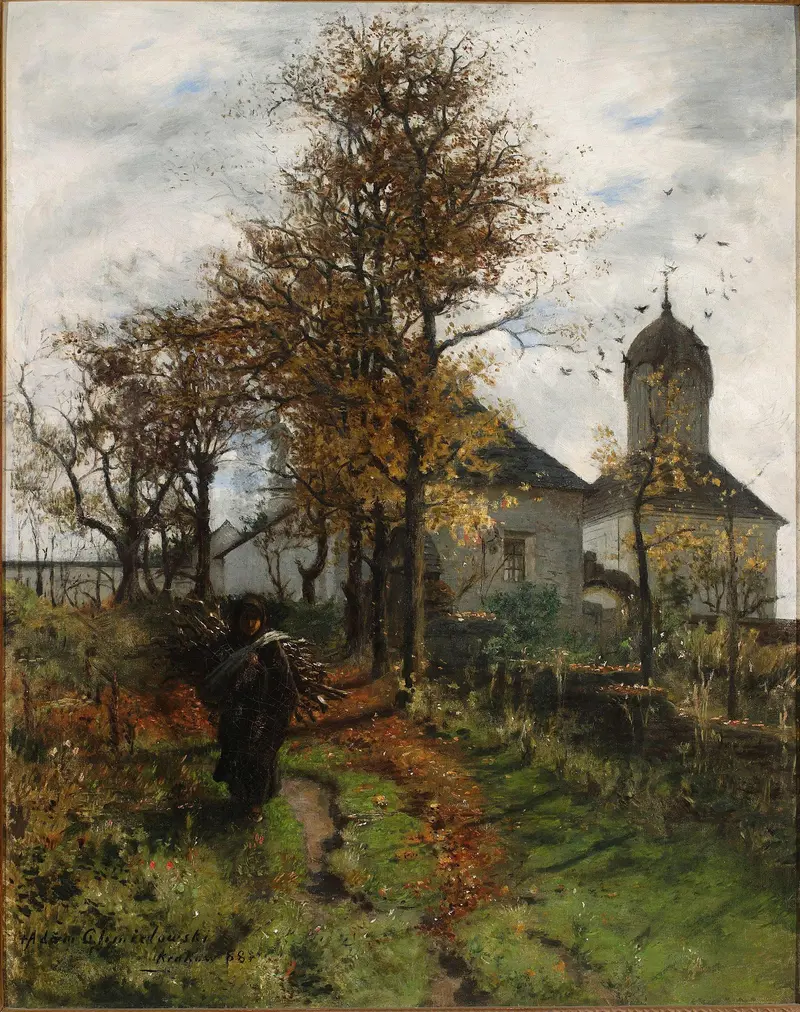
Abandoned clergy house.
Adam Chmielowski
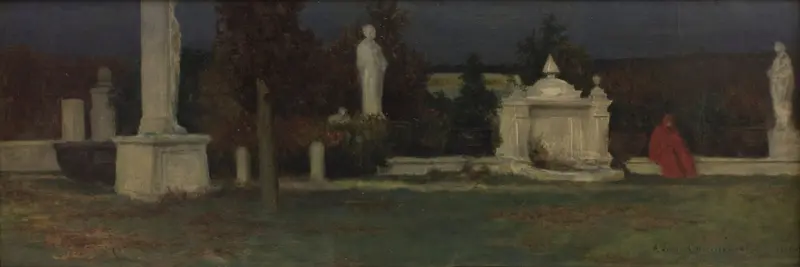
Grey Hour
Adam Chmielowski
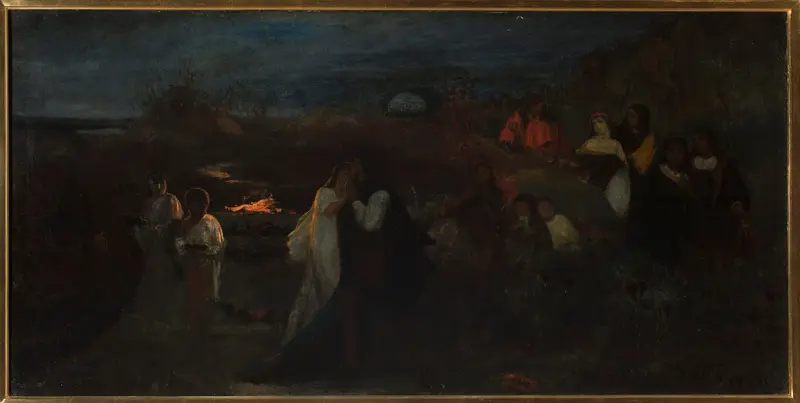
Garden of Love.
Adam Chmielowski
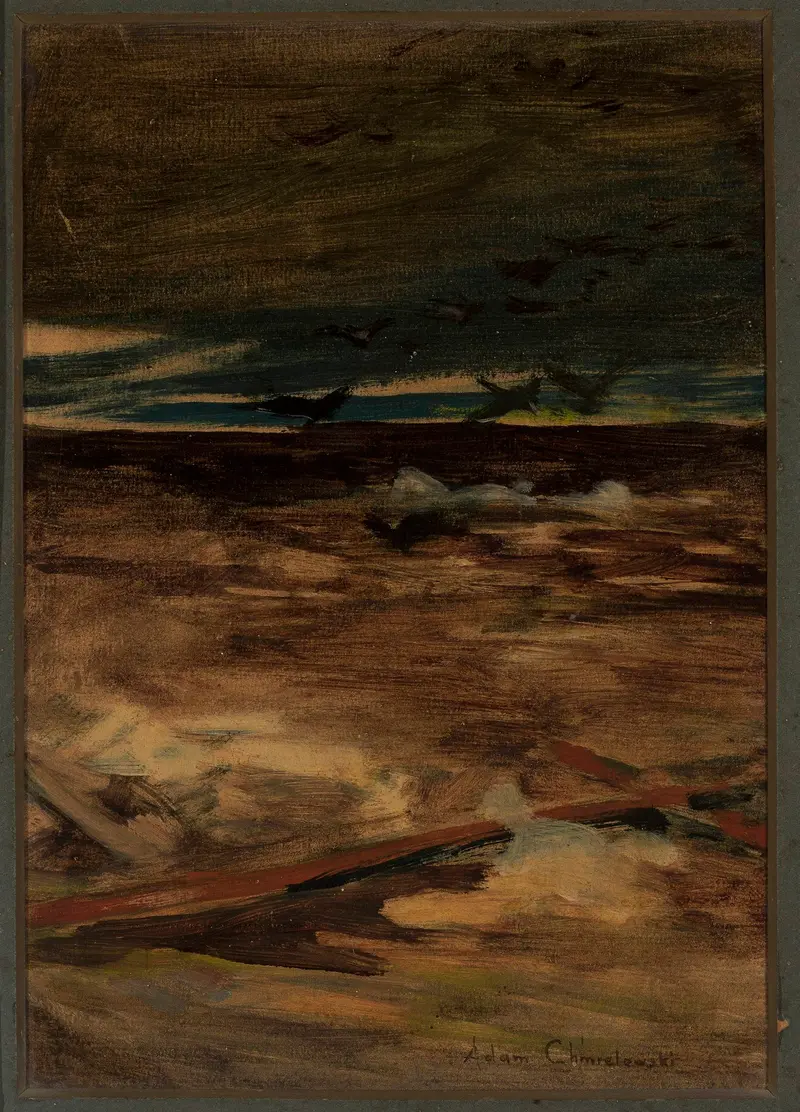
Pestilence, section of the triptych “Disaster”, sketch
Adam Chmielowski

Black clouds, section of the triptych “Disaster”, sketch
Adam Chmielowski





