
Garden of Love. — History & Facts
What draws the viewer first in Garden of Love is the hush of twilight, broken only by a flicker of firelight at the painting’s heart. The scene is thick with shadows, yet the artist, Adam Chmielowski, leads the eye to a pair of figures at the center: a woman in white, her gesture tender and intimate, stands close to a darkly clad companion. Around them, the dusk gathers a loose ring of onlookers—some crowned with flowers, others half-lost in gloom—each figure emerging or receding as if caught between dream and waking.
The fire’s glow, reflected on faces and garments, is not just a source of light but a silent witness, heightening the sense of secrecy and ritual. Painted in 1876, this work belongs to a world of shifting artistic ambitions, where Polish painters like Chmielowski sought to balance romantic narrative with the new freedoms of modern brushwork. The gathering here could be a wedding, a festival, or a private rite—history has kept few traces of its specifics, but the mood is unmistakably one of longing and communion. In the late nineteenth century, such scenes often served as coded meditations on love, community, and the passage of time, especially in a Poland marked by political uncertainty.
Now housed in the National Museum in Warsaw, Garden of Love invites us to linger in the half-light, searching for stories in every shadow.
More Artworks by Adam Chmielowski

Abandoned parsonage
Adam Chmielowski
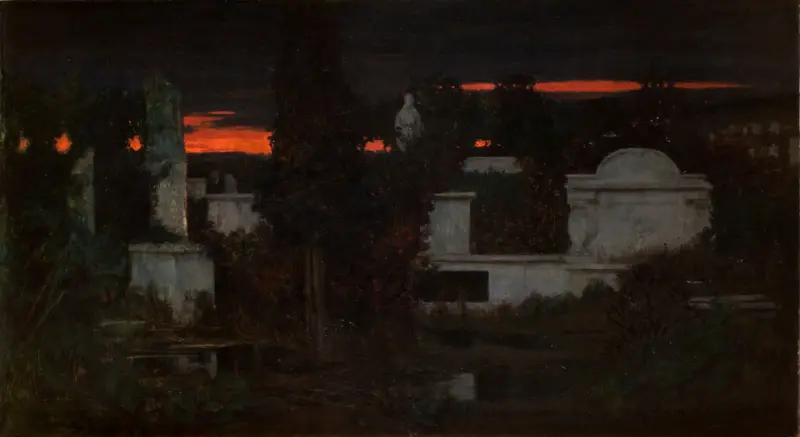
Italian Cemetery at Dusk
Adam Chmielowski
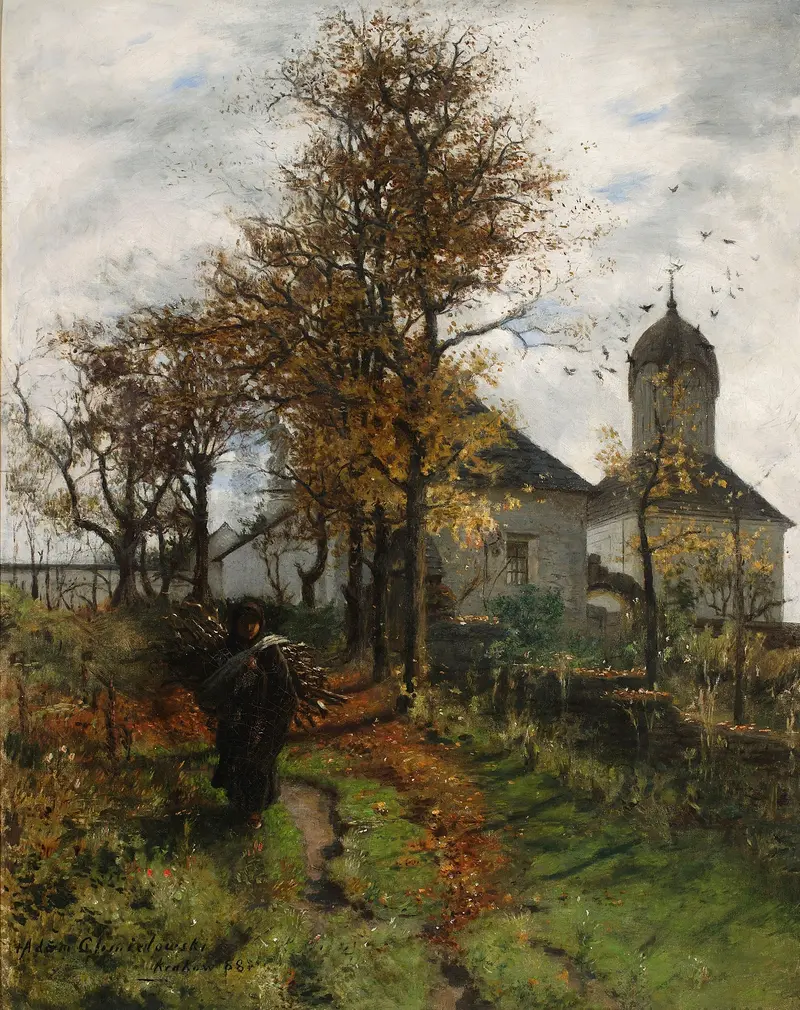
Deserted Presbytery
Adam Chmielowski
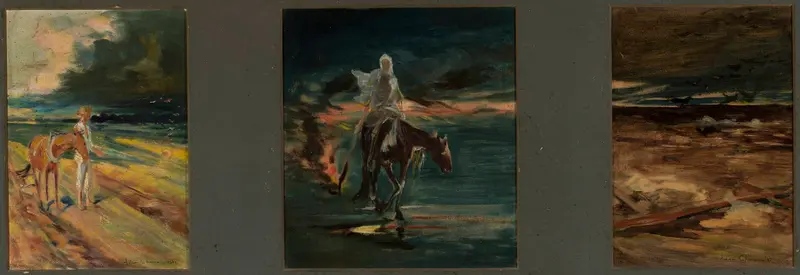
Black clouds. Death. Pestilence, triptych “Disaster”, sketch
Adam Chmielowski
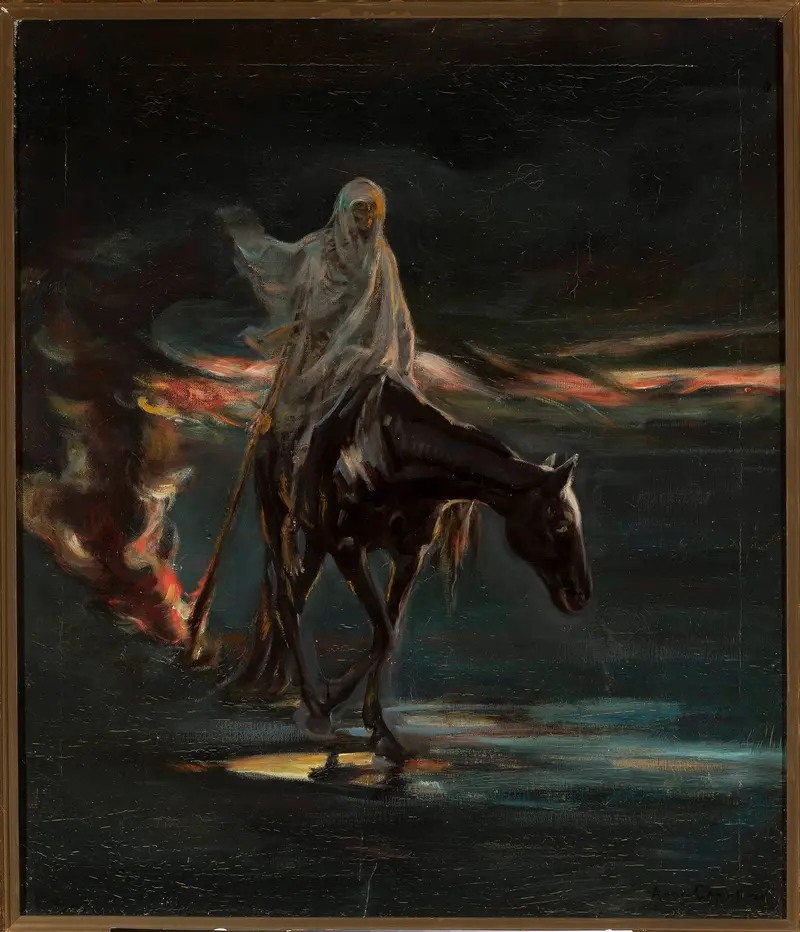
The Death and conflagration, central part of the triptych Disaster"."
Adam Chmielowski
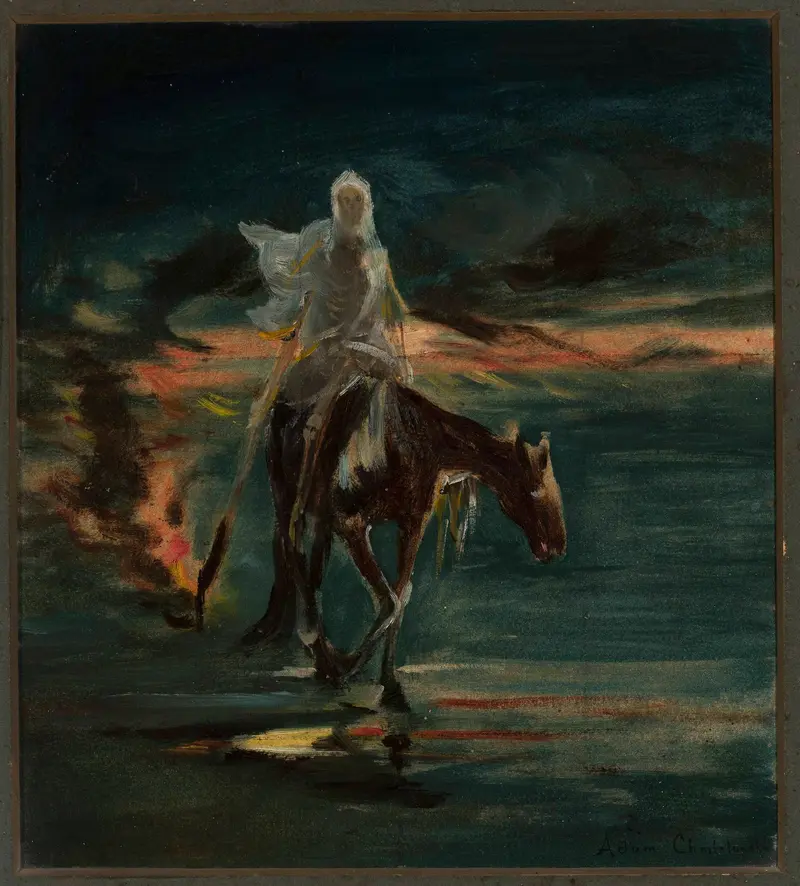
Death, central section of the triptych “Disaster”, sketch
Adam Chmielowski
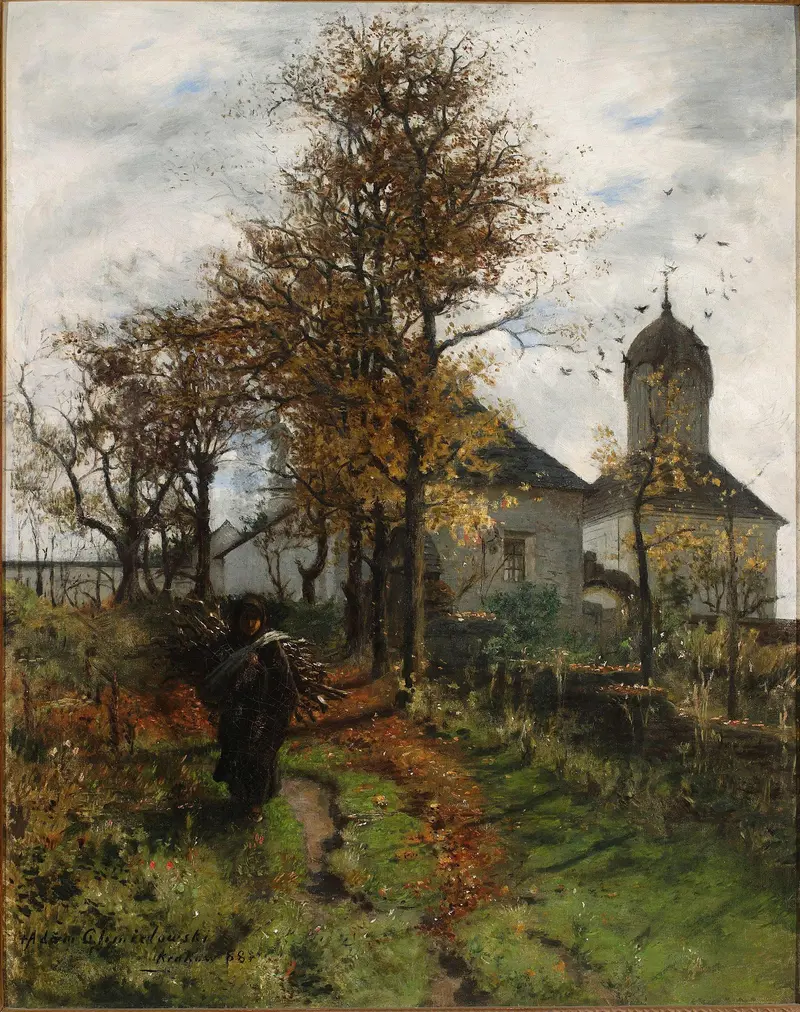
Abandoned clergy house.
Adam Chmielowski
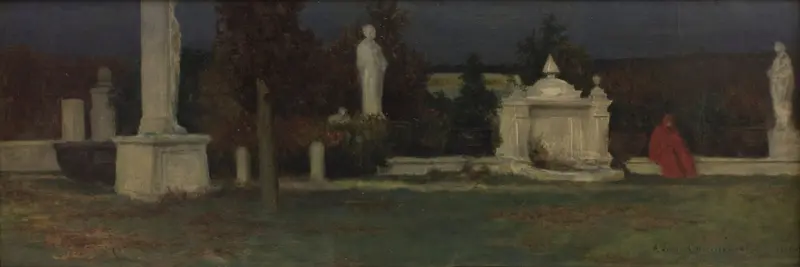
Grey Hour
Adam Chmielowski
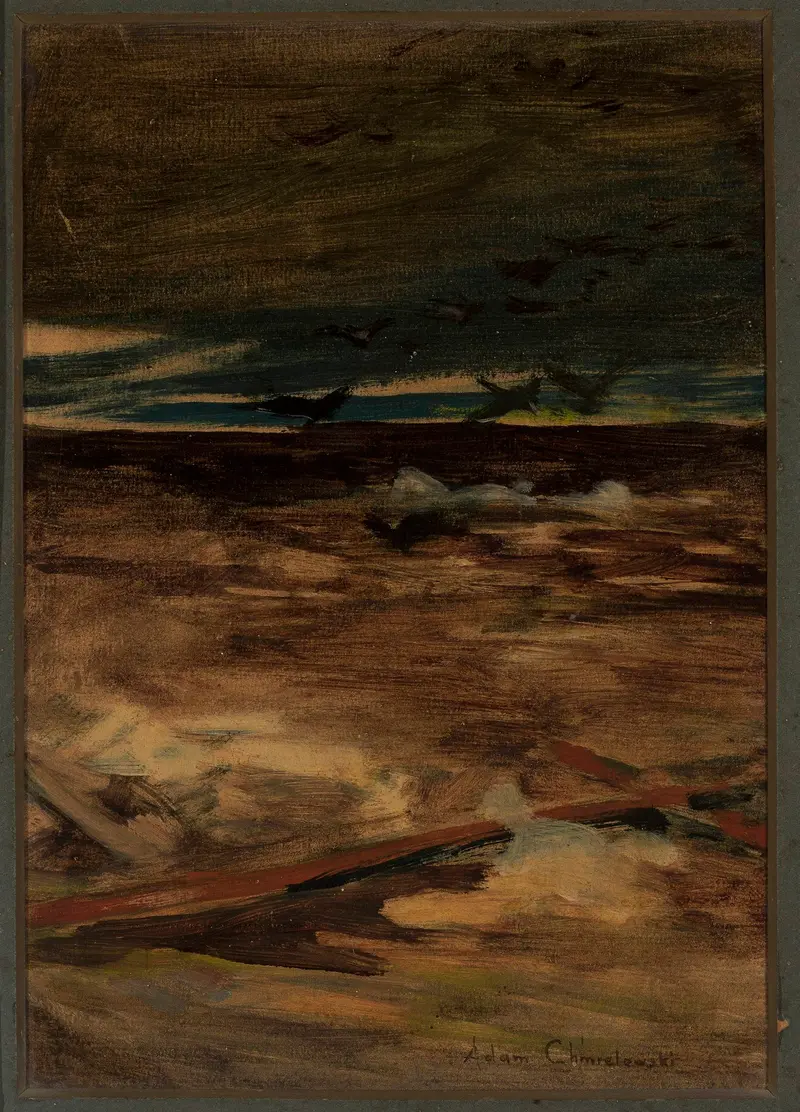
Pestilence, section of the triptych “Disaster”, sketch
Adam Chmielowski

Black clouds, section of the triptych “Disaster”, sketch
Adam Chmielowski
More Genre Scene Art

Banquet of the Officers of the St George Civic Guard
Frans Hals

Rembrandt and Saskia in the Scene of the Prodigal Son
Rembrandt van Rijn

Bal du moulin de la Galette
Pierre-Auguste Renoir

Quadrille at the Moulin Rouge
Henri de Toulouse-Lautrec

A Burial at Ornans
Gustave Courbet

When Will You Marry?
Paul Gauguin