
Blick über die Bucht von Neapel — History & Facts
In the stillness of the moment, the divine seems to breathe life into the landscape, capturing a sense of awe that is as powerful as it is serene. Look to the left at the gentle curvature of the bay, where the shimmering waters reflect the soft pastels of the sky. Achenbach’s meticulous brushwork brings depth to the scene, evoking an ambiance that is both tranquil and electric. Color choices blend harmoniously, with the azure blues and warm golds intertwining, creating a visual dialogue that draws the viewer into the embrace of the landscape. The juxtaposition of land and sea speaks to the eternal struggle between nature and the divine.
Notice the distant silhouette of Mount Vesuvius, looming yet serene, embodying both beauty and the potential chaos beneath. Each element in the painting, from the delicate sailboats to the distant horizon, whispers of a quiet reverence for the majesty of creation, inviting contemplation on the divine presence woven throughout the natural world. In 1880, Blick über die Bucht von Neapel was painted during a time when Achenbach was exploring the relationship between light and nature, deeply influenced by the Romantic ideals of his era. Living in Düsseldorf, where artists were increasingly captivated by landscapes, he sought to elevate the ordinary into the realm of the extraordinary, capturing a moment in time that celebrates both the beauty of the earthly and the whispers of the divine.
More Artworks by Oswald Achenbach
Browse all →
Blick auf die Bucht von Neapel
Oswald Achenbach

Ländliches Fest am Ufer der Bucht von Neapel
Oswald Achenbach
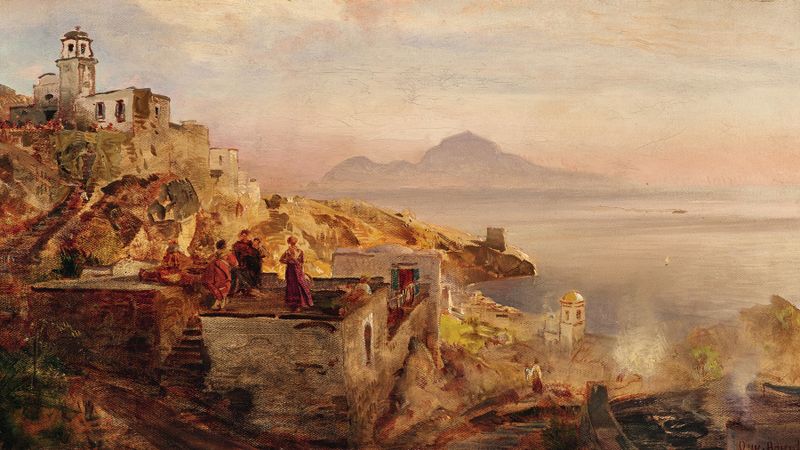
The Gulf of Naples
Oswald Achenbach
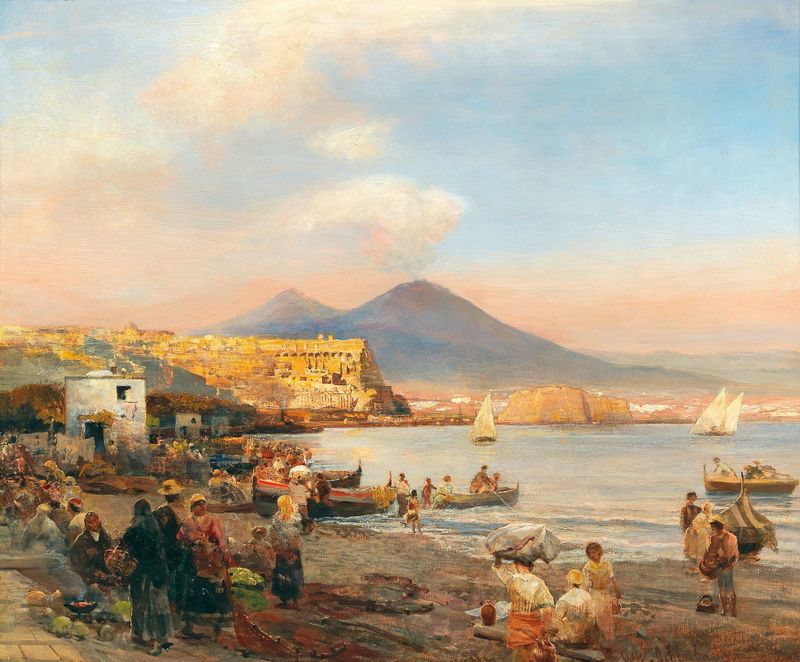
Sunset In The Bay Of Naples
Oswald Achenbach
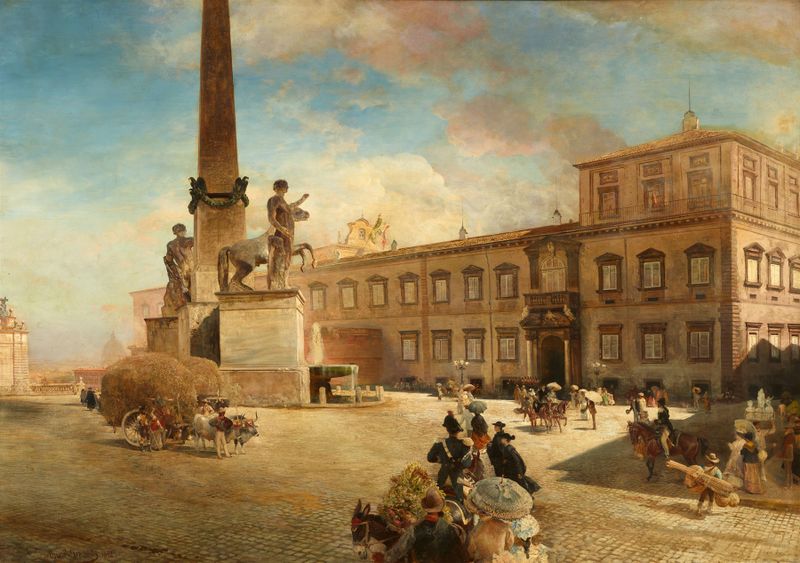
Der Quirinalspalast in Rom
Oswald Achenbach
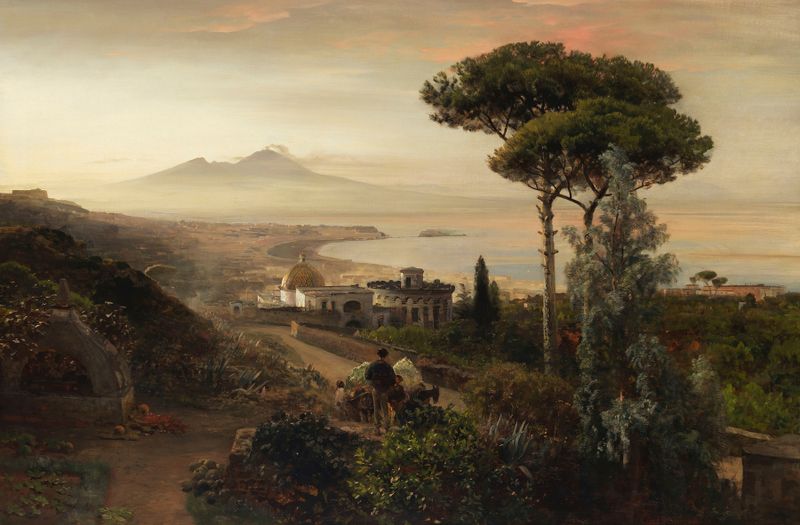
Blick auf den Vesuv
Oswald Achenbach

Küstenlandschaft bei Neapel
Oswald Achenbach
Blick auf Rom von der Villa Medici
Oswald Achenbach

The Great St Bernard Inn, In The Alps
Oswald Achenbach
Campo Santo in Poggioreale, the Vesuvius Beyond
Oswald Achenbach





