
Blind Veit Stoss with granddaughter — History & Facts
Few paintings in Polish art have stirred as much discussion about the fate of artists as Blind Veit Stoss with granddaughter by Jan Matejko. When first exhibited in 1865, the work drew attention for its rare subject: not a king or battle, but an aging, nearly forgotten sculptor. Matejko’s choice to depict Veit Stoss—the German-Polish master of late Gothic woodcarving—at the end of his life, blind and impoverished, was both a tribute and a warning.
In an era when Poland’s own artists struggled for recognition under foreign rule, Matejko’s painting became a quiet manifesto for the dignity and suffering of creative labor. The scene captures a moment of intimate hardship: Veit Stoss, his sight lost, sits hunched in a dim interior, his granddaughter gently guiding his hand over a piece of wood. The painter lingers on the contrast between the elder’s lined, searching face and the girl’s youthful patience. Tools of the sculptor’s trade—chisels, mallets—lie scattered, symbols of both achievement and loss.
The light falls softly on their clasped hands, suggesting hope and continuity amid decline. Unlike Rembrandt’s depictions of aging artists, which often emphasize solitude, Matejko’s focus on intergenerational care offers a more communal vision of artistic legacy. The painting’s early history remains somewhat obscure; no records survive of a specific patron or commission. It entered public collections in the late 19th century, as Matejko’s reputation soared following his grand historical canvases.
Today, Blind Veit Stoss with granddaughter is recognized as a key work from Matejko’s formative years, foreshadowing his lifelong concern with Poland’s cultural memory. Its current home is the National Museum in Kraków, where it stands apart from the artist’s more famous battle scenes—a quiet meditation on the costs and consolations of art.
More Artworks by Jan Matejko
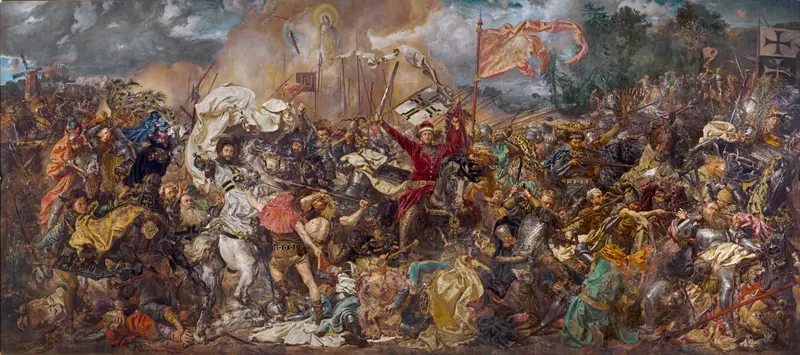
Battle of Grunwald
Jan Matejko

Stańczyk
Jan Matejko

Battle of Raclawice
Jan Matejko
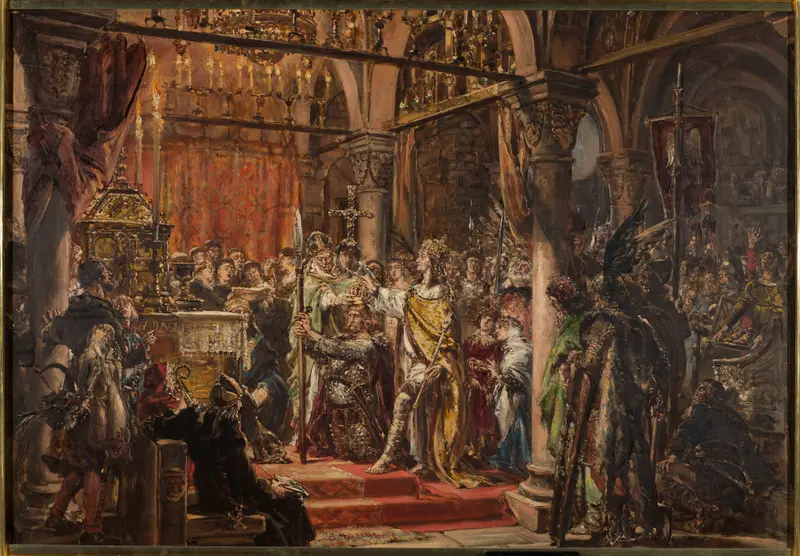
Coronation of the First King, 1001 AD, from the series “History of Civilization in Poland”
Jan Matejko
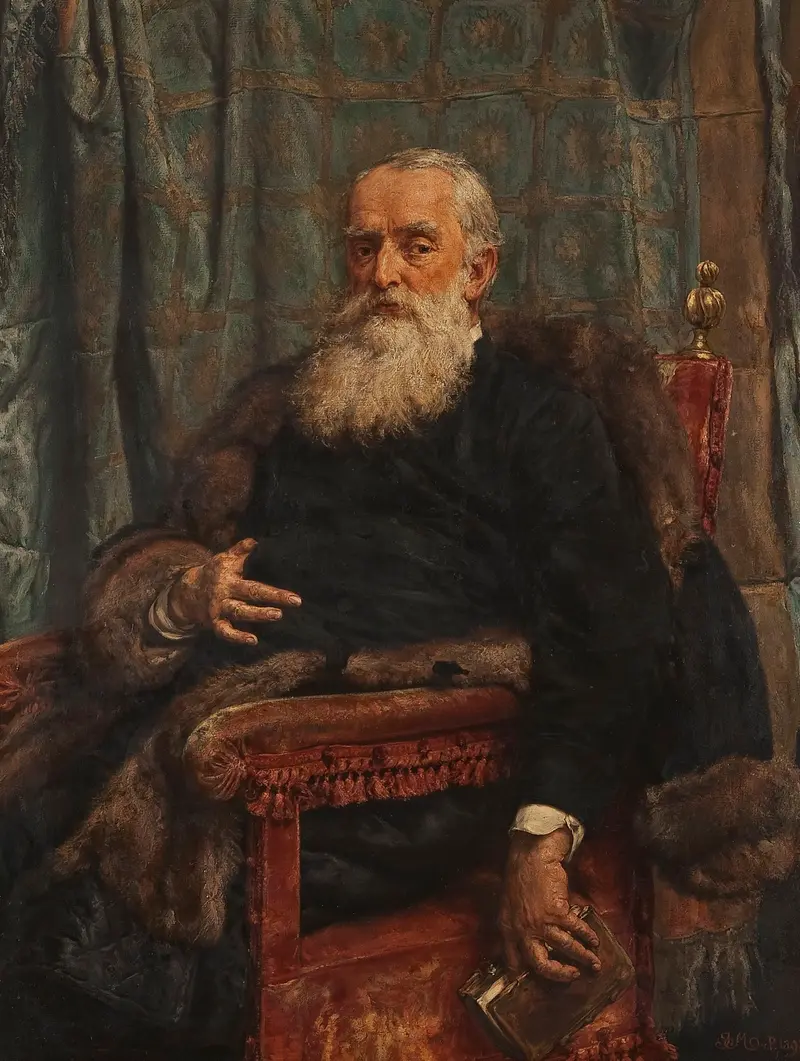
Portrait of Henryk Krajewski
Jan Matejko
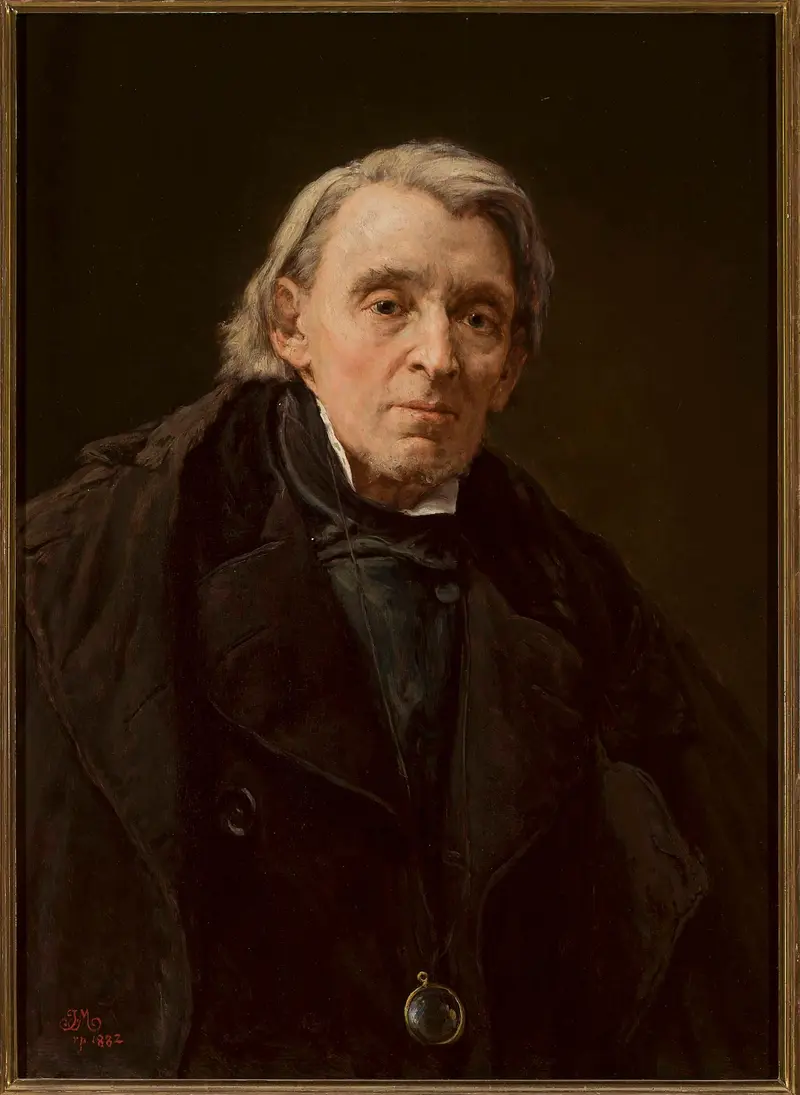
Portrait of Karol Podlewski
Jan Matejko
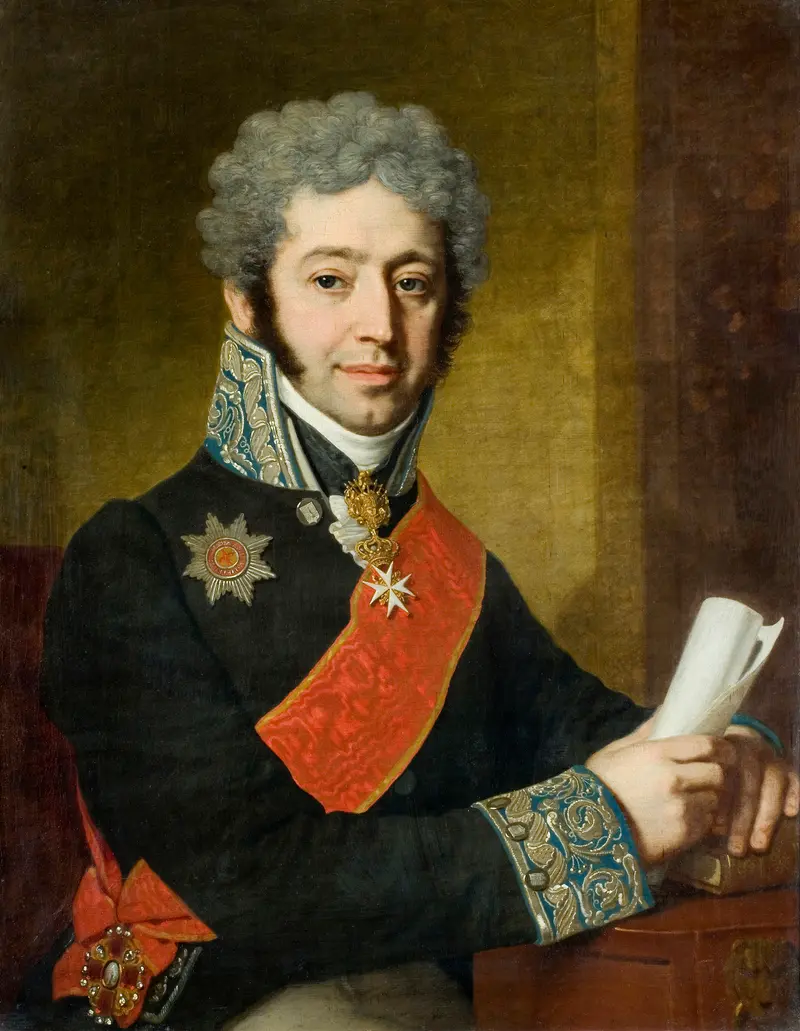
Portrait of Potocki and Poninski
Jan Matejko
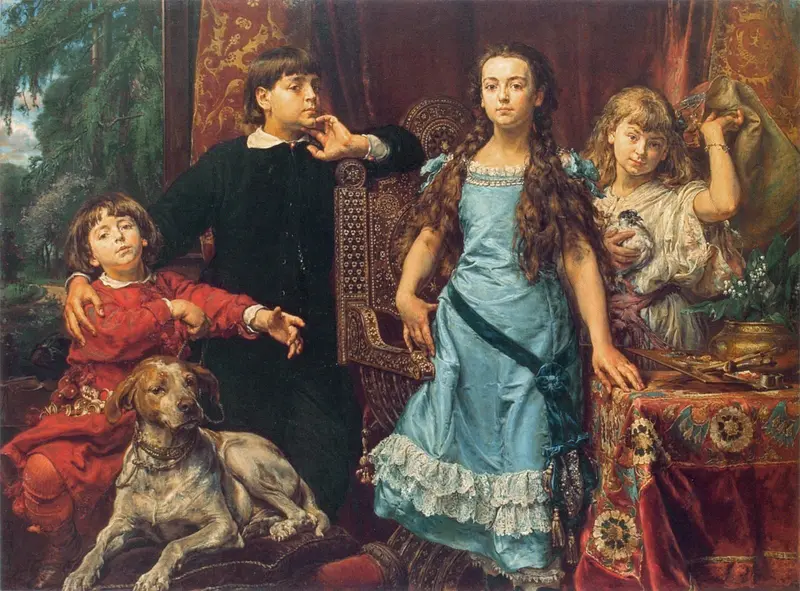
Portrait of the artist's four children
Jan Matejko
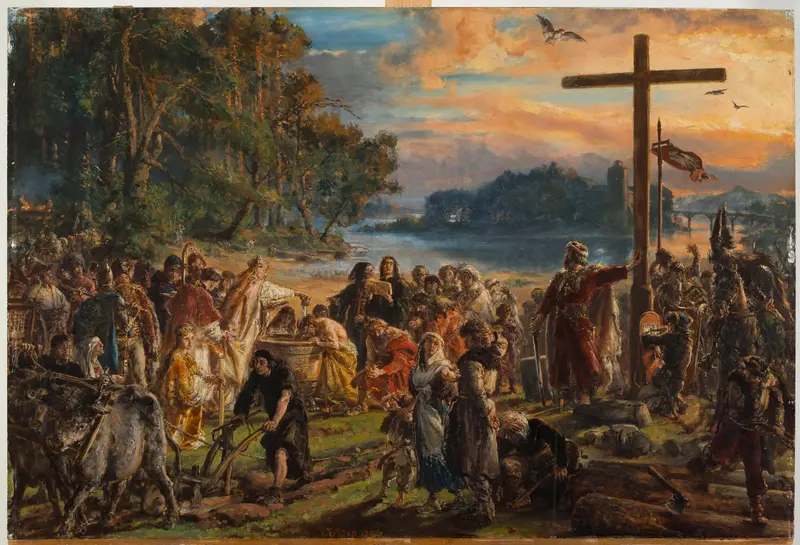
Introduction of Christianity in Poland
Jan Matejko
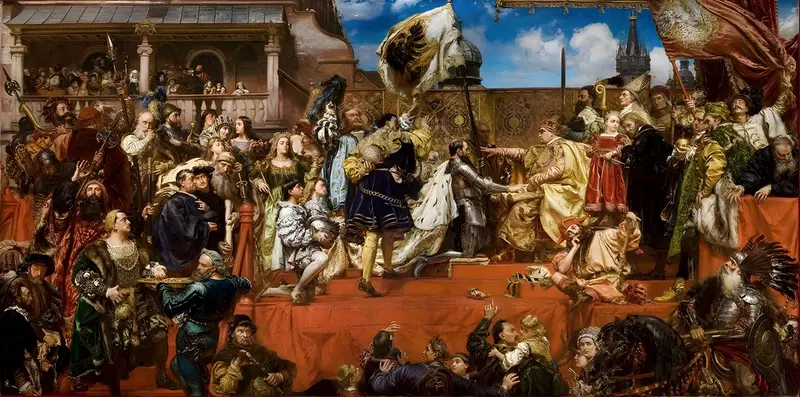
Prussian Homage
Jan Matejko
More Genre Scene Art

Banquet of the Officers of the St George Civic Guard
Frans Hals

Rembrandt and Saskia in the Scene of the Prodigal Son
Rembrandt van Rijn

Bal du moulin de la Galette
Pierre-Auguste Renoir

Quadrille at the Moulin Rouge
Henri de Toulouse-Lautrec

A Burial at Ornans
Gustave Courbet

When Will You Marry?
Paul Gauguin