
Blumenstillleben — History & Facts
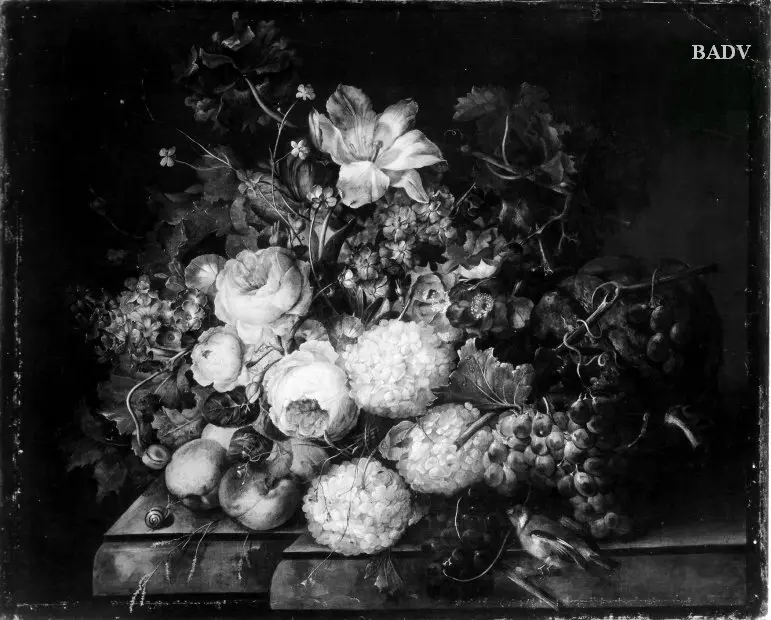
A riot of blossoms seems to burst from the confines of a stone ledge, each petal and leaf rendered with such precision that the eye is drawn again and again to the smallest details—a droplet clinging to a curling leaf, the delicate veins of a tulip, the faint fuzz on a strawberry. At the heart of Blumenstillleben, the arrangement is both wild and impossibly ordered, as if nature has been coaxed into a fleeting moment of perfect abundance. The light falls from above, catching the rounded heads of white hydrangeas and the striped tulip, pushing them forward while shadows pool beneath the tangled stems and fruit.
Here, nothing is accidental: the drooping leaves and scattered berries speak of passing time, while the dense cluster of blooms suggests both celebration and impermanence. Painted between 1640 and 1679, this work belongs to the world of Dutch and Flemish still life, where artists like Abraham Mignon found endless fascination in the drama of the everyday. In the bustling mercantile cities of the seventeenth century, such paintings adorned the homes of prosperous burghers, serving as both a testament to worldly success and a gentle reminder of its limits. Collectors prized these images for their technical brilliance and their layered meanings—luxury and decay, beauty and brevity.
Today, Blumenstillleben resides in the collection of the Pinakothek, its dense bouquet inviting us to look closer, to lose ourselves in the painted illusion, and to find new stories in the tangle of stems and petals.
More Artworks by Abraham Mignon

Still Life with Flowers and a Watch
Abraham Mignon
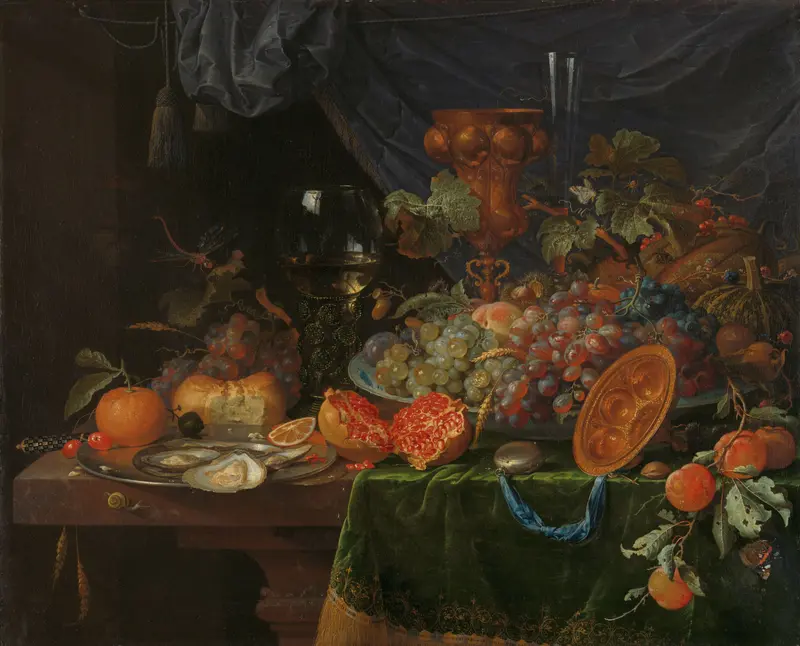
Still Life with Fruit and Oysters
Abraham Mignon
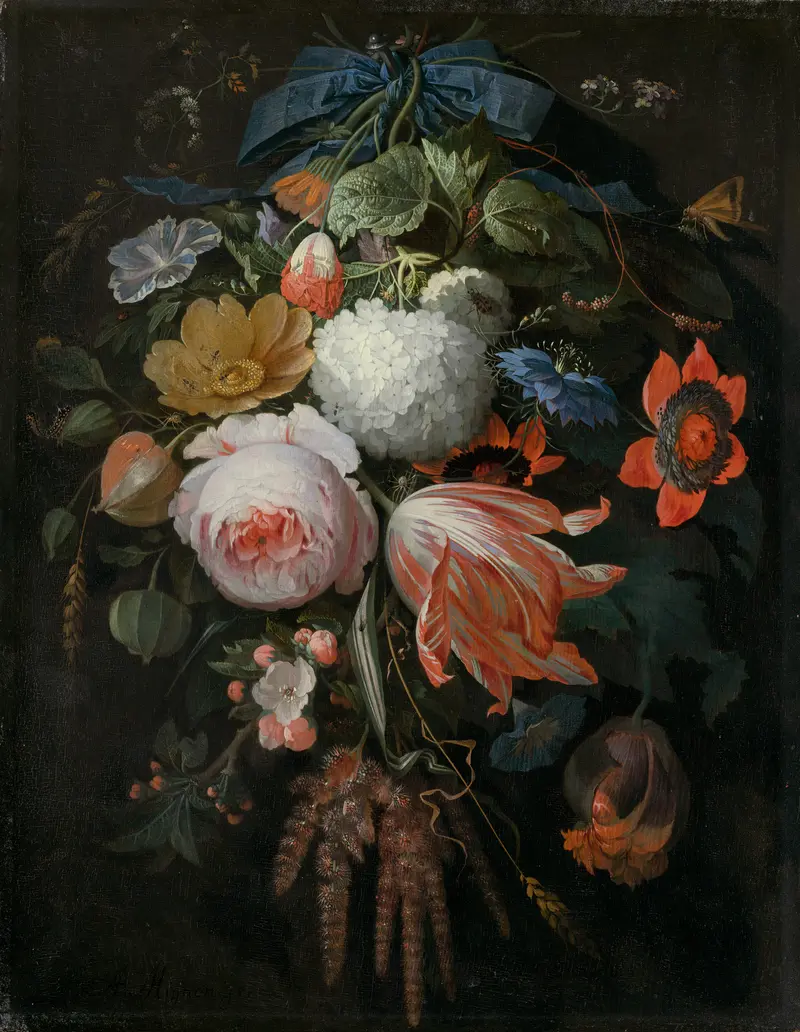
A Hanging Bouquet of Flowers
Abraham Mignon
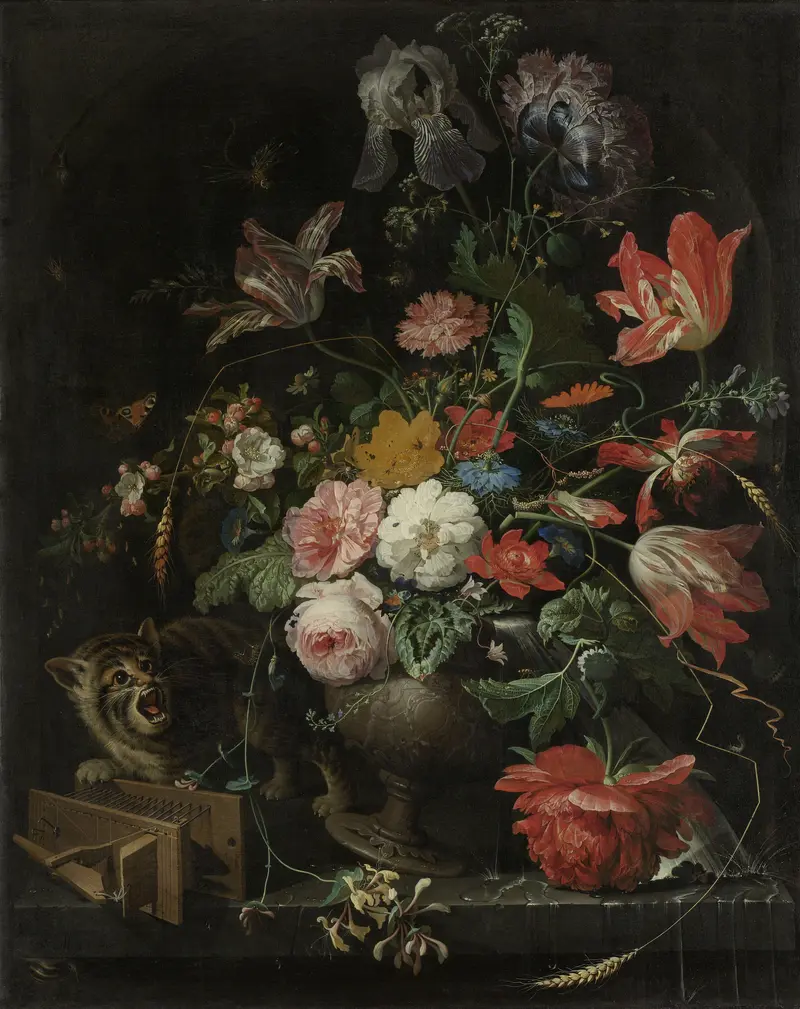
Bouquet with cat and mousetrap
Abraham Mignon
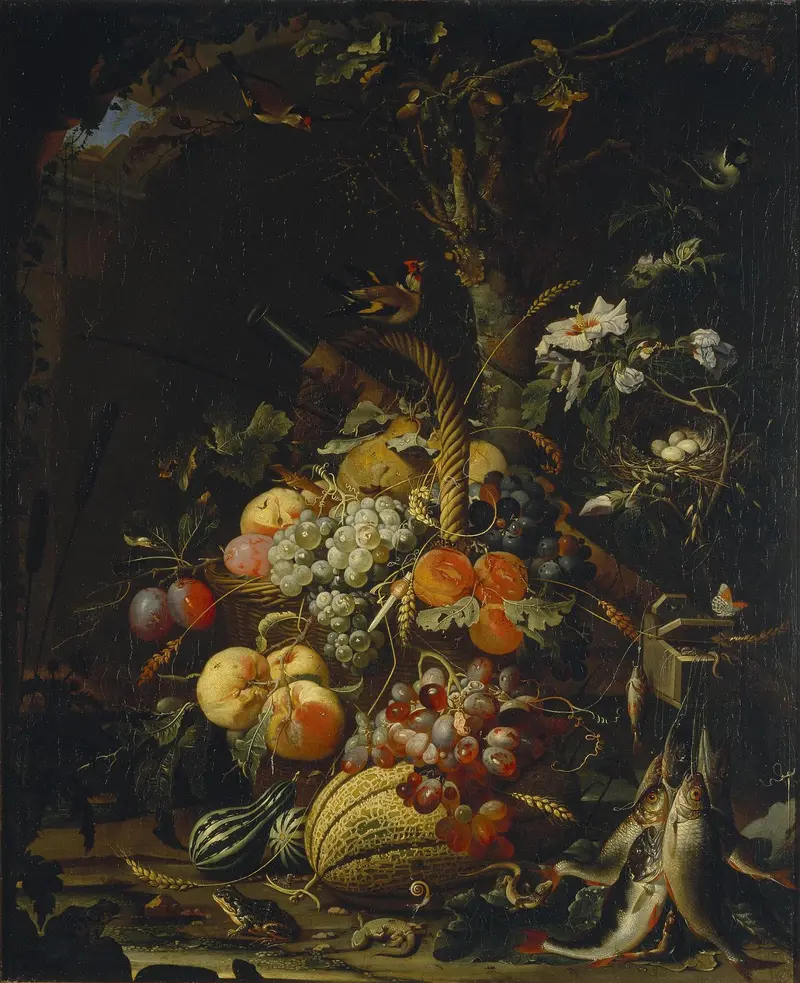
Forest floor still life with fruit, fish and a bird's nest
Abraham Mignon
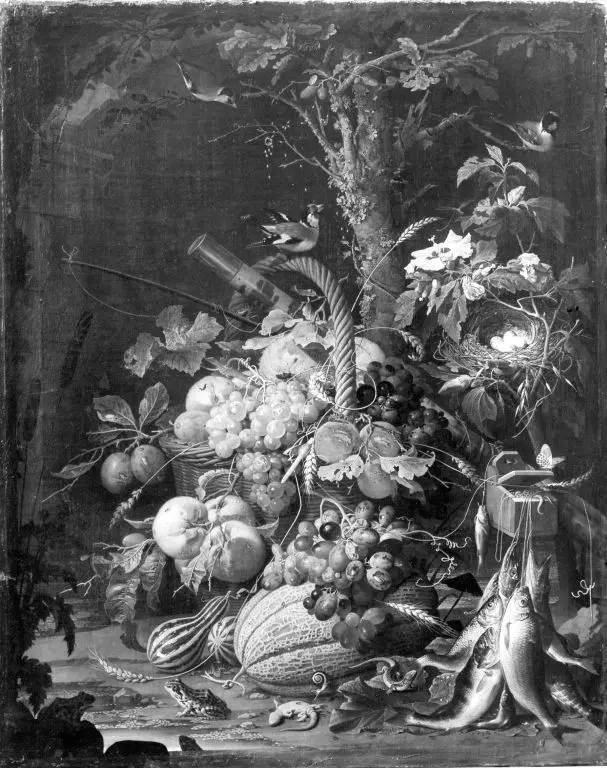
Still life with fruit, fish and a bird's nest
Abraham Mignon
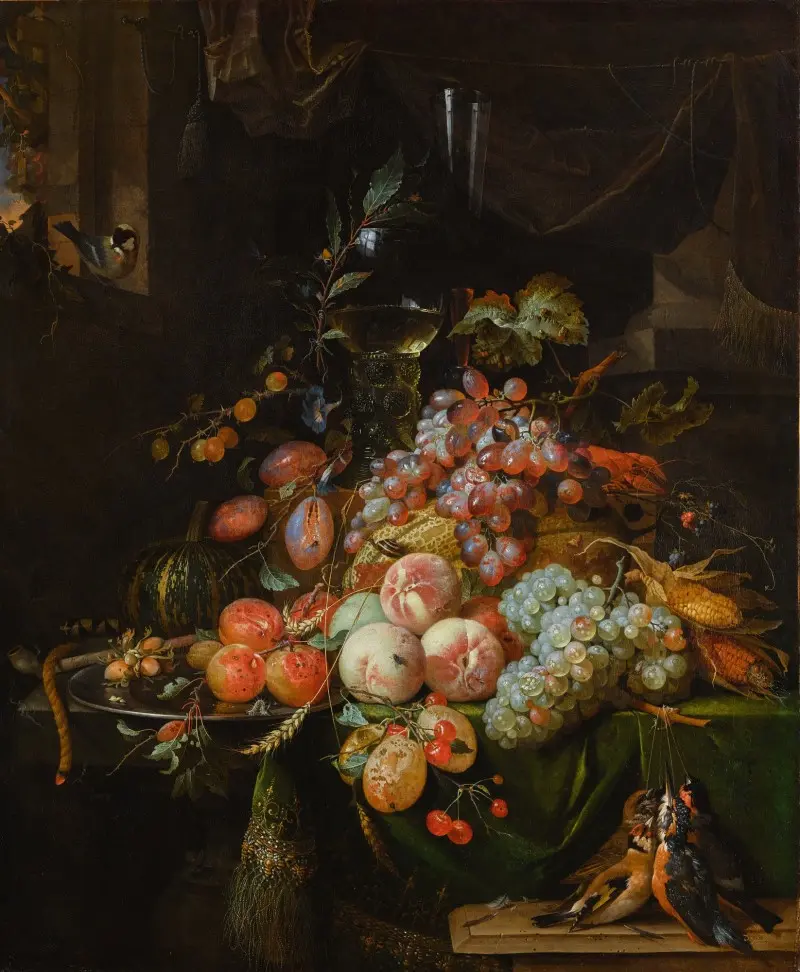
Still Life with Plums, Peaches, Apricots, Grapes and a Melon
Abraham Mignon
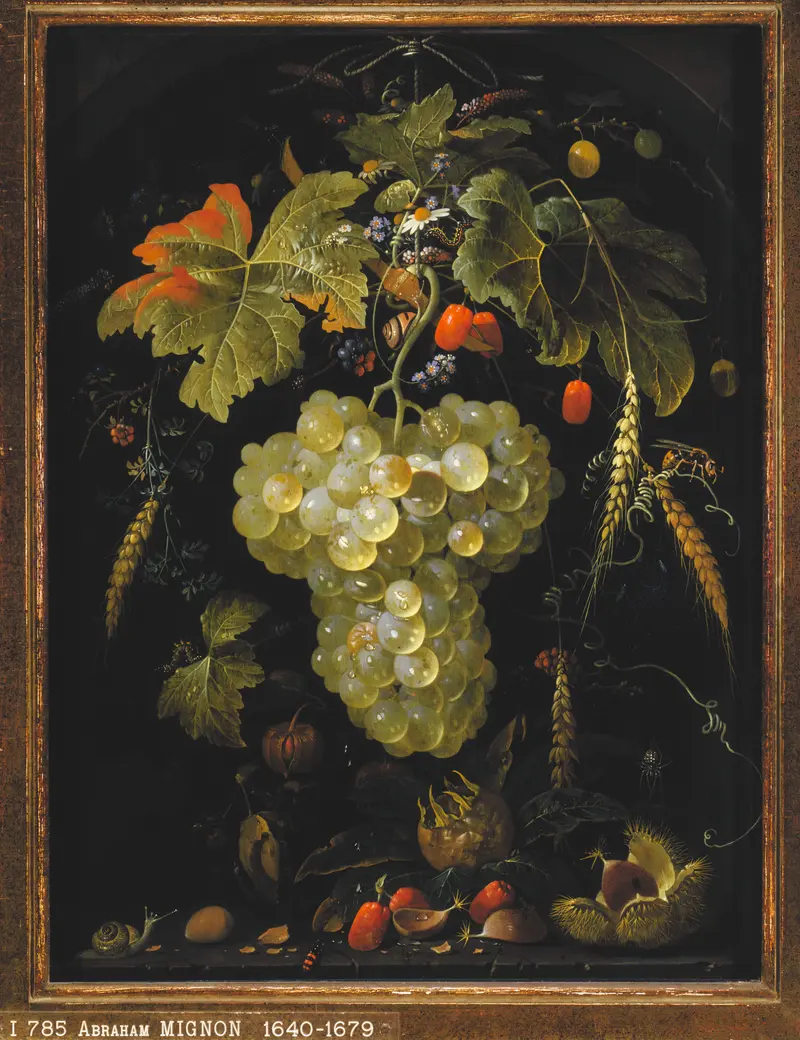
Festoon of fruit suspended from a rope, in a niche
Abraham Mignon
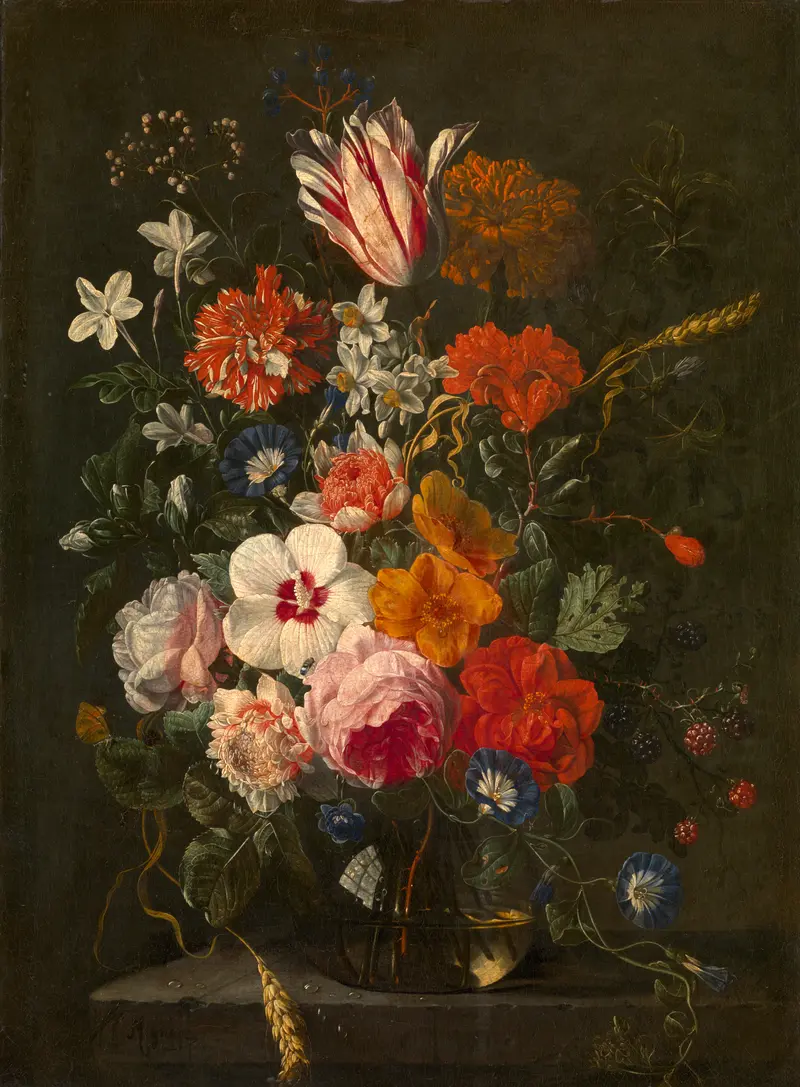
Flowers and a branch of berries in a glass vase on a stone ledge
Abraham Mignon
Flowers and fruit on a plinth
Abraham Mignon





