
Bords de la Seine à Veneux les Sablons — History & Facts
What if silence could speak through light? In Bords de la Seine à Veneux les Sablons, the whispers of a tranquil riverbank evoke a dialogue of serenity and reflection. This scene, painted in 1925, encapsulates the stillness of nature, inviting viewers to immerse themselves in a moment where time seems to stand still. Look to the foreground where the gentle curve of the Seine reflects a soft, shimmering light. The pastel palette harmonizes with the quietude of the landscape, drawing your gaze toward the delicate interplay of sky and water.
Notice how Montézin masterfully contrasts the lush greens of the foliage with the warm, golden hues of the sunset, creating a sense of depth and atmosphere that envelops the entire composition. Each brushstroke seems to harmonize with the gentle flow of the river, guiding the viewer's eye toward a distant horizon. Embedded within this peaceful setting are layers of emotional tension. The stillness of the water is juxtaposed with the dynamic brushwork in the trees, suggesting a world that is alive yet holding its breath.
This contrast might symbolize the balance between the tranquility of nature and the inner turmoil of the human experience. Furthermore, the strategic placement of the horizon invites contemplation of the unknown, hinting at the promise and mystery that lie beyond the landscape. In 1925, Montézin was deeply entrenched in the Post-Impressionist movement, creating works that reflected both his mastery of color and his connection to nature. At this time, France was experiencing significant social and artistic changes, as artists sought to capture the essence of the world around them amidst the aftermath of World War I.
Montézin's serene vision of the Seine represents not only a personal escape but also a collective yearning for peace and beauty in a rapidly transforming society.
More Artworks by Pierre-Eugène Montézin
Browse all →
Chaumières aux fenêtres et volets tourquoises
Pierre-Eugène Montézin

Quai à Saint-Mammes
Pierre-Eugène Montézin
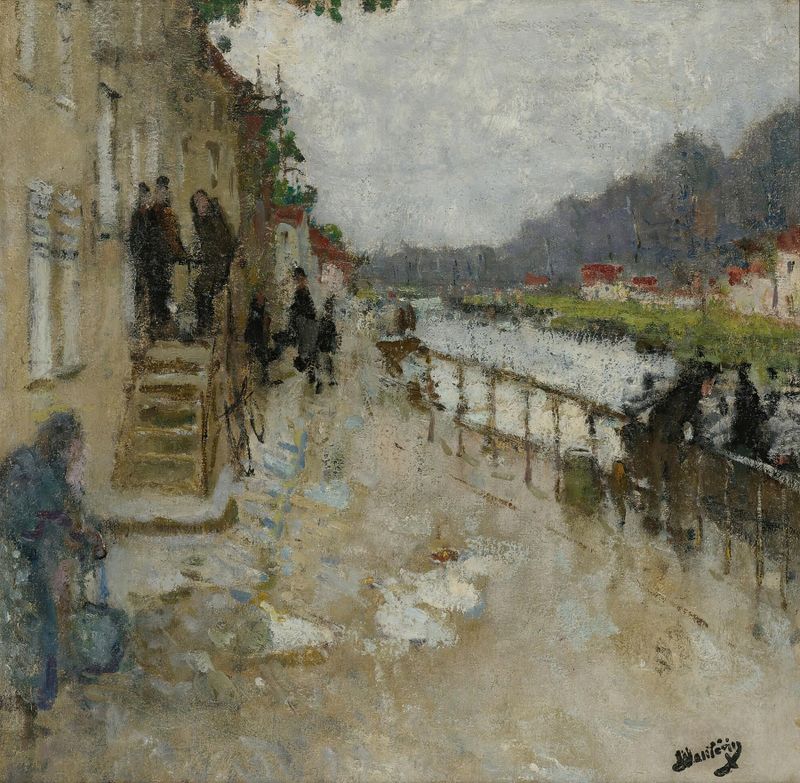
Bord De Canal À Saint-Mammès
Pierre-Eugène Montézin
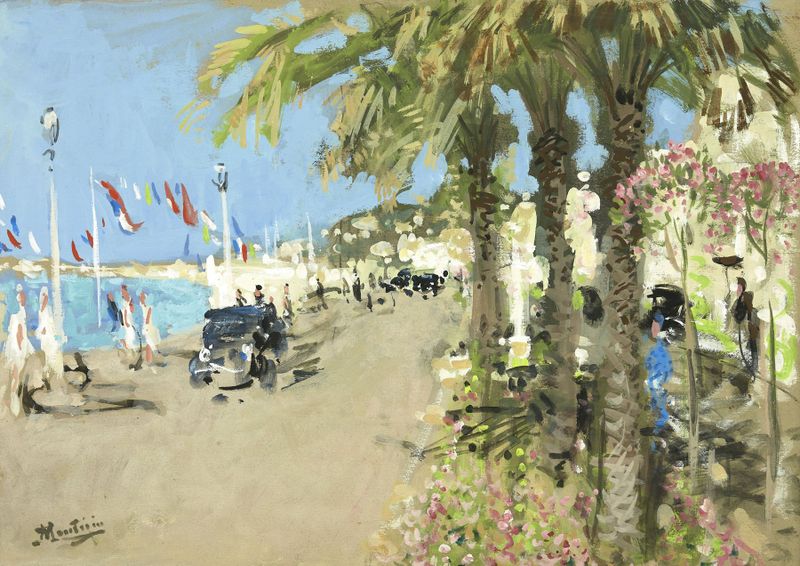
La promenade des Anglais, Nice
Pierre-Eugène Montézin
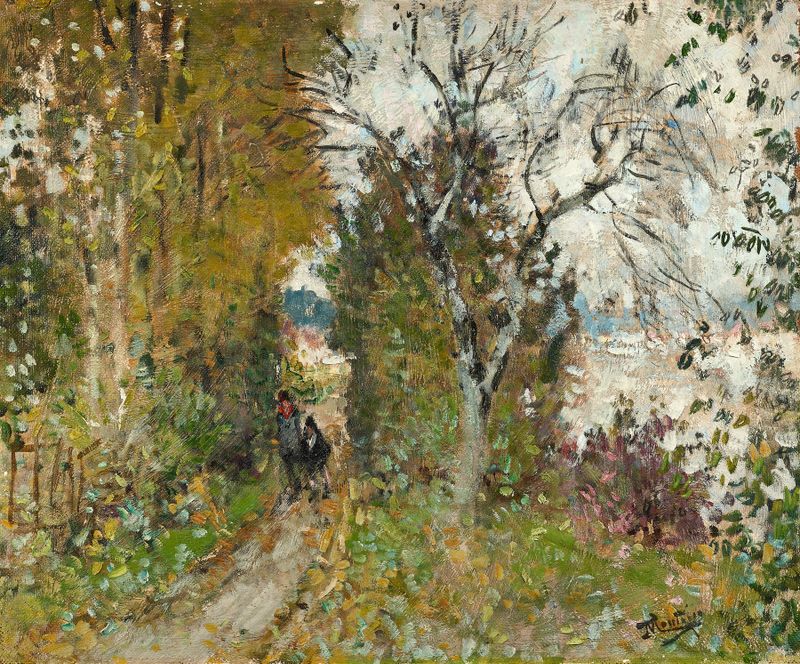
Promenade au bord de l’eau
Pierre-Eugène Montézin

Verger en fleurs
Pierre-Eugène Montézin

Misy Sur Yonne
Pierre-Eugène Montézin
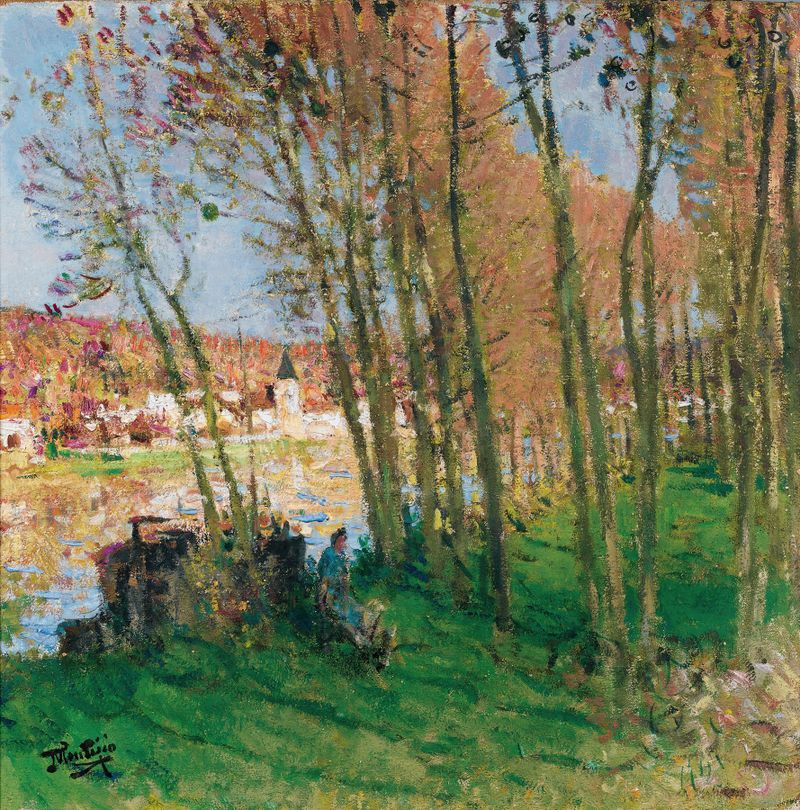
Bord De L’eau
Pierre-Eugène Montézin

La Seine à St. Monance
Pierre-Eugène Montézin

L’entrée Du Village
Pierre-Eugène Montézin





