
"Bourgeois" W---r, and His Squaw — History & Facts
What draws the eye first is the quiet gravity of the figures on horseback, set against a sweep of pale, misted mountains that seem to swallow sound. The man in front, with his broad hat and fringed buckskin, sits upright and alert, his gaze fixed ahead—every line of his posture speaks of vigilance and purpose. Behind him, a woman rides with a different bearing: more reserved, her form almost blending into the landscape, her presence marked by the subtle contrast of her dress and the gentle arch of her horse’s neck.
The palette is all earth and stone, the greens and browns of the foreground giving way to the cool, receding blues of distant peaks, drawing the viewer into a world both intimate and vast. Even the wildflowers at their feet seem to signal a fleeting moment, a pause in a journey whose destination is hidden from us. Created between 1858 and 1860, this work by Alfred Jacob Miller belongs to a period when American artists were drawn to the mythic possibilities of the West, capturing scenes of encounter, migration, and daily survival. Such paintings were often commissioned by patrons eager for glimpses of lands and peoples beyond the reach of eastern cities—images that shaped the nation’s imagination of its own frontier.
The Walters Art Museum now houses this piece, a reminder of how little is recorded about many individual works from this era, even as they speak volumes about the shifting boundaries and layered relationships of their time. To look again at this painting is to sense both the silence of its mountains and the stories that rode through them.
More Artworks by Alfred Jacob Miller

Sunset, Wind River
Alfred Jacob Miller
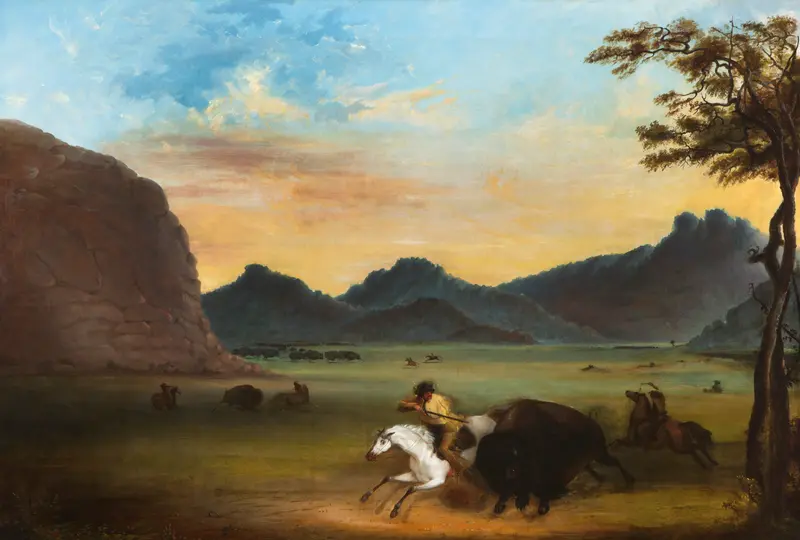
Buffalo Hunt
Alfred Jacob Miller
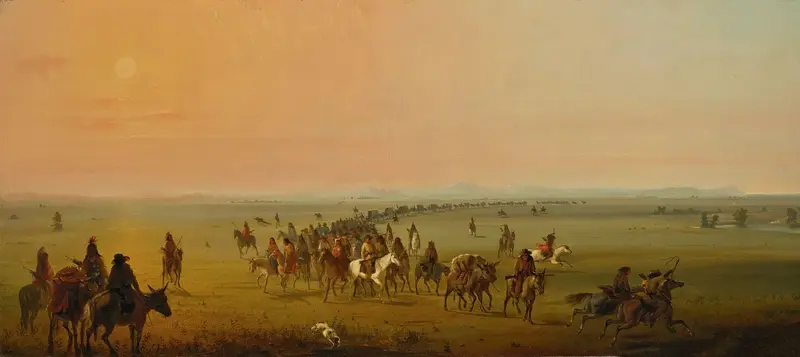
Caravan En Route [Sir William Drummond Stewart’s Caravan]
Alfred Jacob Miller
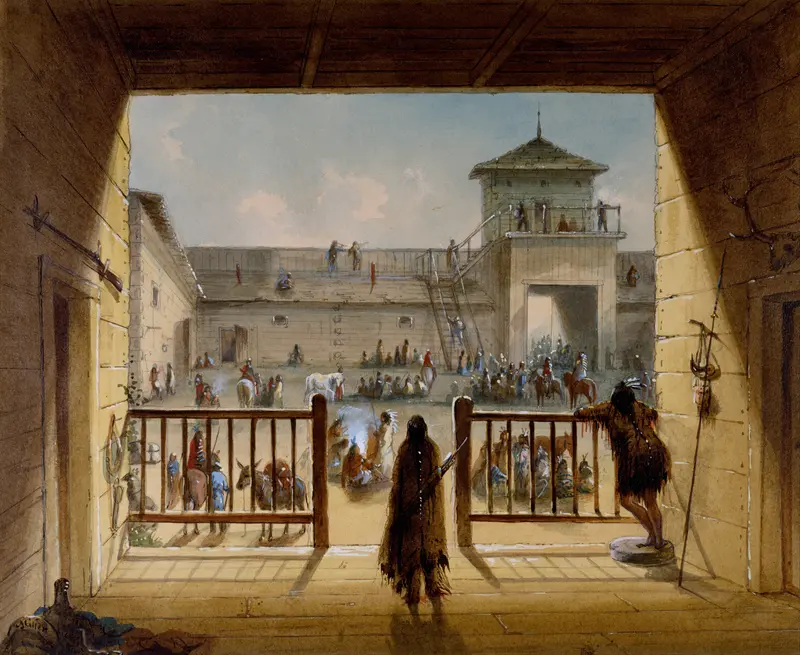
Interior of Fort Laramie
Alfred Jacob Miller
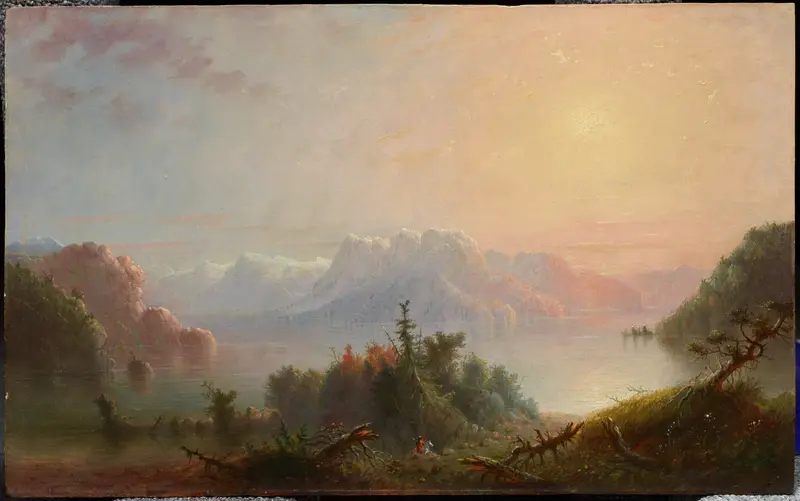
The Lake Her Lone Bosom Expands to the Sky
Alfred Jacob Miller
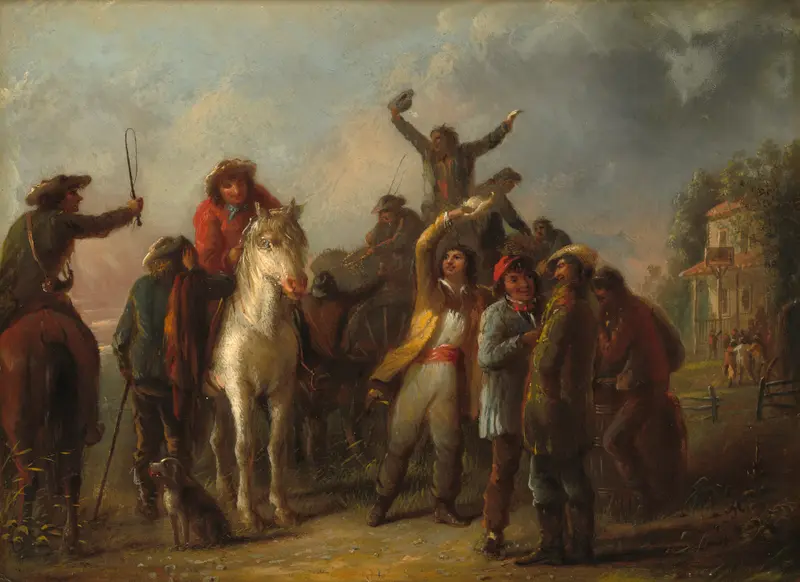
Election Scene, Catonsville, Baltimore County
Alfred Jacob Miller
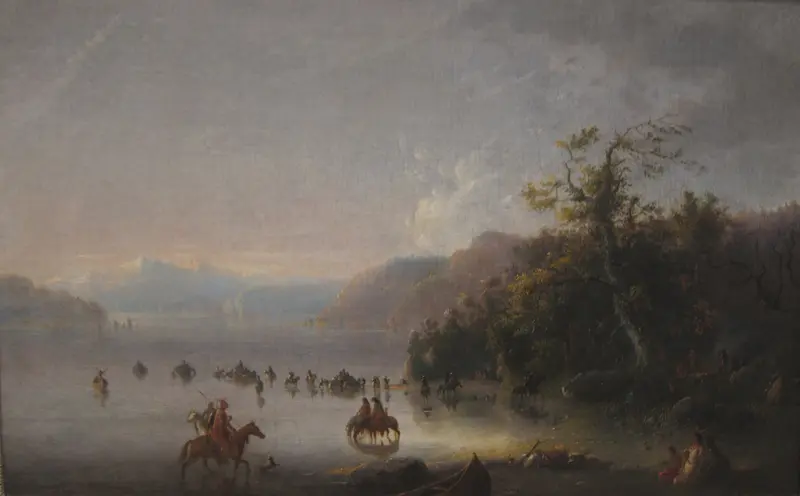
Snake River Indians
Alfred Jacob Miller
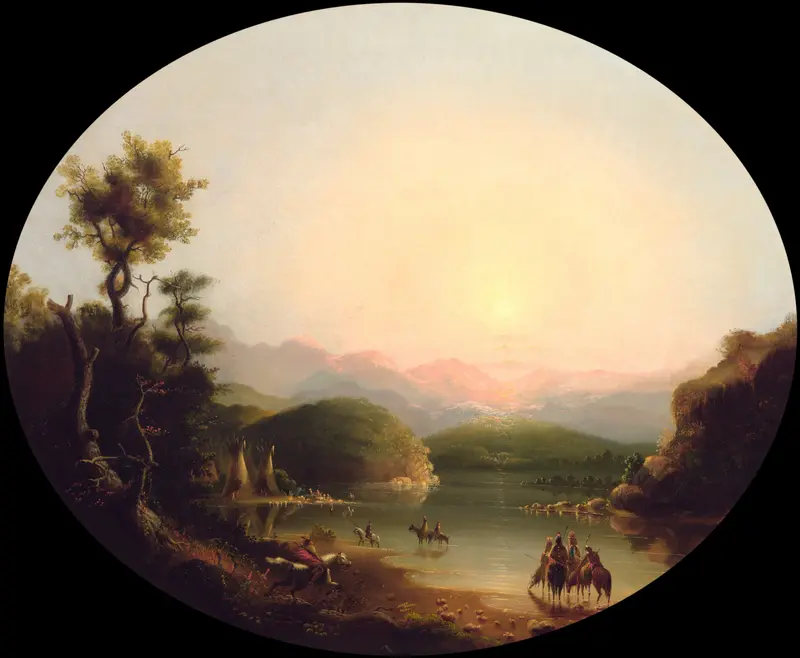
Shoshone Indians at a Mountain Lake (Lake Fremont)
Alfred Jacob Miller
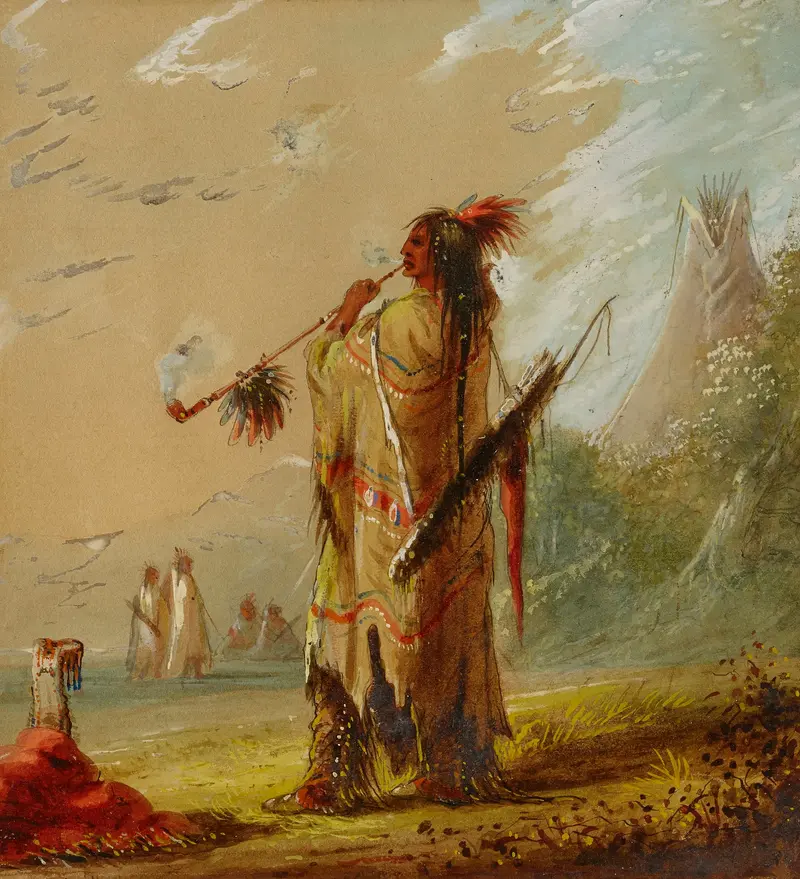
A Shoshonee Indian Smoking
Alfred Jacob Miller
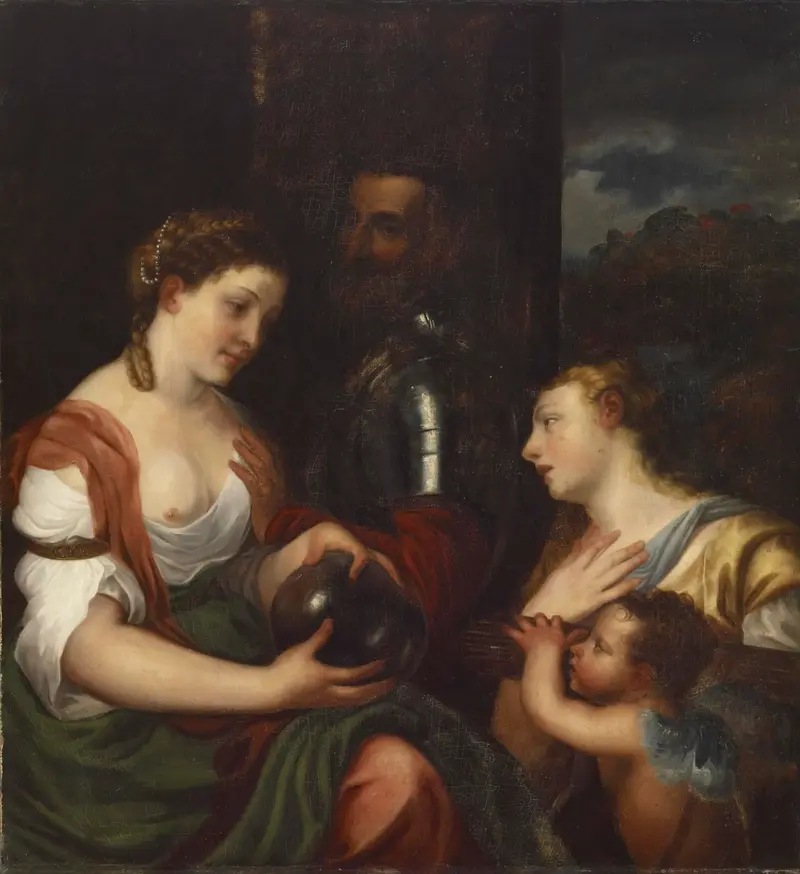
Copy of Titian's "Allegory of Alfonso d'Avalos, Marchese del Vasto"
Alfred Jacob Miller
More Landscape Art

The Starry Night
Vincent van Gogh

View of Delft
Johannes Vermeer

Water Lilies
Claude Monet

The Grand Canal, Venice, looking north-west from the Ca' Corner to the Ca' Contarini degli Scrigni, with the campanile of Santa Maria della Carità
Canaletto

Windsor Castle
Canaletto

The Grand Canal looking North-East from the Palazzo Dolfin-Manin to the Rialto Bridge
Canaletto