
Brown cow milked by a shepherd — History & Facts
A shaft of late afternoon light falls across the broad back of a brown cow, drawing the eye to the quiet labor at the painting’s center. The animal stands patiently, its head turned slightly as if aware of the viewer, while a shepherd—half-shadowed, hat pulled low—works with practiced hands. A chicken pecks in the foreground, its red comb a sudden spark against the muted earth tones.
Every brushstroke in this scene by Adriaen van de Velde serves a purpose: the worn fence, the distant blue hills, the soft, golden haze that settles over the figures. The composition pulls us into a moment of rural routine, yet there’s a sense of calm dignity in the way the cow’s form dominates the canvas, the shepherd’s presence almost secondary to the animal’s gentle bulk. Painted in the 1660s, this work belongs to a world where scenes of everyday country life were both a celebration and a reassurance. Dutch painters like van de Velde found poetry in the ordinary, elevating simple acts—milking, grazing, tending livestock—into subjects worthy of contemplation and pride.
Such paintings were often collected by prosperous townspeople who longed for a connection to the land, even as their own lives grew more urban and mercantile. Today, the painting resides in the collection of the Staatliche Kunsthalle Karlsruhe, its quiet scene a reminder of the enduring appeal of the pastoral ideal. Look again at the cow’s patient gaze and the shepherd’s steady hands: in their stillness, the rhythms of a vanished countryside live on.
More Artworks by Adriaen van de Velde

Staande stier
Adriaen van de Velde
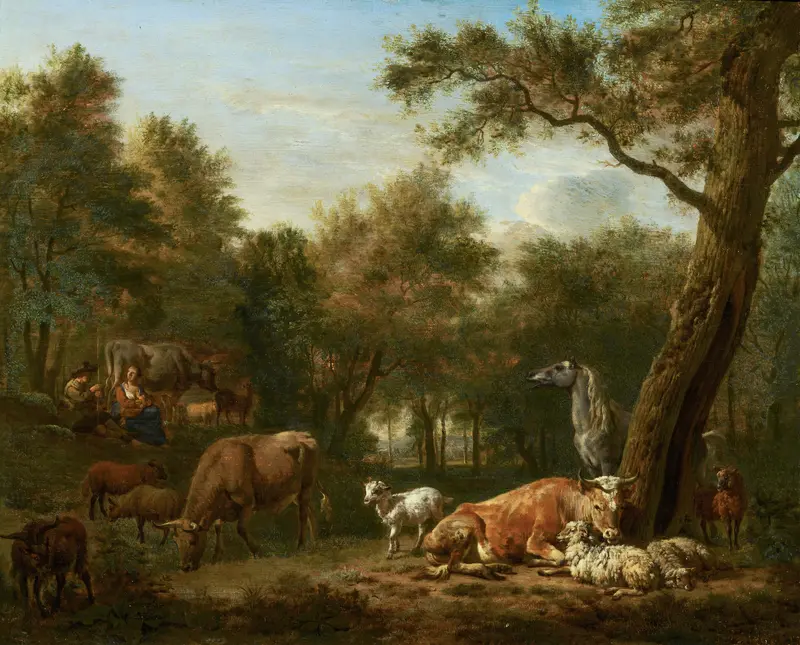
Wooded Landscape with Cattle
Adriaen van de Velde
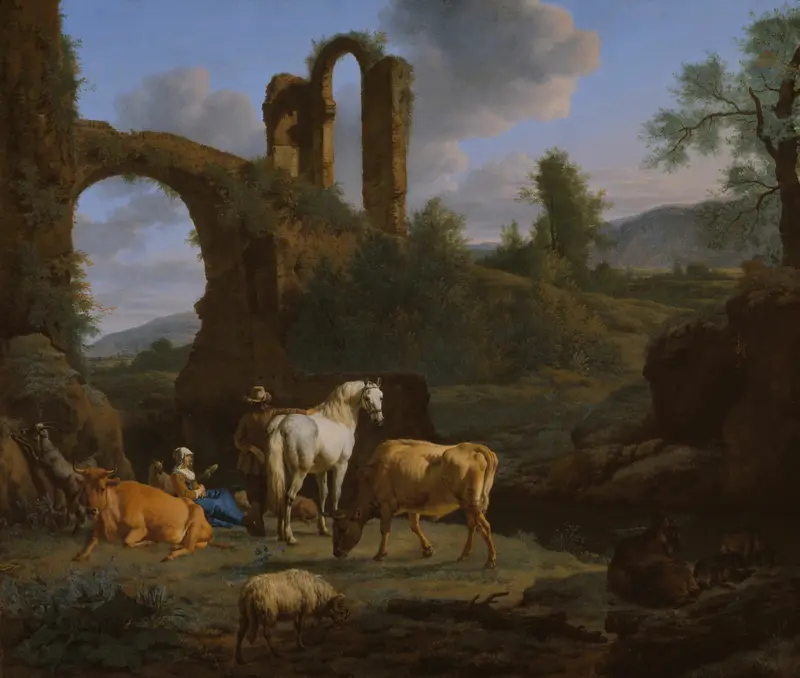
Pastoral Landscape with Ruins
Adriaen van de Velde
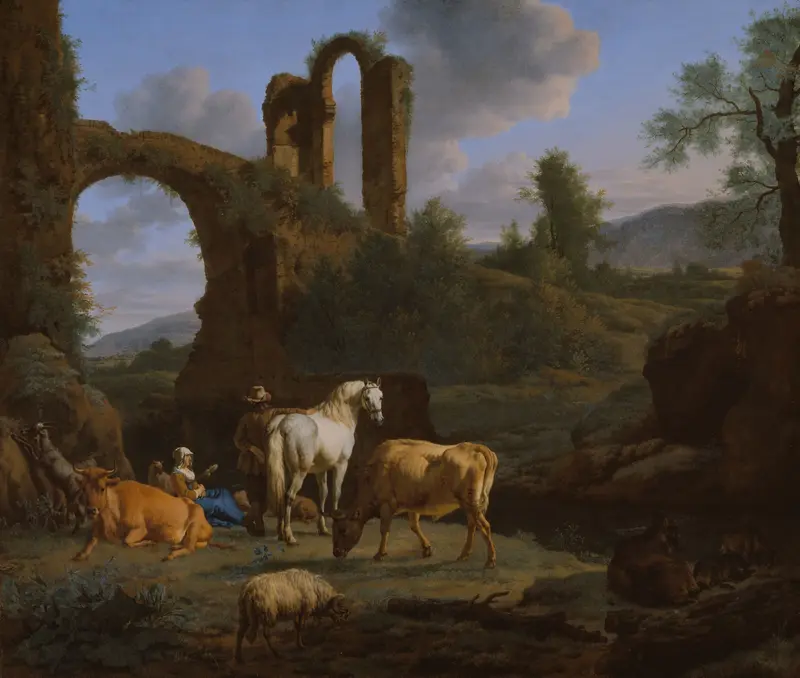
Pastoral Landscape with Ruins
Adriaen van de Velde
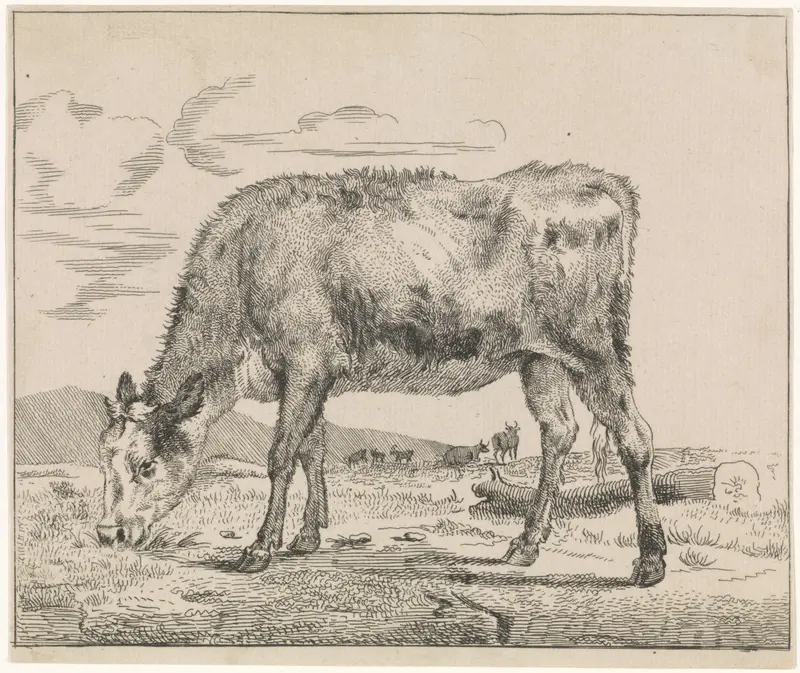
Grazend kalf
Adriaen van de Velde
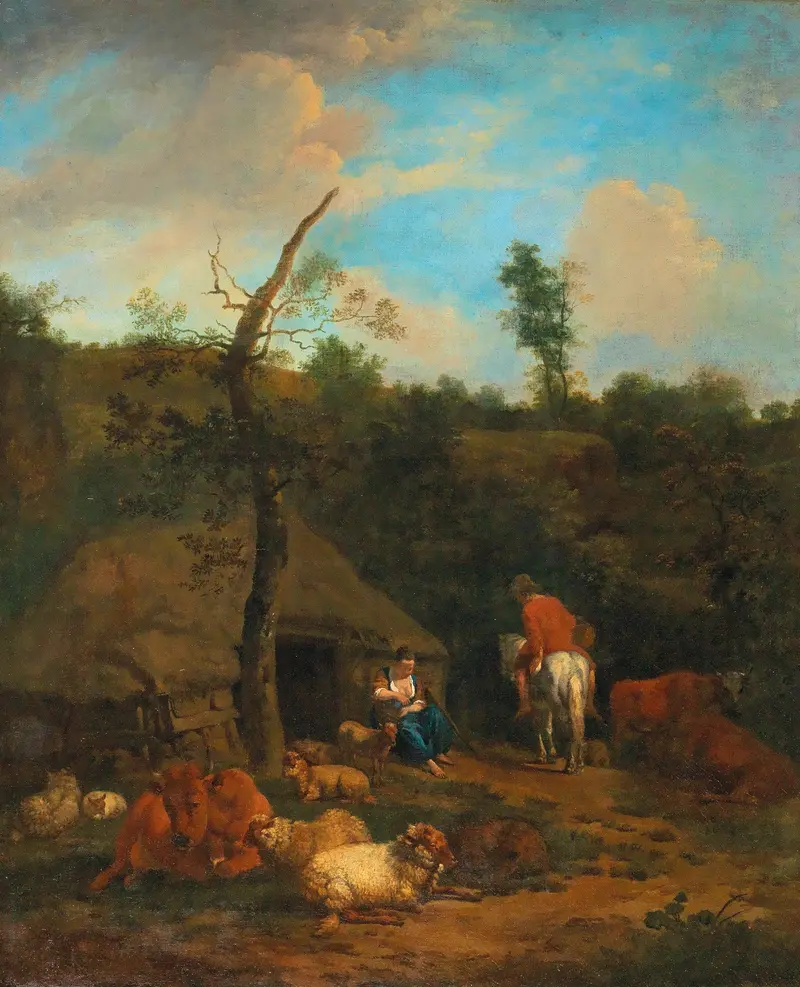
A herdsman and a shepherdess in front of a wooden farmhouse
Adriaen van de Velde
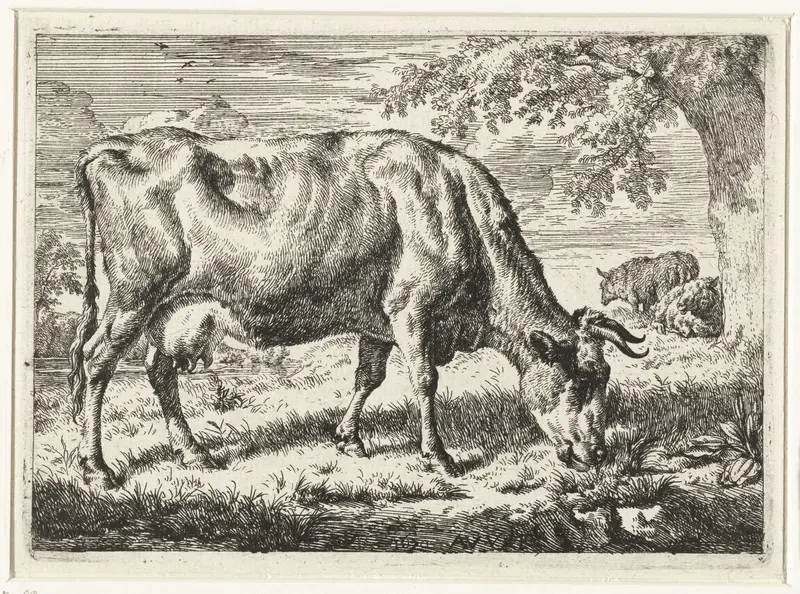
Grazende koe en twee schapen
Adriaen van de Velde
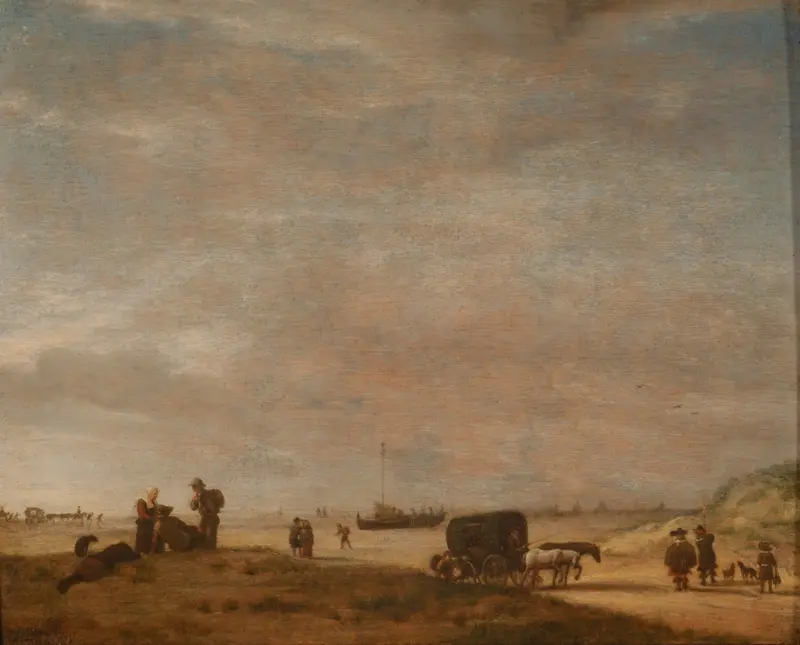
Scheveningen Beach
Adriaen van de Velde
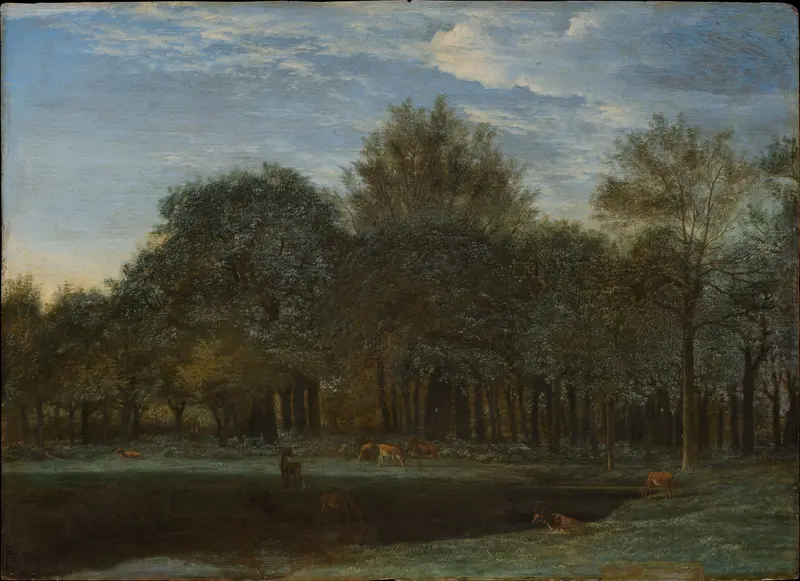
Forest Clearing with Grazing Deer
Adriaen van de Velde
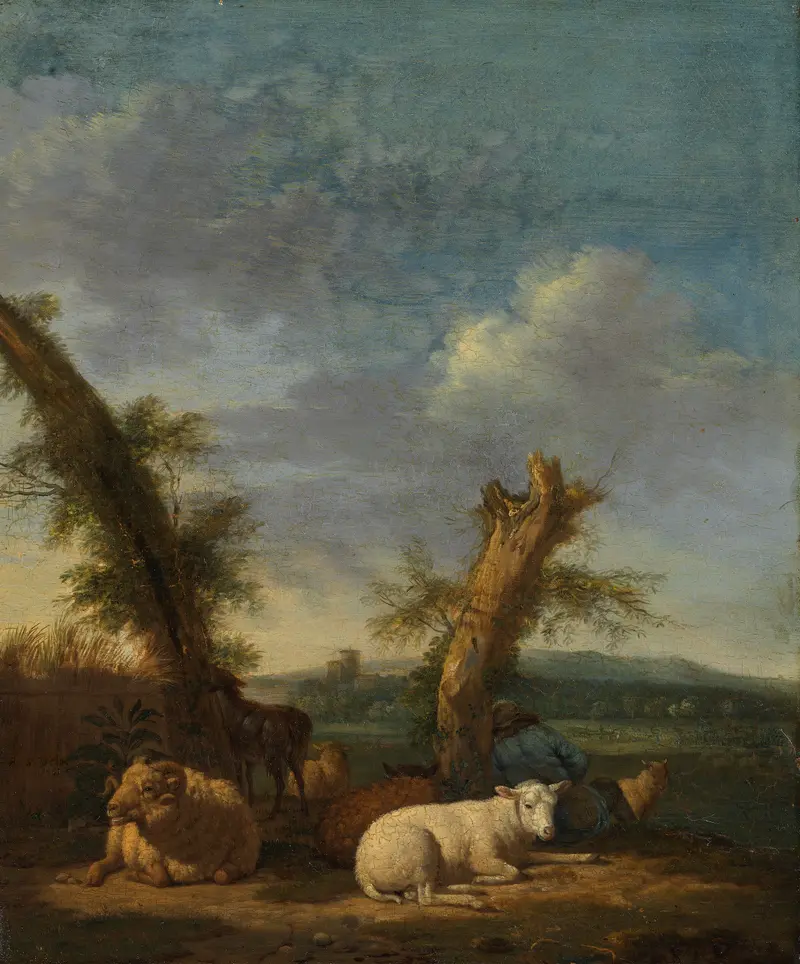
Landscape with Sheep and a Sleeping Shepherd
Adriaen van de Velde
More Genre Scene Art

Banquet of the Officers of the St George Civic Guard
Frans Hals

Rembrandt and Saskia in the Scene of the Prodigal Son
Rembrandt van Rijn

Bal du moulin de la Galette
Pierre-Auguste Renoir

Quadrille at the Moulin Rouge
Henri de Toulouse-Lautrec

A Burial at Ornans
Gustave Courbet

When Will You Marry?
Paul Gauguin