
Calame Vierwaldstättersee — History & Facts
What first seizes the eye in Calame Vierwaldstättersee is the way the mountains seem to rise almost impossibly high, their jagged summits fading into a sky so pale it nearly dissolves into mist. The lake below is a dark, glassy mirror, anchoring the scene with its stillness while a handful of tiny figures—almost lost among the rocks—pull a boat to shore. The human presence is dwarfed by the scale of nature, yet their activity gives the landscape a pulse: these are not idle wanderers but people at work, their gestures purposeful, their forms sharply outlined against the water’s edge.
The light, cool and clear, pours from above and draws the eye upward, inviting the viewer to measure themselves against the vastness that surrounds these figures. Painted in 1855, this work belongs to a moment when artists across Europe turned their gaze to the natural world, seeking both grandeur and truth in its forms. Alexandre Calame, a Swiss painter renowned for his Alpine views, was part of a generation that made landscapes a national emblem—images like this spoke to the new pride and unity of Switzerland after 1848. Such paintings were often commissioned by collectors eager to celebrate the land’s beauty and resilience, and they hung in parlors and public halls alike.
Today, history has kept few traces of this particular canvas beyond its exhibition in Zurich in 1998, but its presence in collections reminds us how the drama of mountains and water once shaped the imagination of a young nation. Let your eye return to the painting’s horizon, and consider how it invites you to travel—if only in spirit—into the cool, blue distance.
More Artworks by Alexandre Calame

By the Lake of Thun
Alexandre Calame
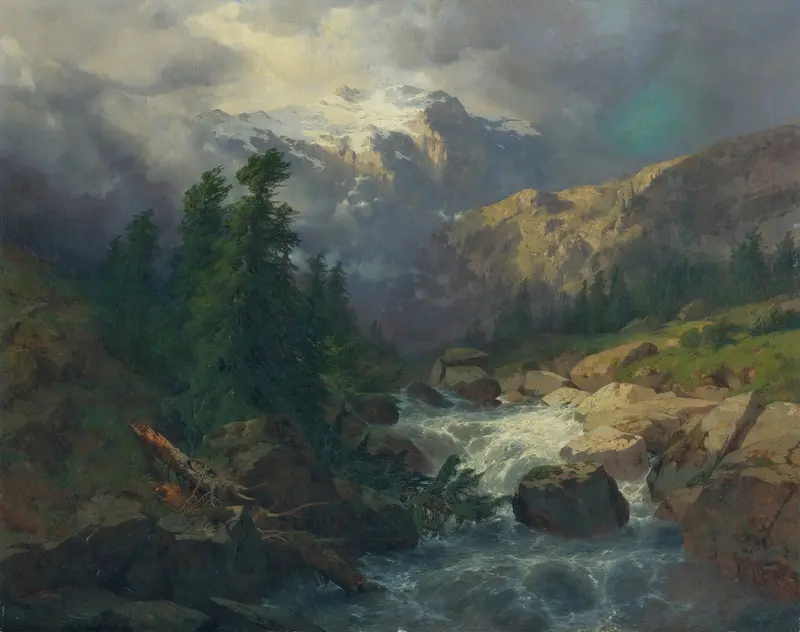
Souvenir Handeck, Stormy Weather
Alexandre Calame
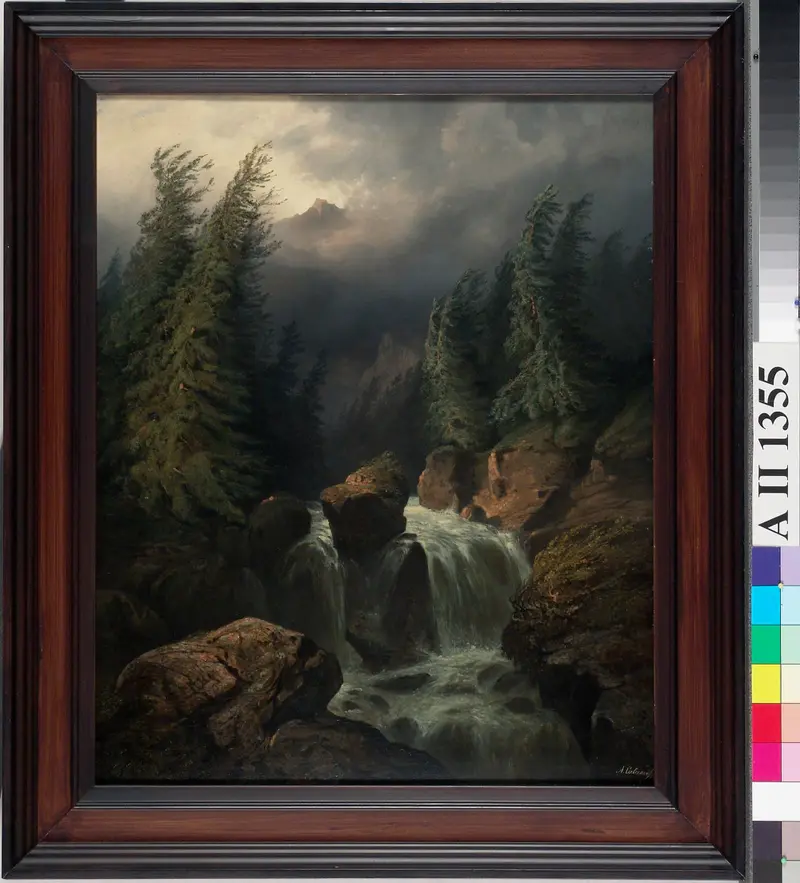
Alppikoski
Alexandre Calame
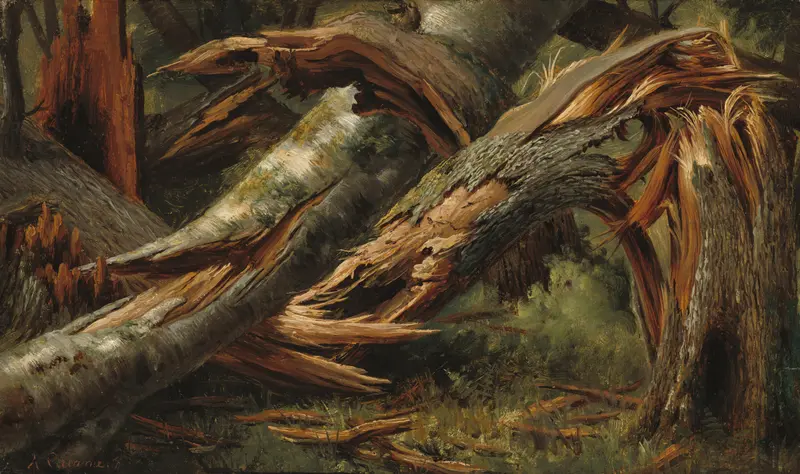
Fallen Tree
Alexandre Calame
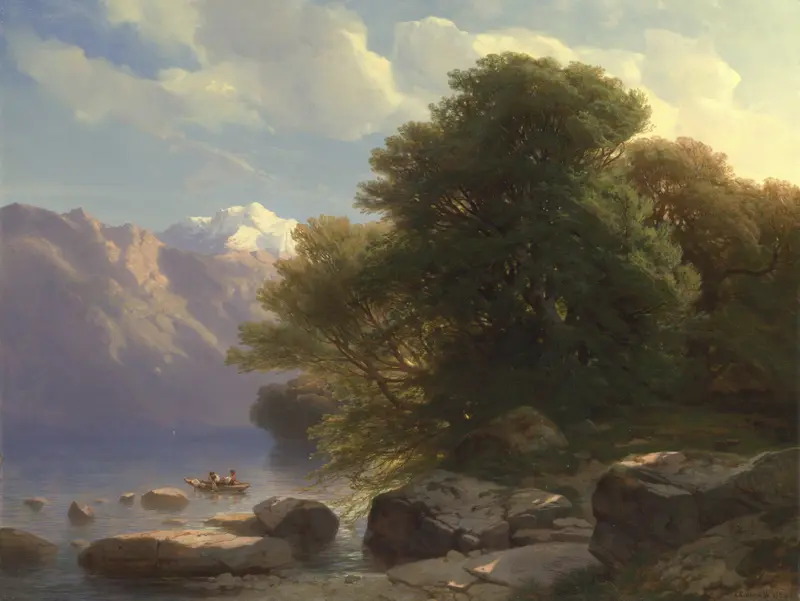
The Lake of Thun
Alexandre Calame
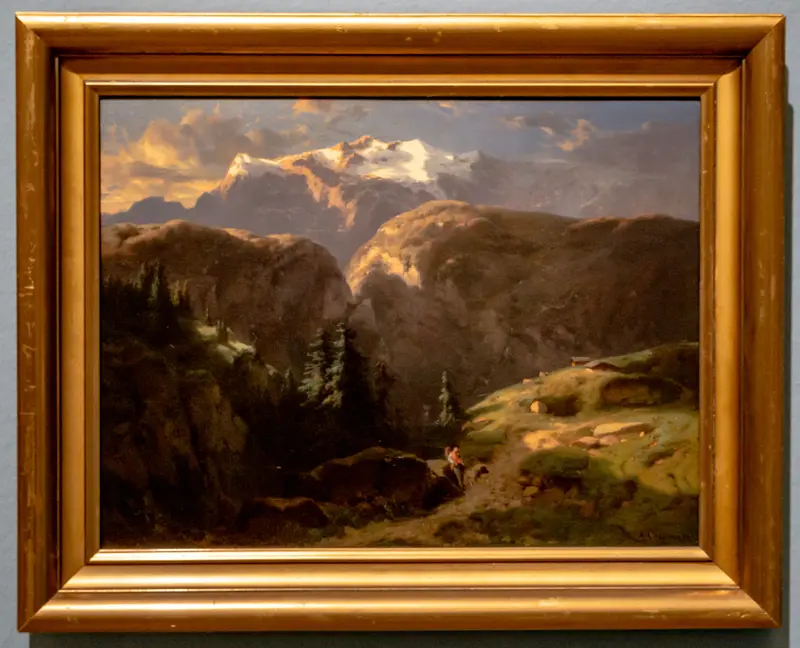
The Weatherhorn
Alexandre Calame
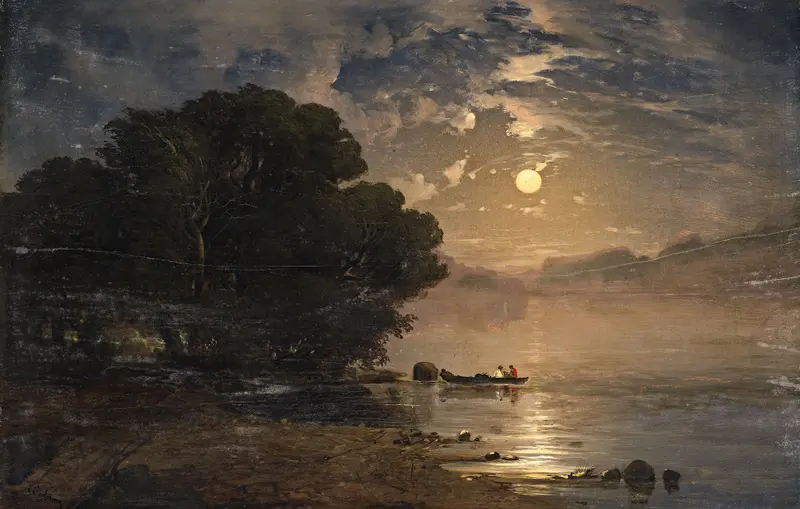
Evening Landscape with a Lake
Alexandre Calame
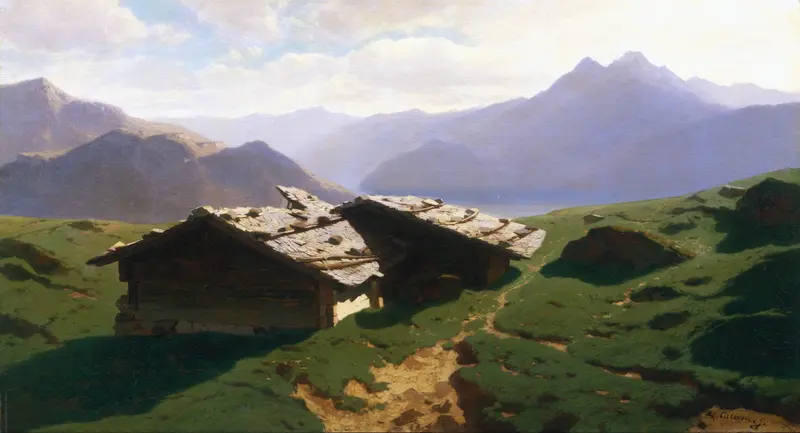
Chalets at Rigi
Alexandre Calame

View of the Wetterhorn and the Reichenbach from Meiringen
Alexandre Calame
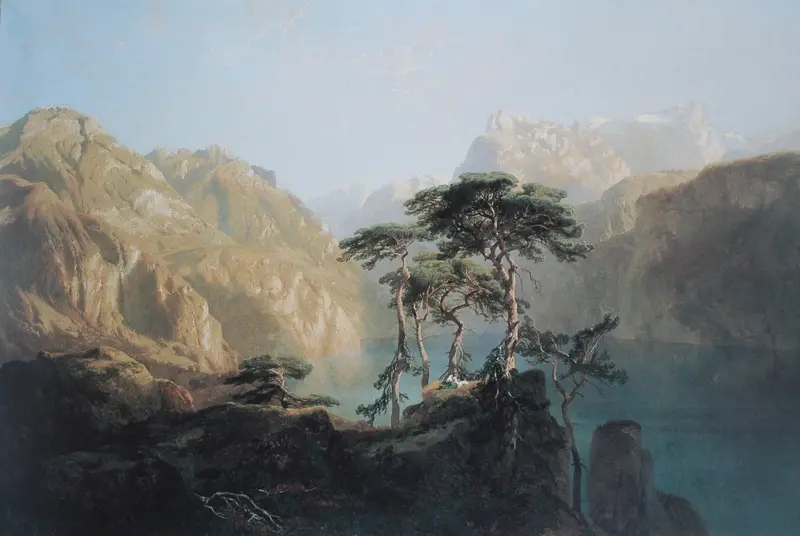
Calame Der Vierwaldstättersee
Alexandre Calame
More Landscape Art

The Starry Night
Vincent van Gogh

View of Delft
Johannes Vermeer

Water Lilies
Claude Monet

The Grand Canal, Venice, looking north-west from the Ca' Corner to the Ca' Contarini degli Scrigni, with the campanile of Santa Maria della Carità
Canaletto

Windsor Castle
Canaletto

The Grand Canal looking North-East from the Palazzo Dolfin-Manin to the Rialto Bridge
Canaletto