
Cattle in the pasture — History & Facts
A single white horse, its mane tousled and coat flecked with sunlight, stands at the threshold between shadow and open field, inviting the viewer into the hush of this rural scene. The animals cluster loosely beneath a leaning tree, its branches framing the upper left and casting a gentle screen over the group. A cow, settled comfortably on the earth, turns its head with a gaze that meets our own, while another stands behind, half lost in the golden haze.
The herdsman, nearly swallowed by the landscape, sits quietly at the right, his presence more felt than seen, a reminder of the human hand in these peaceful rhythms. The sky, vast and softly radiant, sweeps the eye toward the horizon, where clouds drift in warm, layered bands, lending the entire scene a sense of suspended time. Works like Cattle in the pasture by Aelbert Cuyp belong to a Dutch tradition that celebrated the prosperity and calm of the countryside during the seventeenth century. These landscapes were prized by a new class of urban collectors—merchants and burghers who sought reminders of the land's bounty and stability.
Cuyp, renowned for his golden light and tranquil compositions, often painted such scenes to evoke both pride and nostalgia for rural life. The painting now resides in the National Museum in Warsaw, a testament to the enduring appeal of these quiet moments. As you linger before it, notice how the gentle play of light and the careful arrangement of animals draw you into a world where time seems to slow, and even the clouds pause to watch.
More Artworks by Aelbert Cuyp

The Maas at Dordrecht
Aelbert Cuyp
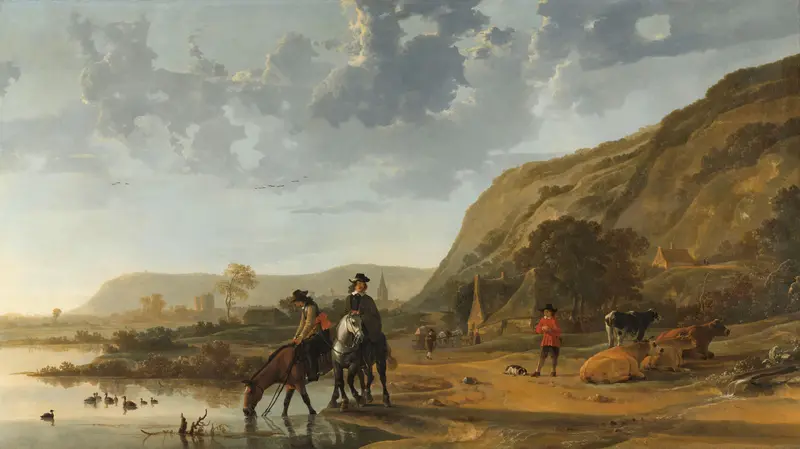
River Landscape with Riders
Aelbert Cuyp

The Maas at Dordrecht
Aelbert Cuyp
Gezicht op Dordrecht
Aelbert Cuyp
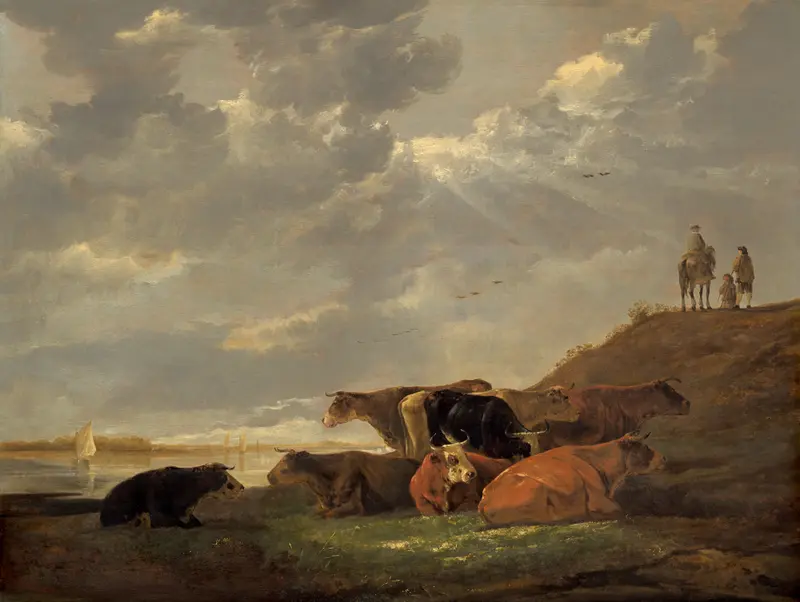
River Landscape with Cows
Aelbert Cuyp
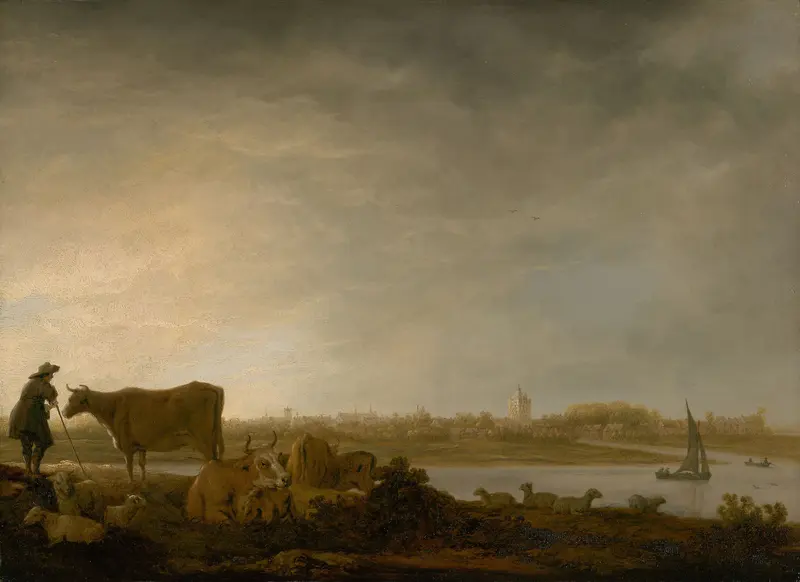
A View of Vianen with a Herdsman and Cattle by a River
Aelbert Cuyp
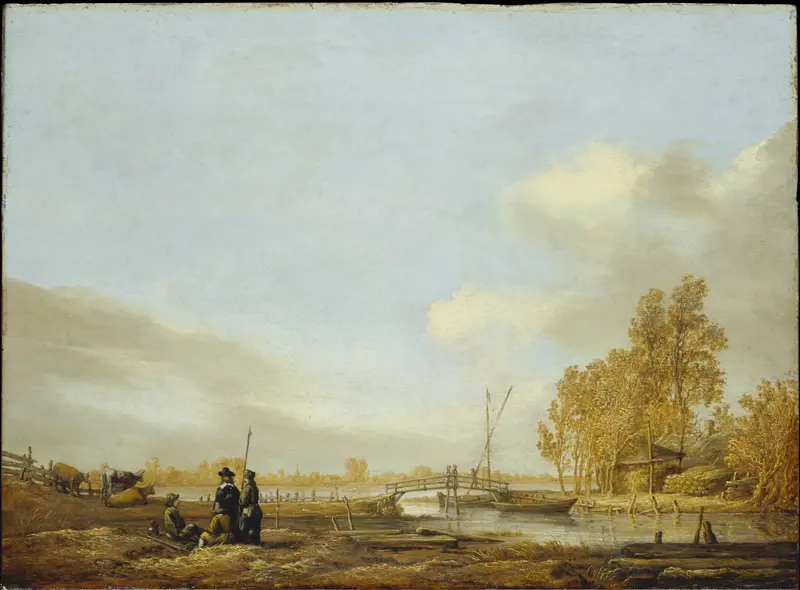
River Landscape with Footbridge
Aelbert Cuyp
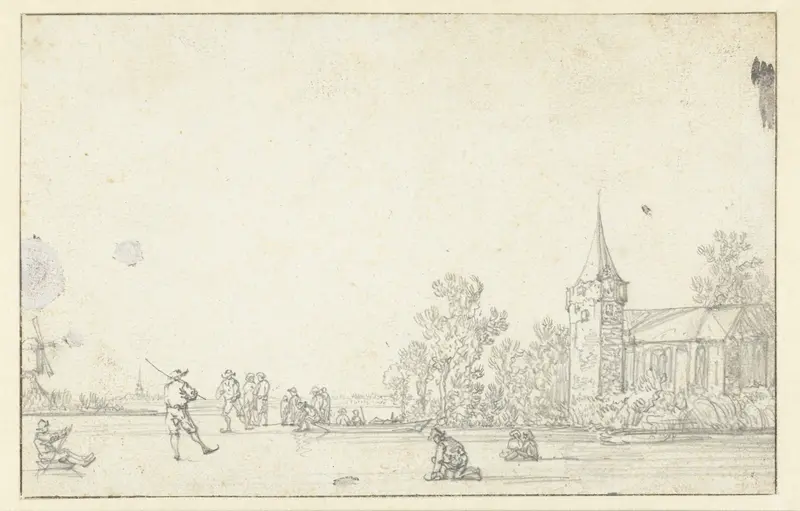
Bevroren rivier met schaatsers bij een kerk
Aelbert Cuyp

Cattle near a River
Aelbert Cuyp
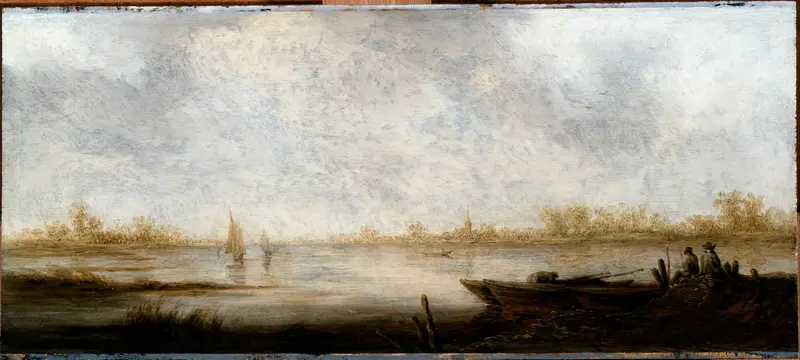
River Landscape
Aelbert Cuyp
More Landscape Art

The Starry Night
Vincent van Gogh

View of Delft
Johannes Vermeer

Water Lilies
Claude Monet

The Grand Canal, Venice, looking north-west from the Ca' Corner to the Ca' Contarini degli Scrigni, with the campanile of Santa Maria della Carità
Canaletto

Windsor Castle
Canaletto

The Grand Canal looking North-East from the Palazzo Dolfin-Manin to the Rialto Bridge
Canaletto