
Chamonix, Mer de Glace — History & Facts
Could a single brushstroke hold eternity? In Chamonix, Mer de Glace, the vastness of nature captures a moment suspended in faith and wonder, inviting the viewer to contemplate the sublime. Look to the left at the towering peaks, their jagged silhouettes piercing the soft, hazy sky. The artist masterfully employs a palette of muted blues and greens, interspersed with the glistening whites of snow and ice, creating a serene yet formidable landscape. The composition guides the eye from the rugged mountains down to the frozen expanse below, where the Mer de Glace winds its way through the valley, evoking a sense of depth and grandeur that envelops the viewer. Yet, within this breathtaking panorama, there lies an inherent tension between the immensity of nature and the fragility of human existence.
The interplay of light and shadow across the ice reflects the duality of beauty and peril in the natural world. The delicate strokes that bring life to the icy surface whisper of movement, yet the stillness of the scene compels contemplation, urging one to reflect on humanity's place against such overwhelming majesty and the faith required to appreciate it. During the late 18th century, while creating this piece, Charles Gore was immersed in the burgeoning Romantic movement—a time when artists began to explore emotion and the sublime in nature. He painted this work between 1778 and 1779, capturing the essence of a changing world where the grandeur of landscapes became a vehicle for deeper introspection and spiritual reflection, resonating with the ideals of his contemporaries.
More Artworks by Charles Gore
Browse all →
Lorch on the Rhine
Charles Gore

Ruins du Chateau du Heidelberg
Charles Gore

Lago Maggiore and the Borromean Islands
Charles Gore

Isola Bella, Lago Maggiore
Charles Gore
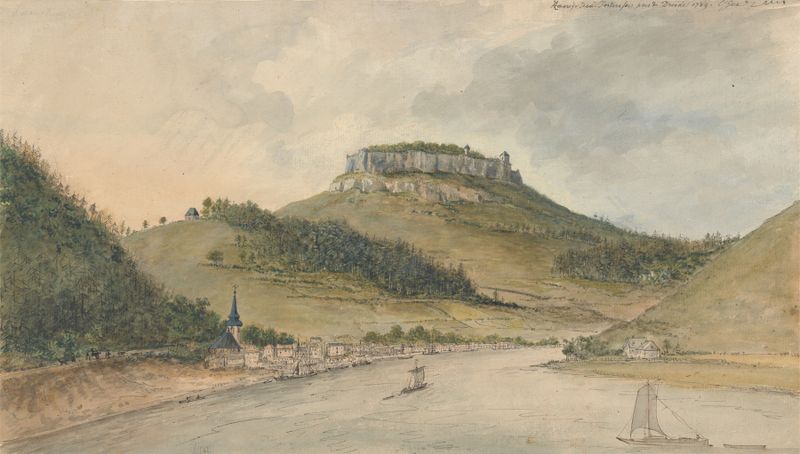
Konigstein
Charles Gore

Landing Place at Pallanza
Charles Gore
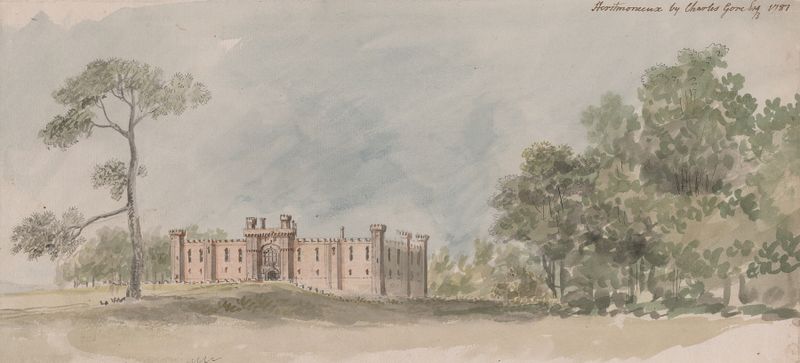
Herstmonceux
Charles Gore

Gate Toward Bursit, Aix-la-Chappelle
Charles Gore

Garden of Vieux Jones near Maastricht
Charles Gore
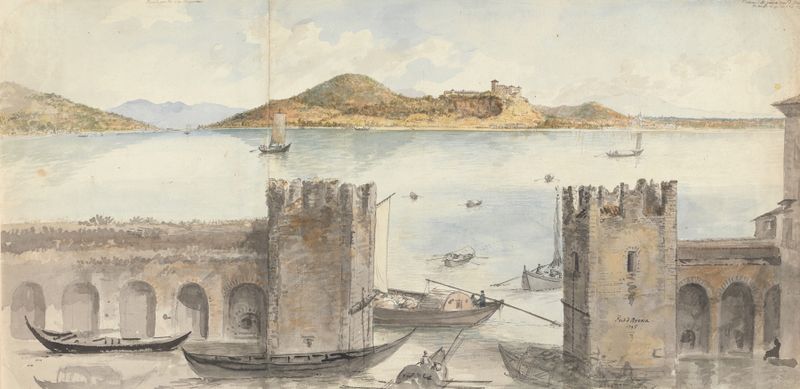
Port d’Arona
Charles Gore





