
Gate Toward Bursit, Aix-la-Chappelle — History & Facts
What if beauty was never meant to be finished? In the work of Charles Gore, the unfinished quality speaks volumes about the conflict beneath tranquility, revealing the violence that often accompanies creation. Look closely at the central arch in Gate Toward Bursit. The intricate carvings, with their delicate interplay of light and shadow, guide your gaze upward. Notice how the pale hues of the stone contrast sharply with the darker background, emphasizing both the fragility and strength of the structure.
The way the light hits the arch’s edges creates a sense of depth, suggesting that beyond this gateway lies a realm of uncertainty and potential. Each groove and indent tells a story of labor, an echo of the artist’s hand grappling with beauty. Delve deeper into the details: the subtle hints of wear around the edges signify time’s relentless passage, as if the beauty of the arch is a moment paused in a cycle of decay. The juxtaposition of the serene architectural form against the chaos it suggests invites contemplation on the violence of existence and creation.
What lies beyond this gate? Perhaps it symbolizes the conflict between the desire for beauty and the inevitable dissolution that awaits all things. In 1785, while painting this piece in Aix-la-Chapelle, Gore was immersed in a Europe wrestling with enlightenment ideals and revolutionary changes. His work captures the tension of an era, where beauty was celebrated even as society faced upheaval. It reflects both his artistic ambition and the turbulent world around him, embodying the paradox of pursuit and impermanence.
More Artworks by Charles Gore
Browse all →
Lorch on the Rhine
Charles Gore

Ruins du Chateau du Heidelberg
Charles Gore

Lago Maggiore and the Borromean Islands
Charles Gore

Isola Bella, Lago Maggiore
Charles Gore
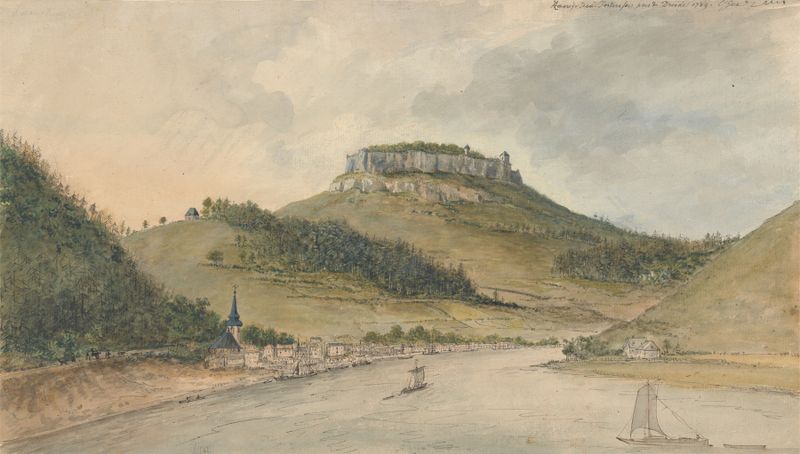
Konigstein
Charles Gore
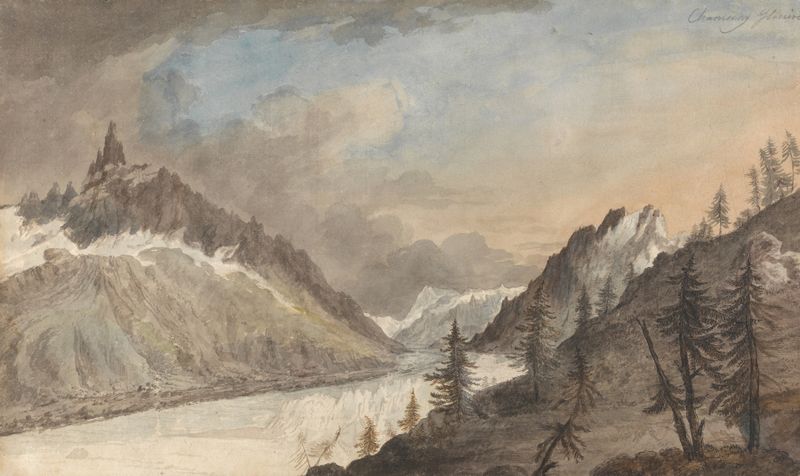
Chamonix, Mer de Glace
Charles Gore

Landing Place at Pallanza
Charles Gore
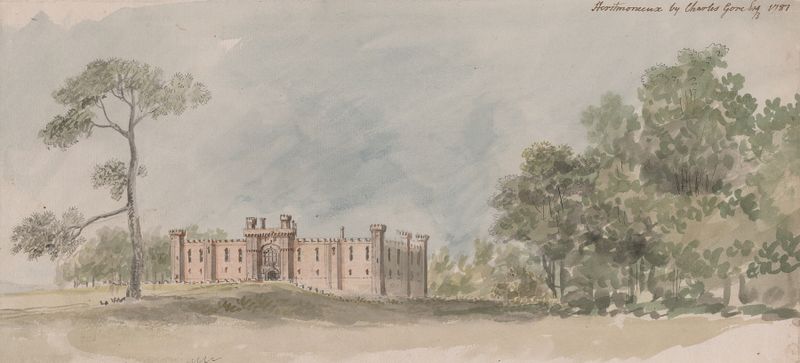
Herstmonceux
Charles Gore

Garden of Vieux Jones near Maastricht
Charles Gore
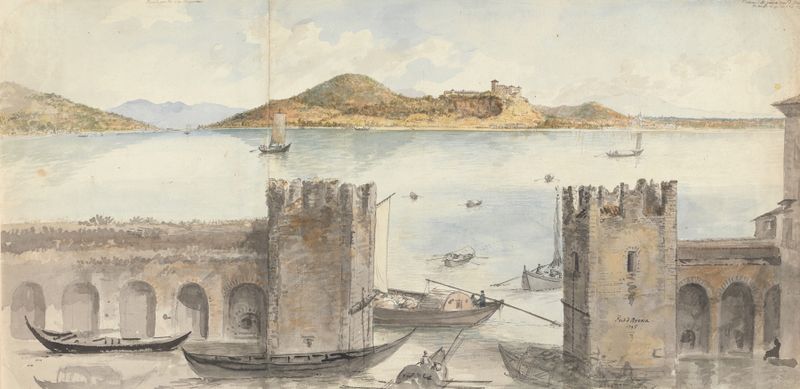
Port d’Arona
Charles Gore
More Architecture Art
Browse all →
The statue of Liberty
Frédéric Auguste Bartholdi

View of Houses in Delft, Known as ‘The Little Street’
Johannes Vermeer

View of Houses in Delft, Known as ‘The Little Street’
Johannes Vermeer

The Cathedral in Rouen. The portal, Grey Weather
Claude Monet

The yellow house
Vincent van Gogh

The Church in Auvers-sur-Oise, View from the Chevet
Vincent van Gogh