
Chestnut horse in a stable — History & Facts
When Théodore Géricault first exhibited Chestnut horse in a stable in 1814, the young artist had just returned from the Salon where his equestrian studies drew whispers of admiration and surprise. At only 23, Géricault was already obsessed with horses—an obsession that would later culminate in his celebrated The Charging Chasseur and his studies for The Raft of the Medusa. This early painting stands out for its intimate focus: rather than a battle or a grand scene, the artist turns to a single animal, capturing its restless energy and muscular form.
For contemporaries, this was a bold move—horses were usually background actors in grand military canvases, not the main event. The chestnut horse stands tethered in a shadowed stable, its head turned sharply as if startled by an unseen presence. Muscles ripple beneath its glossy coat, and the animal’s gaze is alert, almost anxious, suggesting a narrative of anticipation or confinement. The stable itself is rendered with broad, confident strokes, the play of light emphasizing the horse’s powerful body against the gloom.
Unlike the calm, idealized steeds of George Stubbs or the decorative animals of Rosa Bonheur, Géricault’s horse is restless, alive, and individual—a living creature, not a symbol. The artist’s fascination with anatomy and movement is evident in every brushstroke, inviting the viewer to feel the tension in the air. The precise early history of Chestnut horse in a stable remains unclear, as records from this period of Géricault’s career are fragmentary. It is likely the painting was created for a private patron or as part of the artist’s personal studies, reflecting the era’s growing interest in animal painting and the Romantic movement’s focus on individuality and emotion.
Over time, the work has been recognized as a key example of Géricault’s early style, foreshadowing his later, more dramatic compositions. Today, it is valued for its directness and vitality, offering a glimpse into the mind of a young artist who would soon revolutionize French painting.
More Artworks by Théodore Géricault
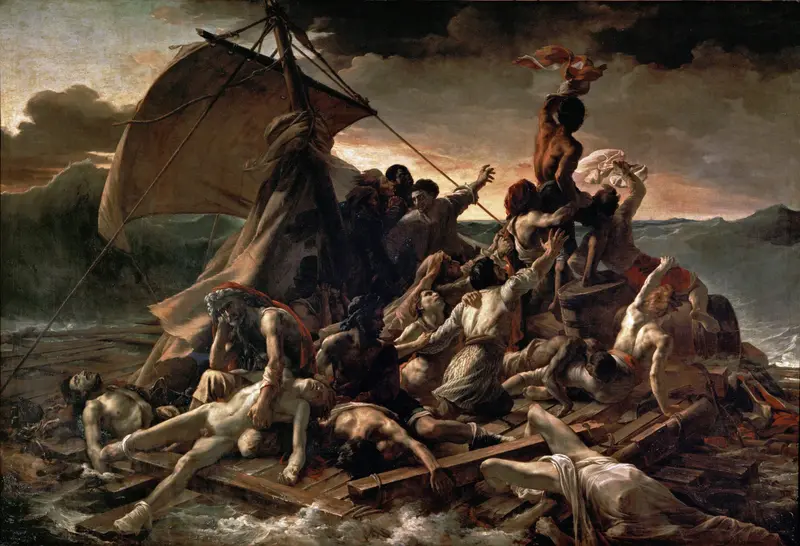
The Raft of the Medusa
Théodore Géricault

Géricault - Le naufrage du radeau de la Méduse, MBA 790
Théodore Géricault
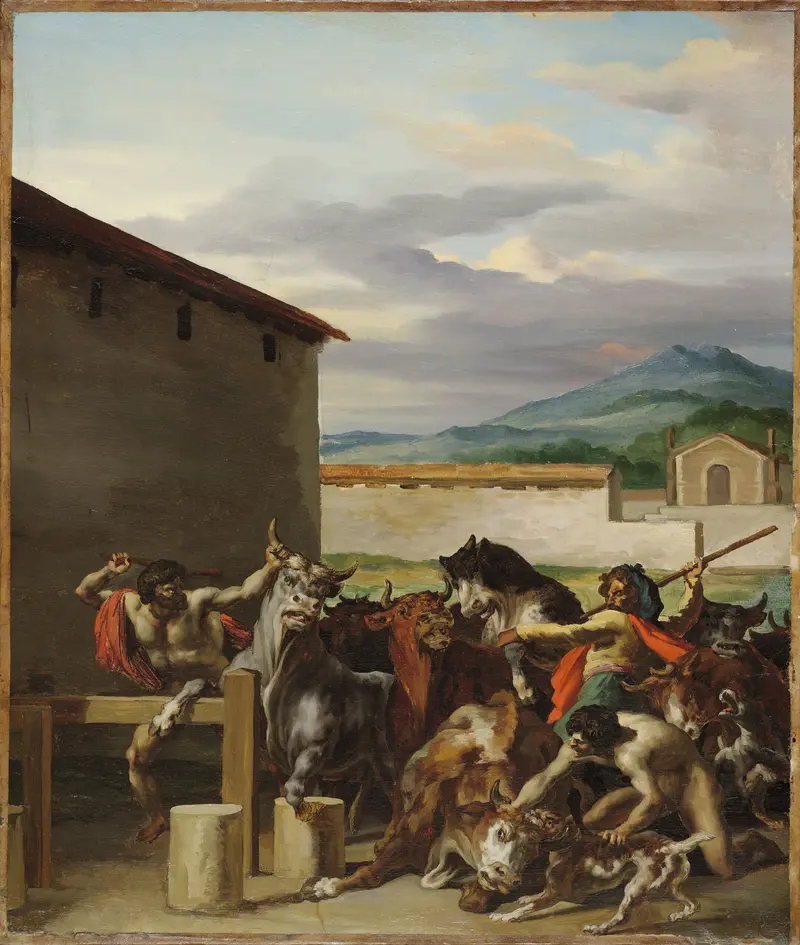
Cattle Market
Théodore Géricault
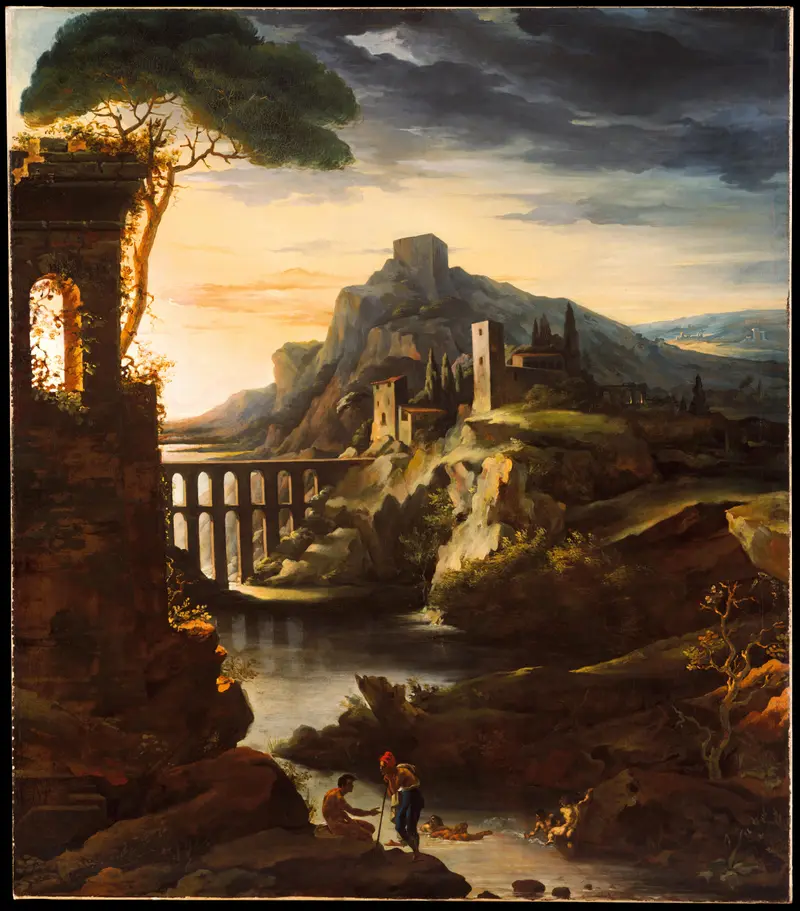
Evening; Landscape with an Aqueduct
Théodore Géricault
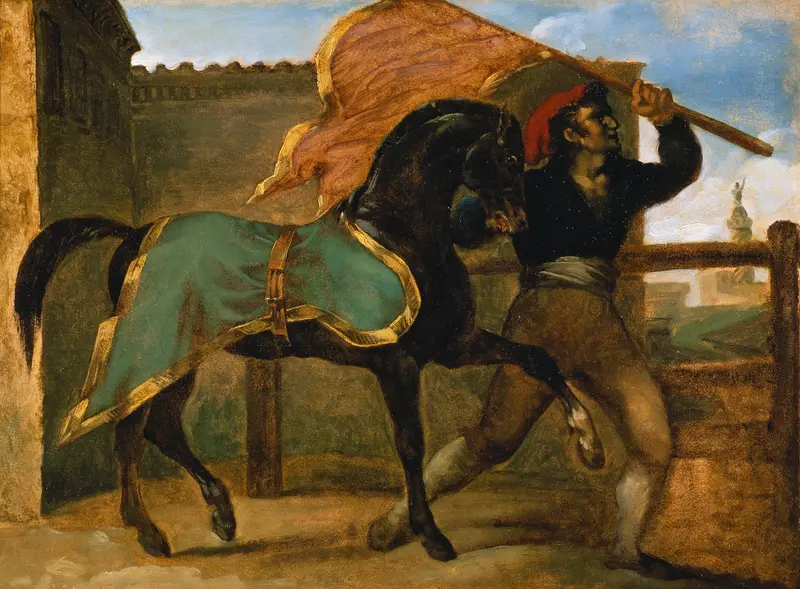
Horse Race
Théodore Géricault

Horses Standing in a Mews
Théodore Géricault
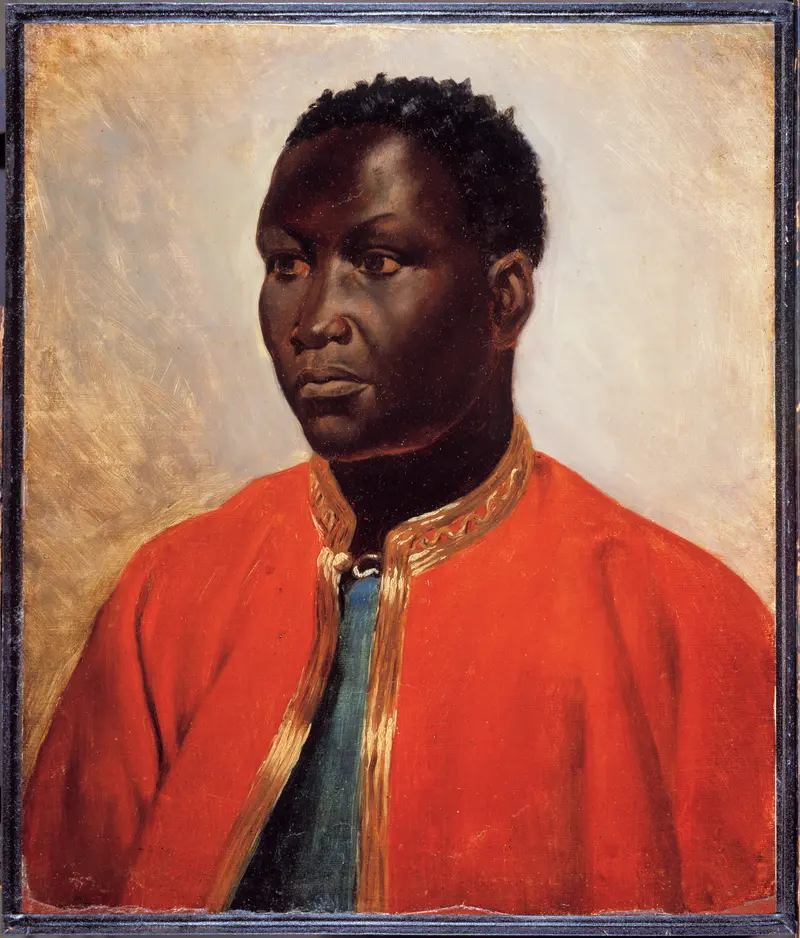
Portrait of a Negro
Théodore Géricault
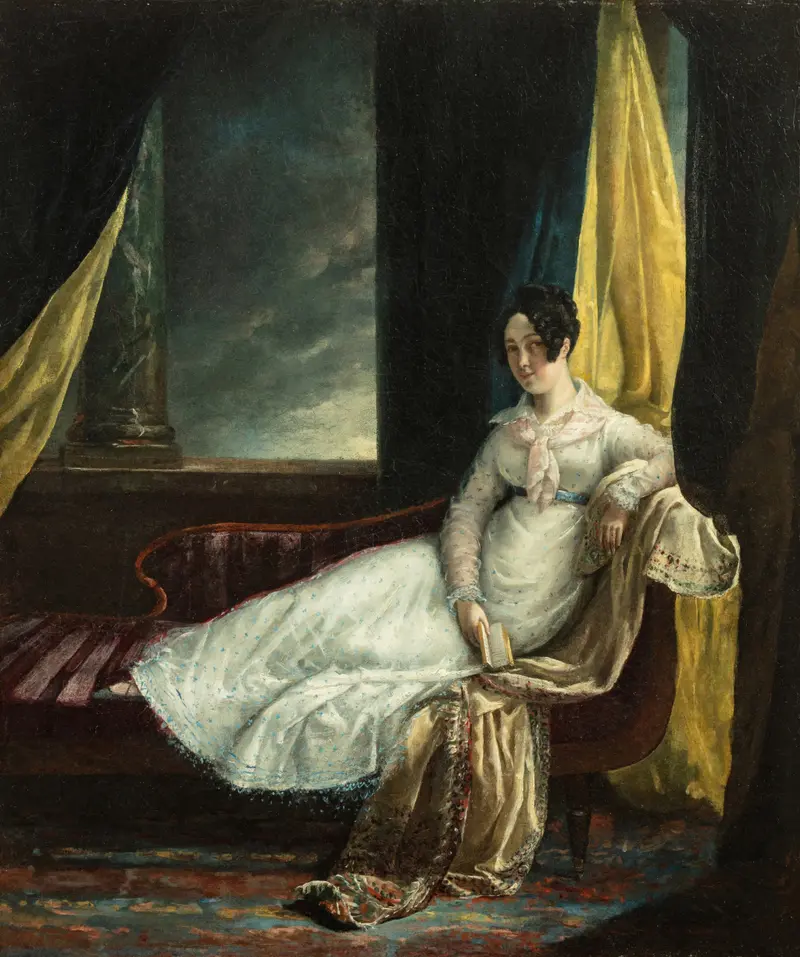
Portrait of Zoë Elmore
Théodore Géricault
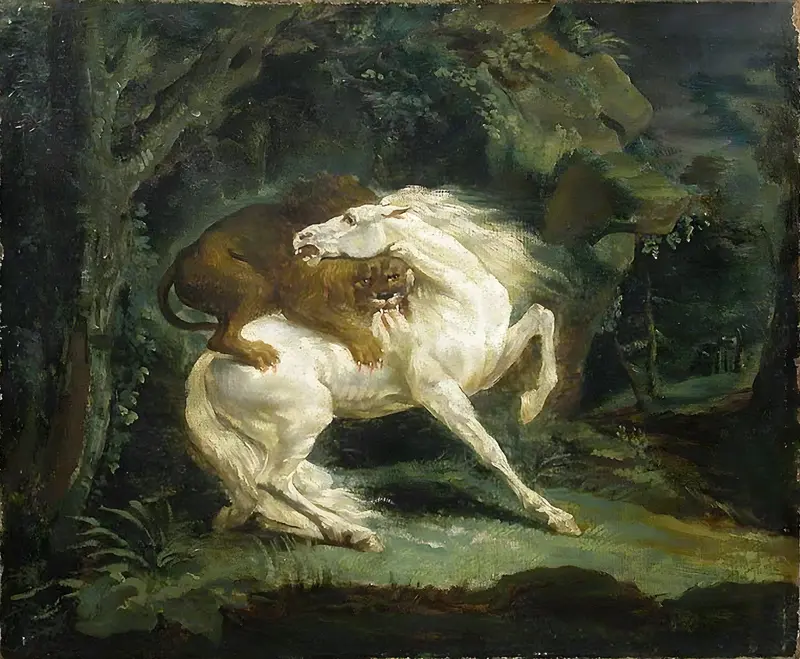
Cheval attaqué par un lion
Théodore Géricault
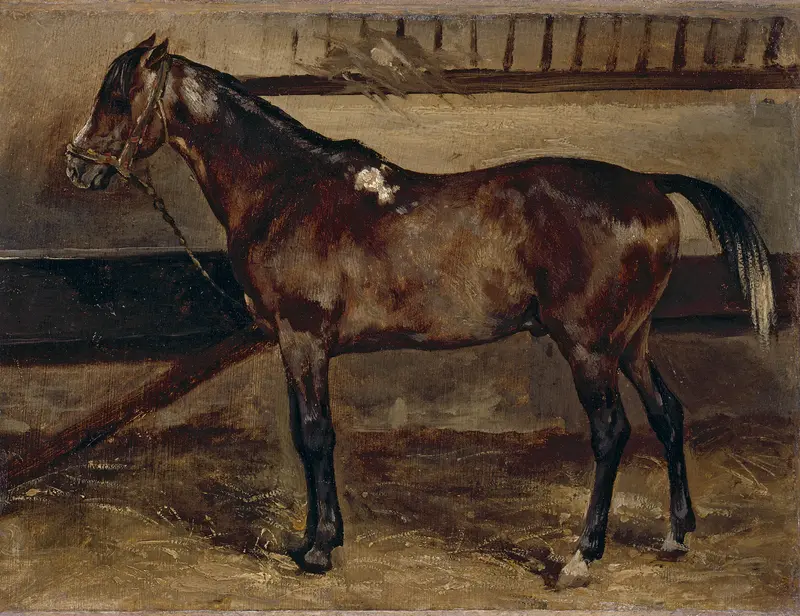
Cheval brun à l'écurie
Théodore Géricault





