
Children playing in a Stable — History & Facts
In the quiet moments of childhood, life dances on the edge of innocence and discovery, a rebirth of joy in every playful gesture. Look to the center of the canvas, where children tumble and frolic amidst the shadows of the stable. Notice the warm earth tones that envelop them, contrasting with the muted, dim light filtering through wooden beams. The artist’s brushwork reveals a textured intimacy, where every stroke amplifies the laughter echoing within these walls.
The soft play of light creates a gentle halo around the children, emphasizing their untroubled existence in this simple, yet rich environment. Yet, among the carefree playfulness lies a deeper narrative. The stable, often a symbol of humility, juxtaposes the innocence of the children with the weight of life’s realities outside its confines. The scattered hay on the ground represents both a playground and a reminder of labor, hinting at the cycles of existence and the continuity of life.
Each child’s expression reflects the fleeting nature of joy, as though they embody both the present delight and the impending responsibilities of adulthood. Created in 1675, this piece came during Roos's time in the German lands, a period marked by both the flourishing of baroque art and the growing interest in capturing everyday life. As he painted, the world around him was a tapestry of change and renewal, with the aftermath of the Thirty Years' War still echoing in society. It was a time when artists began to explore more intimate themes, grounding their work in relatable human experiences, like the simple yet profound joy of childhood.
More Artworks by Johann Heinrich Roos
Browse all →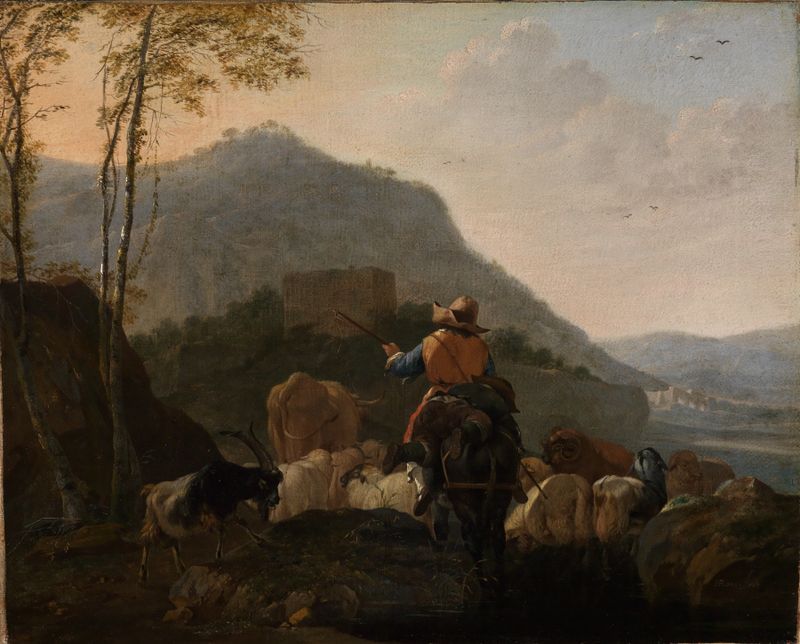
Ausziehende Hirten mit ihrer Herde in südlicher Berglandschaft
Johann Heinrich Roos
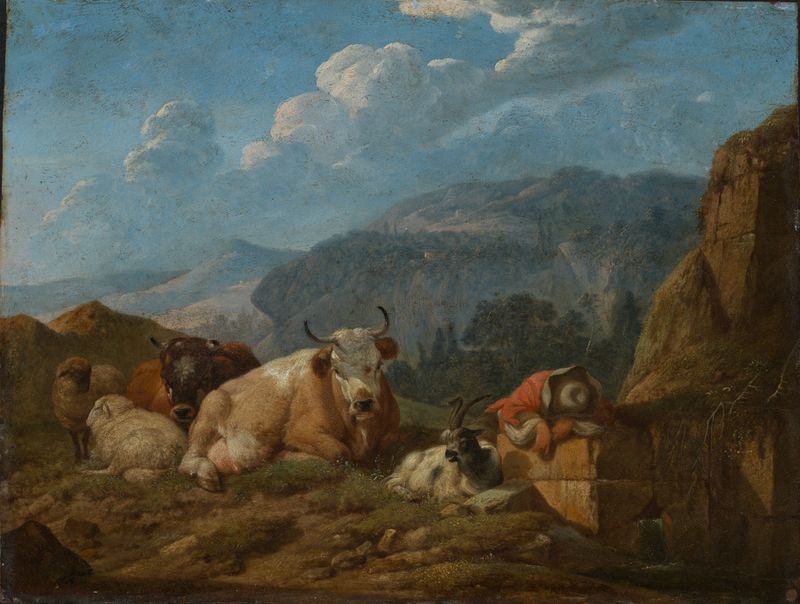
Italienische Berglandschaft
Johann Heinrich Roos
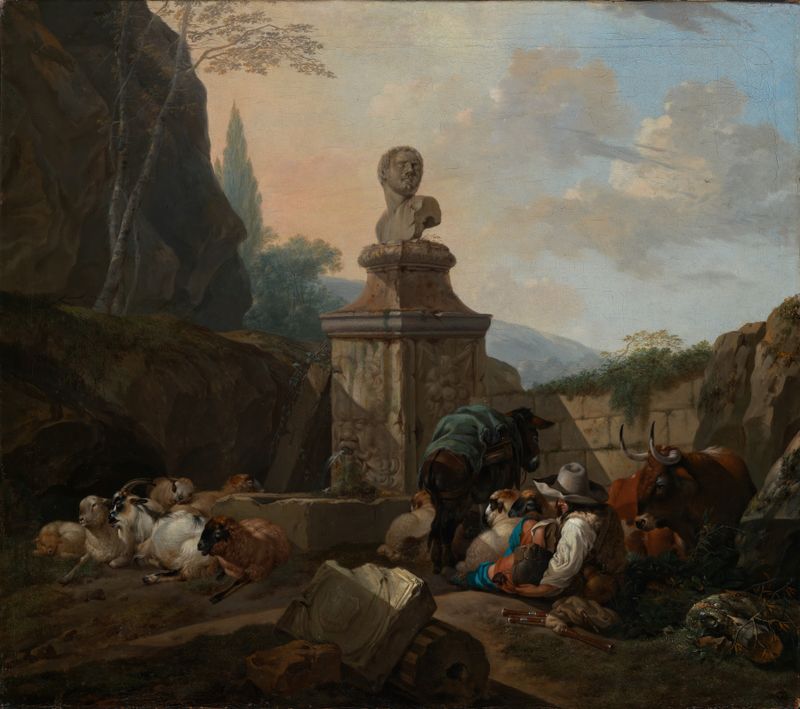
Ruhender Hirt und Herde an römischem Brunnen
Johann Heinrich Roos
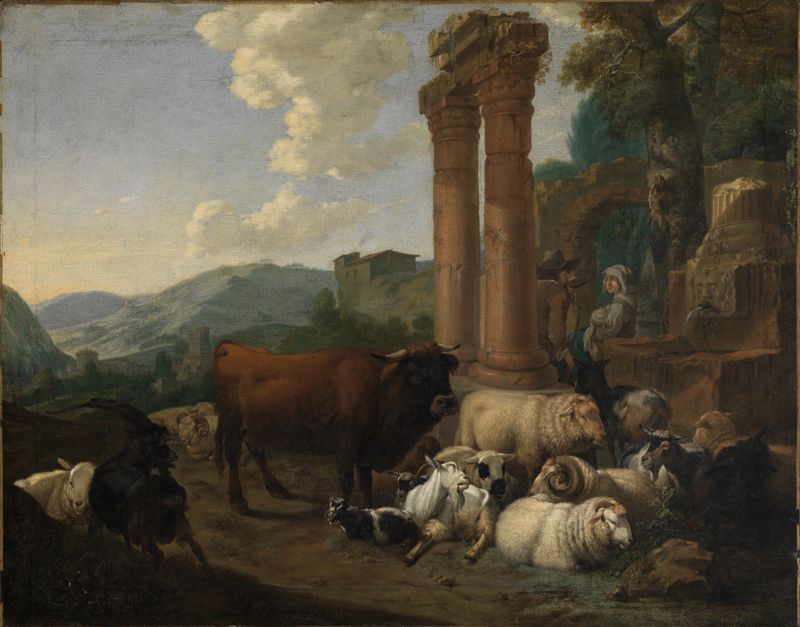
Hirtenszene in römischer Ruinenlandschaft
Johann Heinrich Roos
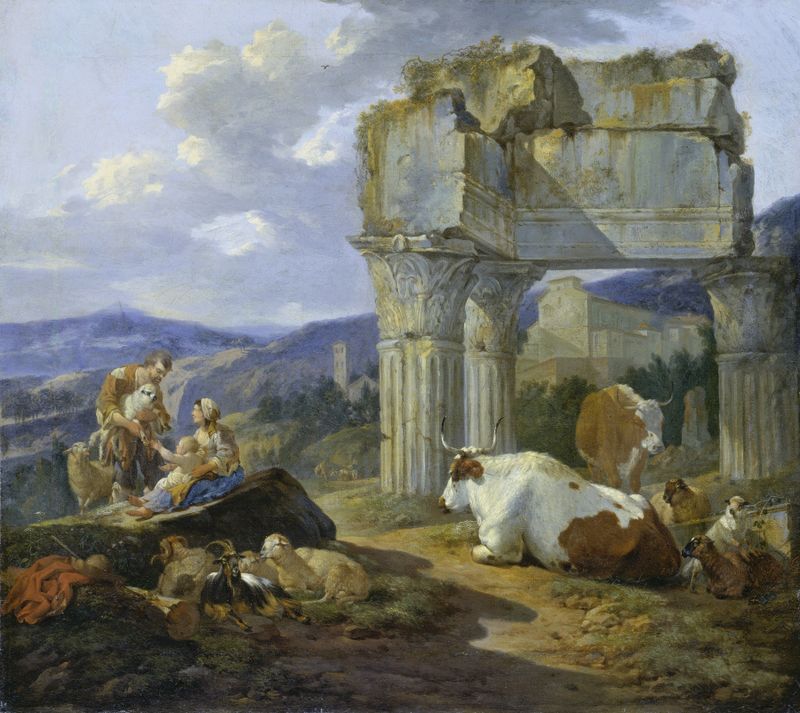
Shepherd’s Family at the Ruins of the Temple of Vespasian
Johann Heinrich Roos
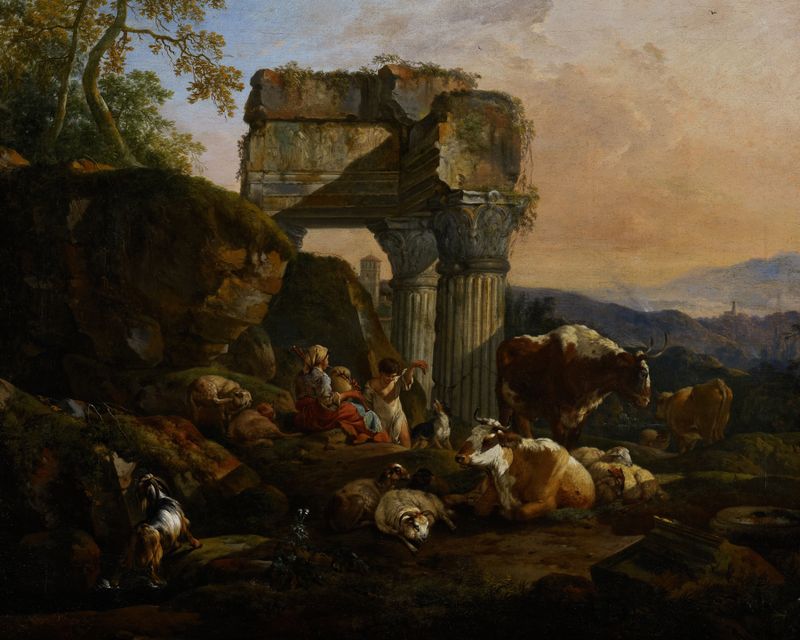
Roman Landscape with Cattle and Shepherds
Johann Heinrich Roos
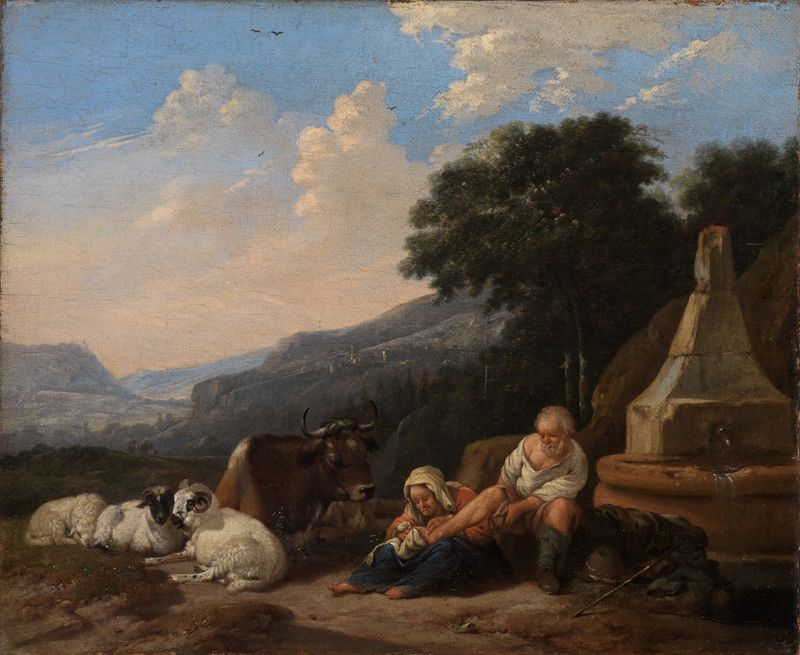
Berglandschaft mit Hirten am Brunnen
Johann Heinrich Roos
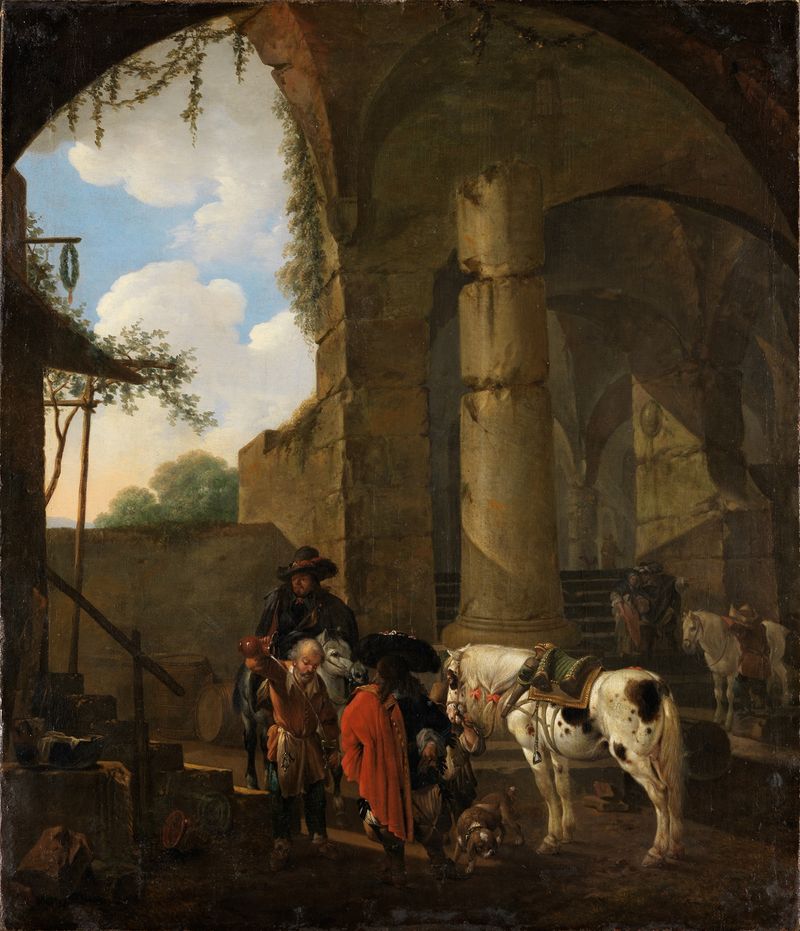
Osteria in römischer Ruine
Johann Heinrich Roos
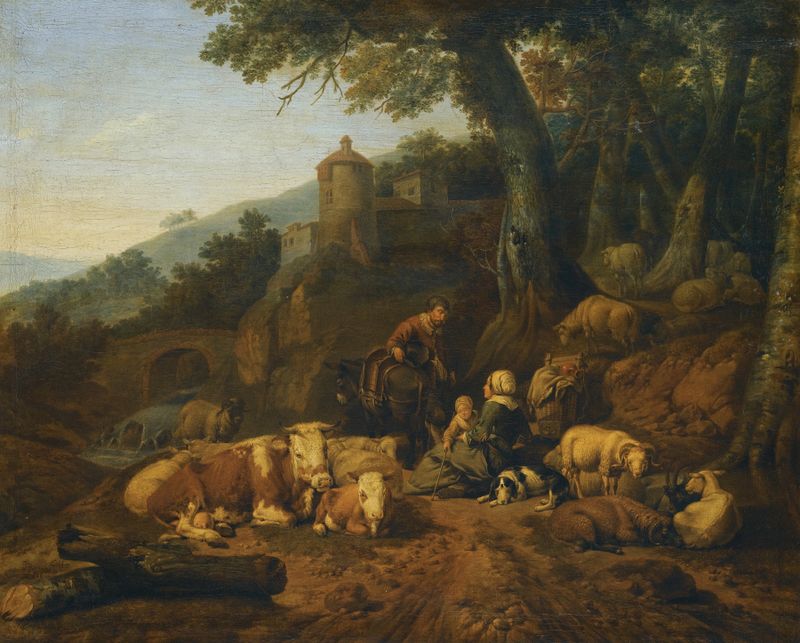
A Landscape With Drovers And Their Flock At Rest
Johann Heinrich Roos
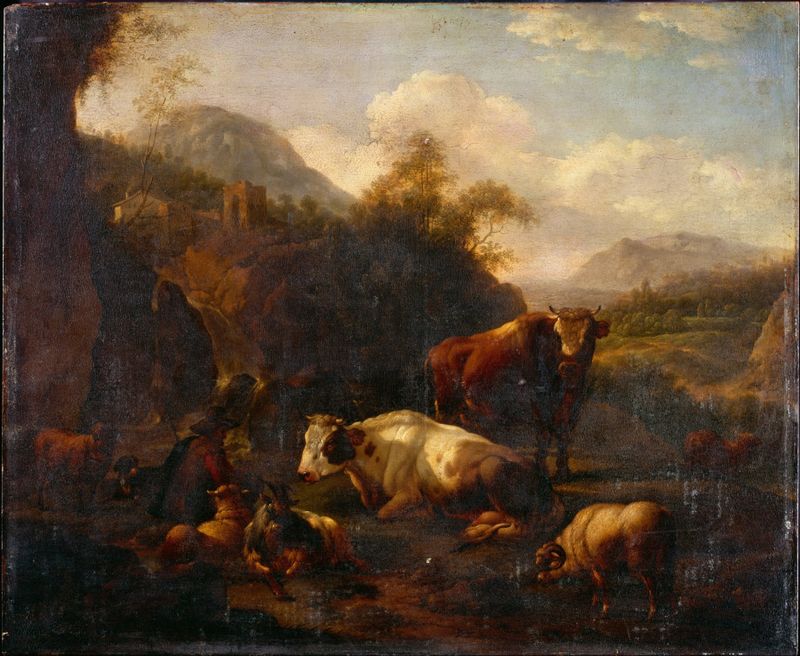
Landscape
Johann Heinrich Roos





