
Christophorus – still searching — History & Facts
No other work by Gustave Van de Woestijne has provoked as much speculation as Christophorus – still searching. The painting’s title itself is a riddle, hinting at both the legendary journey of Saint Christopher and the artist’s own spiritual quest. Strikingly, the date and medium remain unknown, fueling debate among scholars about its place in Van de Woestijne’s career and the context of its creation.
The lack of documentation has only increased its allure, making it a touchstone for those fascinated by the mysteries of early 20th-century Belgian art. At the heart of the composition is the moment when Saint Christopher, the giant who ferried travelers across a dangerous river, pauses mid-stream with the Christ Child on his shoulder. Van de Woestijne chooses not the triumphant arrival but the moment of doubt and searching—the saint’s gaze cast upward, his feet unsteady on the rocks, the water swirling with uncertainty. The Christ Child clings to his neck, impossibly heavy, symbolizing the weight of faith.
A gnarled staff and a distant, flickering light recall traditional iconography, yet the palette is subdued, the forms almost modernist in their starkness. Unlike the golden serenity of Saint Christopher Carrying the Christ Child by Hieronymus Bosch, Van de Woestijne’s vision is restless, unresolved, and deeply personal. The painting’s physical history is as elusive as its meaning. No records survive of a patron or exhibition, and it is possible the work remained in the artist’s studio until his death.
Its first known appearance was in a mid-20th-century private collection, after which it passed through several hands before entering a public collection. The uncertainty surrounding its medium—oil, tempera, or perhaps even mixed media—reflects Van de Woestijne’s experimental tendencies during his mature years. Today, Christophorus – still searching stands as a testament to both the enduring power of myth and the artist’s lifelong engagement with the spiritual dilemmas of modernity.
More Artworks by Gustave Van de Woestijne
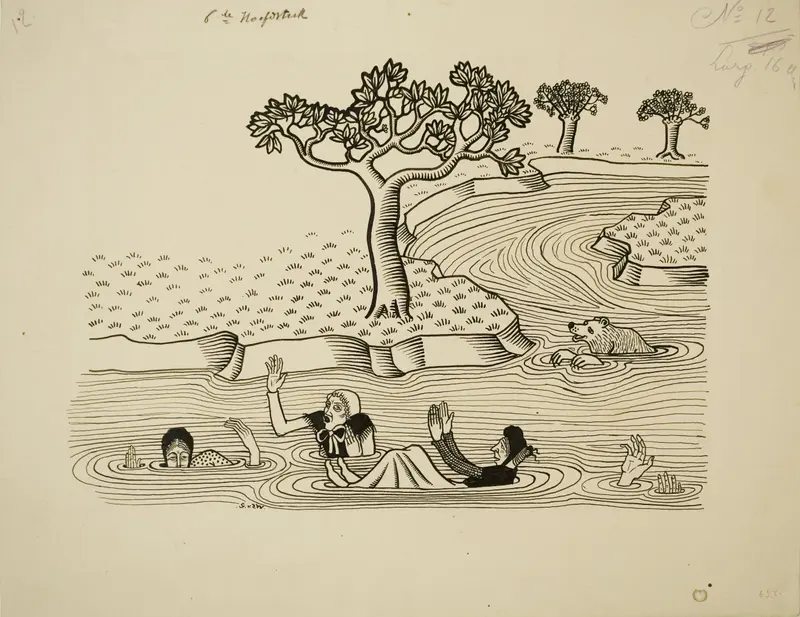
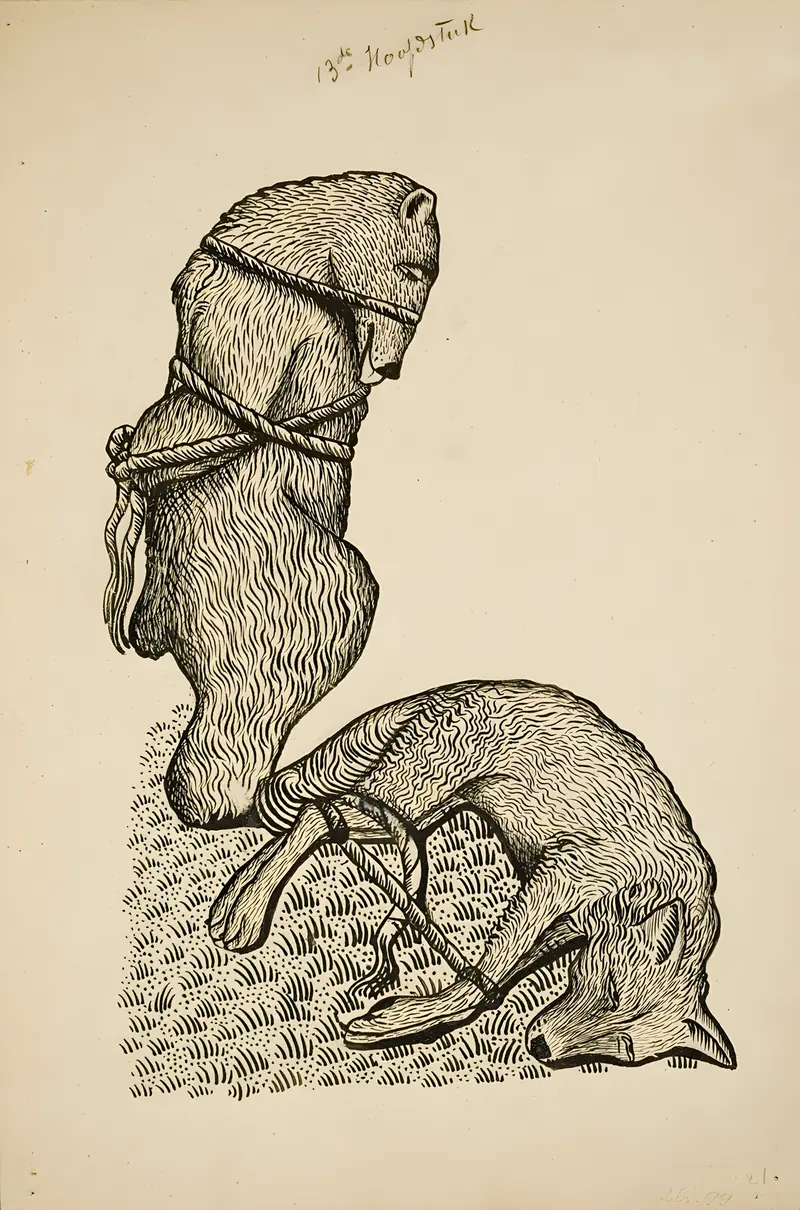
How Brown went out with Reynard where he thought he was eating honey and how he was caught by head and feet and suffered further misfortune
Gustave Van de Woestijne
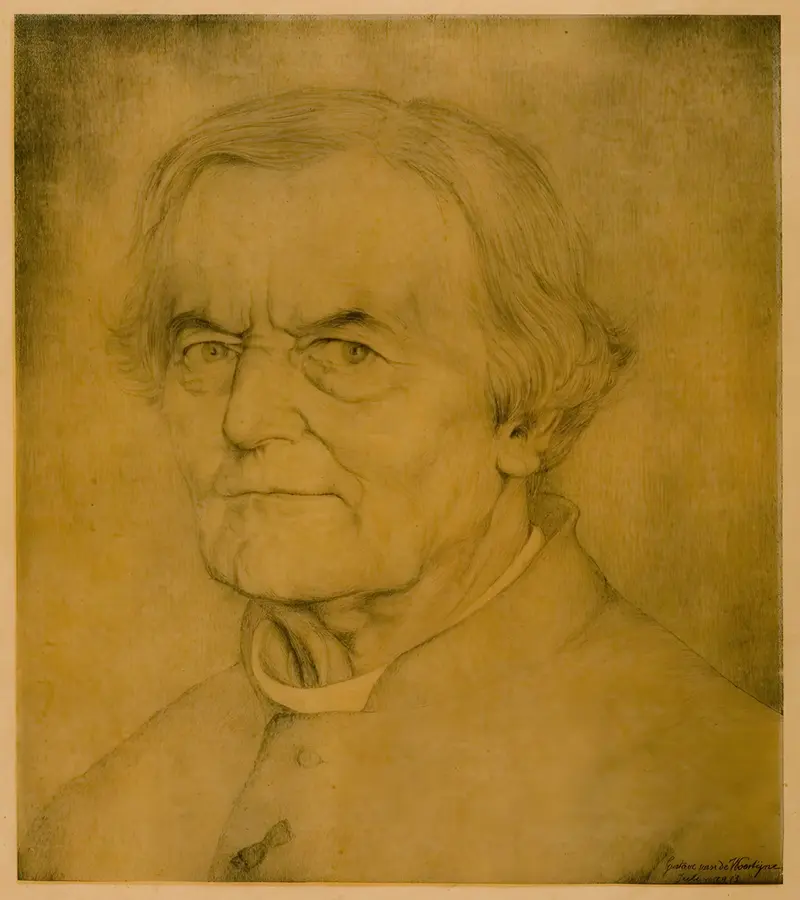
Portrait of Hugo Verriest
Gustave Van de Woestijne
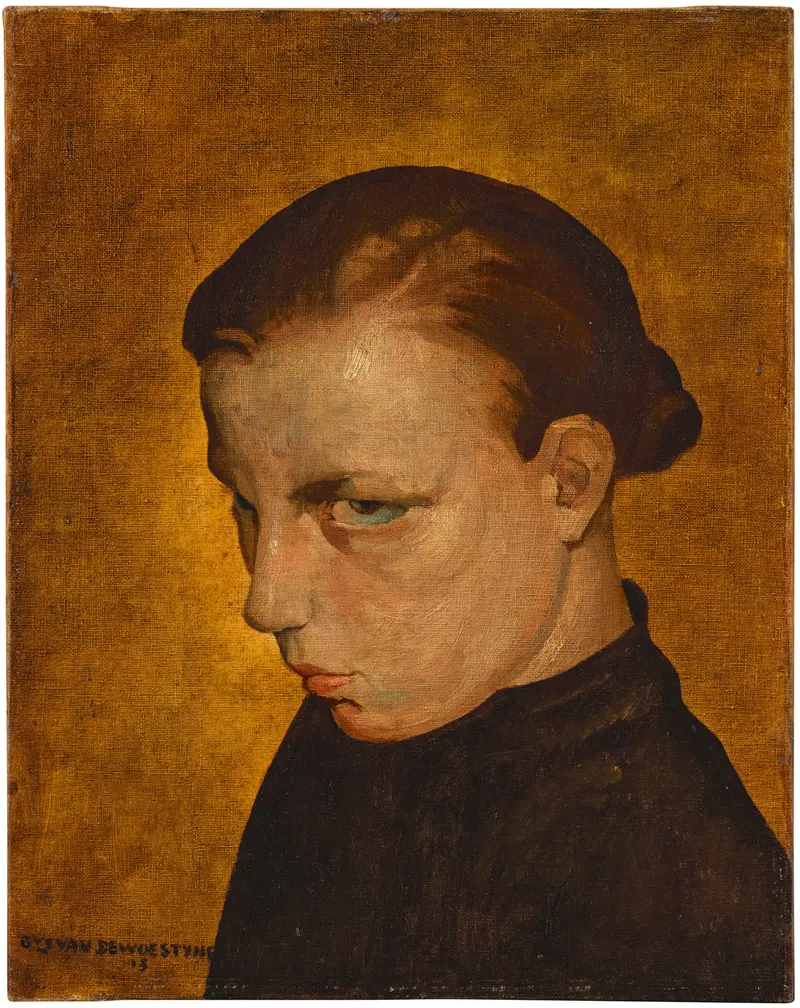
Angèle
Gustave Van de Woestijne
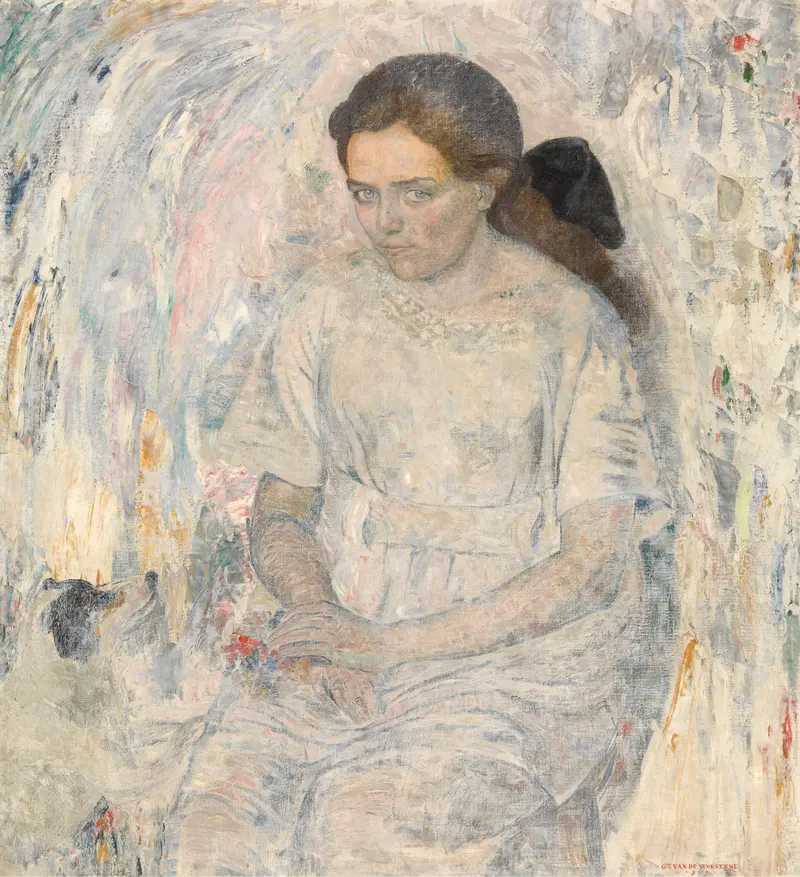
Adrienne
Gustave Van de Woestijne
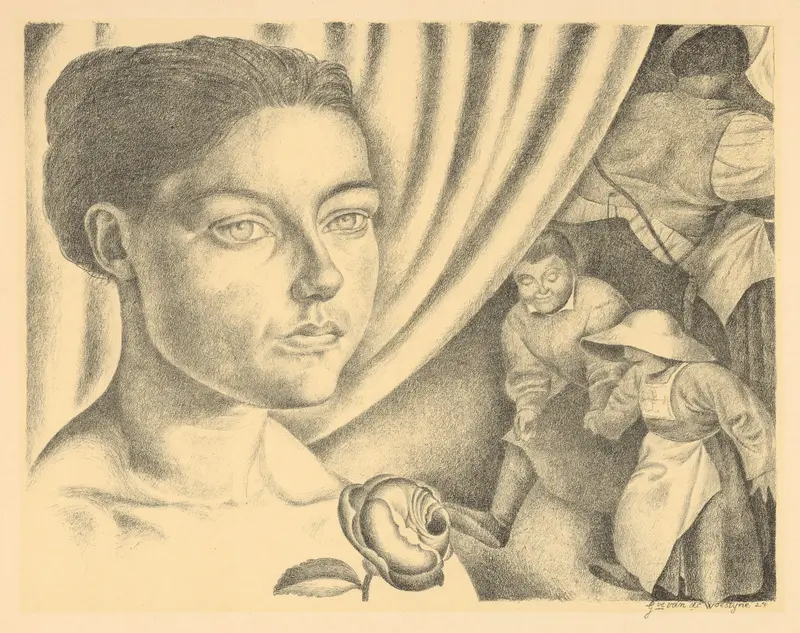
Jeune Femme
Gustave Van de Woestijne
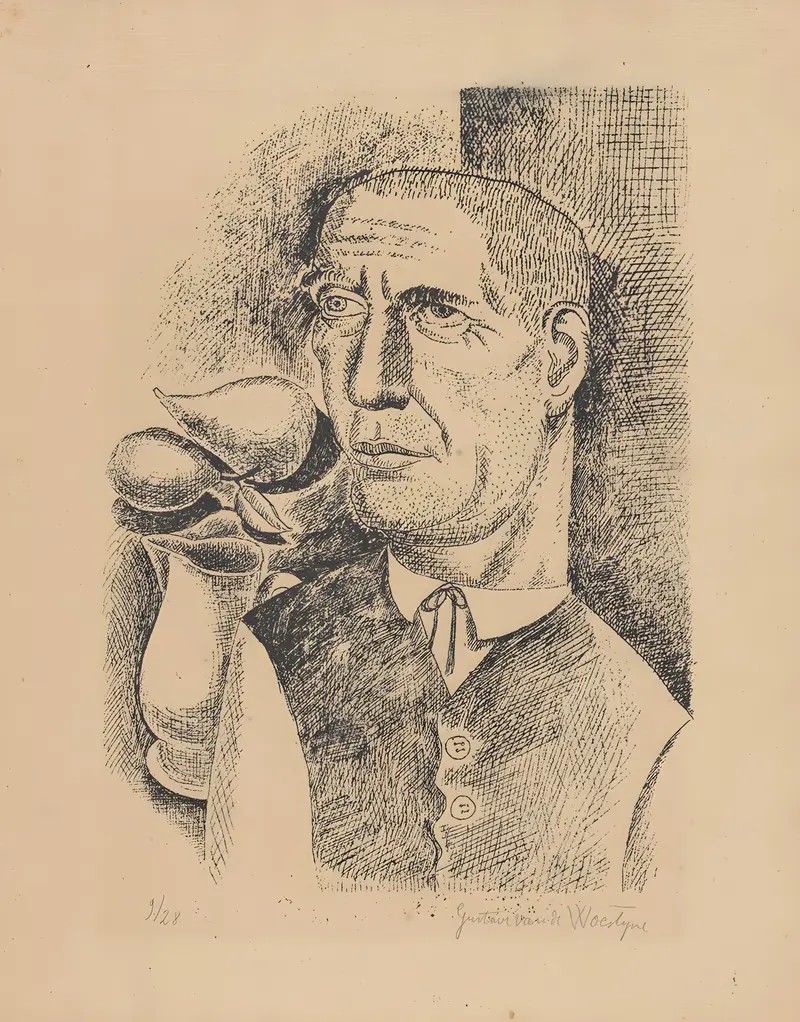
Boer op zijn zondags (Paysan endimanché)
Gustave Van de Woestijne
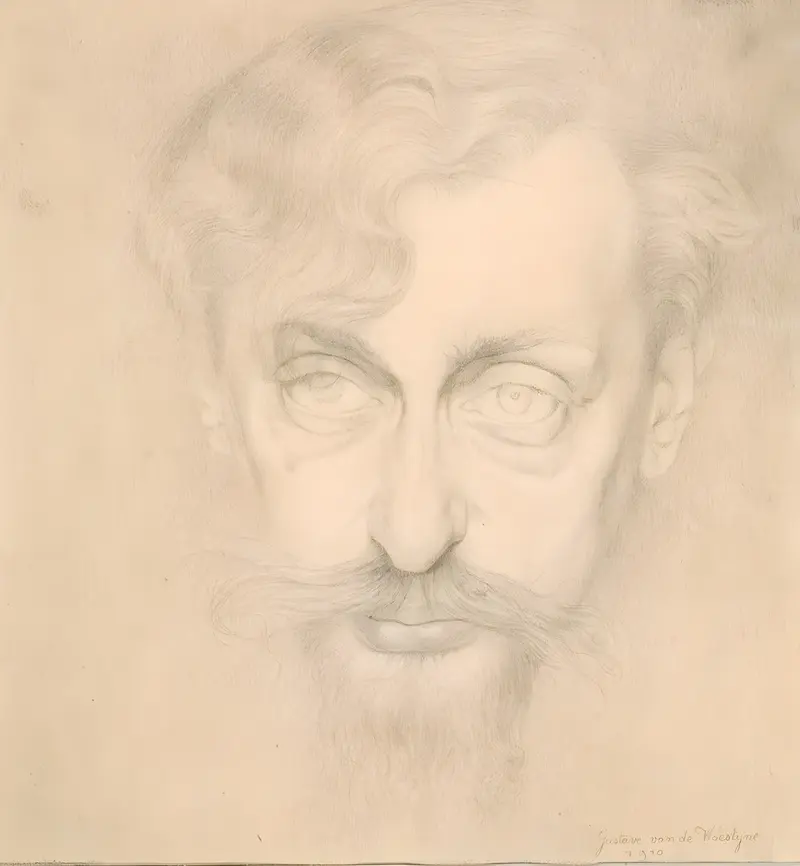
Portrait of the Writer Karel van de Woestijne
Gustave Van de Woestijne
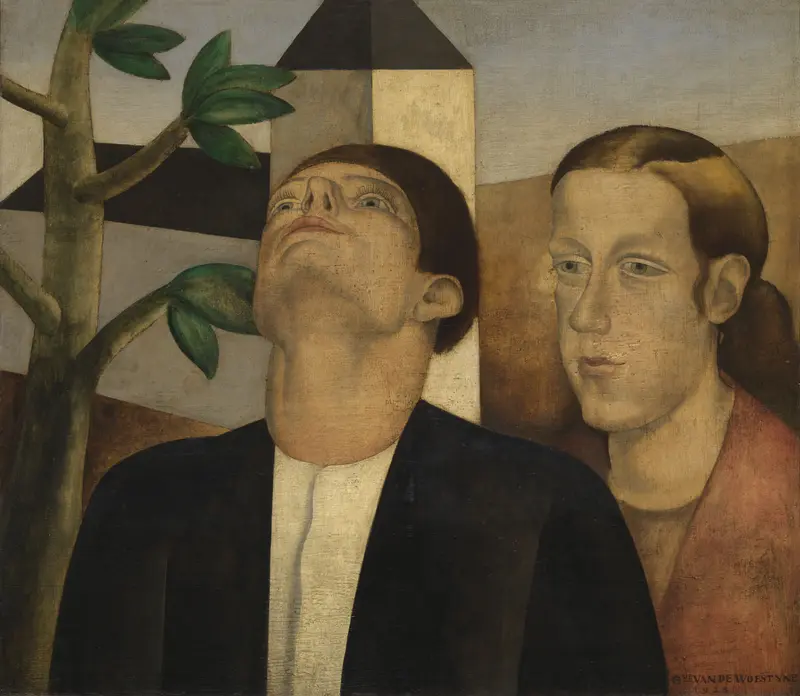
Azure
Gustave Van de Woestijne
How Reinaert devises a new trick to get free and exterminate his enemies
Gustave Van de Woestijne
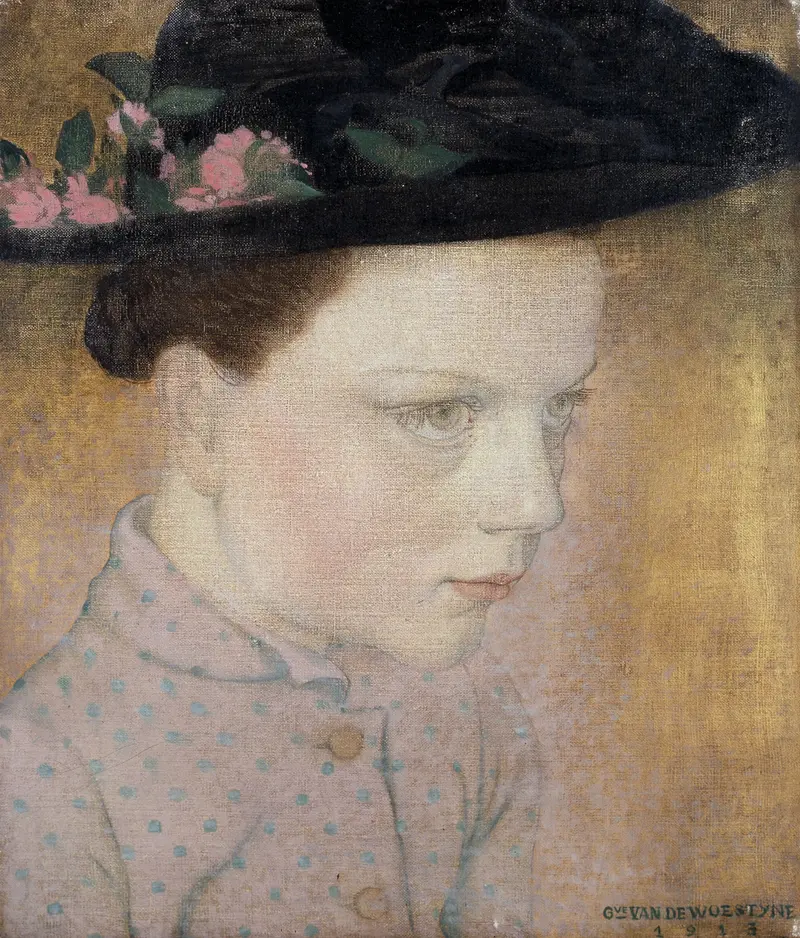
Country Girl
Gustave Van de Woestijne





