
City of Macon — History & Facts
The first thing that catches the eye in City of Macon is the ship’s proud silhouette, cutting across the choppy green waves with sails unfurled and a plume of smoke trailing from its funnel. The vessel’s crisp lines and the precision of its rigging speak to both the painter’s technical skill and the era’s fascination with maritime engineering. The American flag at the stern and the name streaming from the masthead signal identity and ambition, while the careful gradation of the sky, from blue to the faintest blush, draws the viewer’s gaze upward, giving the whole scene a sense of forward motion and optimism.
The ship seems to lean into the future, a floating city on the edge of the unknown. Painted in 1888, City of Macon belongs to a tradition of ship portraiture that flourished in the late nineteenth century, when steam and sail shared the world’s oceans. Artists like Antonio Jacobsen were often commissioned by shipping lines or proud captains to immortalize their vessels, celebrating the marvels of modern travel and commerce. These works served as both mementos and advertisements, capturing the pride of an industry at its height.
Little is recorded about the specific journey or commission behind this painting, but its date and style place it firmly in the age when America’s merchant fleet was expanding, and the promise of transatlantic connection felt almost boundless. The next time you look at this ship, consider the hopes and ambitions it carried—not just across the water, but into the future.
Sources: Wikidata Q127966414 · Image source (Wikimedia Commons)
More Artworks by Antonio Jacobsen

Het stoomschip met hulpzeilvermogen ‘Kroonland’
Antonio Jacobsen

The Barque Vigilant
Antonio Jacobsen
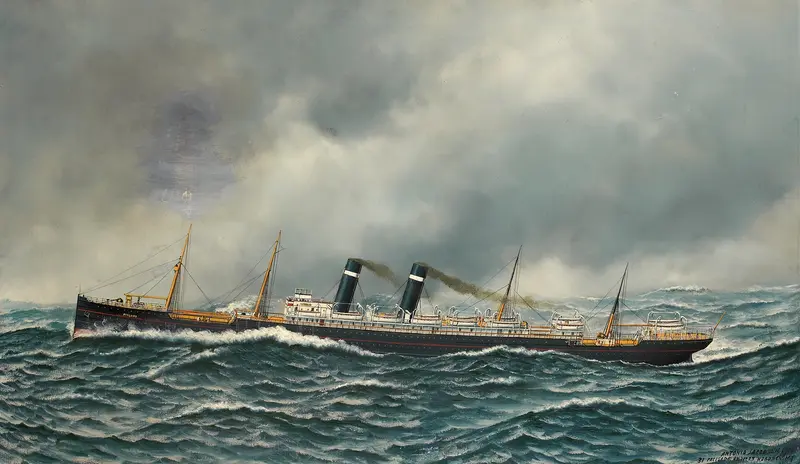
Het stoomschip ‘Finland’ te New York
Antonio Jacobsen
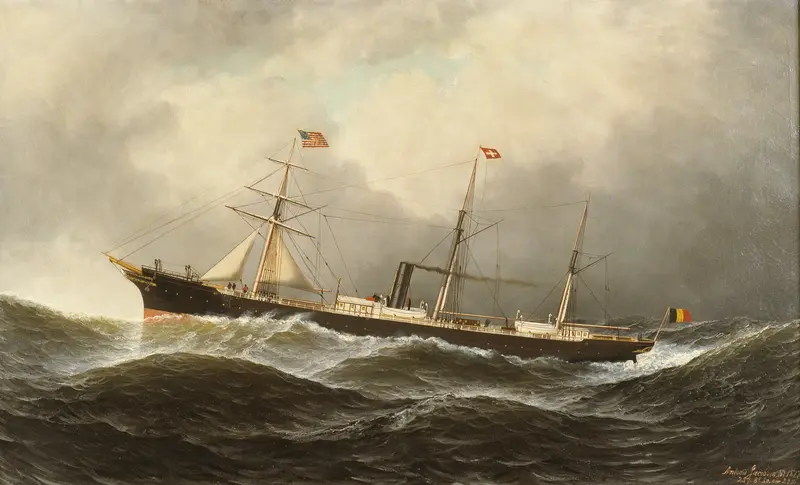
Het Belgische stoomschip met hulpzeilvermogen ‘Ludwig’ op zee
Antonio Jacobsen
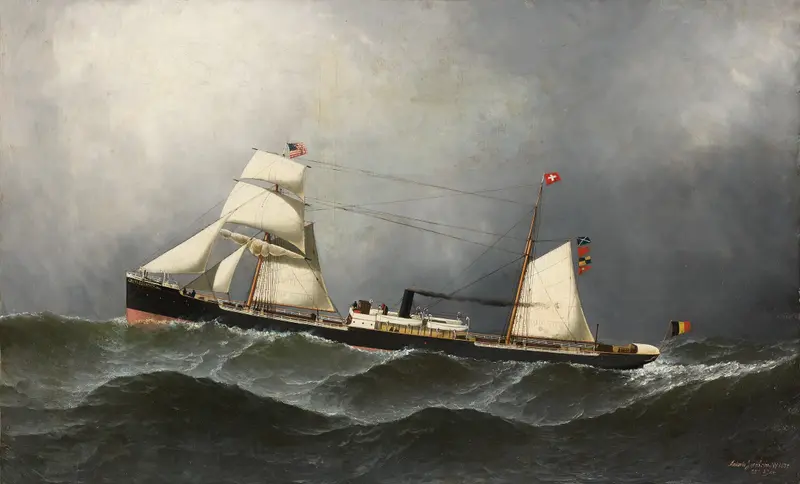
Het stoomschip met hulpzeilvermogen ‘Daniel Steinmann’ van de White Cross Line
Antonio Jacobsen
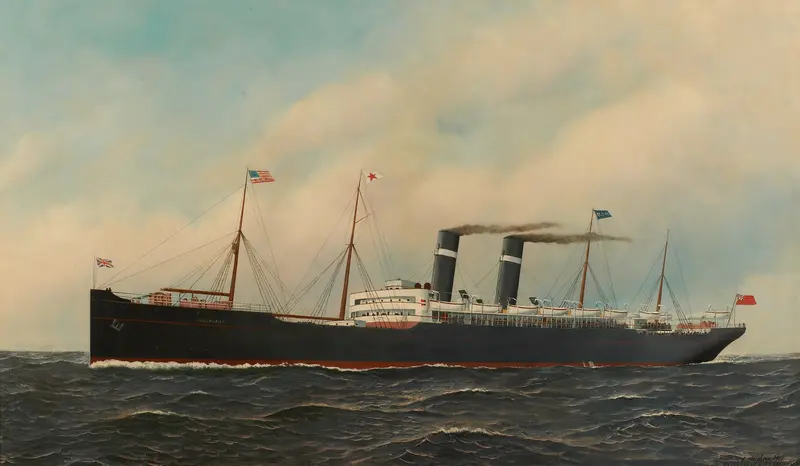
Het passagiersstoomschip Vaderland
Antonio Jacobsen
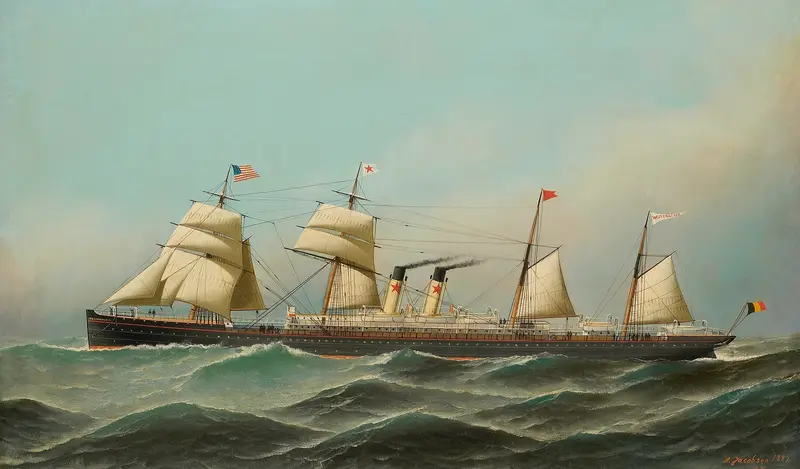
Het stoomschip met hulpzeilvermogen ‘Westernland’
Antonio Jacobsen
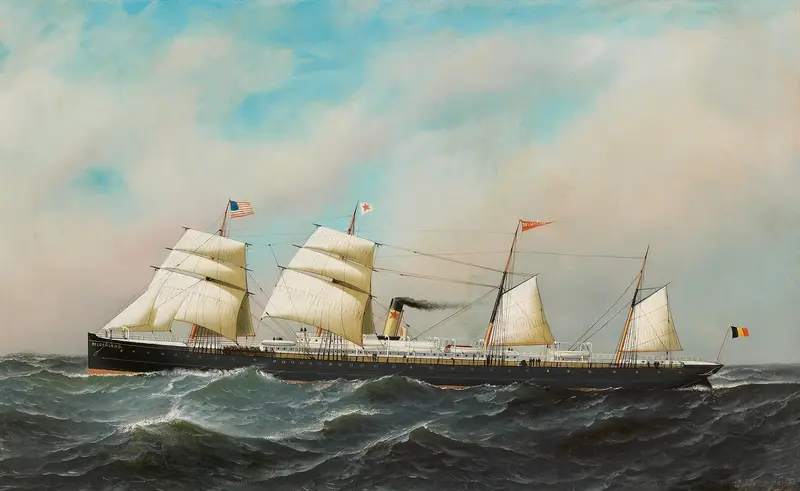
Het stoomschip met hulpzeilvermogen Belgenland
Antonio Jacobsen
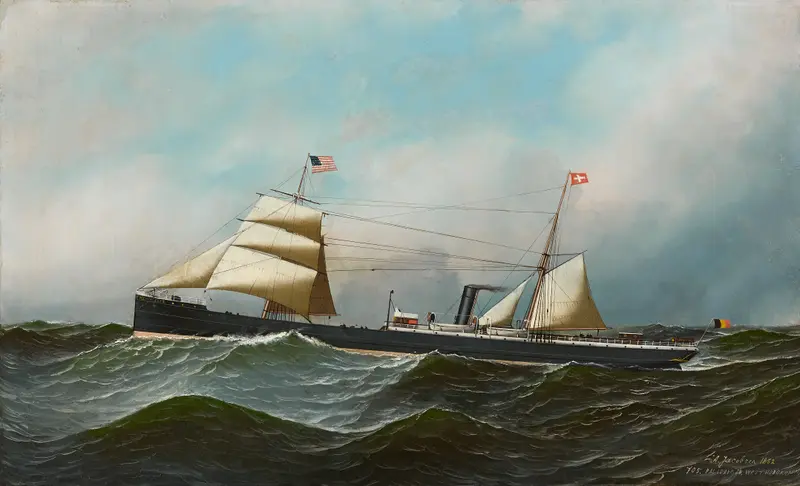
Het stoomschip met hulpzeilvermogen ‘Henry Edye’ van de White Cross Line
Antonio Jacobsen
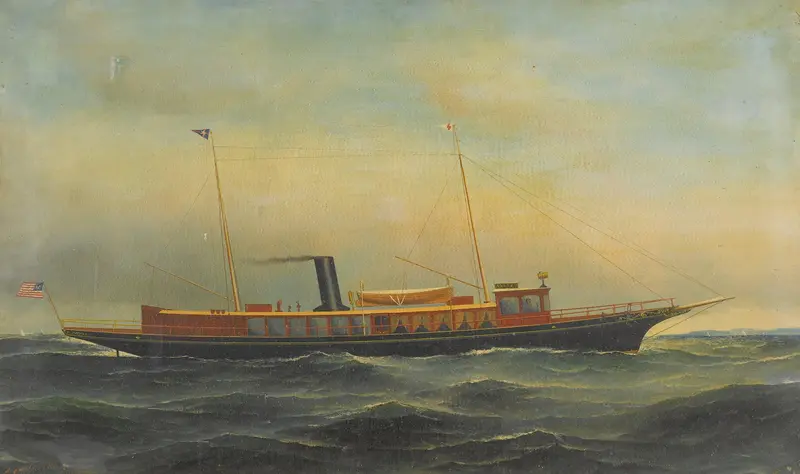
The Yacht ‘aztec’
Antonio Jacobsen





