
Classical Beauty — History & Facts
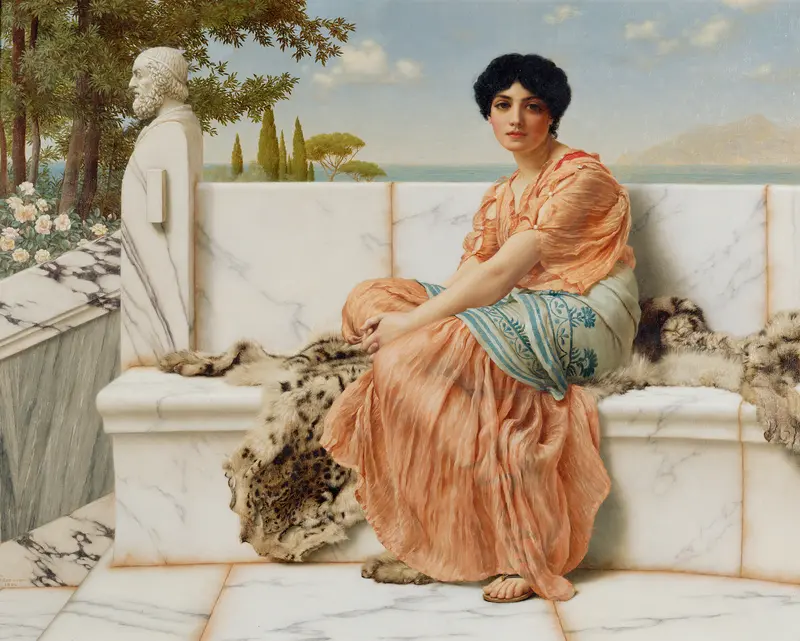
What first catches the eye in Classical Beauty is the quiet certainty with which the sitter occupies her space, her profile set against a tapestry of deep plum and gold. The artist, John William Godward, leads us to linger over the textures: the soft fall of sheer fabric on her shoulder, the gleam of a ribbon in her hair, the subtle contrast of her luminous skin against the patterned background. Every element is calculated to draw attention to her poise and the gentle line of her neck, while the animal pelt beneath her arm hints at a world of ancient luxury.
The palette is restrained but rich, the light carefully modulated to caress rather than command, inviting the viewer to contemplate rather than intrude. Works like this, painted in the late nineteenth or early twentieth century, belong to a world enthralled by the imagined splendor of antiquity. The classical revival, especially in Britain, offered artists and their patrons a vision of serene beauty and order, untouched by the uncertainties of modern life. Godward was celebrated for his technical precision and his devotion to the idealized female form, often set in imagined Greco-Roman interiors.
Though little is recorded about this particular painting in the Art Renewal Center Museum’s collection, its presence there testifies to the enduring appeal of such images—reminders of a time when art sought solace in the distant past. The sitter’s gaze, forever turned away, leaves us wondering what dreams or memories fill her silent reverie.
More Artworks by John William Godward

Eighty and eighteen
John William Godward
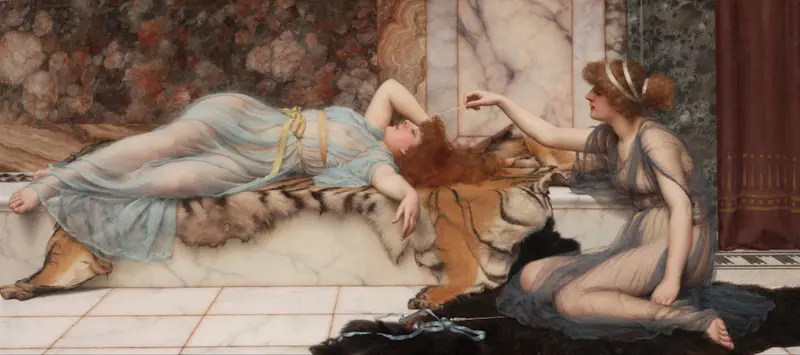
Mischief and Repose
John William Godward
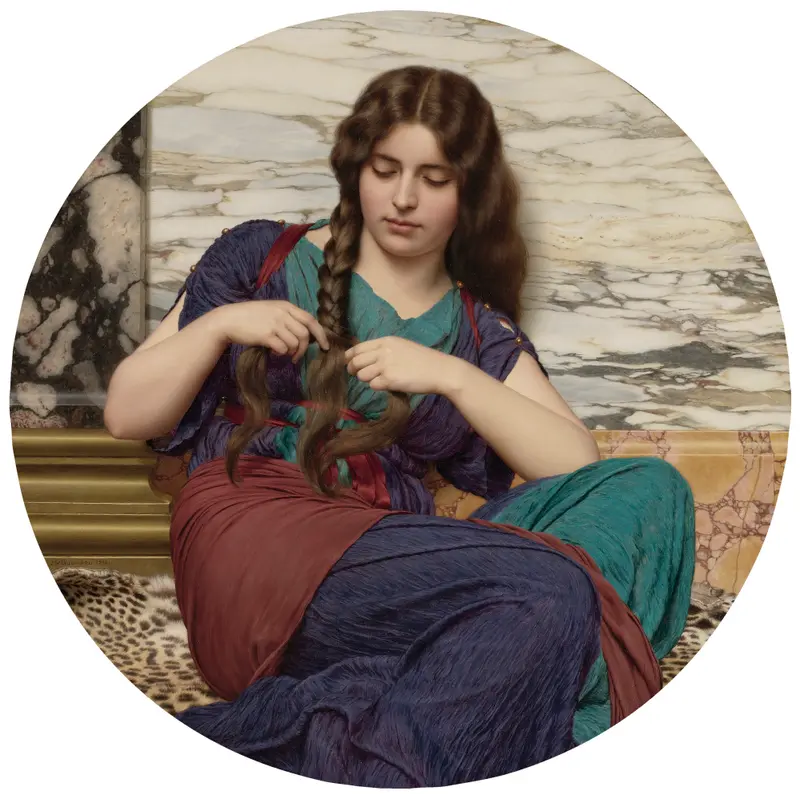
A Congenial Task
John William Godward
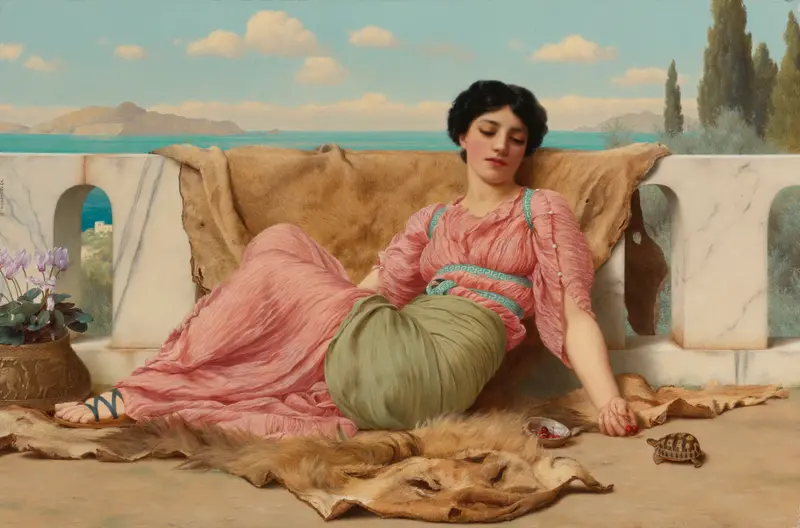
The Quiet Pet
John William Godward
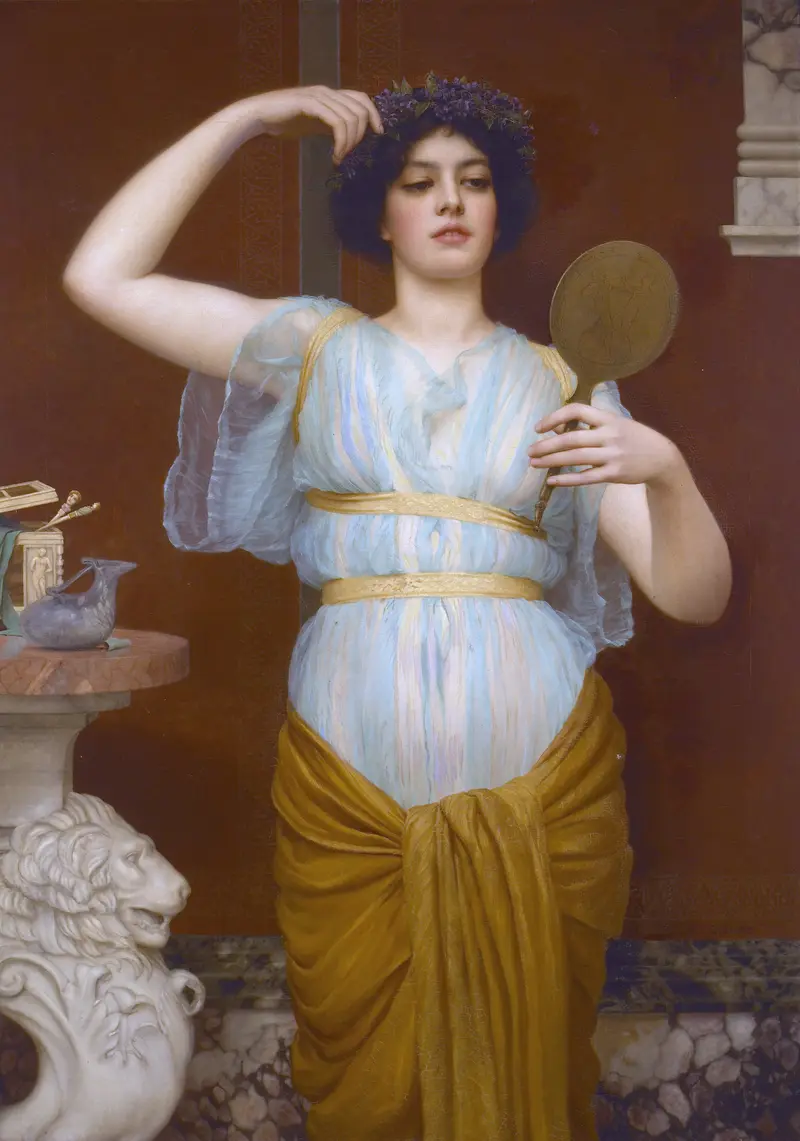
Ione
John William Godward
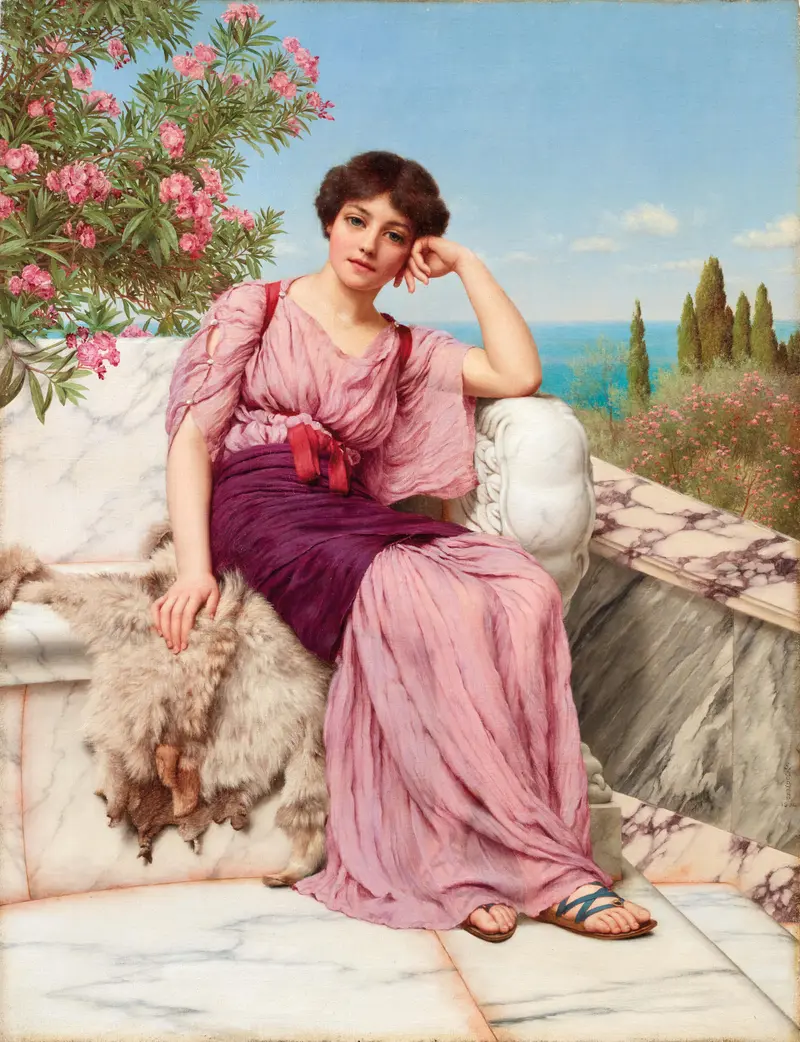
Sweet Dreams
John William Godward
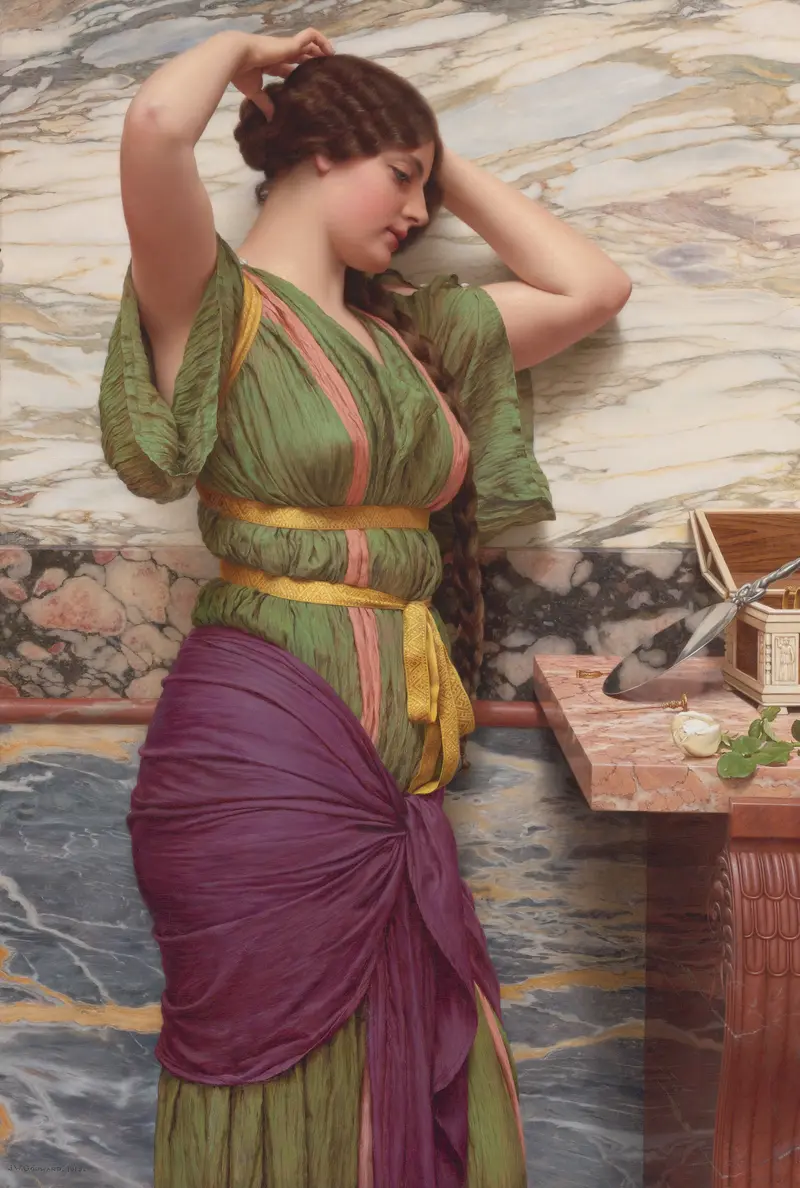
A Fair Reflection
John William Godward
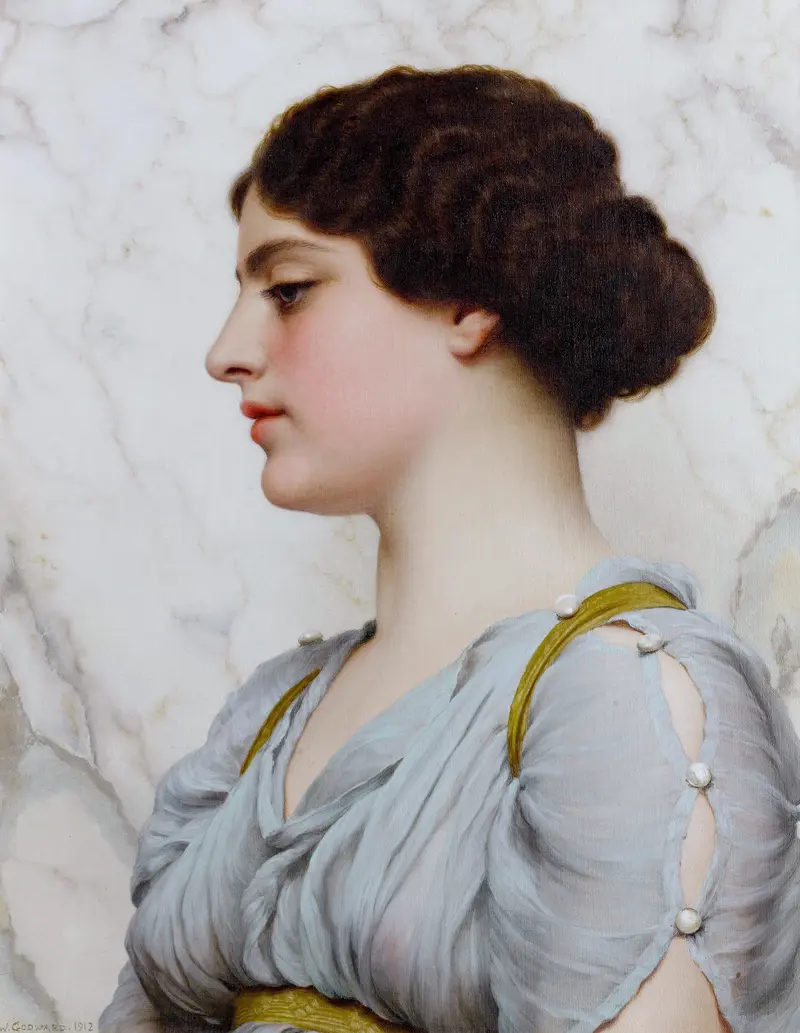
A Roman Beauty
John William Godward
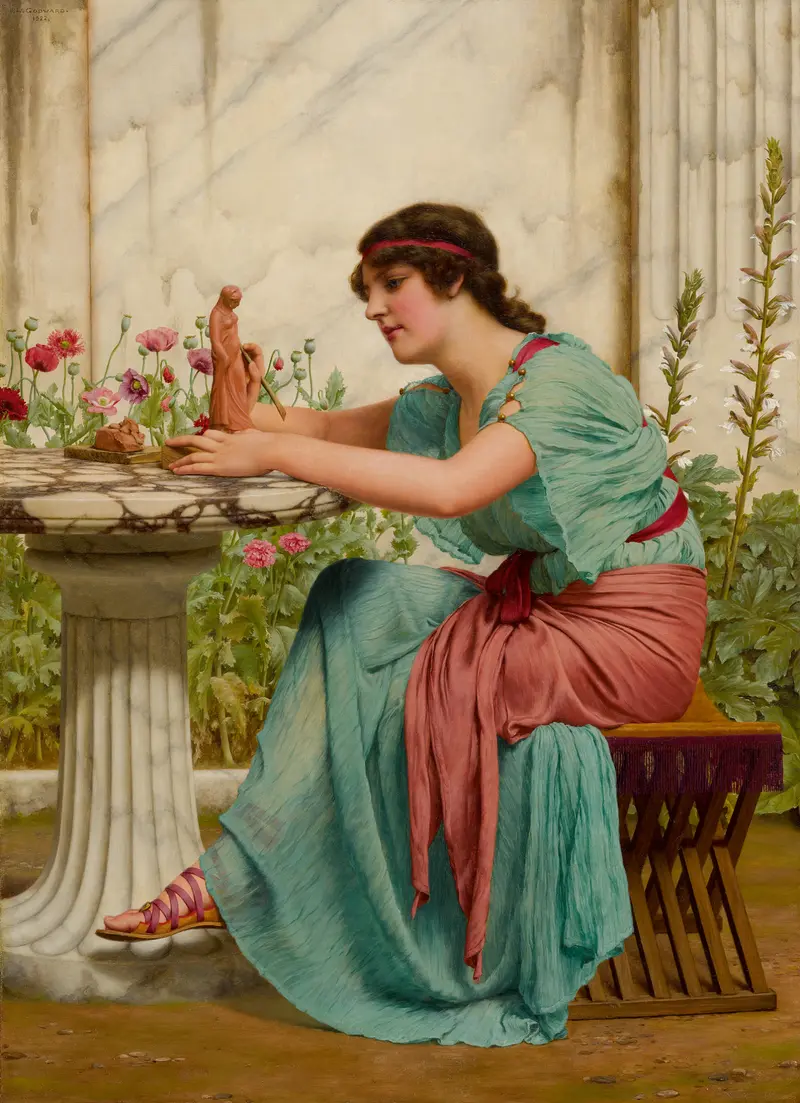
A Dilettante
John William Godward
Reverie
John William Godward





