
Clouds over flatland below the Tatra Mountains — History & Facts
Can beauty exist without sorrow? In Clouds over Flatland Below the Tatra Mountains, Władysław Ślewiński invites us to ponder this profound question as shadows dance across the landscape. The painting captures a moment suspended between light and dark, where the ethereal beauty of the Tatra Mountains looms majestically over the tranquil flatlands below, creating an interplay of emotions that echo in the viewer's soul. Focus first on the clouds, swirling and billowing across the canvas, their soft whites and grays contrasting with the deep blues of the sky. The mountains, rendered in earthy tones, rise stoically from the flatlands, their jagged edges softened by the encroaching mist.
Notice how the light struggles to break through the dense cloud cover, casting an almost melancholic shadow over the land, suggesting the weight of unseen burdens borne by the earth itself. The tension between light and shadow encapsulates a deeper narrative; the clouds, while beautiful, also evoke a sense of impending change or turmoil. The soft gradients in the sky hint at an emotional complexity, reflecting the transient nature of beauty intertwined with the heaviness of existence. The mountains stand as silent witnesses to this duality, suggesting strength amid vulnerability, a balance that resonates within all of us. Ślewiński created this artwork in 1908, during a time when he was deeply influenced by the Symbolist movement.
Living in France, he grappled with his Polish identity while absorbing the innovative techniques and ideas of his contemporaries. This painting emerged amidst a rich cultural dialogue, reflecting both personal and collective struggles, as artists sought to capture the essence of beauty, nature, and the human condition.
More Artworks by Władysław Ślewiński
Browse all →
Rough sea
Władysław Ślewiński
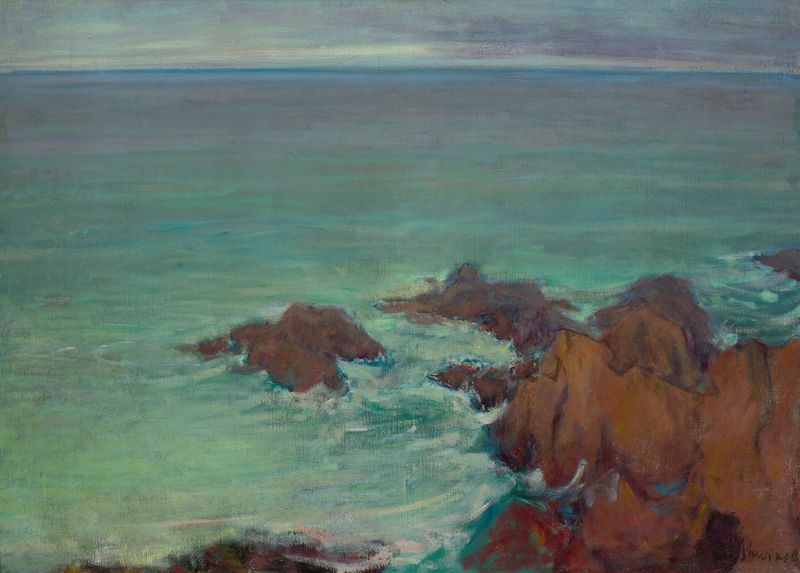
Sea in Brittany
Władysław Ślewiński
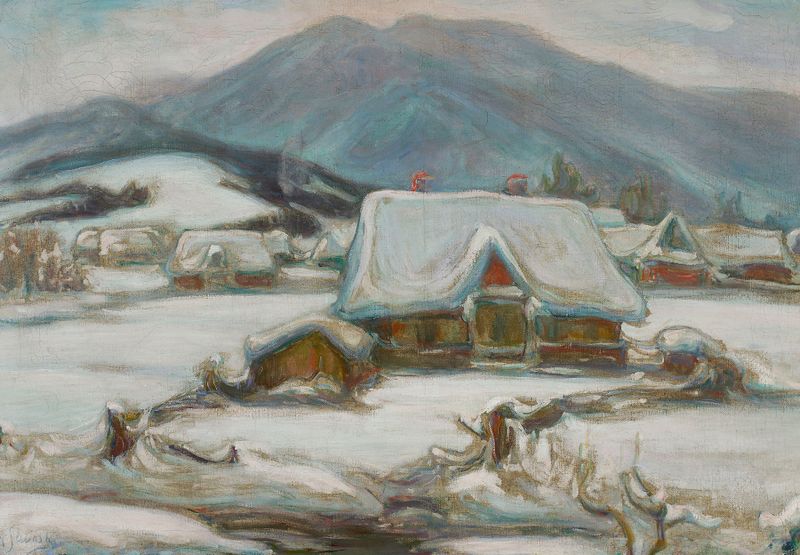
Cottages in the snow
Władysław Ślewiński

Sea
Władysław Ślewiński

Waves in a rocky bay
Władysław Ślewiński

Sea with white waves
Władysław Ślewiński
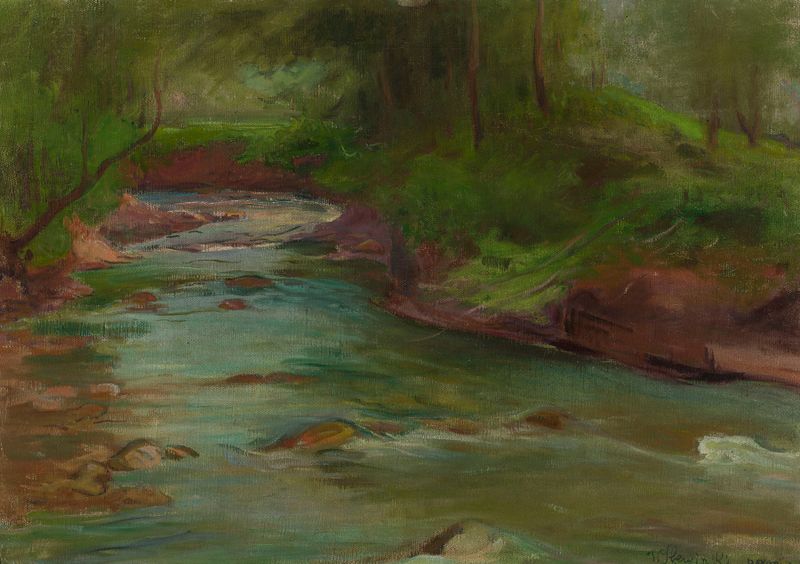
Mountain stream – in the Tatra Mountains below Mt Nosal
Władysław Ślewiński
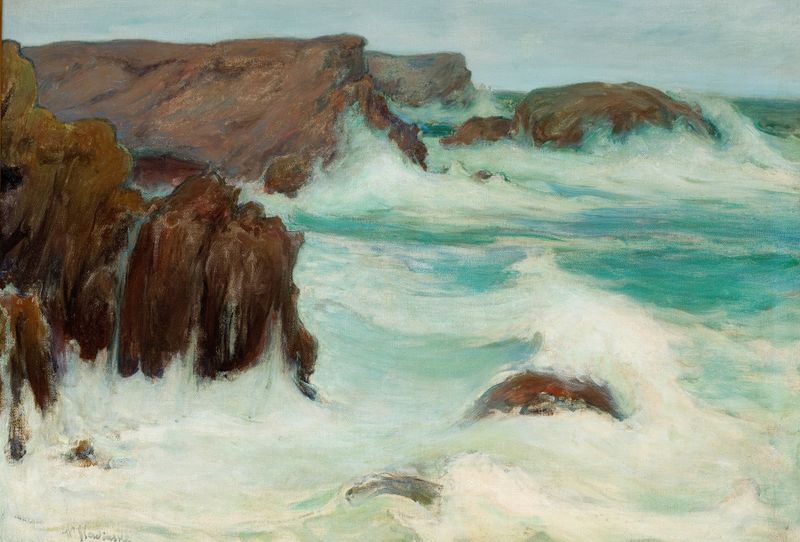
The Sea in Brittany
Władysław Ślewiński

A Coastal Landscape
Władysław Ślewiński

Sea at night
Władysław Ślewiński





