
Composition aux Deux Oiseaux Fernand Leger — History & Facts
A pair of white birds, caught mid-flight, seem to slice through a world of bold shapes and restless color. The eye is drawn first to their wings, outlined in black, as they dart through a tangle of yellow branches, blue ribbons, and geometric fragments. Each element feels purposeful: the birds’ olive branches hint at peace, while the looping chains and scaffolding suggest a world still under construction.
The palette is both playful and insistent—emerald green, violet, and ochre jostle for attention, while the deep blue ribbon pulls the gaze across the surface, tying the composition together. Here, Fernand Léger transforms the everyday into a stage for movement and hope, the birds’ flight a promise of escape or renewal. Painted in 1947, Composition aux Deux Oiseaux Fernand Leger belongs to a period when artists across Europe sought new languages for a world emerging from war. Léger, a key figure in Cubism and later a pioneer of his own brand of modernism, often filled his canvases with machinery, architecture, and the rhythms of city life.
Yet in this work, the mechanical is softened by organic forms and the universal symbol of the dove. Such paintings, often created for private collectors or public spaces, were meant to inspire optimism and reconstruction in a battered continent. History has kept few traces of this particular composition’s journey, but its energy and symbols invite viewers to imagine what peace might look like, even in the midst of chaos.
More Artworks by Fernand Léger

The Tugboat Bridge
Fernand Léger
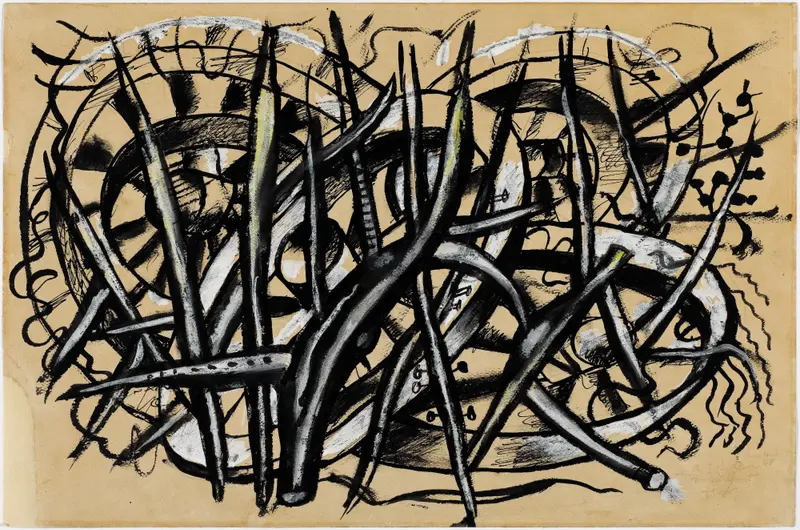
The Wheels
Fernand Léger

Le Cirque Médrano
Fernand Léger
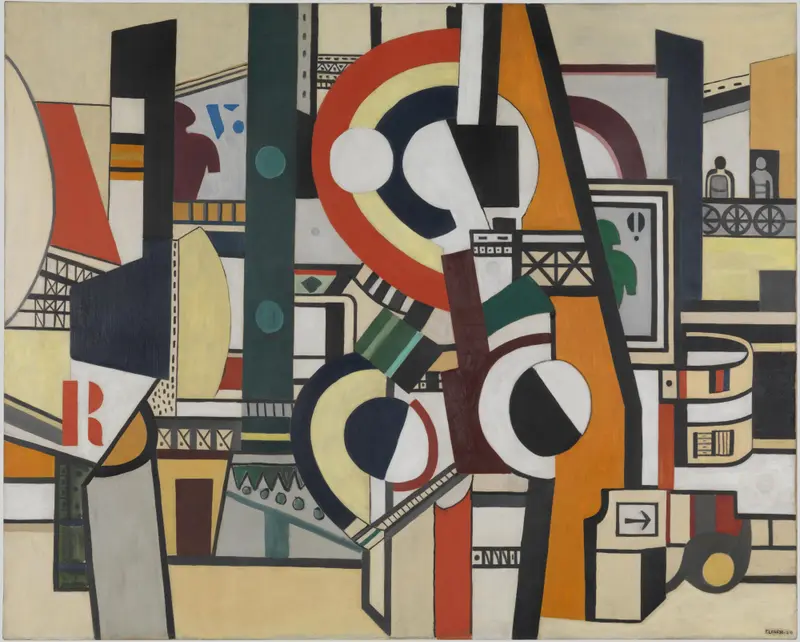
The Disks in the City
Fernand Léger
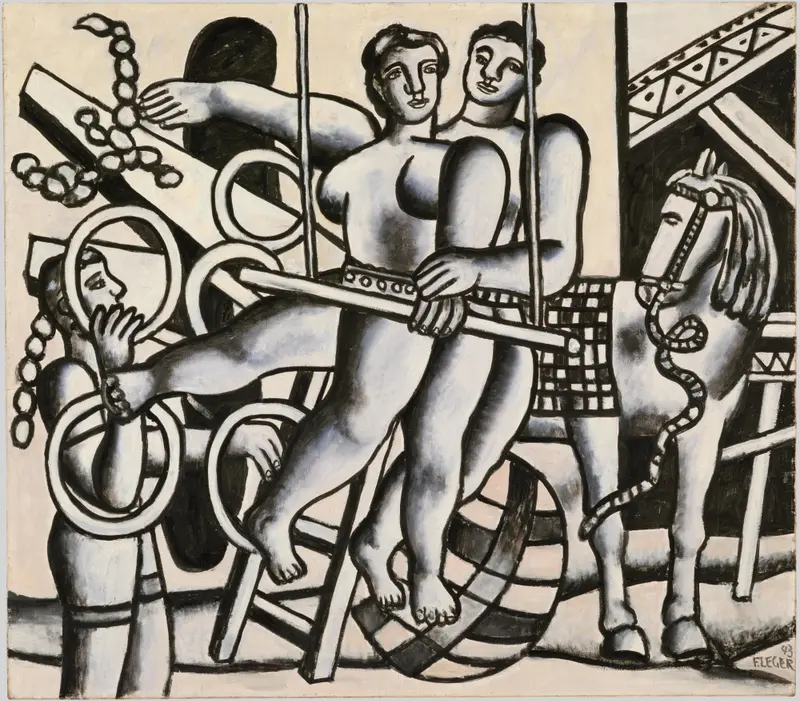
Le Jongleur et les acrobates
Fernand Léger
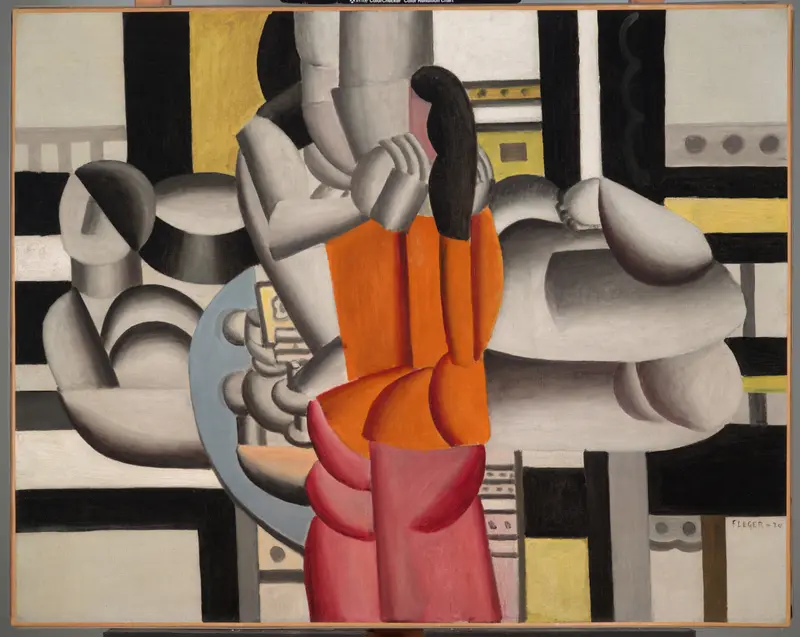
Three Women and Still Life (Déjeuner)
Fernand Léger

Reading
Fernand Léger
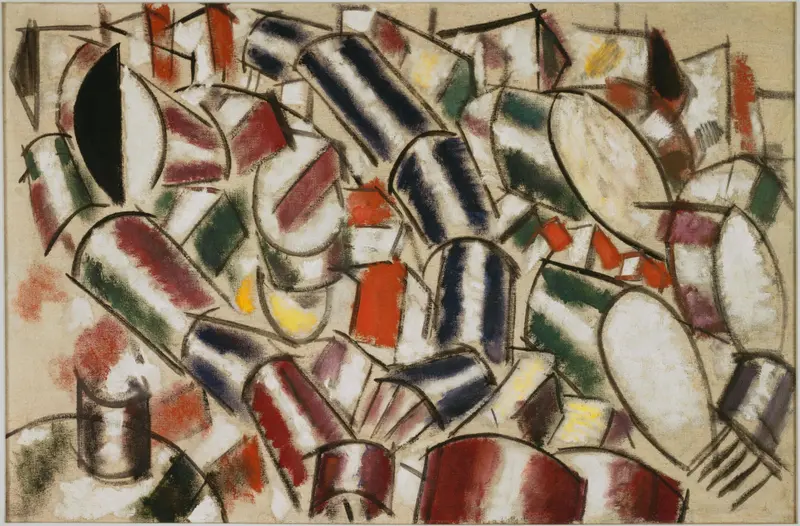
Femme couchée
Fernand Léger
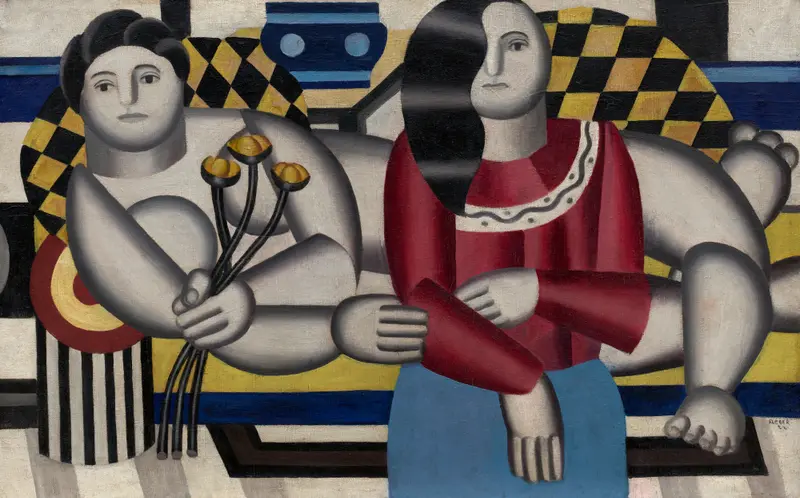
Woman holding flowers
Fernand Léger
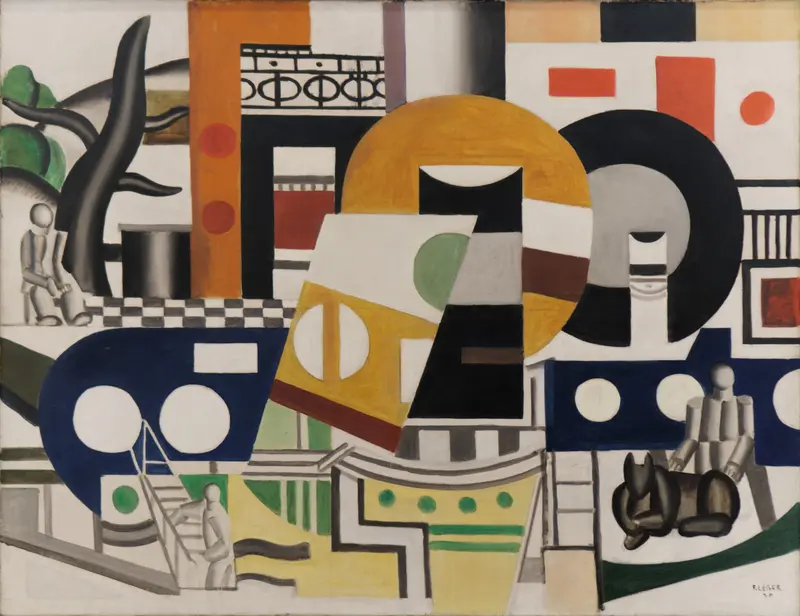
The Tug
Fernand Léger



