
Composition (La Danseuse au triangle jaune) — History & Facts
A single figure floats in a world of bold, colliding shapes—her body rendered in smooth, sculptural curves, while her surroundings burst with angular geometry and electric color. The eye is drawn first to the dancer herself, a pale and almost classical form, whose calm face contrasts with the riot of red, black, and yellow that encircles her. The yellow triangle, sharp and luminous, slices through the composition like a spotlight or a stage prop, setting the scene for a performance caught between organic and mechanical.
Black lines snake and loop, binding the figure to the abstracted architecture beside her, as if movement itself is being diagrammed in space. Léger’s palette is cool and controlled, yet the effect is anything but static—this is a painting that pulses with the rhythm of modern life. Painted in 1930, Composition (La Danseuse au triangle jaune) emerges from a moment when artists like Fernand Léger were captivated by the energy of the machine age and the possibilities of abstraction. Léger, a central figure in the Cubist and later Purist movements, often explored the tension between the human body and the constructed environment, reflecting a world transformed by industry and speed.
Works like this were rarely private commissions; rather, they were created for the modern gallery, for collectors eager to surround themselves with the new visual language of the twentieth century. History has kept few traces of this particular painting’s early journey, but its date and style place it squarely in the years when Léger was refining his signature vocabulary—one that invites us to look again, to find the dance in the machinery and the poetry in the everyday.
More Artworks by Fernand Léger

The Tugboat Bridge
Fernand Léger
The Wheels
Fernand Léger

Le Cirque Médrano
Fernand Léger
The Disks in the City
Fernand Léger
Le Jongleur et les acrobates
Fernand Léger
Three Women and Still Life (Déjeuner)
Fernand Léger
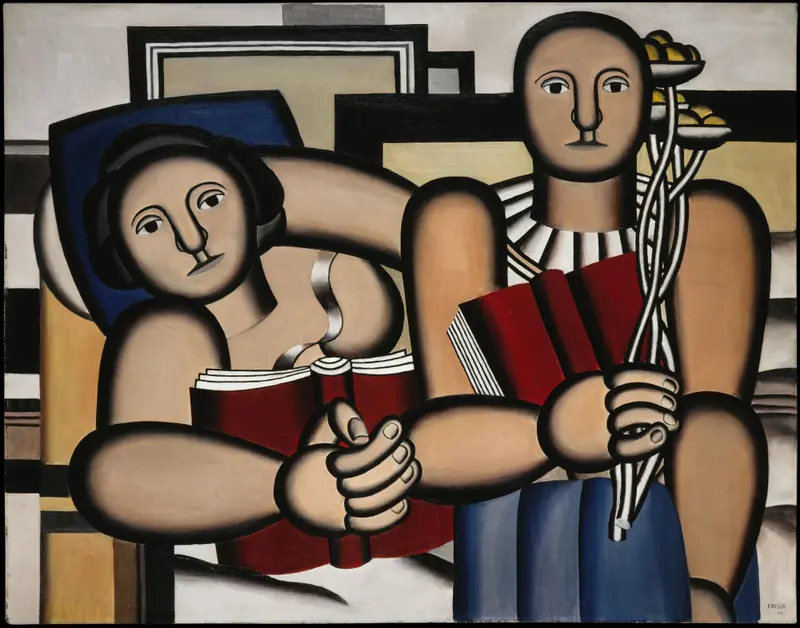
Reading
Fernand Léger
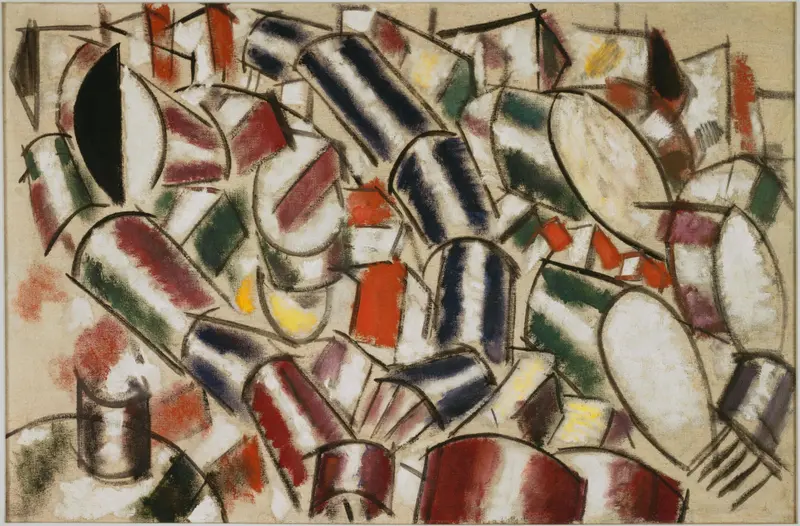
Femme couchée
Fernand Léger
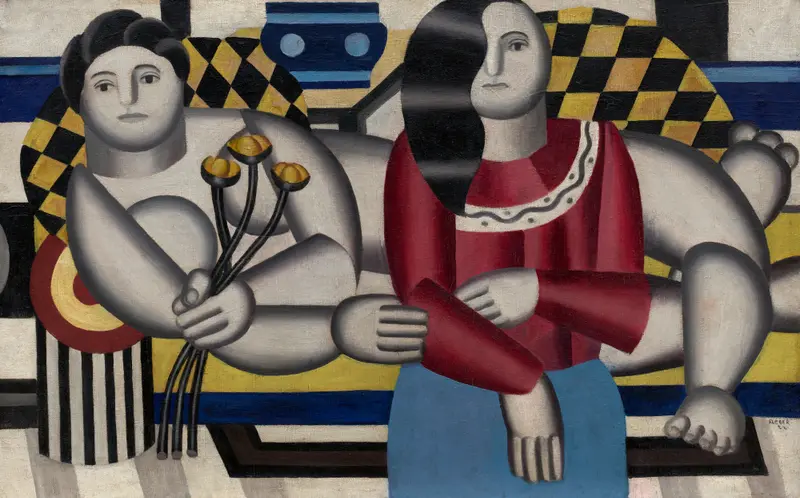
Woman holding flowers
Fernand Léger
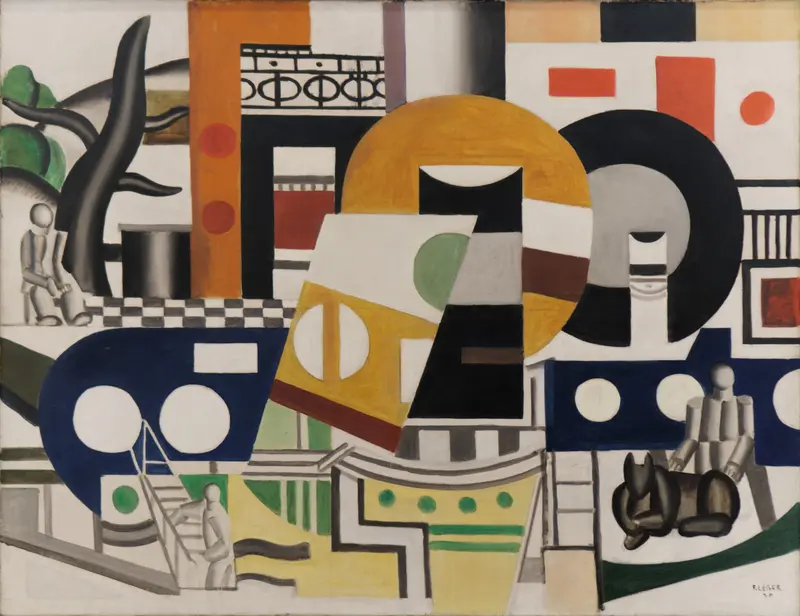
The Tug
Fernand Léger



