
Cottage on a Hill — History & Facts
The winding path draws you in first, its gentle curve inviting the eye to wander up toward the thatched cottage perched on the hill. Every line in Antonie Waterloo’s Cottage on a Hill works like a quiet guide: the slant of the fence, the shadows beneath the trees, the way the figures gather in a loose knot of conversation near the house. The trees, rendered with a restless energy, seem to lean together, sheltering the home and its inhabitants.
Light falls softly across the scene, illuminating the gathering and giving the landscape a sense of lived-in calm, as if this is a place where stories are exchanged at the end of a day’s work. Works like this, emerging from the Dutch Golden Age, were crafted for a world newly fascinated by the land itself. Landscape prints and drawings became prized possessions, collected by merchants and burghers who saw in them a reflection of their own ordered, prosperous countryside. Waterloo, known for his sensitive etchings, often chose such humble scenes—rural cottages, winding paths, the quiet drama of everyday life.
The date and medium of this particular work remain uncertain; history has kept few traces of its journey before it arrived in the National Gallery of Art, where it now forms part of an open-access collection. Look again at the figures by the cottage, and imagine the countless viewers who have paused here before you, drawn into the gentle rhythm of Waterloo’s world.
More Artworks by Antonie Waterloo
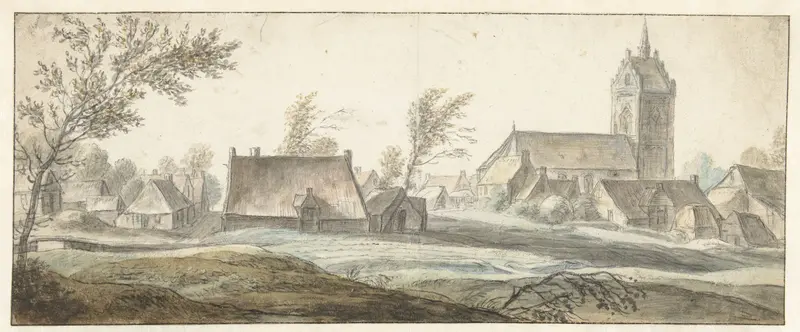
Gezicht op het dorp Soest
Antonie Waterloo
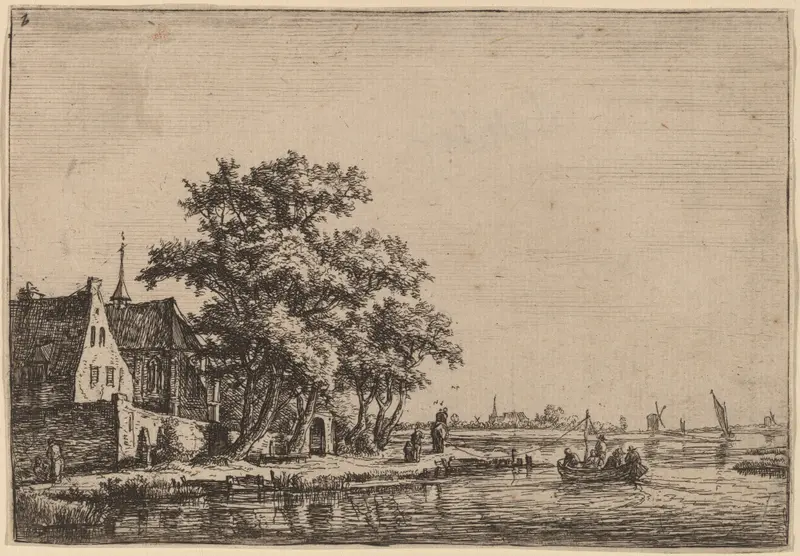
Churchyard at the Waterside
Antonie Waterloo
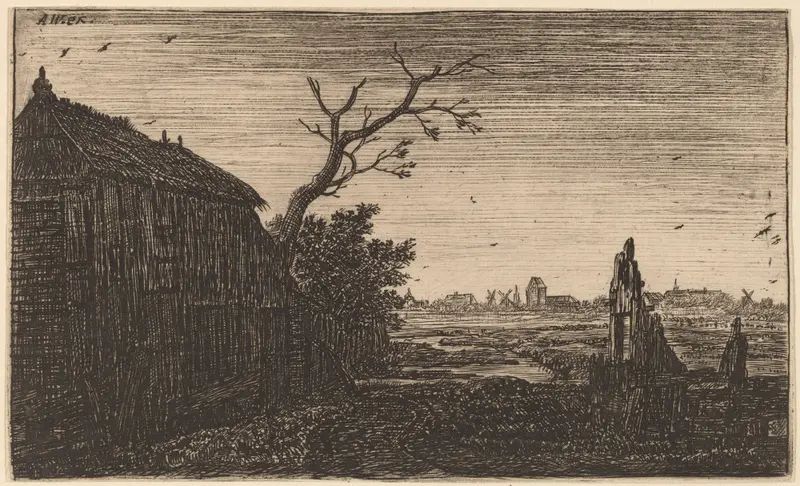
The Sluice
Antonie Waterloo
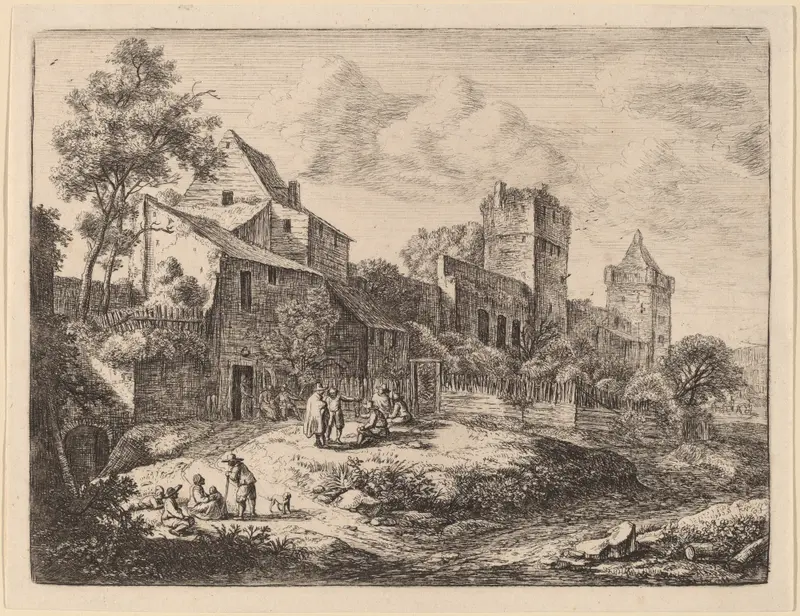
Square in Front of an Inn
Antonie Waterloo
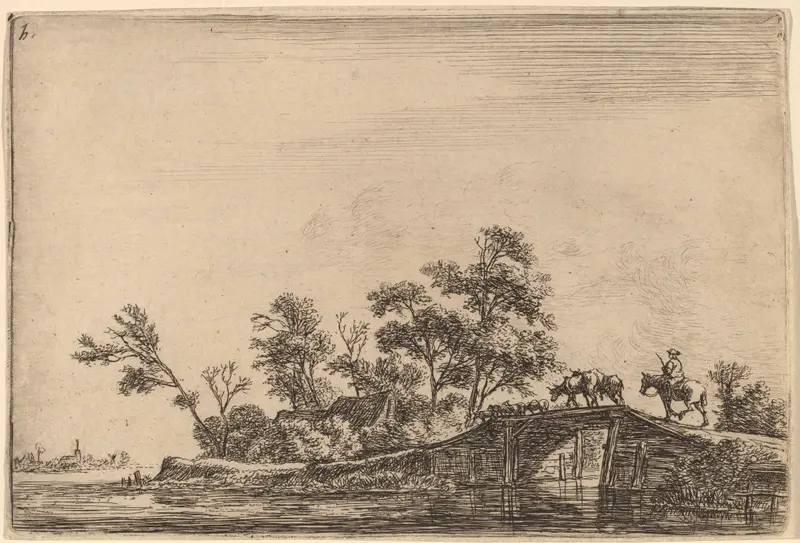
Rider and Flock on a Bridge
Antonie Waterloo
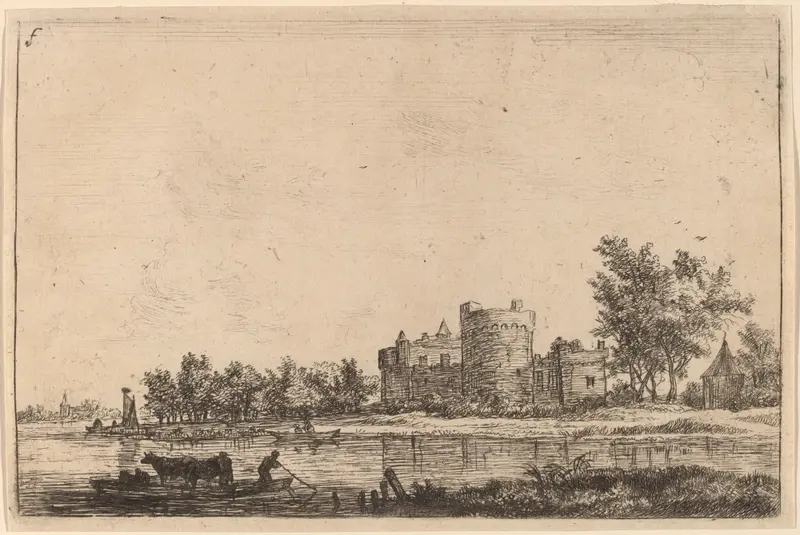
Two Cows on a Ferry
Antonie Waterloo
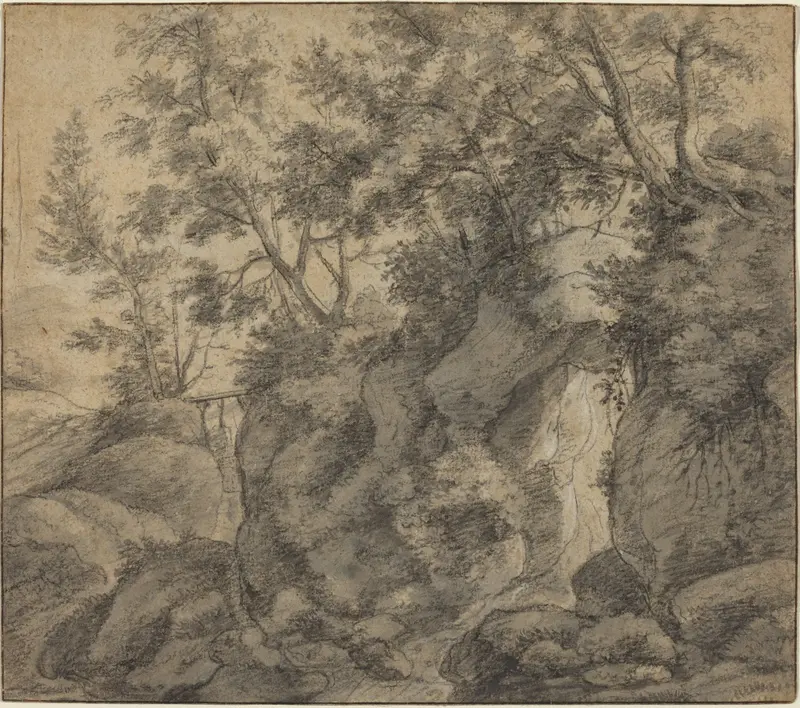
Landscape with a Wooded Ravine
Antonie Waterloo
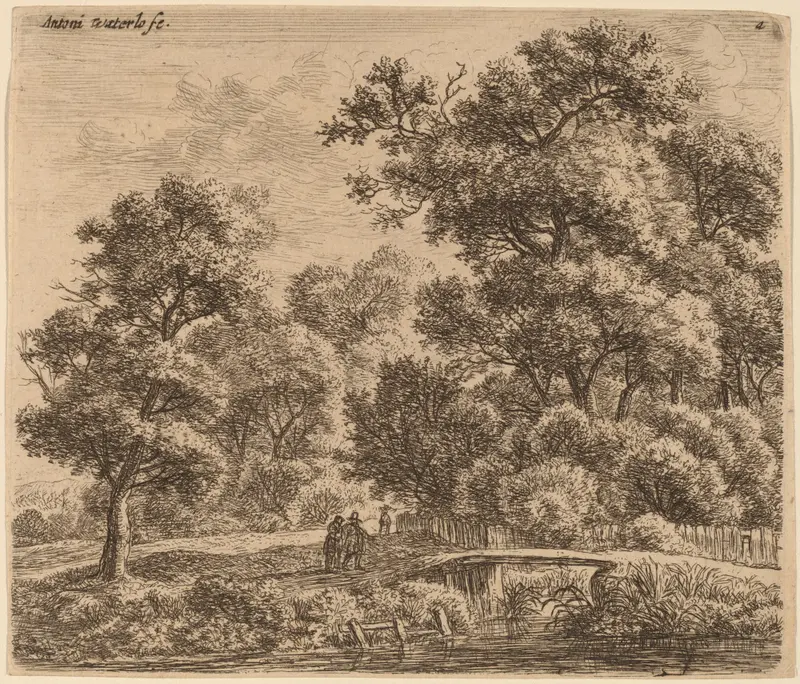
Wooded Landscape with a Bridge
Antonie Waterloo
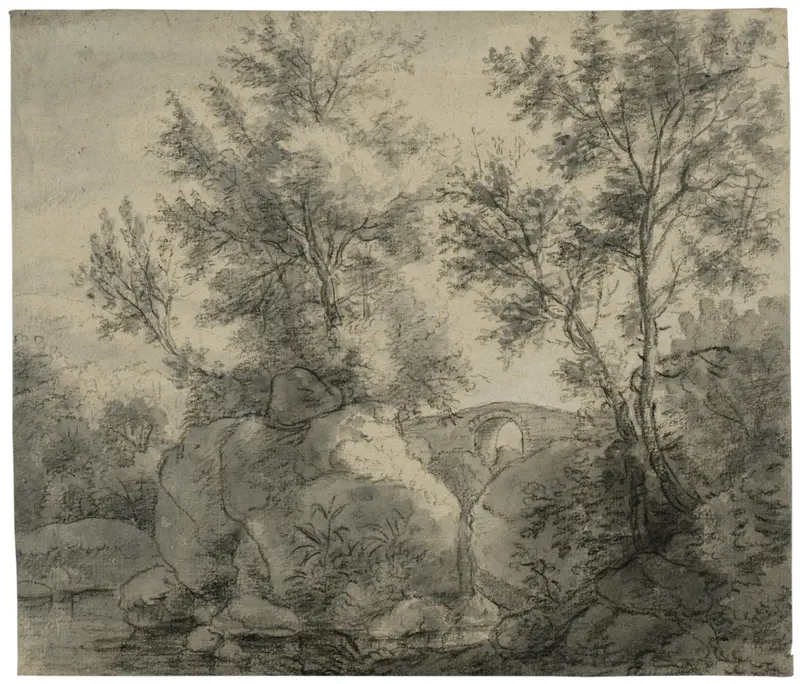
Rocky Landscape with a Stone Bridge
Antonie Waterloo
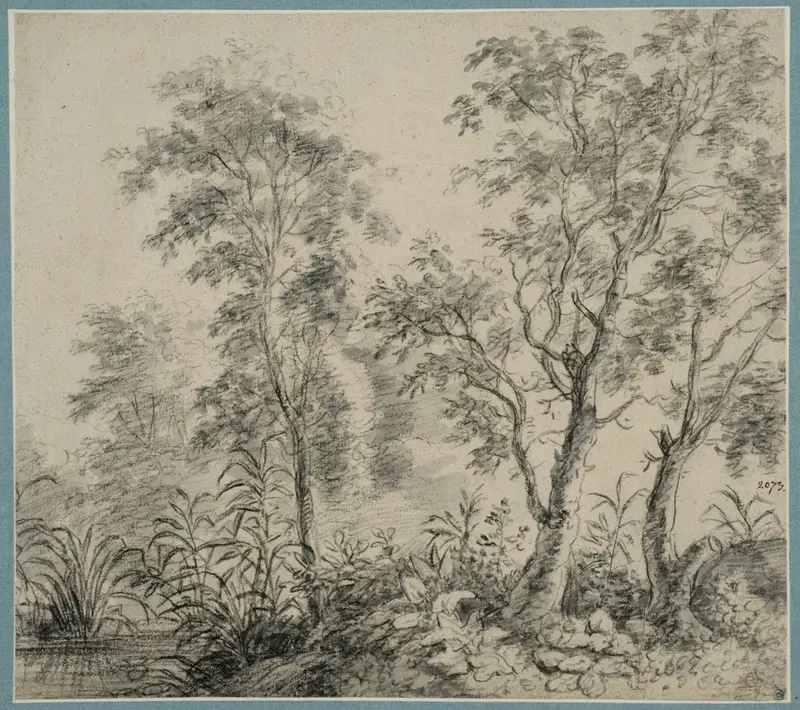
River Bank with a Row of Trees
Antonie Waterloo
More Landscape Art

The Starry Night
Vincent van Gogh

View of Delft
Johannes Vermeer

Water Lilies
Claude Monet

The Grand Canal, Venice, looking north-west from the Ca' Corner to the Ca' Contarini degli Scrigni, with the campanile of Santa Maria della Carità
Canaletto

Windsor Castle
Canaletto

The Grand Canal looking North-East from the Palazzo Dolfin-Manin to the Rialto Bridge
Canaletto