
Crossing the Ford — History & Facts
Did the painter know this moment would outlive them? In Crossing the Ford, a serene yet powerful tableau unfolds, whispering of longing and the quiet passage of time—a reminder that nature endures while we traverse its depths. Focus on the luminous foreground, where the gentle ripples of water reflect soft, muted colors. The subtle interplay of light and shadow invites your eye to trace the figures navigating the ford, their bodies half-submerged yet resolute. Notice how the brushwork captures the lustrous quality of the water, with dappled sunlight dancing across the surface, drawing you deeper into this tranquil scene.
The backdrop—lush trees stretching toward the horizon—completes the composition, framing the human struggle against the vast, unyielding wilderness. The contrasting elements of stillness and movement evoke a profound emotional tension. The figures, while engaged in their crossing, seem almost lost in contemplation, as if pondering the paths that lie ahead. The water, representing both a barrier and a passage, symbolizes the journey of life, where each crossing is fraught with uncertainty yet filled with hope.
The choice of palette, soft greens and browns juxtaposed with shimmering blues, enhances this sense of longing for connection, both with nature and with one another. Created in 1848, this work emerged during a pivotal period for George Inness, who was exploring his unique style, moving away from conventional techniques toward a more expressive representation of landscapes. Living in a time when American art was beginning to assert its identity, he sought to capture spiritual and emotional truths within nature, and Crossing the Ford encapsulates this ambition beautifully, reflecting the artist's inner quest as much as the external world he observed.
More Artworks by George Inness
Browse all →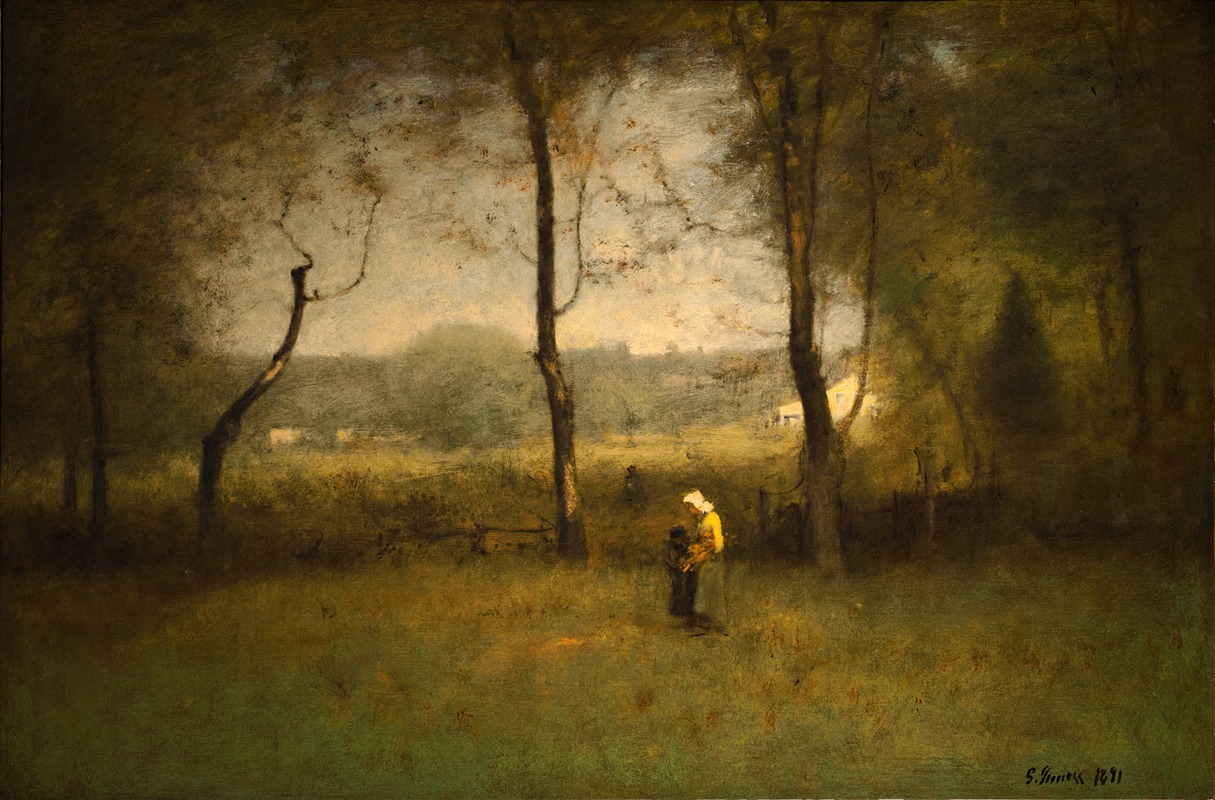
Autumn Woods
George Inness
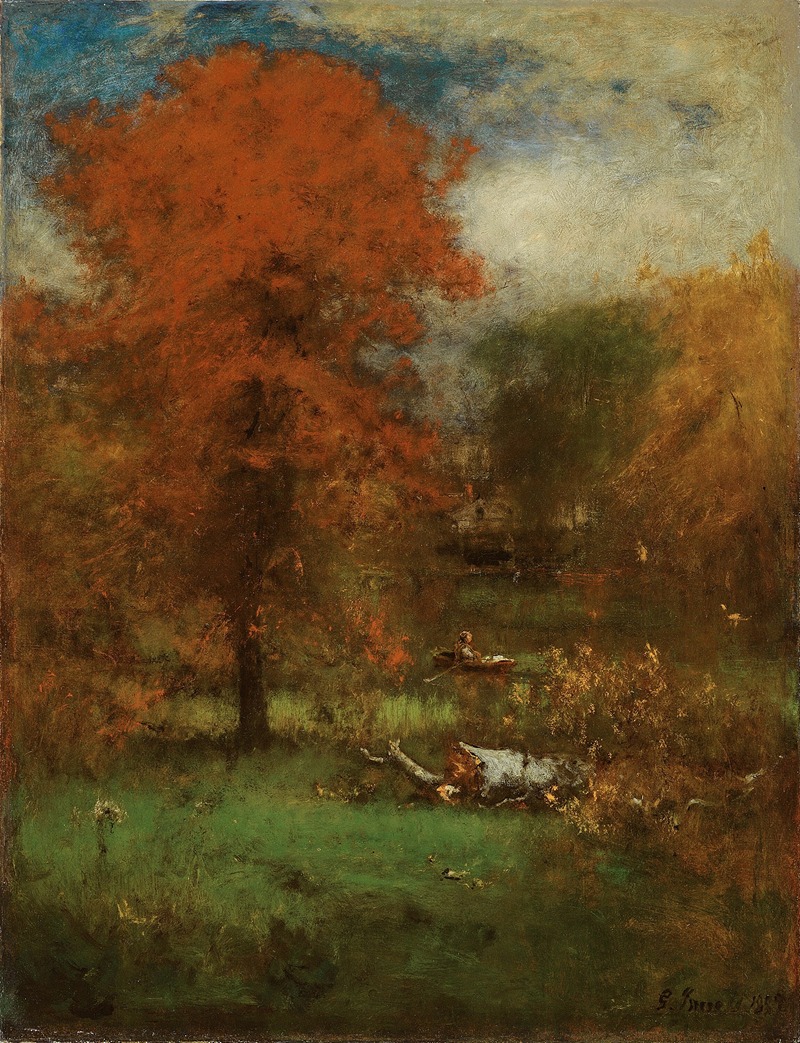
The Mill Pond
George Inness
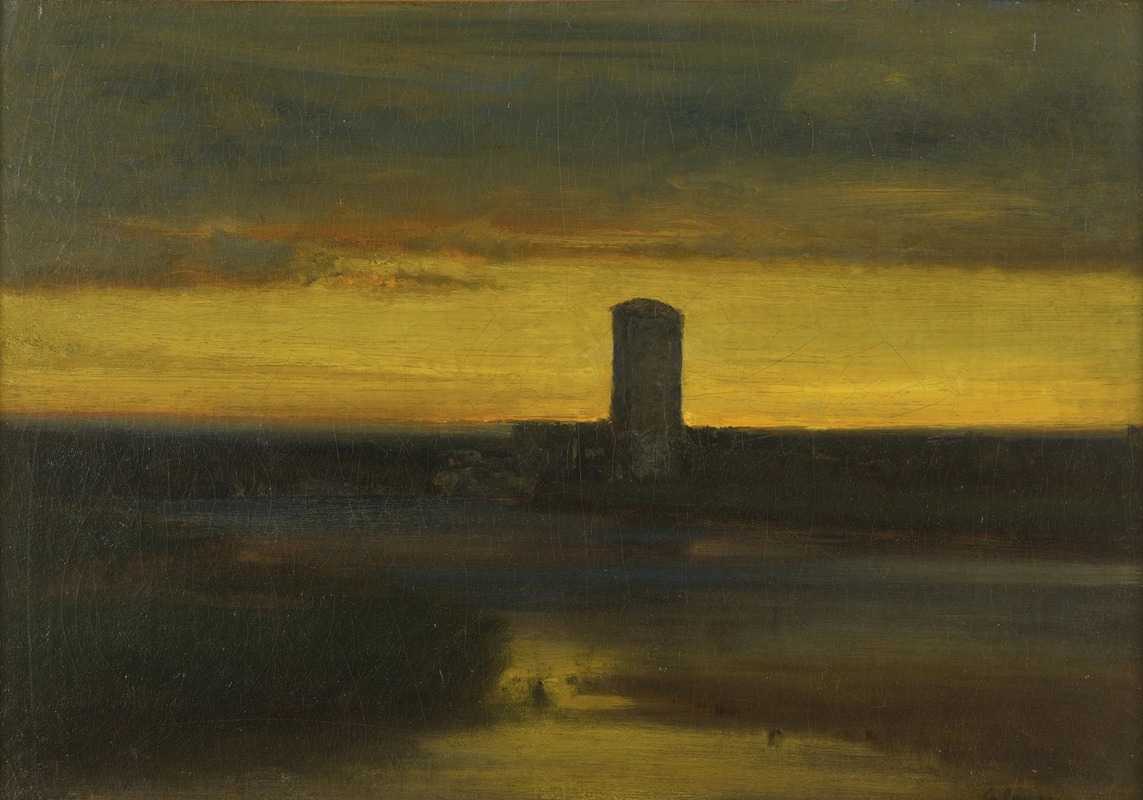
Afterglow
George Inness
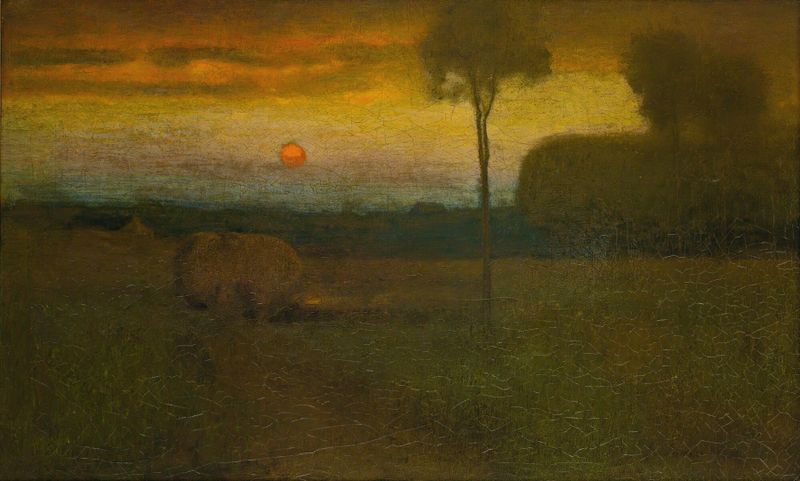
Landscape (Evening Landscape)
George Inness

Montclair
George Inness

View in Berkshire County, Massachusetts, Clearing Off after a September Storm
George Inness

October
George Inness
Landscape, Sunset
George Inness
Afterglow
George Inness
Catskill Mountains
George Inness





