
Crossing the Ford — History & Facts
In a world often overshadowed by uncertainty, hope emerges in the quiet corners of existence. Focus on the gentle curve of the river, where the water glimmers under the soft embrace of dawn. The pastel hues blend seamlessly in the sky, a delicate palette that dances between soft pinks and warm golds. Notice how the figures near the water’s edge seem to pause, caught between the task of crossing and the contemplation of their journey.
The brushwork invites your eyes to explore the tranquil scene, revealing not just the landscape but also the emotional landscape of the human experience. As you delve deeper, consider the symbolism of the river as a threshold between worlds—an invitation to transition or transformation. The subtle yet significant presence of the sunlight filtering through the trees evokes an atmosphere of serenity and optimism, contrasting with the darker undertones of the water. This interplay between light and shadow suggests an inner struggle, a moment where hope glimmers through the uncertainty of life. George Inness created Crossing the Ford in 1848 while living in New Jersey, at a time when American art was beginning to find its distinct voice.
This period marked a transition for the artist, as he sought to merge realism with an understanding of the spiritual and emotional depth of nature. The artwork reflects his evolving style, influenced by the Hudson River School and the Romantic movement, as he aimed to capture both the physical beauty of the landscape and its deeper emotional resonance.
More Artworks by George Inness
Browse all →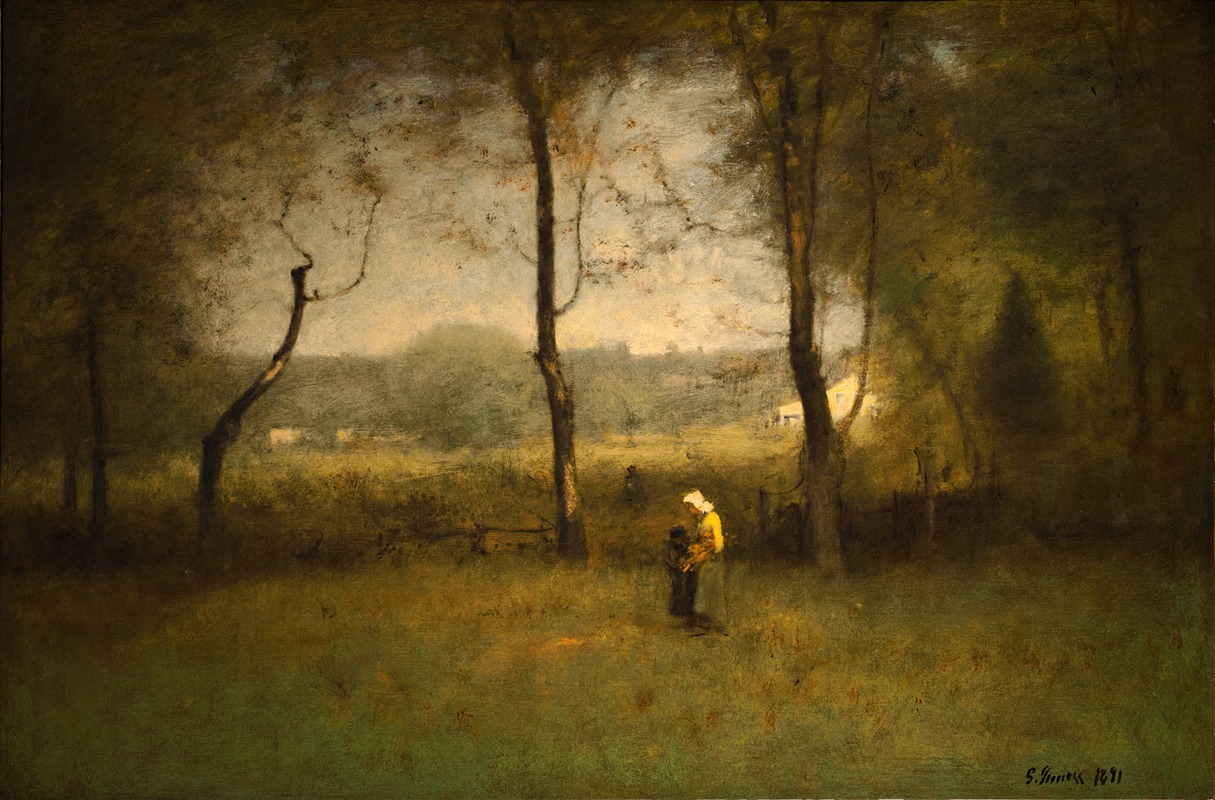
Autumn Woods
George Inness
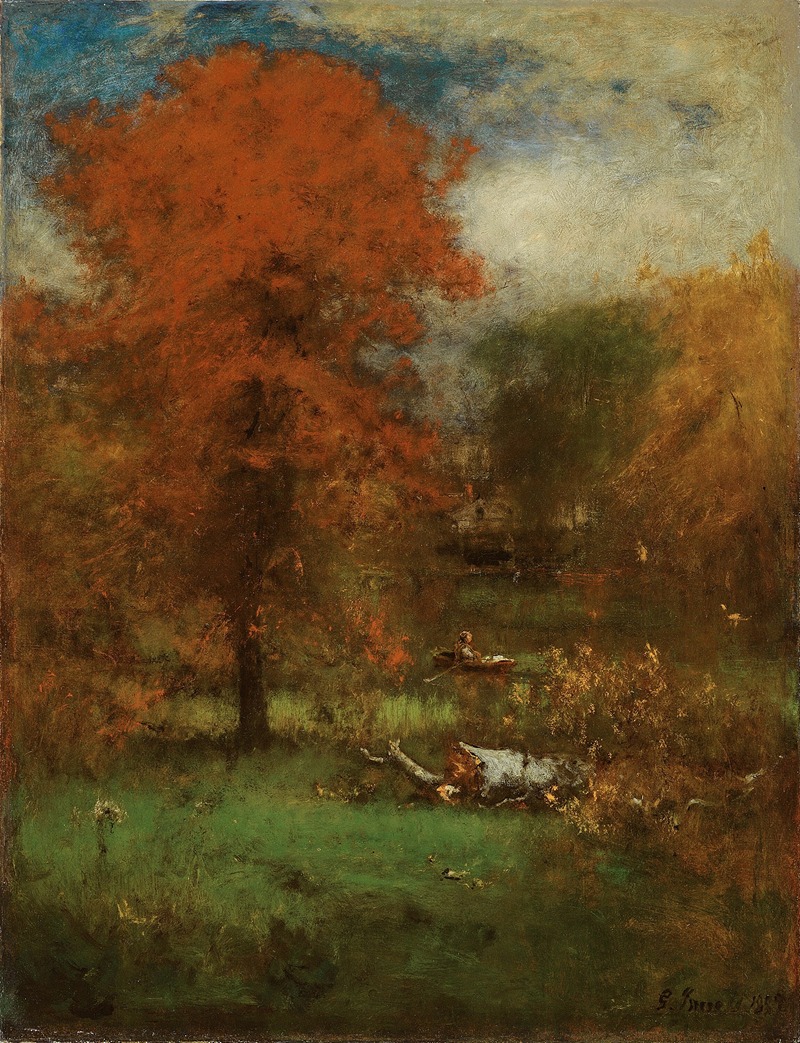
The Mill Pond
George Inness
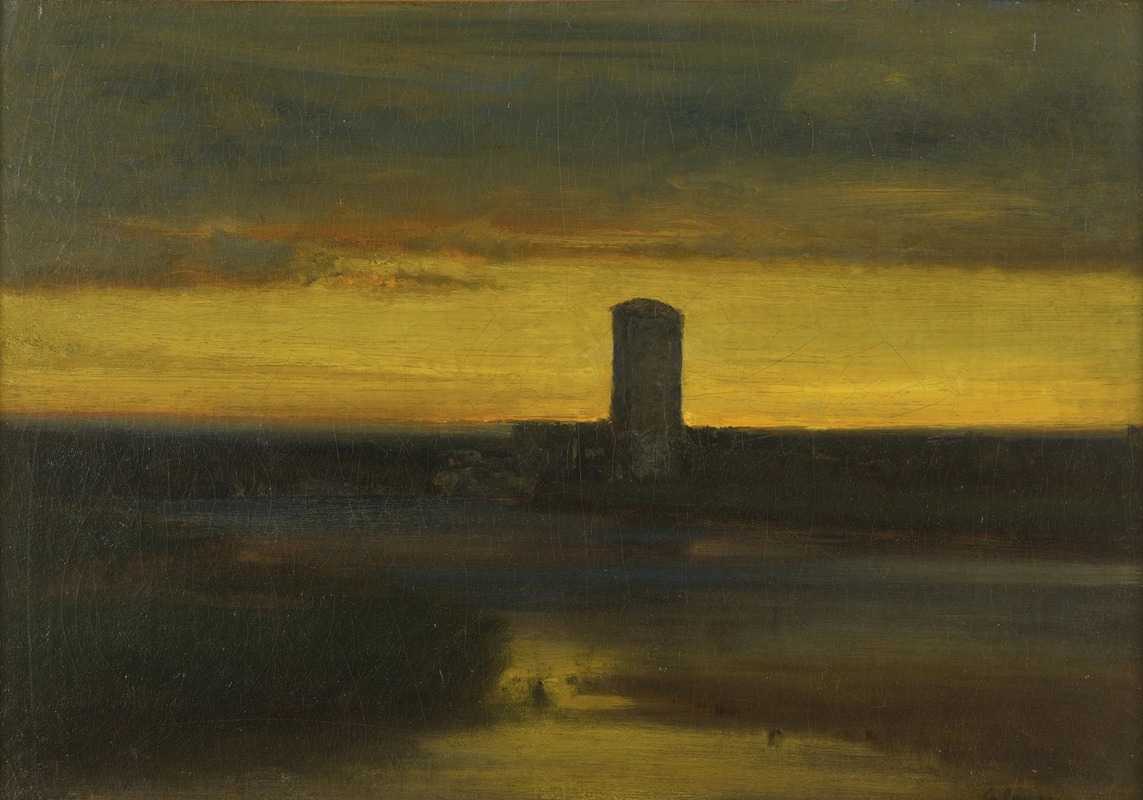
Afterglow
George Inness
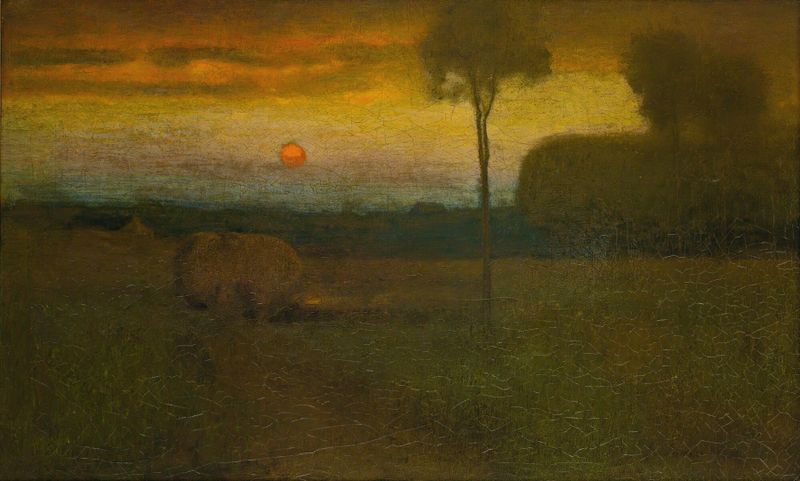
Landscape (Evening Landscape)
George Inness

Montclair
George Inness

View in Berkshire County, Massachusetts, Clearing Off after a September Storm
George Inness

October
George Inness
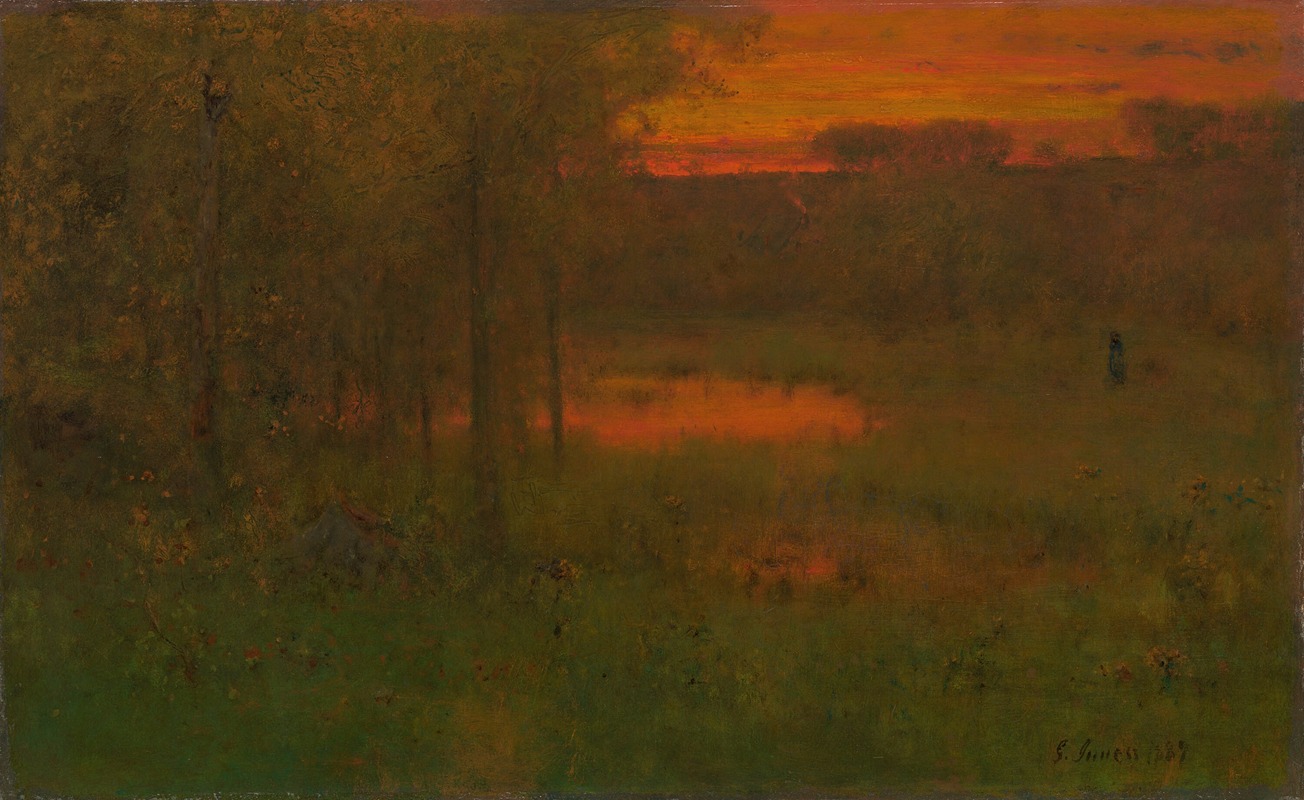
Landscape, Sunset
George Inness
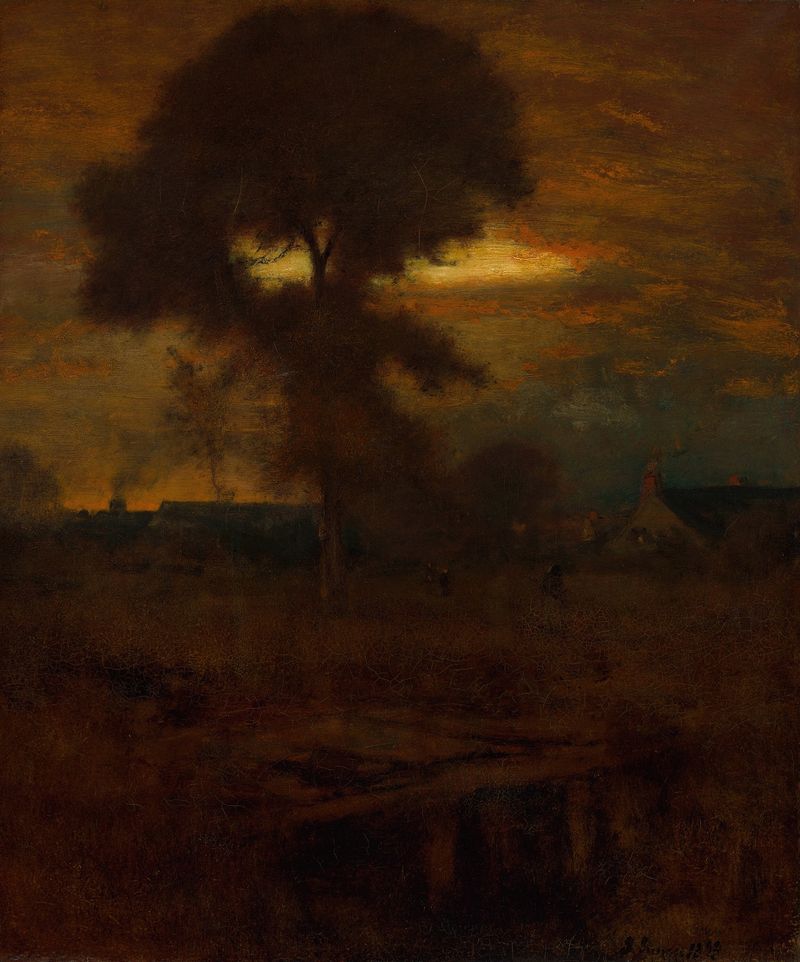
Afterglow
George Inness
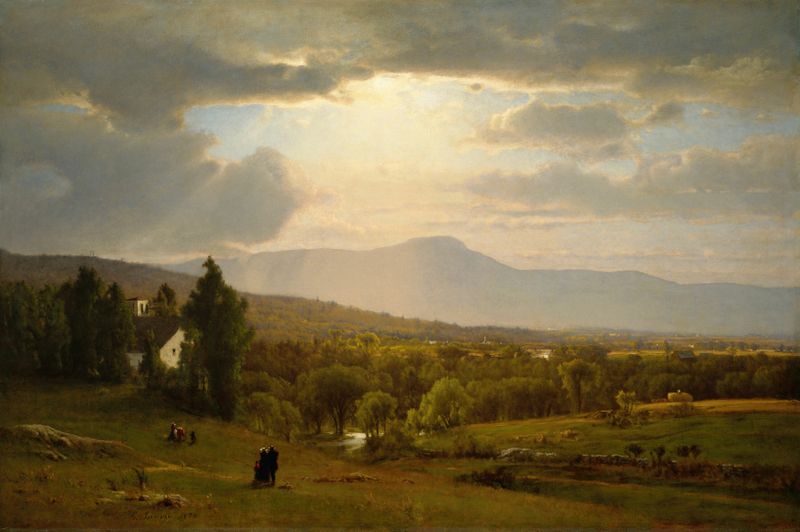
Catskill Mountains
George Inness





