
De dronken tamboer — History & Facts
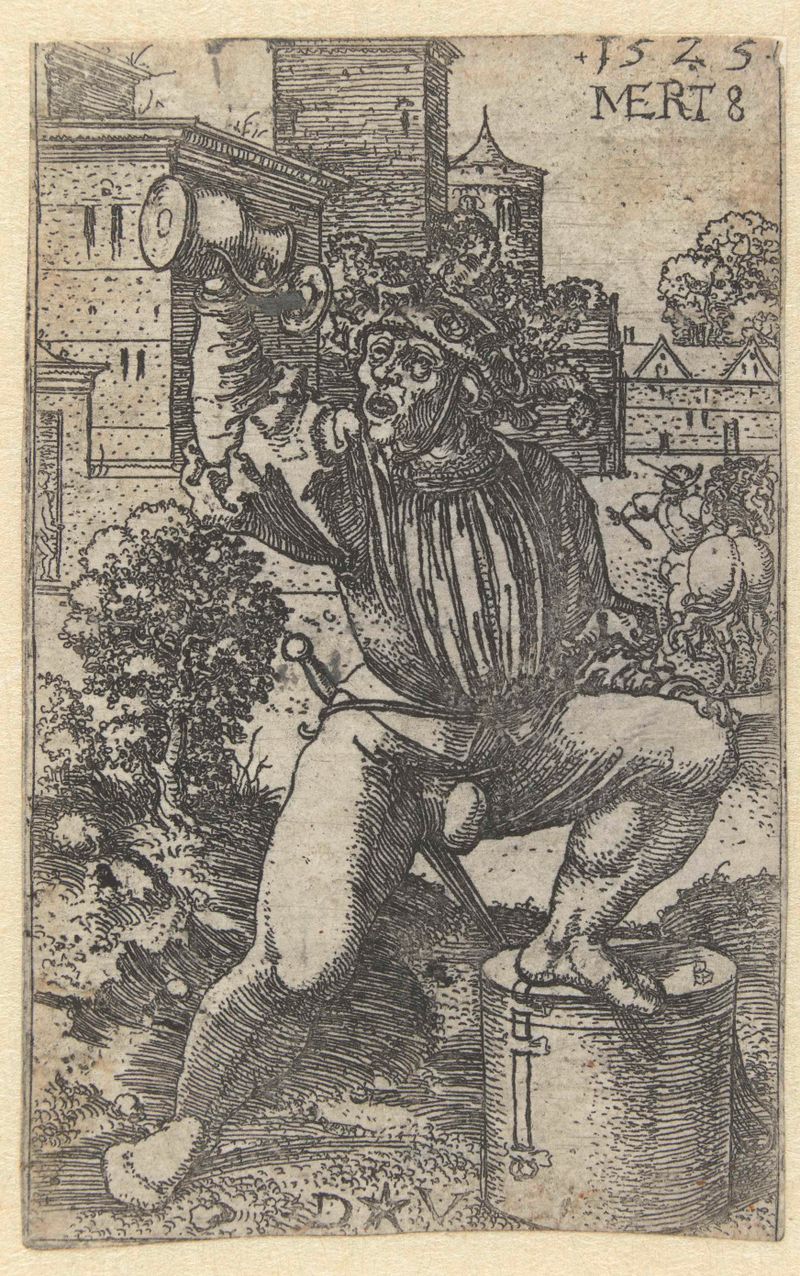
Can paint confess what words never could? In De dronken tamboer, Dirck Vellert masterfully captures the essence of human folly, revealing the transcendent nature of art itself. The vibrant tableau invites us to ponder the tension between joy and despair woven into the fabric of everyday life. Look to the center of the canvas, where the tambourine player sways, his posture a blend of exuberance and imbalance. Notice how the swirling colors of his garments mirror the chaotic energy of the scene, while the surrounding figures, some amused and others indifferent, frame his moment of intoxicated abandon.
The warm, golden hues of the light spill from the left, illuminating their faces, casting shadows that evoke a sense of intimacy and chaos alike. As you observe the emotions etched into the faces of the onlookers, a fascinating contrast emerges; laughter and apathy coexist side by side, illustrating the complexity of human interaction. The tambourine player, lost in his revelry, embodies both the highs of celebration and the lows of excess, challenging the viewer to reflect on the thin line that separates joy from despair. Each figure holds a fragment of the larger narrative, inviting us to explore the myriad ways we cope with our own shortcomings. Dirck Vellert painted this piece in 1525 during the Northern Renaissance, a time characterized by a growing fascination with human emotion and individual expression.
Living in Antwerp, he was influenced by the burgeoning art market and the shift from religious themes to secular subjects. This period marked a pivotal moment in art history, where the exploration of everyday life and its complexities began to gain prominence and relevance.
More Artworks by Dirck Vellert
Browse all →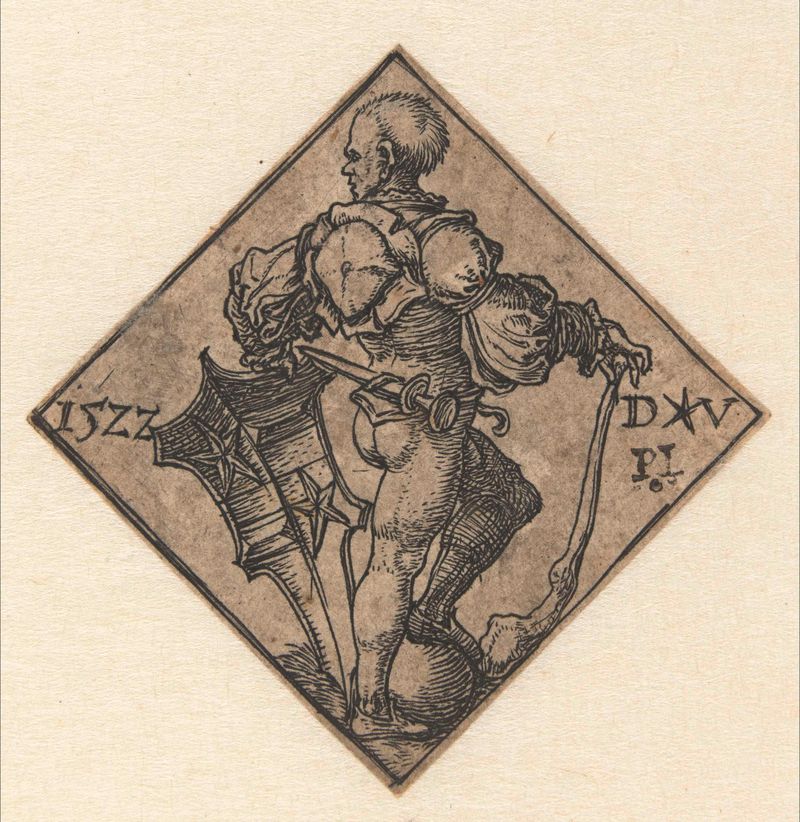
Soldaat met wapenschild
Dirck Vellert

Christus en de Samaritaanse vrouw
Dirck Vellert
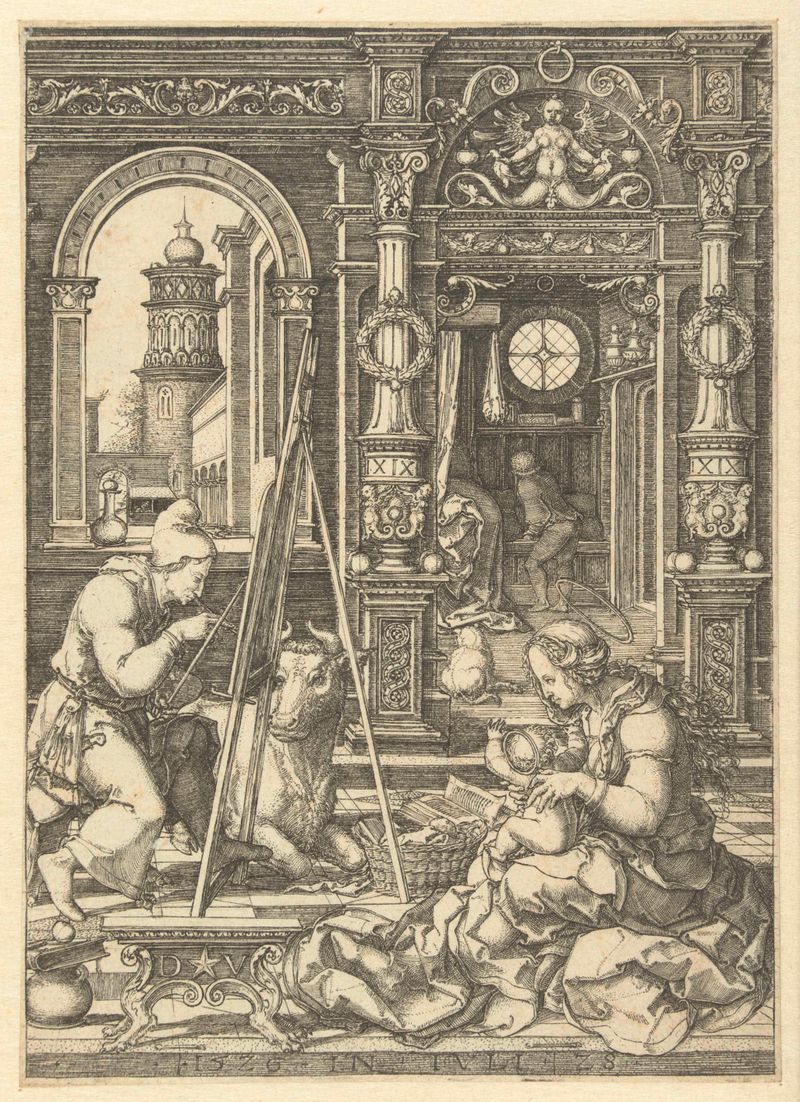
Heilige Lucas schildert Madonna met kind
Dirck Vellert

The Flight into Egypt
Dirck Vellert

Faun
Dirck Vellert
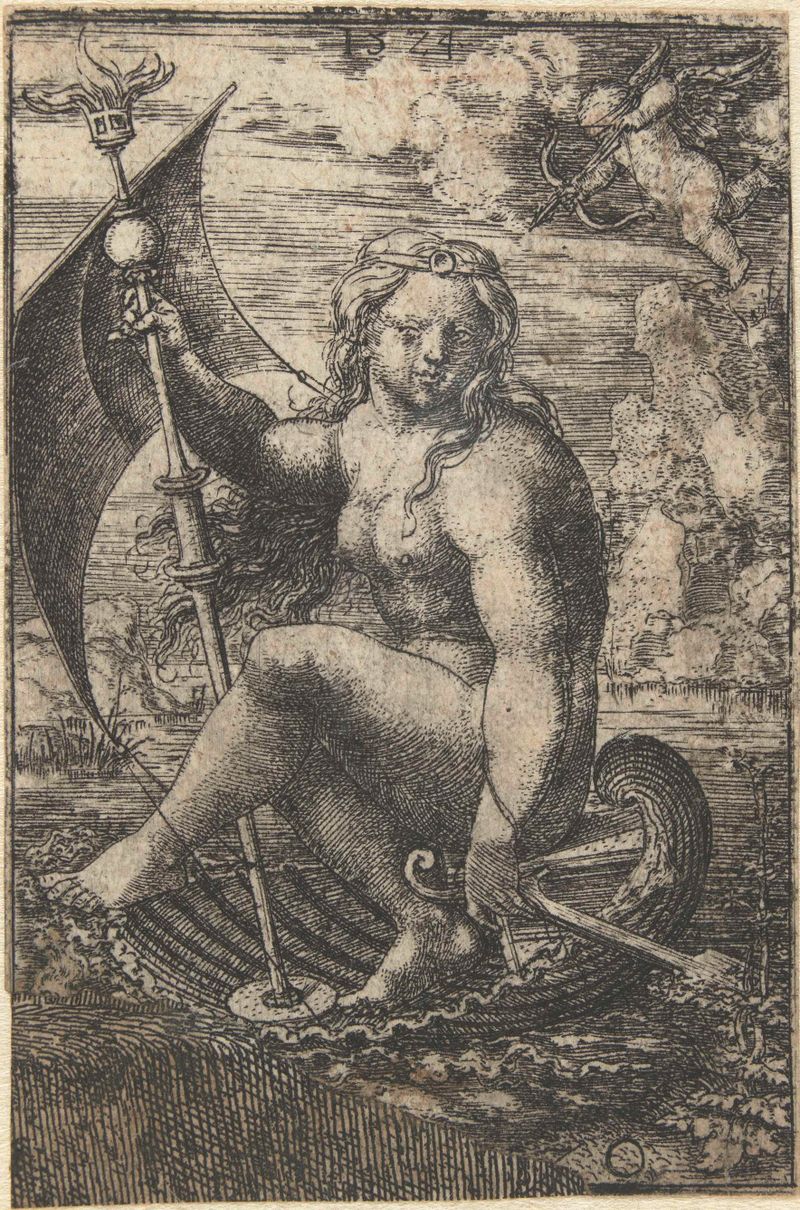
Venus zeilend in een schelp
Dirck Vellert
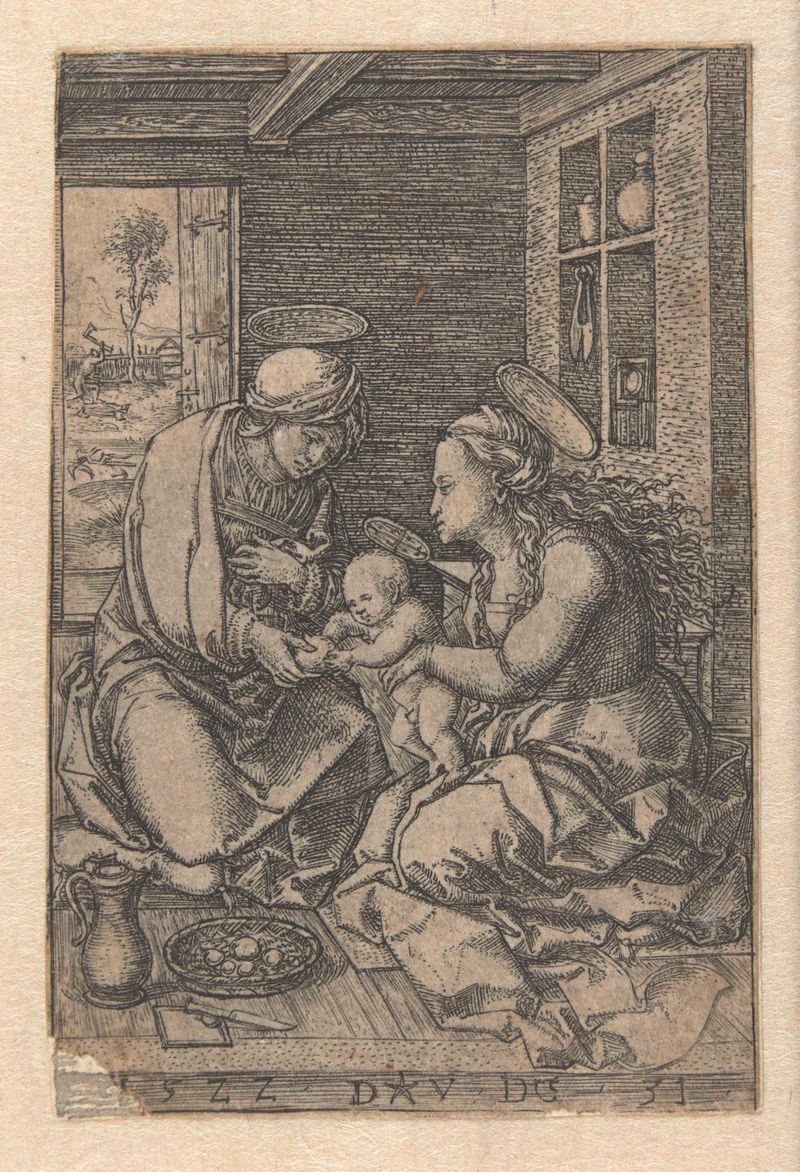
Maria met kind en heilige Anna
Dirck Vellert
Naakte vrouw met wapenschild
Dirck Vellert
De dronken tamboer
Dirck Vellert

Eva en Kaïn
Dirck Vellert





