
Death in exile — History & Facts
A hush falls over the crowded room, not from silence but from the weight of what is happening before our eyes. At the center, a pale figure lies on a makeshift bed, his body shrouded in white, clutching a cross as the last anchor to his faith. The living gather close, their faces a study in grief, worry, and helplessness: a woman kneels, hands clasped in prayer or farewell, while others press forward, caught between the urge to comfort and the need to witness.
The light, dim and uncertain, pools around the dying man and the torch at his side, drawing our attention to the drama of his final moments, while the barred window behind hints at captivity and the world beyond. Painted in 1864, Death in exile by Aleksander Kotsis belongs to a world where exile was not only a political punishment but a personal tragedy, especially in the Poland of the nineteenth century. Works like this, often created in the wake of uprisings and social upheaval, spoke to a public intimately familiar with loss and displacement. The painting now resides in the National Museum in Warsaw, a silent witness to a history that left many stories untold.
Look again at the faces in the crowd: each one is a fragment of a larger narrative, inviting us to imagine the ties that bind the living to the dying, and the exiled to the homeland they may never see again.
More Artworks by Aleksander Kotsis

Trip in the Tatra Mountains
Aleksander Kotsis

Fair in Nowy Targ
Aleksander Kotsis
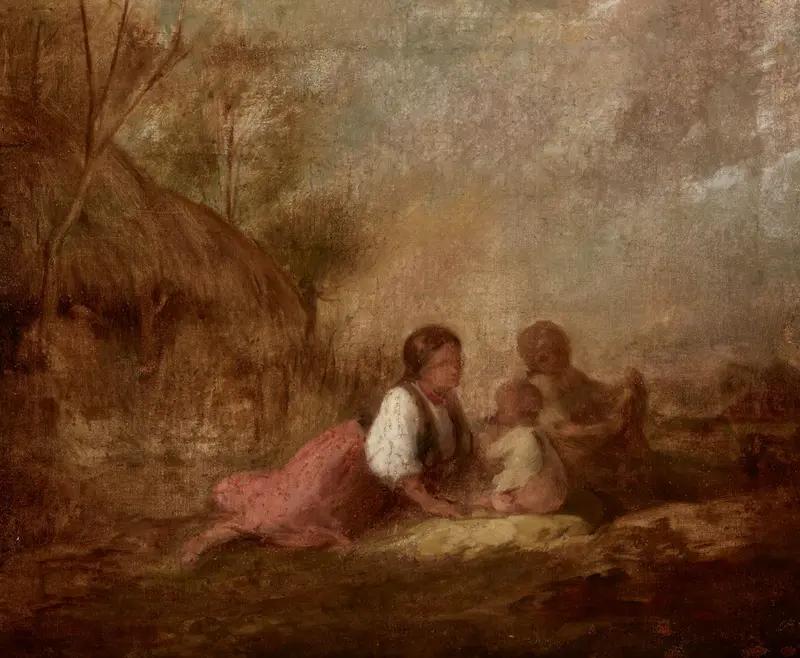
Pastoral Scene
Aleksander Kotsis
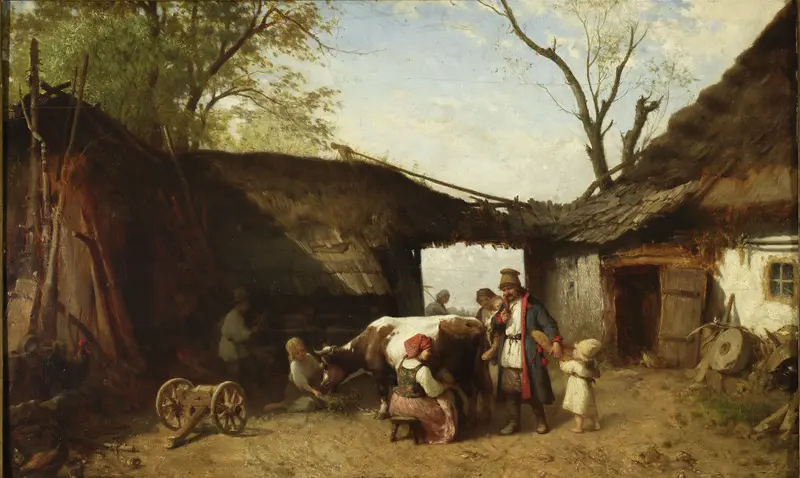
In the farmyard
Aleksander Kotsis
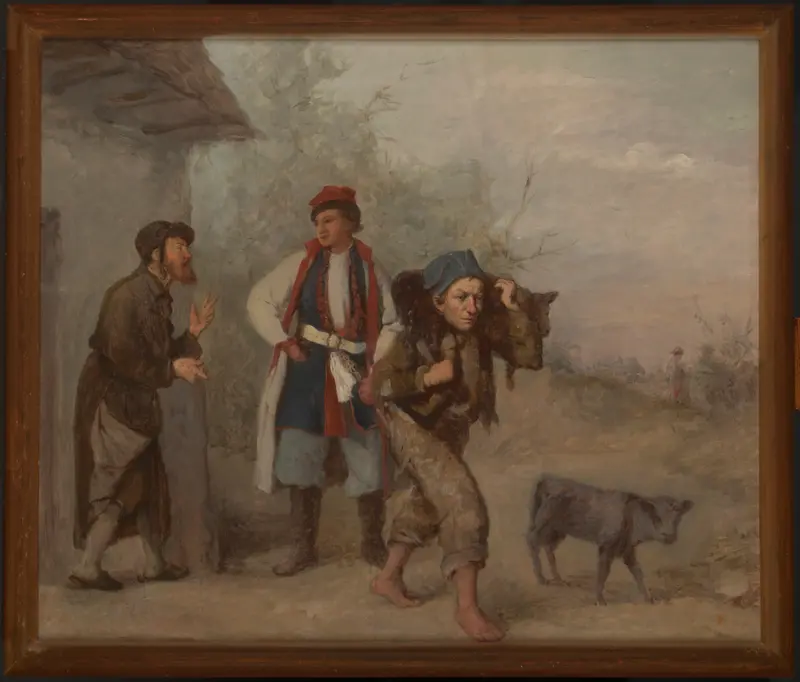
Haggling over a Calf
Aleksander Kotsis
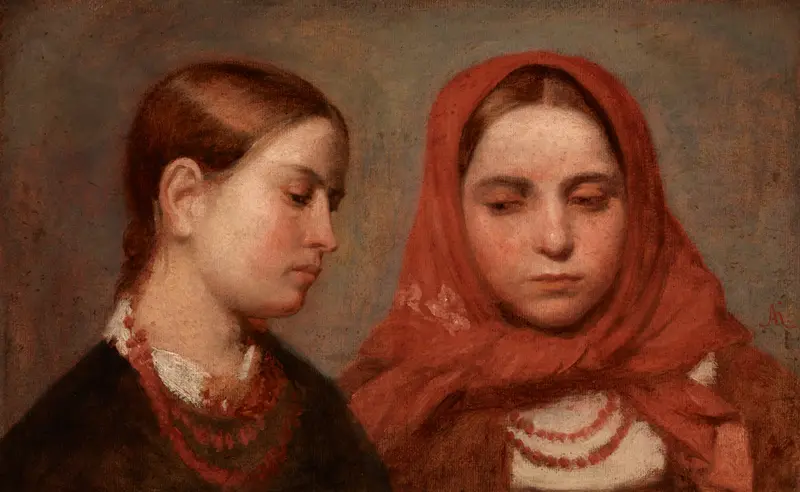
Heads of Two Young Girls
Aleksander Kotsis
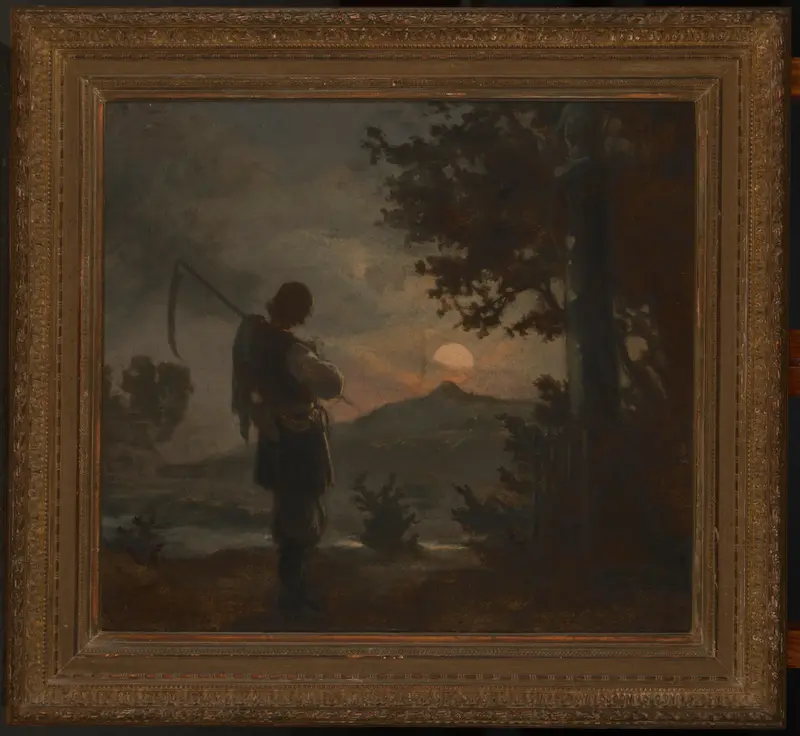
Haymaker
Aleksander Kotsis
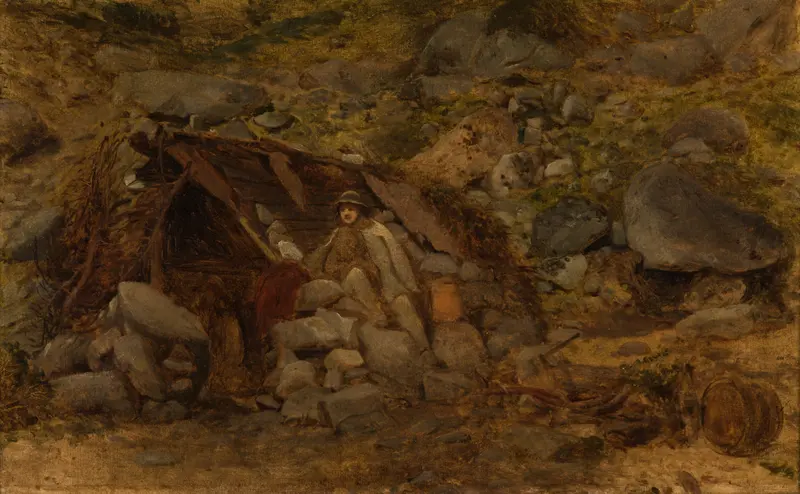
Highlander in Front of a Hut
Aleksander Kotsis
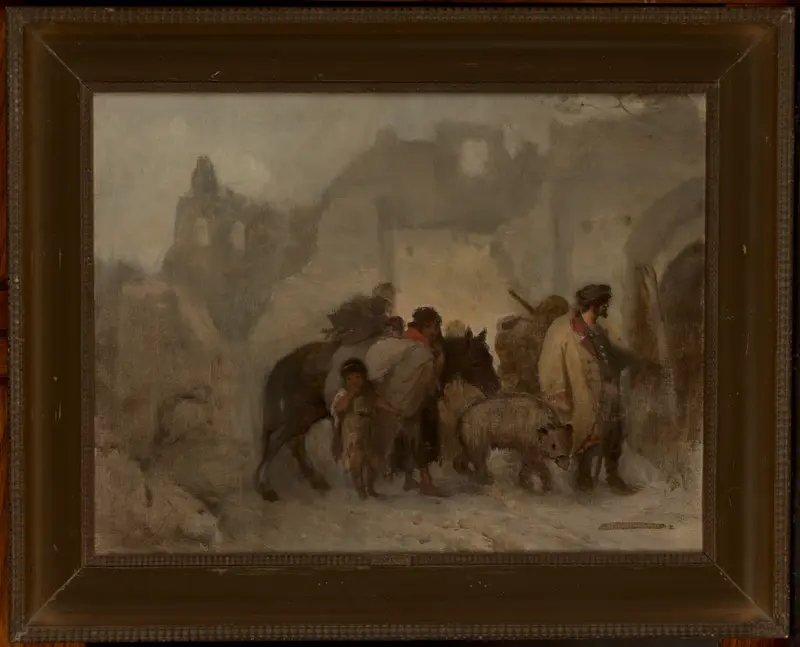
Gypsies
Aleksander Kotsis
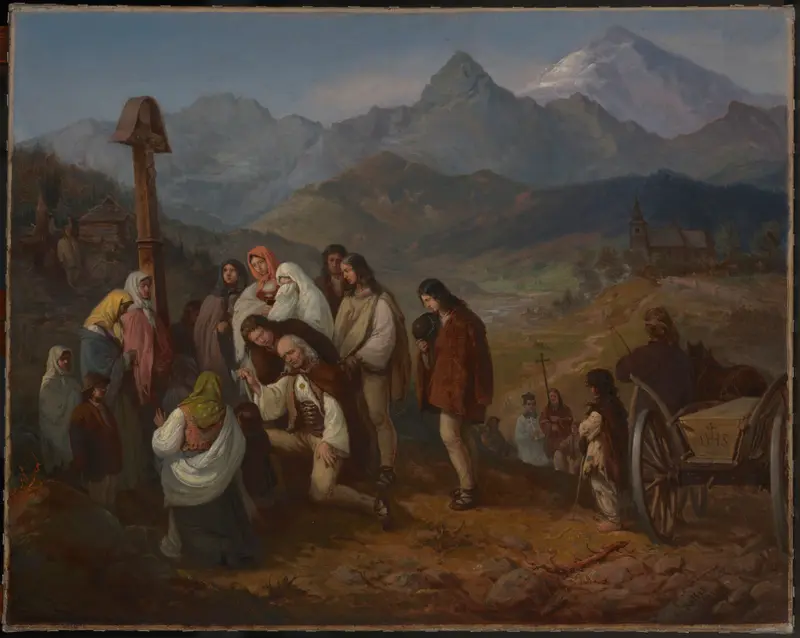
A Highlander's Funeral
Aleksander Kotsis



