
In the farmyard — History & Facts
What draws the eye first in In the farmyard by Aleksander Kotsis is the gentle choreography of rural life, caught in a shaft of morning light. At the heart of the scene, a cow stands patiently as a woman in a red kerchief milks it, her posture speaking to the routine and rhythm of daily labor. The light falls softly across her back and the animal’s hide, guiding us to a man in a long coat and fur hat, who stands with a child tugging at his hand—perhaps a father readying for work, or simply pausing to savor a quiet family moment.
Around them, children crouch and play, a rooster struts in the shadows, and the thatched roofs arch protectively overhead, their textures rendered with loving detail. The palette is earthy, the mood unhurried, as if the world outside the farmyard can wait. Painted in 1873, this work belongs to a moment when artists across Europe turned their gaze to the dignity and beauty of rural existence. In Poland, where Kotsis worked, such scenes were both a celebration of national identity and a record of vanishing ways of life, as industrialization crept ever closer.
Works like this, now in the National Museum in Warsaw, were rarely grand commissions but rather heartfelt tributes to ordinary people, cherished by collectors who saw their own roots reflected in the straw and sunlight. History has kept few traces of this particular farmyard, but the painting invites us to linger, to notice the small gestures and quiet pride that shaped a world.
Sources: Wikidata Q104587517 · Image source (Wikimedia Commons)
More Artworks by Aleksander Kotsis

Trip in the Tatra Mountains
Aleksander Kotsis

Fair in Nowy Targ
Aleksander Kotsis
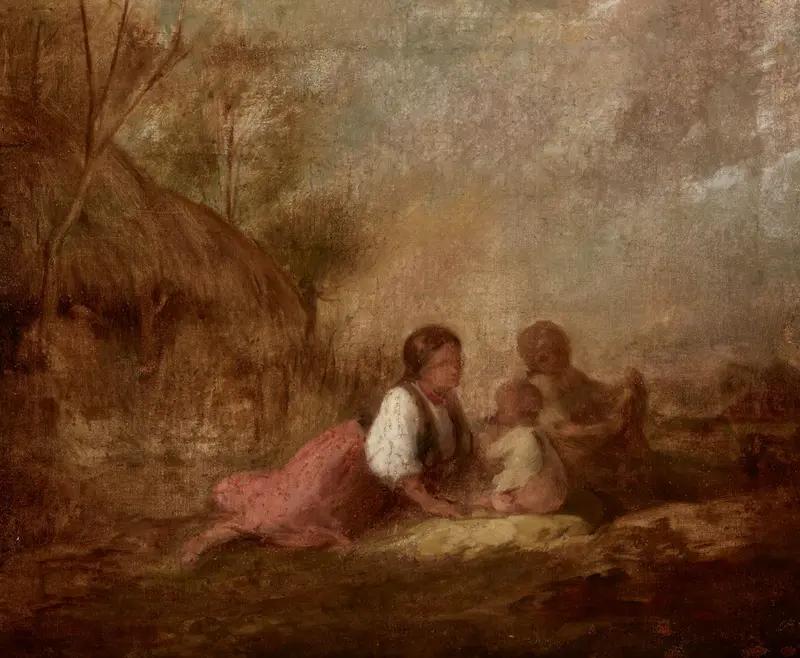
Pastoral Scene
Aleksander Kotsis
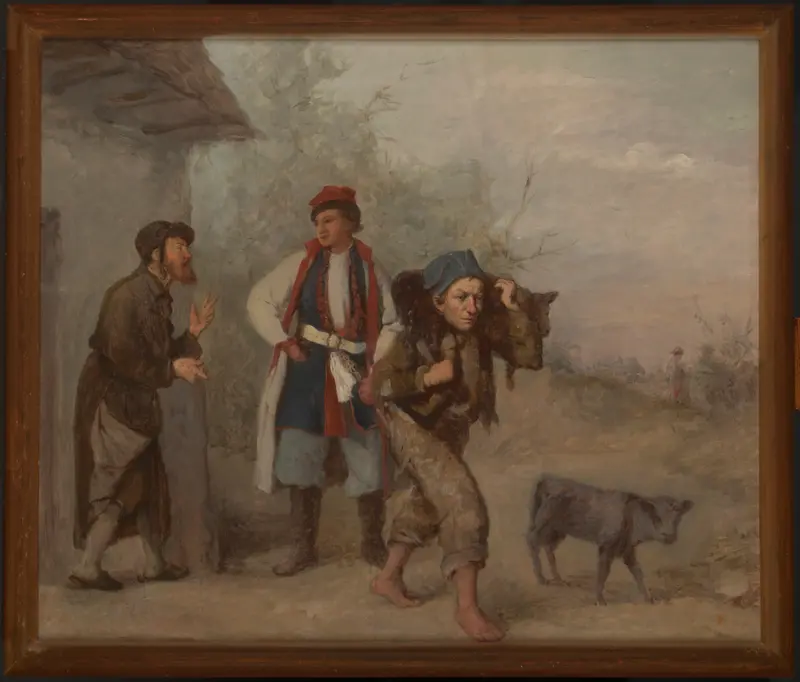
Haggling over a Calf
Aleksander Kotsis
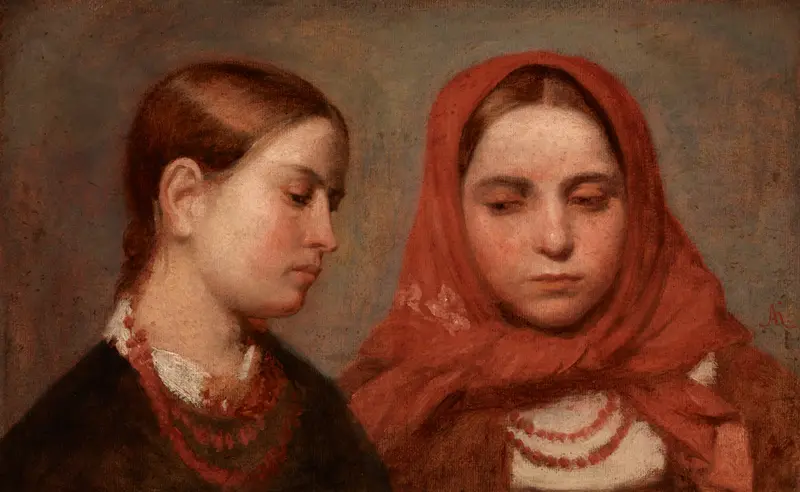
Heads of Two Young Girls
Aleksander Kotsis
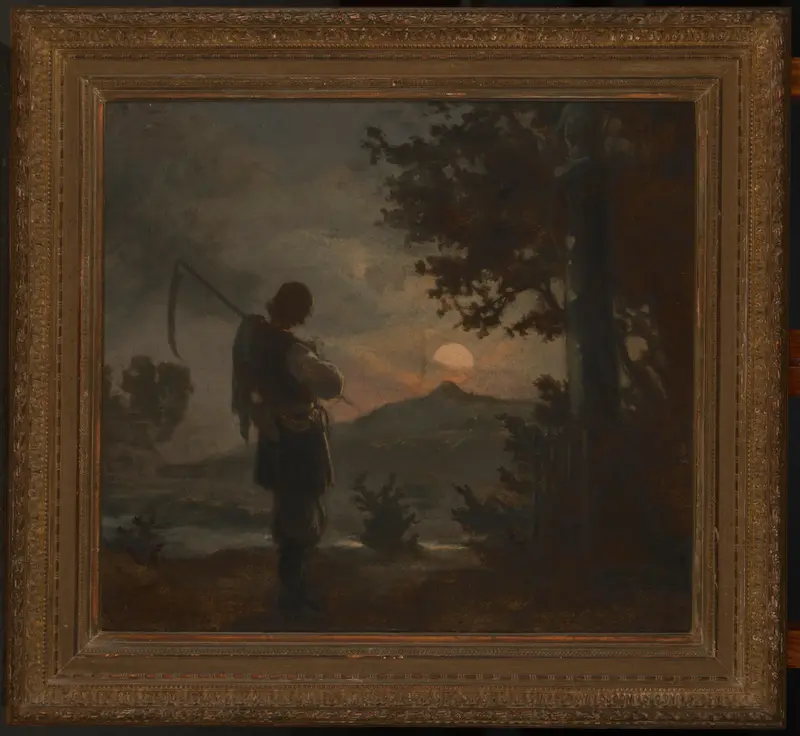
Haymaker
Aleksander Kotsis
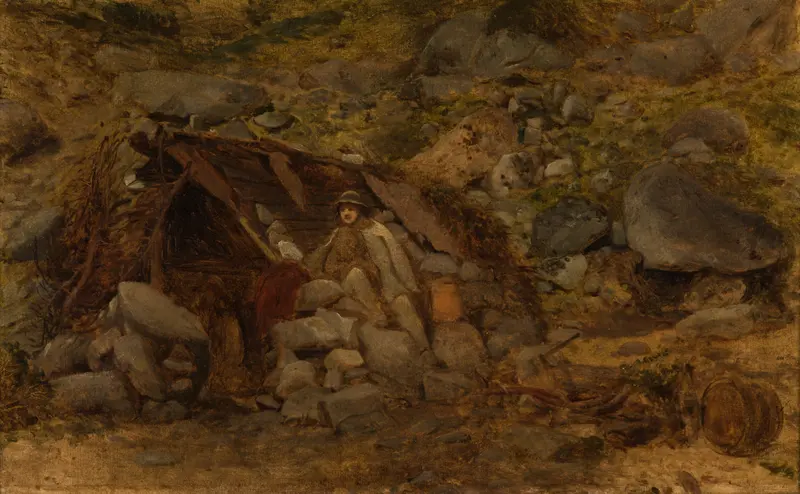
Highlander in Front of a Hut
Aleksander Kotsis
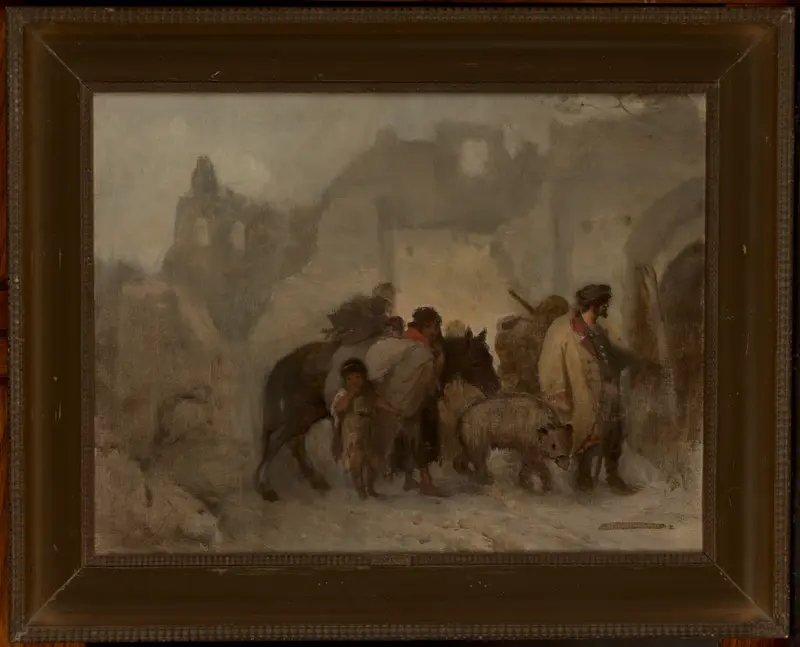
Gypsies
Aleksander Kotsis
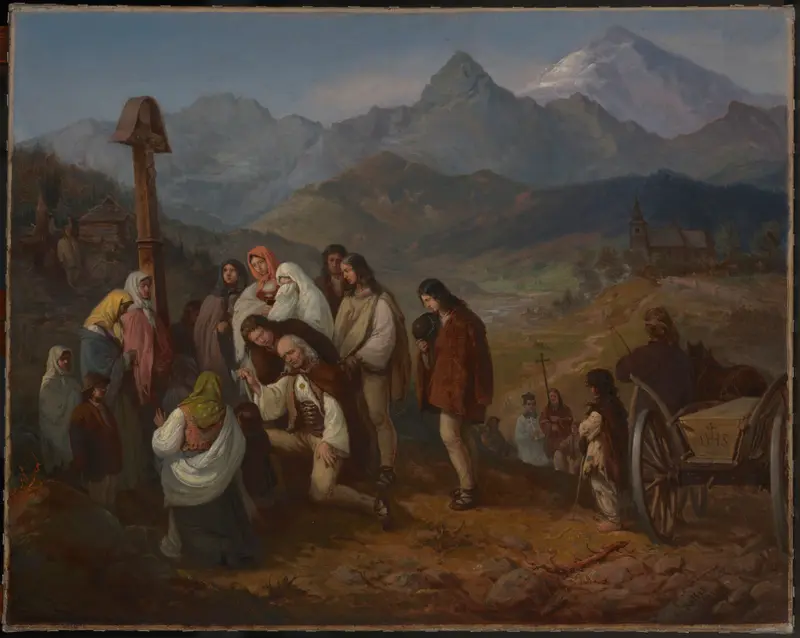
A Highlander's Funeral
Aleksander Kotsis
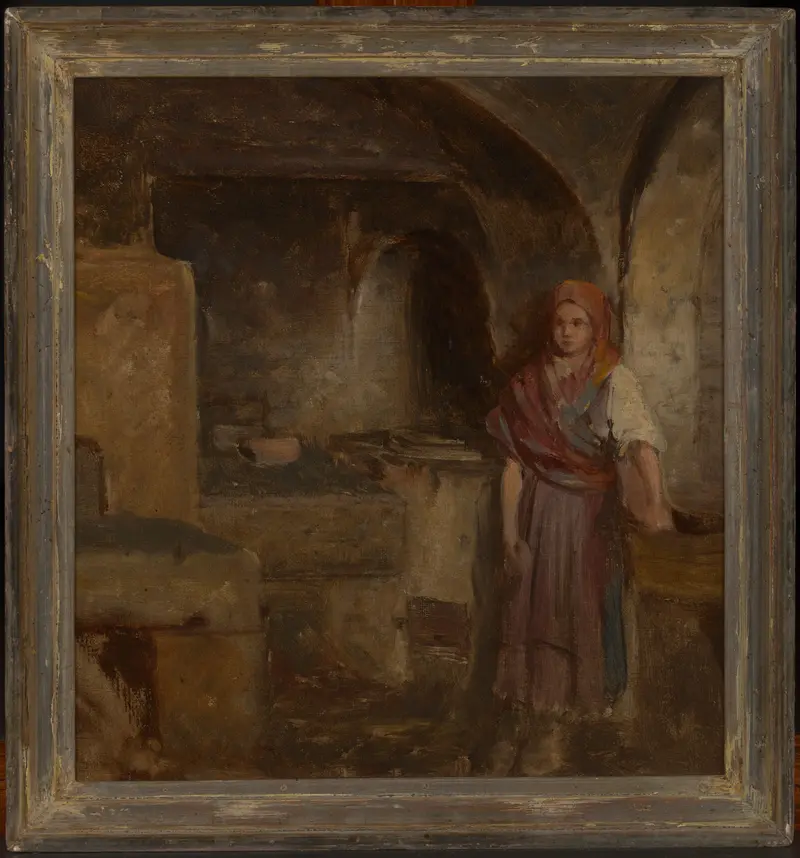
Girl in the Kitchen
Aleksander Kotsis
More Genre Scene Art

Banquet of the Officers of the St George Civic Guard
Frans Hals

Rembrandt and Saskia in the Scene of the Prodigal Son
Rembrandt van Rijn

Bal du moulin de la Galette
Pierre-Auguste Renoir

Quadrille at the Moulin Rouge
Henri de Toulouse-Lautrec

A Burial at Ornans
Gustave Courbet

When Will You Marry?
Paul Gauguin