Deken en de Dood — History & Facts
Could beauty survive in a century of chaos? In a world teetering on the brink of upheaval, art offers a sanctuary, a reflection of both fragility and resilience. Focus on the stark contrast in Deken en de Dood, where the somber figure of Death looms large over the serene, slumbering body of a nobleman. Notice the intricate details in the rich fabrics that drape the deceased, the exquisite embroidery echoing the grandeur of life now extinguished. The palette shifts from deep, muted tones surrounding Death to the softer hues illuminating the figure, creating a poignant tension between life and mortality.
The arrangement feels deliberate, guiding the viewer's gaze from the lifeless form to the skeletal figure, and highlighting the inevitable fate that awaits us all. Within this composition lies a profound commentary on the human condition. The juxtaposition of opulence and decay reminds us that material wealth does little to shield us from destiny. The delicate flowers depicted offer a fleeting glimpse of beauty, suggesting that life, no matter how lavish, ultimately succumbs to time’s ruthless grasp.
Holbein’s masterful use of detail invites introspection, urging the viewer to consider the legacy one leaves behind in a world rife with turmoil. Created in 1538, this work emerged during a tumultuous period in European history, marked by rising tensions and ideological conflicts. Holbein, having settled in England, was deeply influenced by the shifting currents of the Reformation and the complex dynamics of court life. In the face of an oppressive atmosphere, his art sought to dissect the paradox of existence — capturing both the ephemeral beauty and the inevitable demise that defines humanity.
More Artworks by Hans Holbein (II)
Browse all →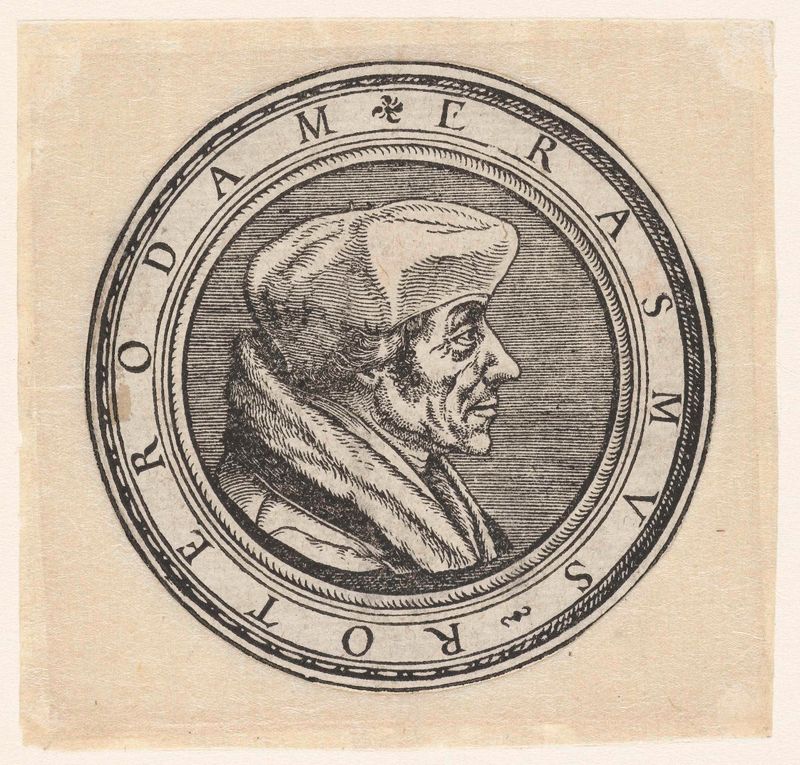
Portret van Erasmus
Hans Holbein (II)
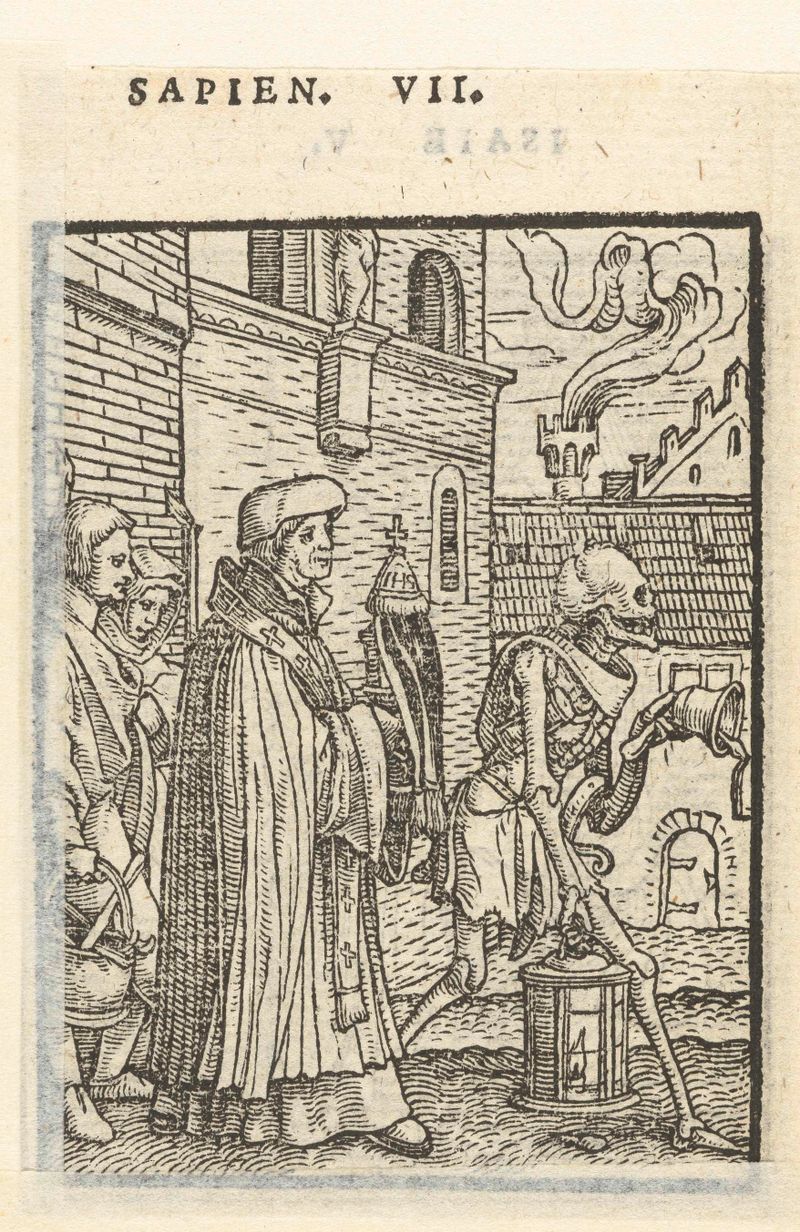
Priester en de Dood
Hans Holbein (II)
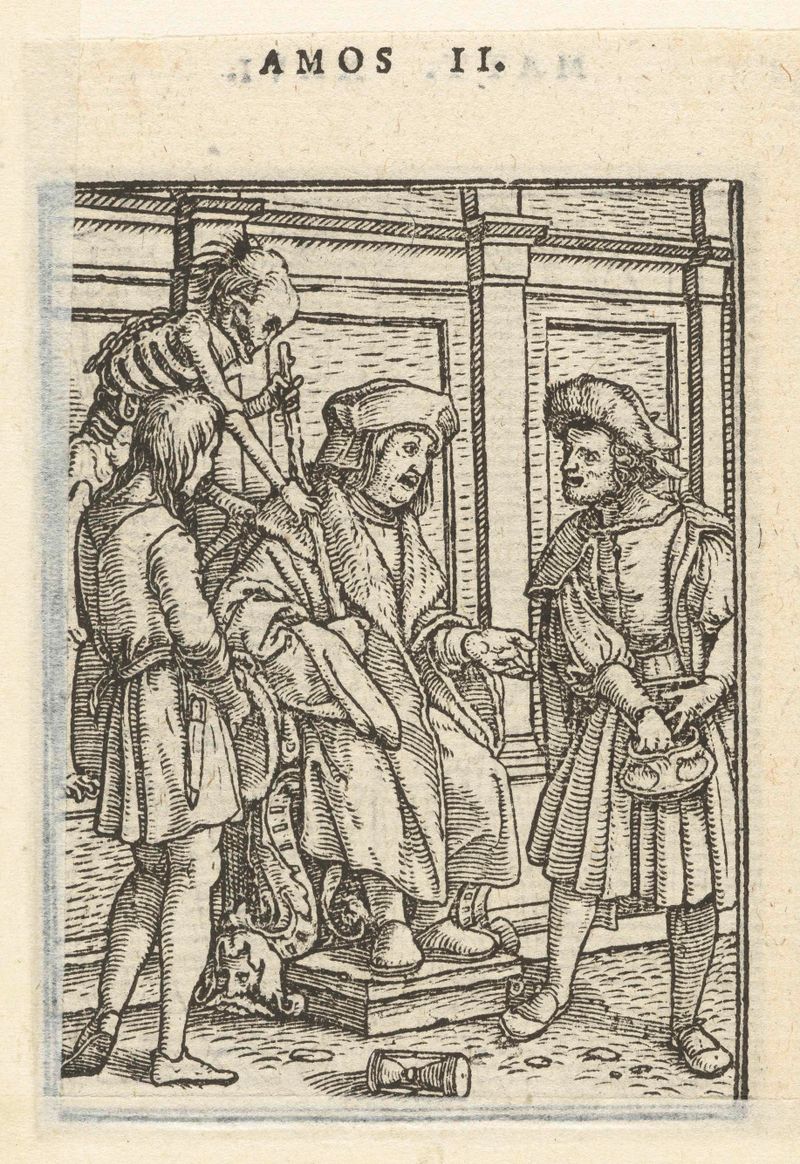
Rechter en de Dood
Hans Holbein (II)
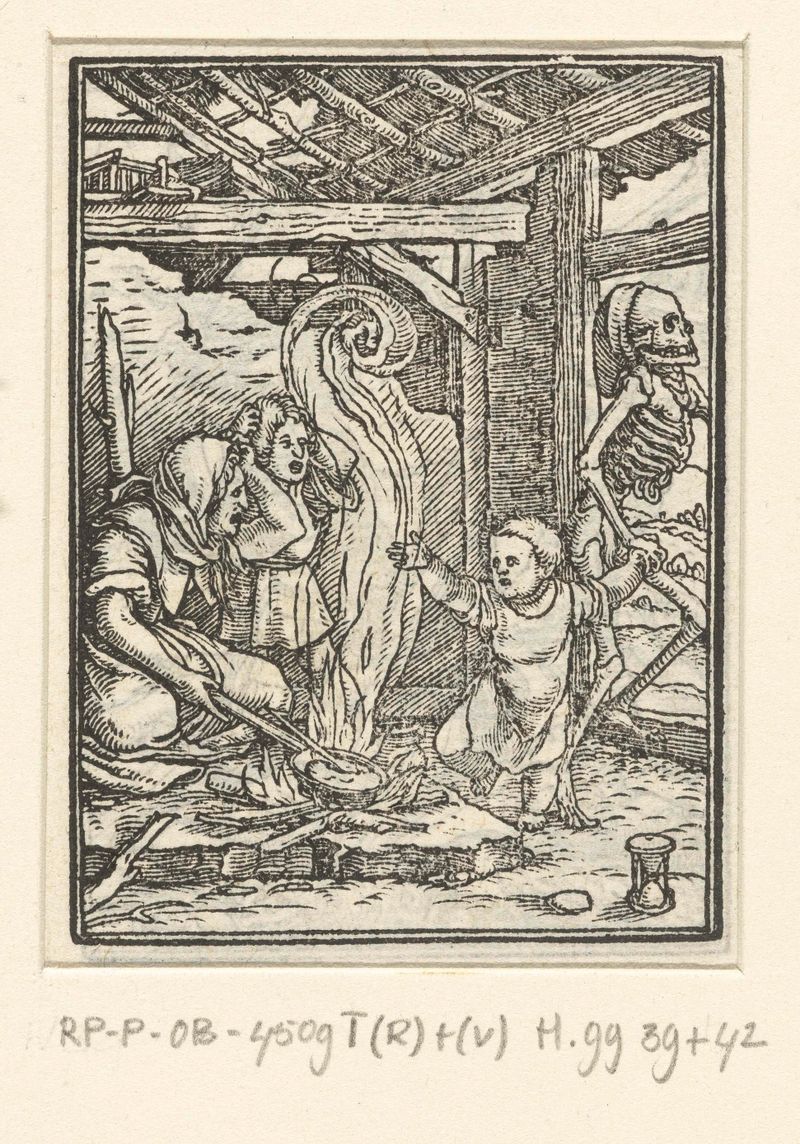
Kind en de Dood
Hans Holbein (II)
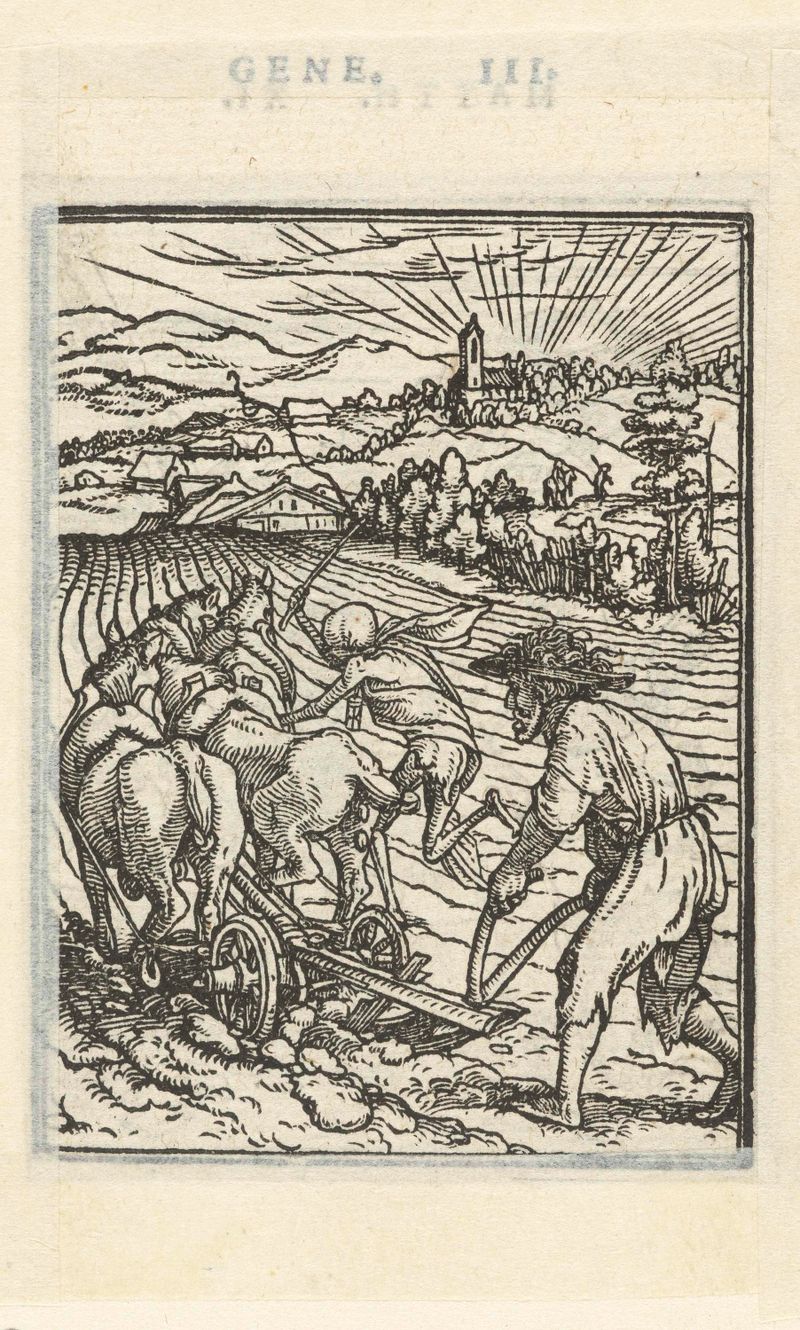
Boer en de Dood
Hans Holbein (II)
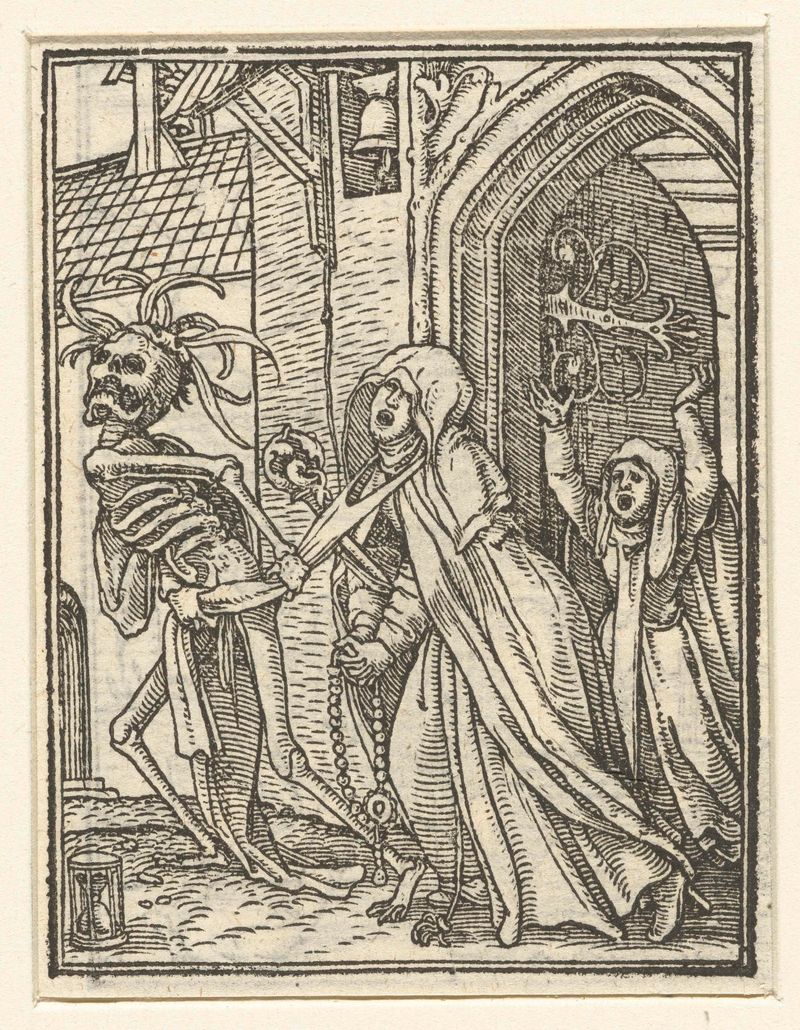
Abdis en de Dood
Hans Holbein (II)
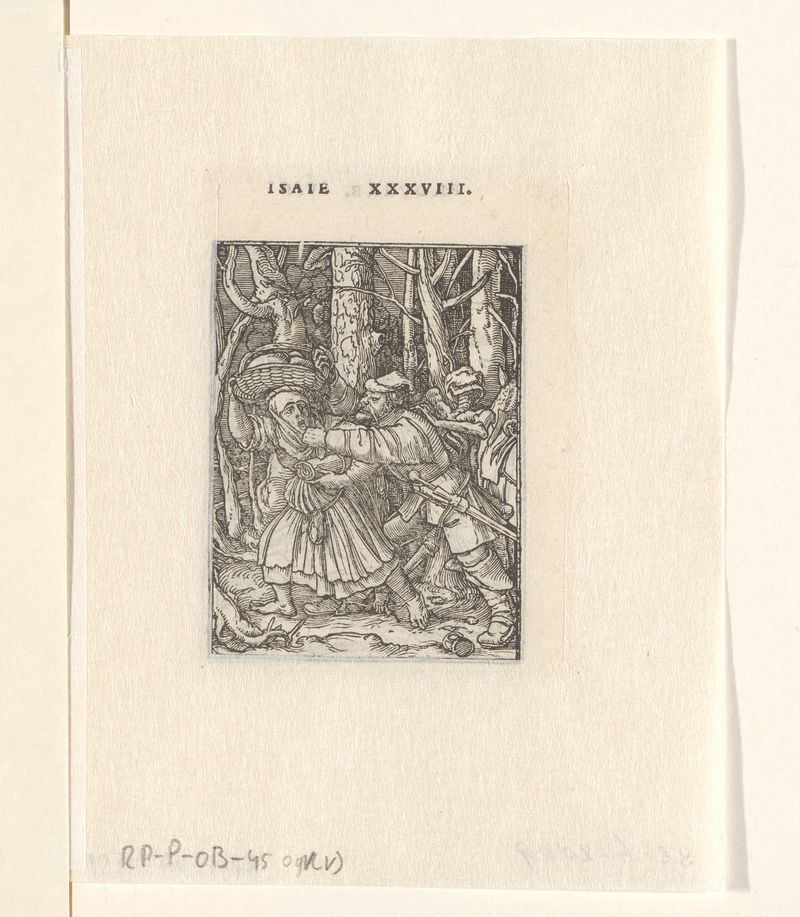
Dief en de Dood
Hans Holbein (II)
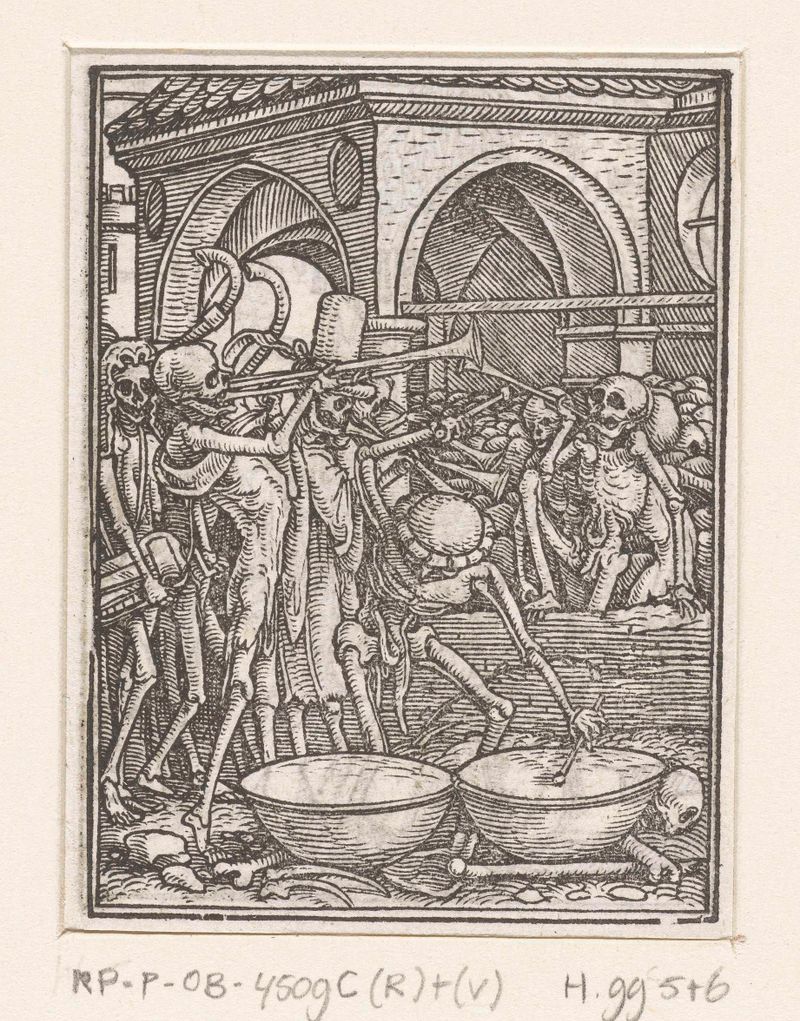
Skeletons Making Music from Dance of the Dead
Hans Holbein (II)
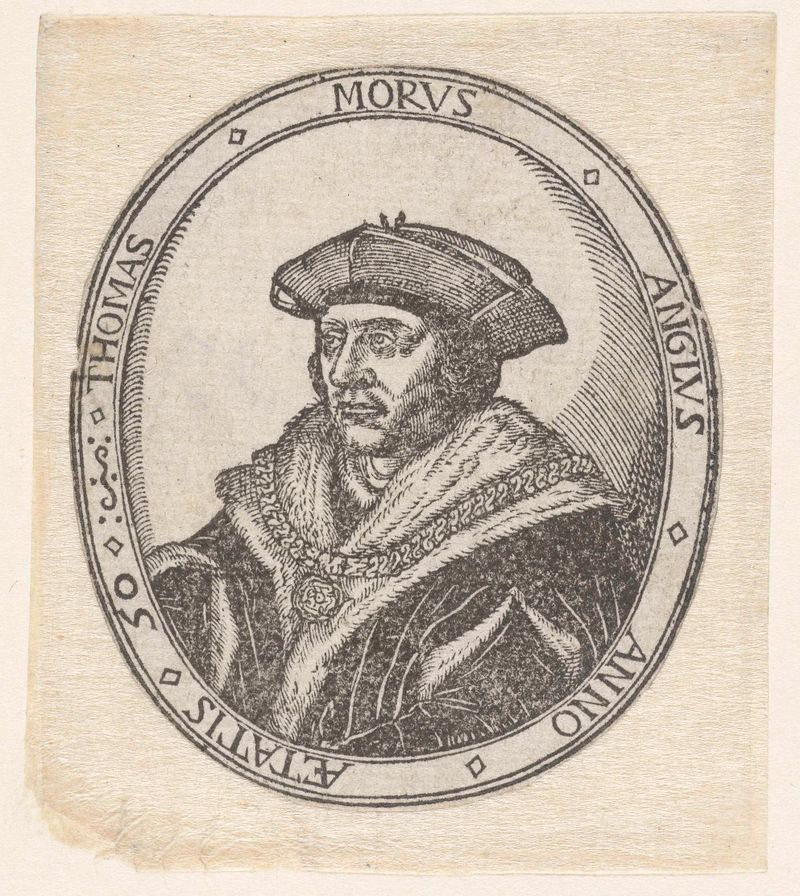
Portret van Thomas More
Hans Holbein (II)
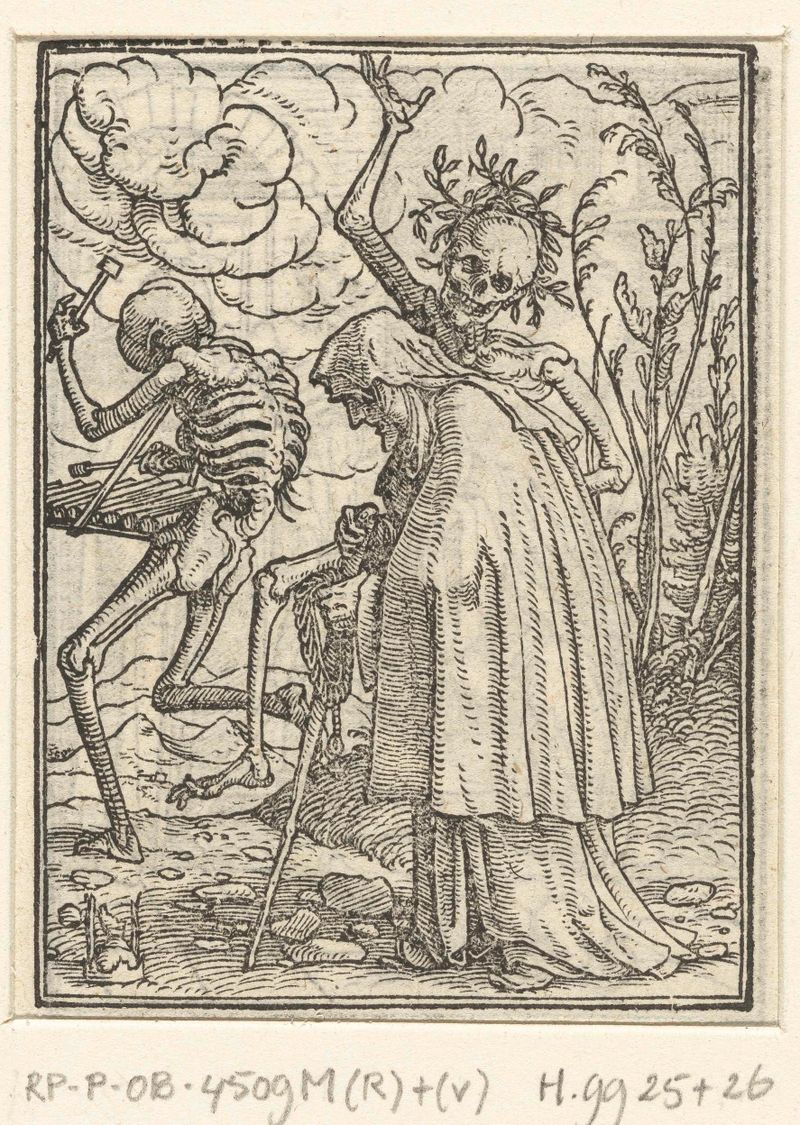
Oude vrouw en de Dood
Hans Holbein (II)