
Delaware Valley — History & Facts
Where does light end, and longing begin? In the tender embrace of a landscape, the boundary blurs, inviting us into a world drenched in both sunlight and emotion. Look to the center of the canvas, where the soft glow of sunlight bathes the rolling hills in golden hues, creating a serene invitation to explore deeper. Notice how the artist employs delicate brushwork to evoke the gentle sway of grasses, almost whispering in the breeze. The gradient of greens and yellows melds into the horizon, drawing your eye towards the distant trees, which stand as silent sentinels framing this tranquil scene. Inness captures a fleeting moment where nature’s beauty instills a sense of peace and introspection.
The contrast between the vibrant foreground and the muted, shadowed background suggests an interplay of presence and absence, of what is tangible versus what is felt. Subtle figures may be discerned in the distance, evoking a sense of memory or nostalgia, reminding us of the people and stories that have shaped this landscape, even if they are not seen. Created in the mid-1860s, during a transformative period for American art, this work reflects Inness's commitment to transcending mere representation. As he painted Delaware Valley, he was influenced by the Romantic ideals of nature and spirituality, seeking to convey deeper emotional resonance in his landscapes.
This era was marked by a growing appreciation for American scenery, positioning Inness as a pivotal figure in the Hudson River School's evolution towards impressionistic expression.
More Artworks by George Inness
Browse all →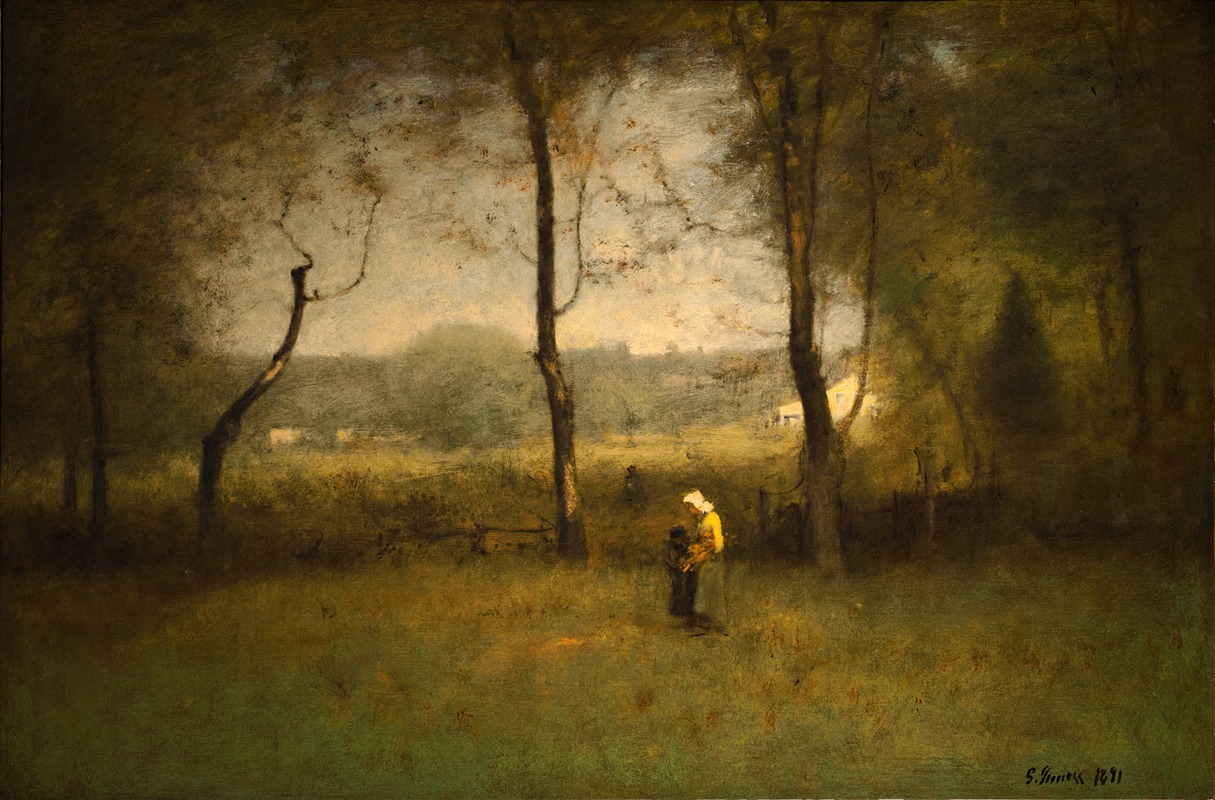
Autumn Woods
George Inness
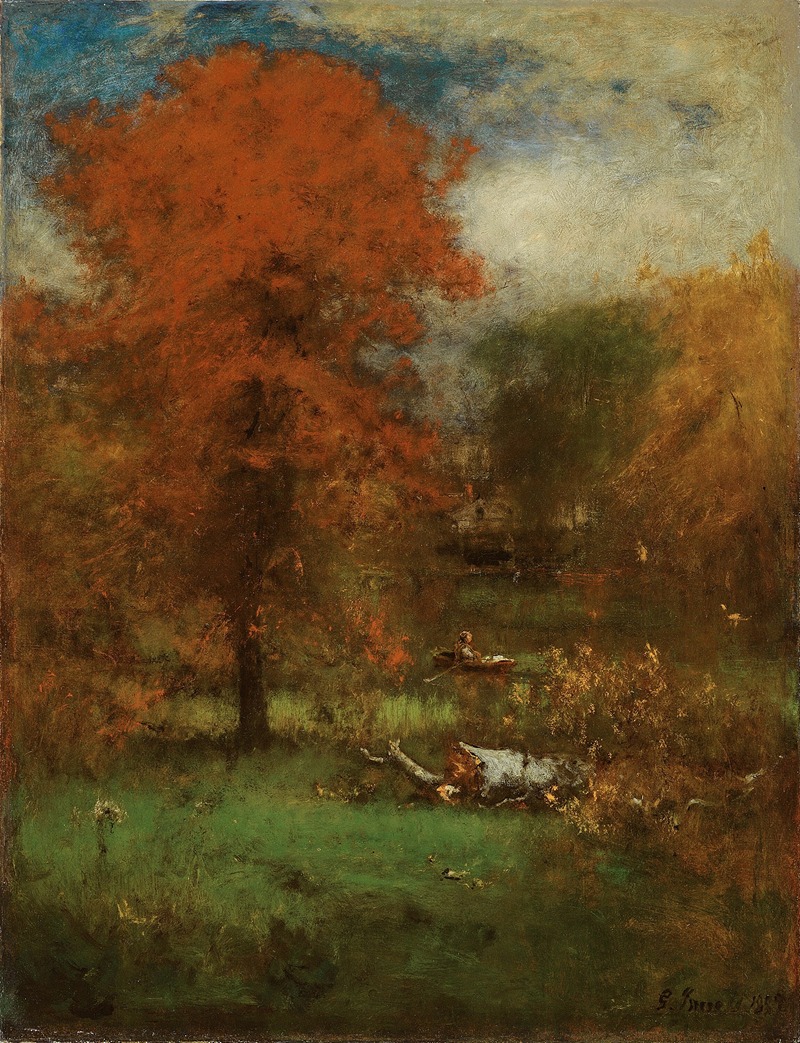
The Mill Pond
George Inness
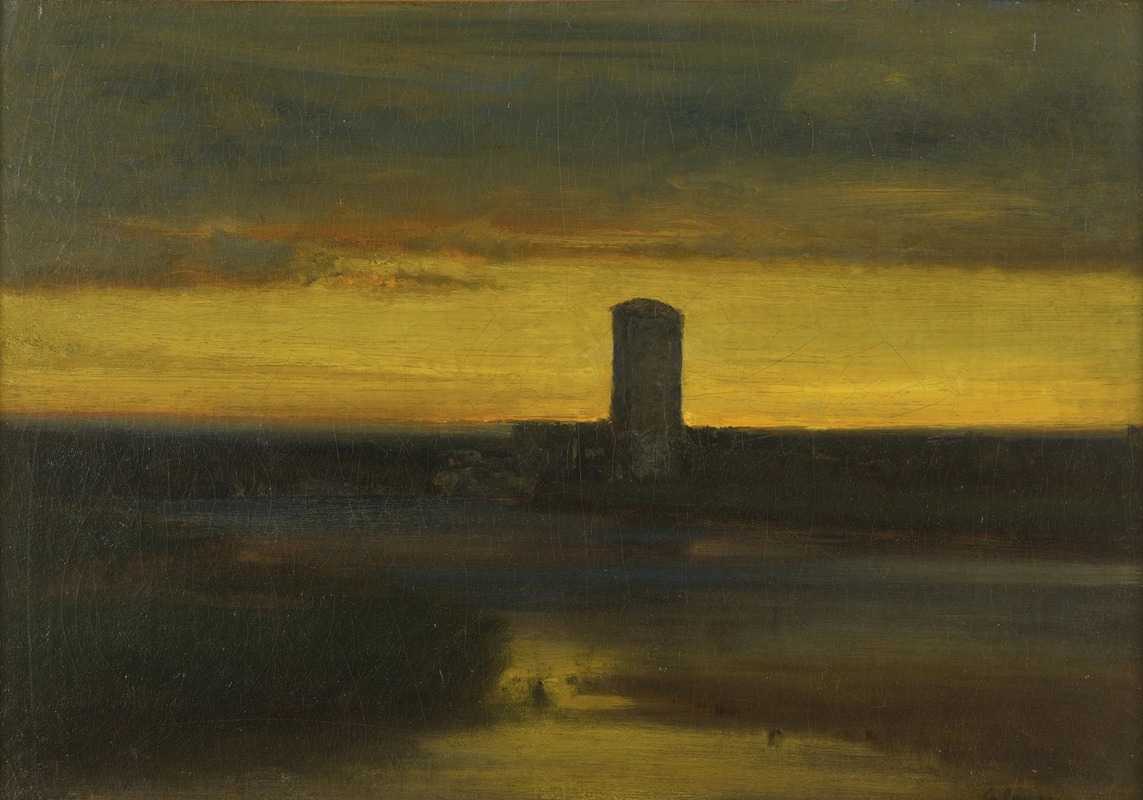
Afterglow
George Inness
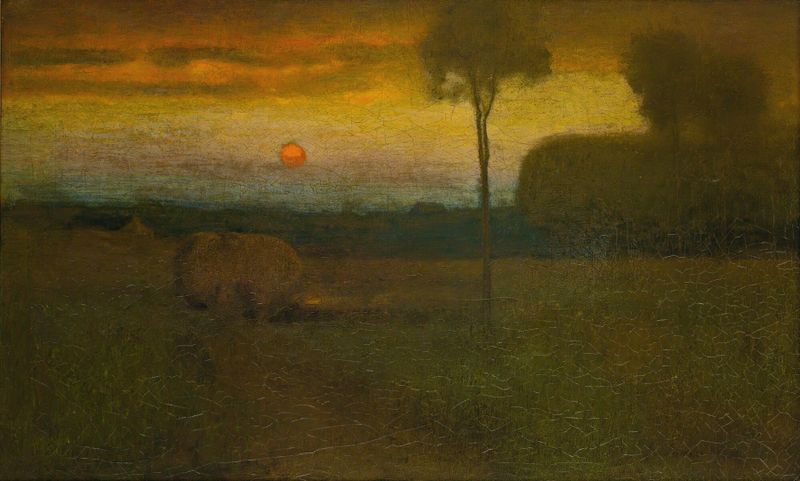
Landscape (Evening Landscape)
George Inness

Montclair
George Inness

View in Berkshire County, Massachusetts, Clearing Off after a September Storm
George Inness

October
George Inness
Landscape, Sunset
George Inness
Afterglow
George Inness
Catskill Mountains
George Inness





