
Departure of Two Fishermen — History & Facts
A hush seems to settle over the riverbank, where the world pauses to watch two fishermen push off from the shadow of ancient stone walls. The eye is drawn first to the quiet bustle at the water’s edge—one figure leans into the boat, a companion already seated, their vessel loaded with baskets and nets. The old house, with its slanting roof and irregular windows, stands as a silent witness, its weathered façade half-swallowed by foliage.
Light glances off the water and the stone, guiding us along the curve of the quay to the distant tower and the faint silhouette of a church spire, anchoring the scene in a lived landscape. The sky, left mostly bare, gives the river and its travelers a sense of openness and possibility, while the careful etching of reeds in the foreground reminds us of the patient, cyclical labor of fishing. Works like Departure of Two Fishermen by Antonie Waterloo belong to a tradition of Dutch landscape drawing and printmaking that flourished in the seventeenth century, when artists and collectors alike found new fascination in the everyday rhythms of rural and riverside life. These scenes were rarely grand commissions; instead, they were made for a growing audience of urban buyers who sought reminders of a quieter, older countryside.
The etching’s fine lines and careful attention to architectural detail reflect the era’s love of observation and technical skill, while its modest scale invites close, personal viewing. Though little is recorded about this particular sheet, now held in the National Gallery of Art and shared through their open access initiative, its quiet drama and gentle humor speak across centuries—inviting us to linger, and to imagine the world just beyond the frame.
More Artworks by Antonie Waterloo
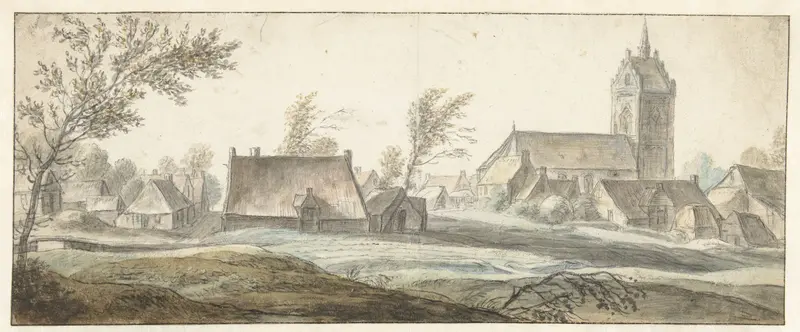
Gezicht op het dorp Soest
Antonie Waterloo
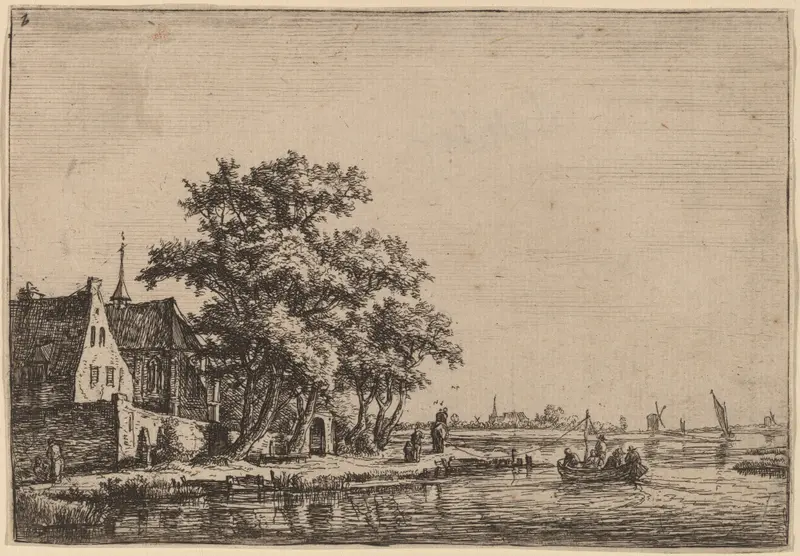
Churchyard at the Waterside
Antonie Waterloo
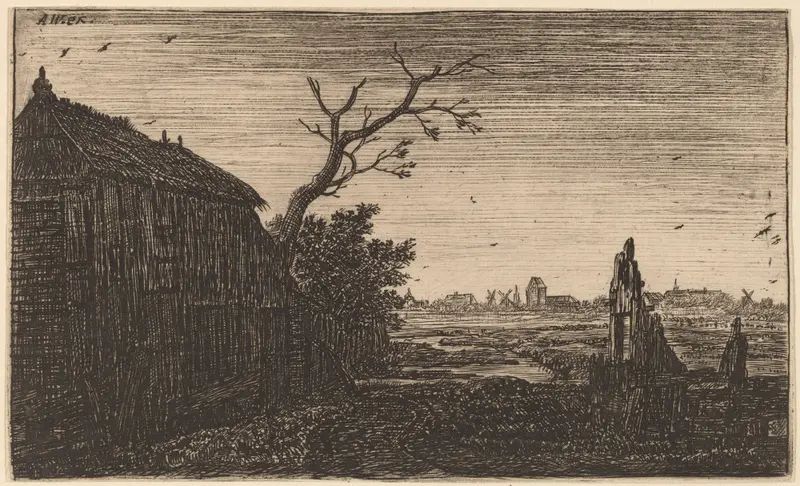
The Sluice
Antonie Waterloo
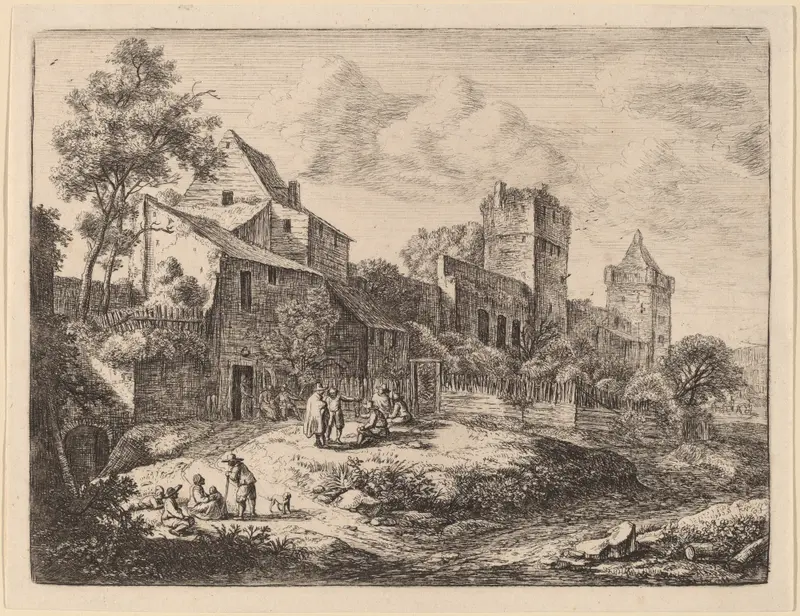
Square in Front of an Inn
Antonie Waterloo
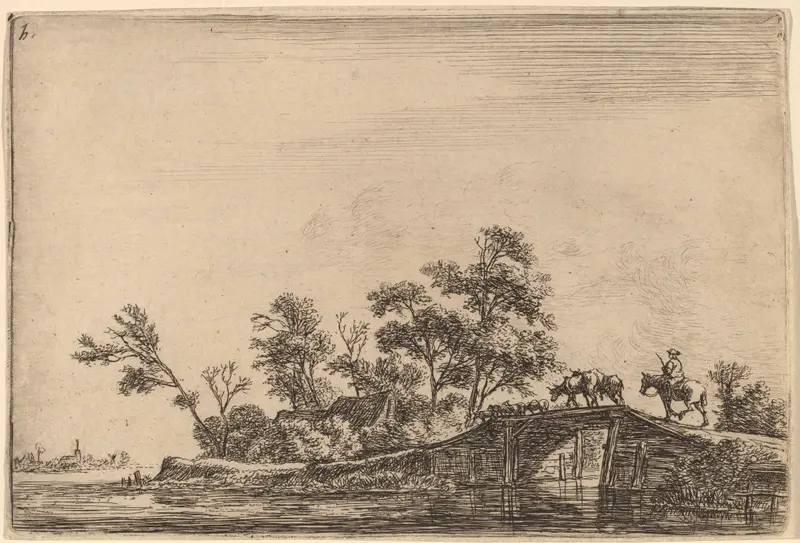
Rider and Flock on a Bridge
Antonie Waterloo
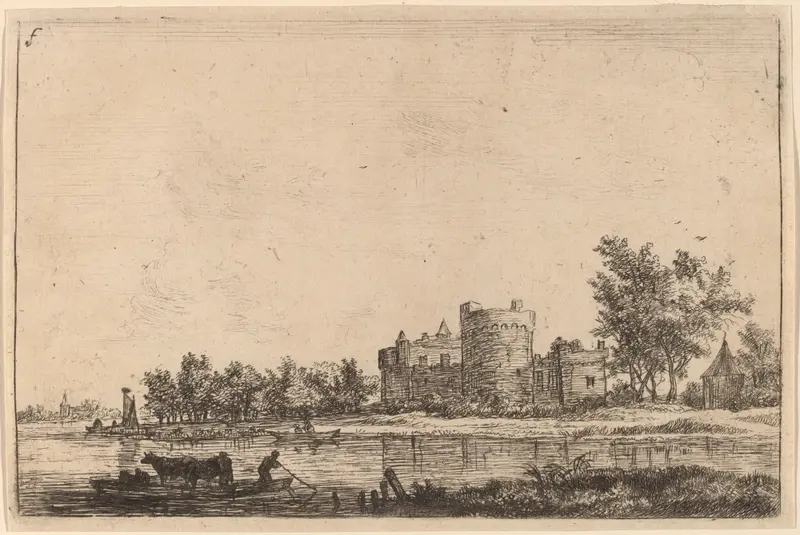
Two Cows on a Ferry
Antonie Waterloo
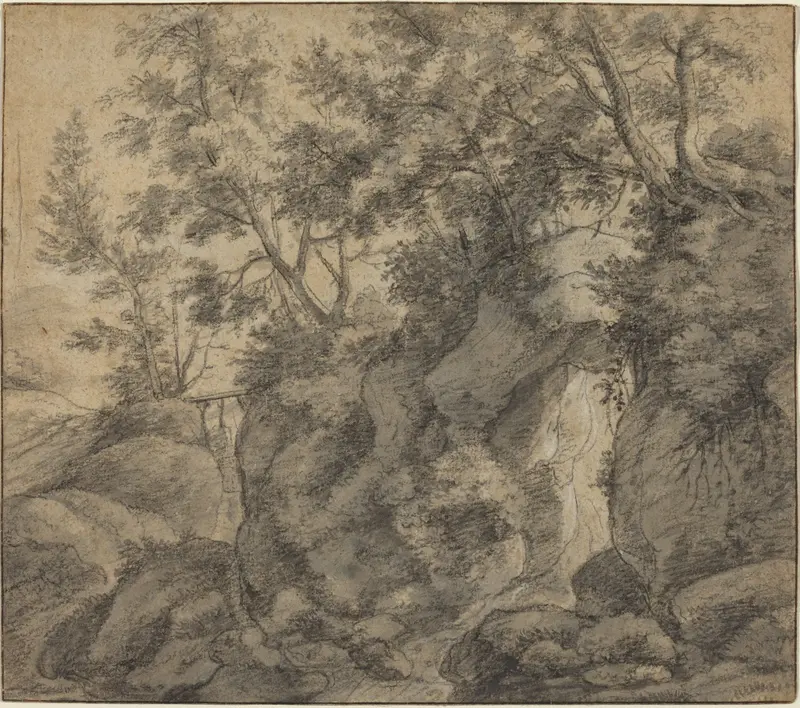
Landscape with a Wooded Ravine
Antonie Waterloo
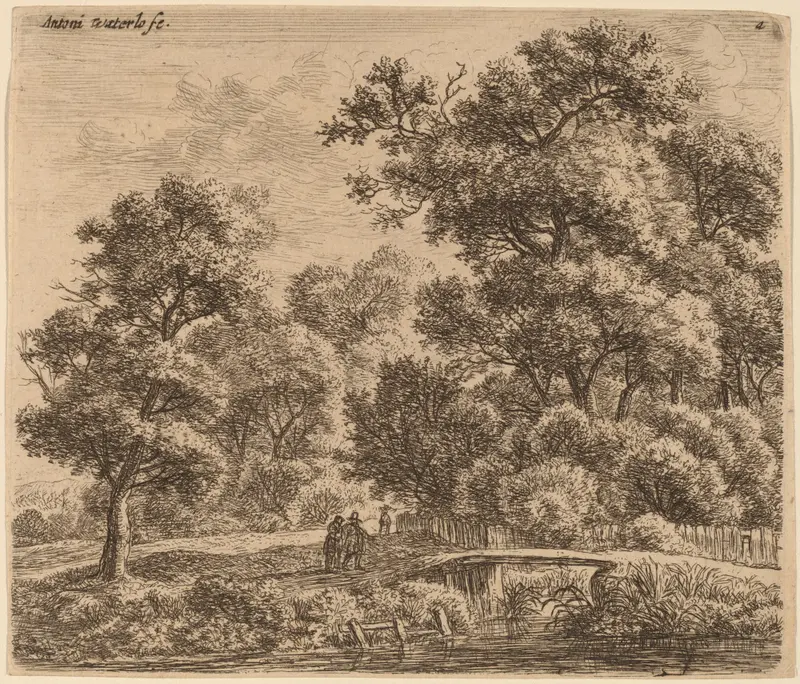
Wooded Landscape with a Bridge
Antonie Waterloo
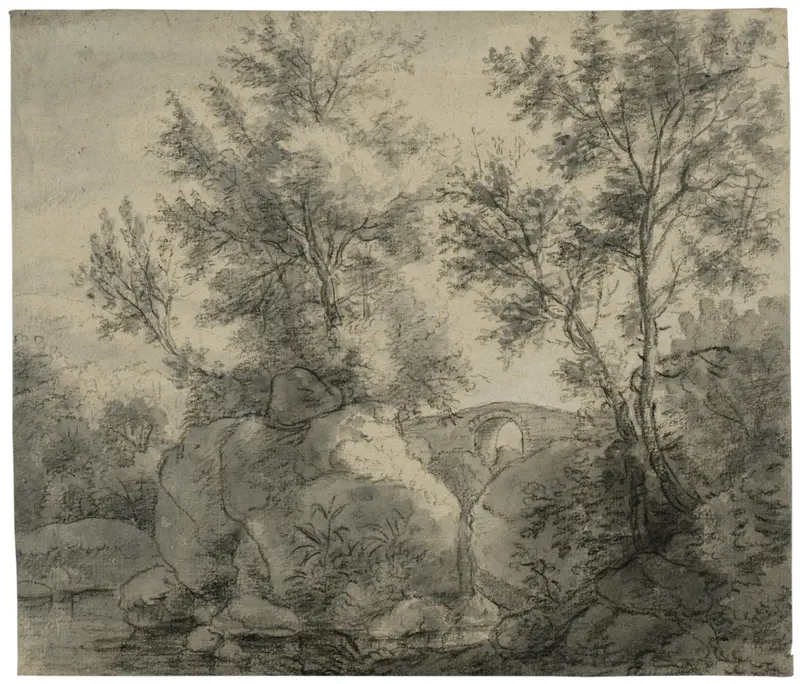
Rocky Landscape with a Stone Bridge
Antonie Waterloo
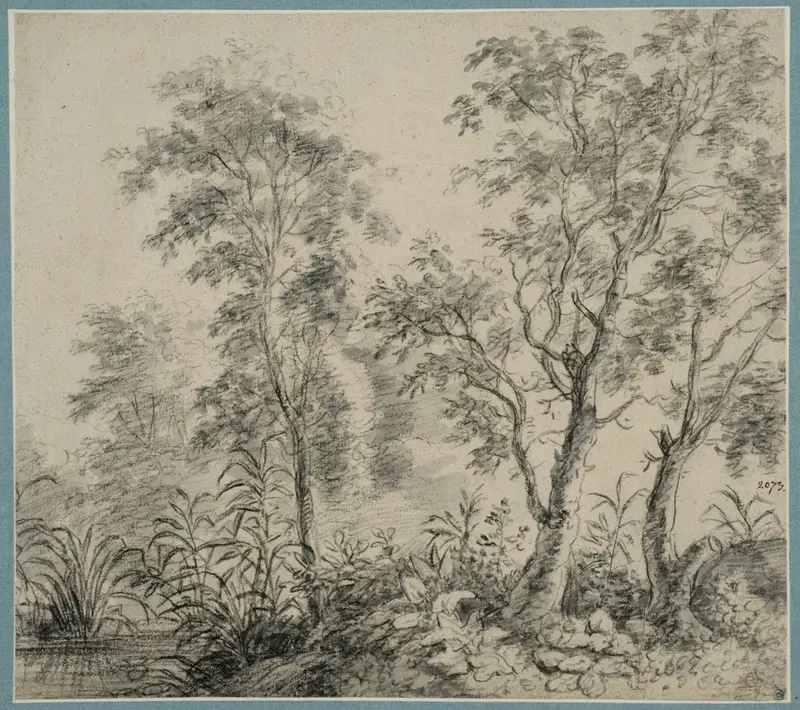
River Bank with a Row of Trees
Antonie Waterloo
More Landscape Art

The Starry Night
Vincent van Gogh

View of Delft
Johannes Vermeer

Water Lilies
Claude Monet

The Grand Canal, Venice, looking north-west from the Ca' Corner to the Ca' Contarini degli Scrigni, with the campanile of Santa Maria della Carità
Canaletto

Windsor Castle
Canaletto

The Grand Canal looking North-East from the Palazzo Dolfin-Manin to the Rialto Bridge
Canaletto