
Der Hagestolz — History & Facts
When did color learn to lie? In a world where tranquility is often a facade, Der Hagestolz reveals the serene depths of solitude with its gentle hues and contemplative figures. Look to the center of the canvas, where a solitary man sits in quiet introspection. His thoughtful gaze is directed slightly off the edge, as if lost in the reveries of his own mind. The soft pastel palette bathes the scene in a warm glow, with dappled light cascading through the foliage that frames him.
Notice the delicate brushwork that captures the varying textures of his clothing and the surrounding nature, creating a harmonious balance between man and environment. The contrast between the figure's stillness and the vibrant life of nature speaks volumes; though he appears at peace, there lies an undercurrent of melancholy in his isolation. The lush greenery enveloping him offers a sanctuary, yet it also underscores his separation from the world beyond. The juxtaposition of serene beauty and poignant solitude illuminates the complexity of human emotion—a reminder that serenity often carries a weight of unseen burdens. Created between 1847 and 1849, the piece reflects a pivotal moment in Carl Spitzweg's life.
During this period, he was fully immersed in the Romantic movement, which celebrated individualism and introspection against the backdrop of an industrializing Europe. This painting encapsulates not only his artistic vision but also the broader cultural shift towards exploring the depths of personal experience amidst societal change.
More Artworks by Carl Spitzweg
Browse all →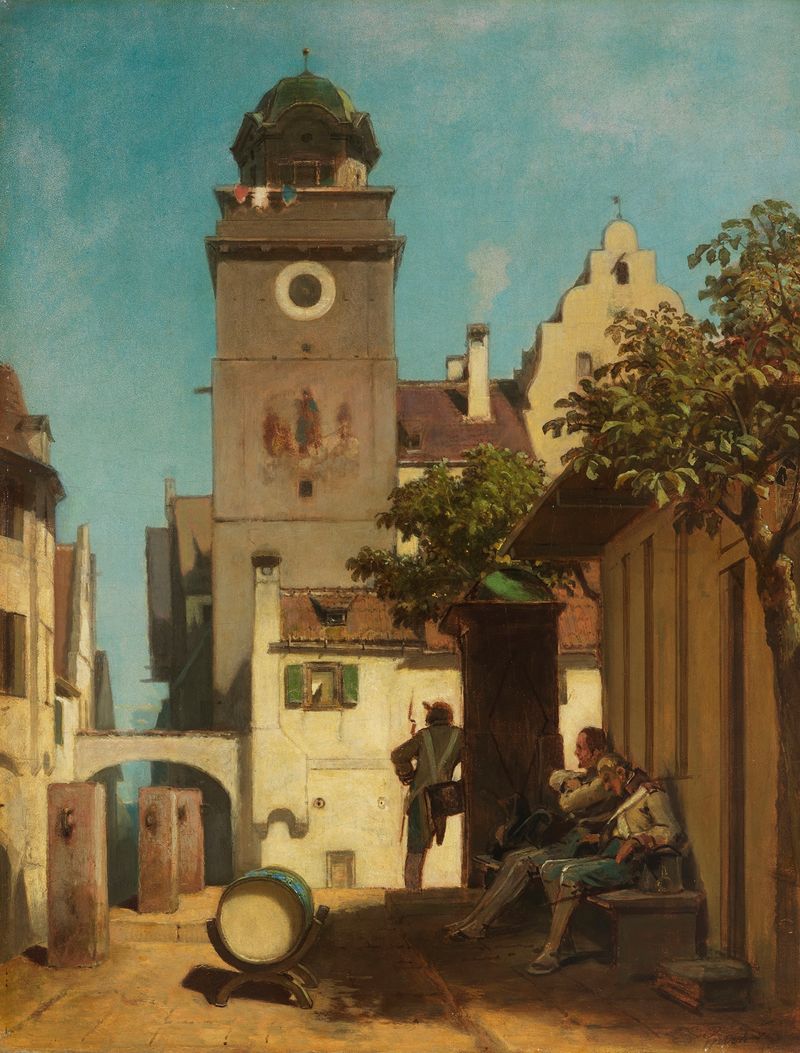
Die Stadtwache
Carl Spitzweg
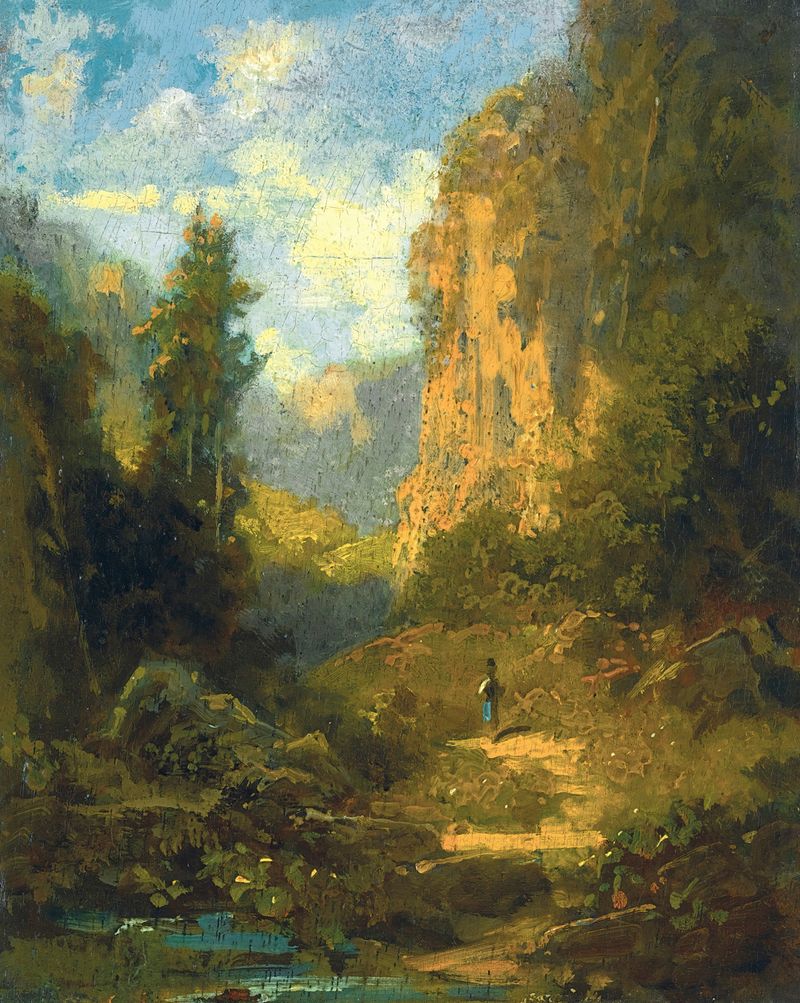
Gebirgslandschaft
Carl Spitzweg

In the Alpine High Valley (Landscape with Mt. Wendelstein)
Carl Spitzweg

Gebirgsmühle
Carl Spitzweg
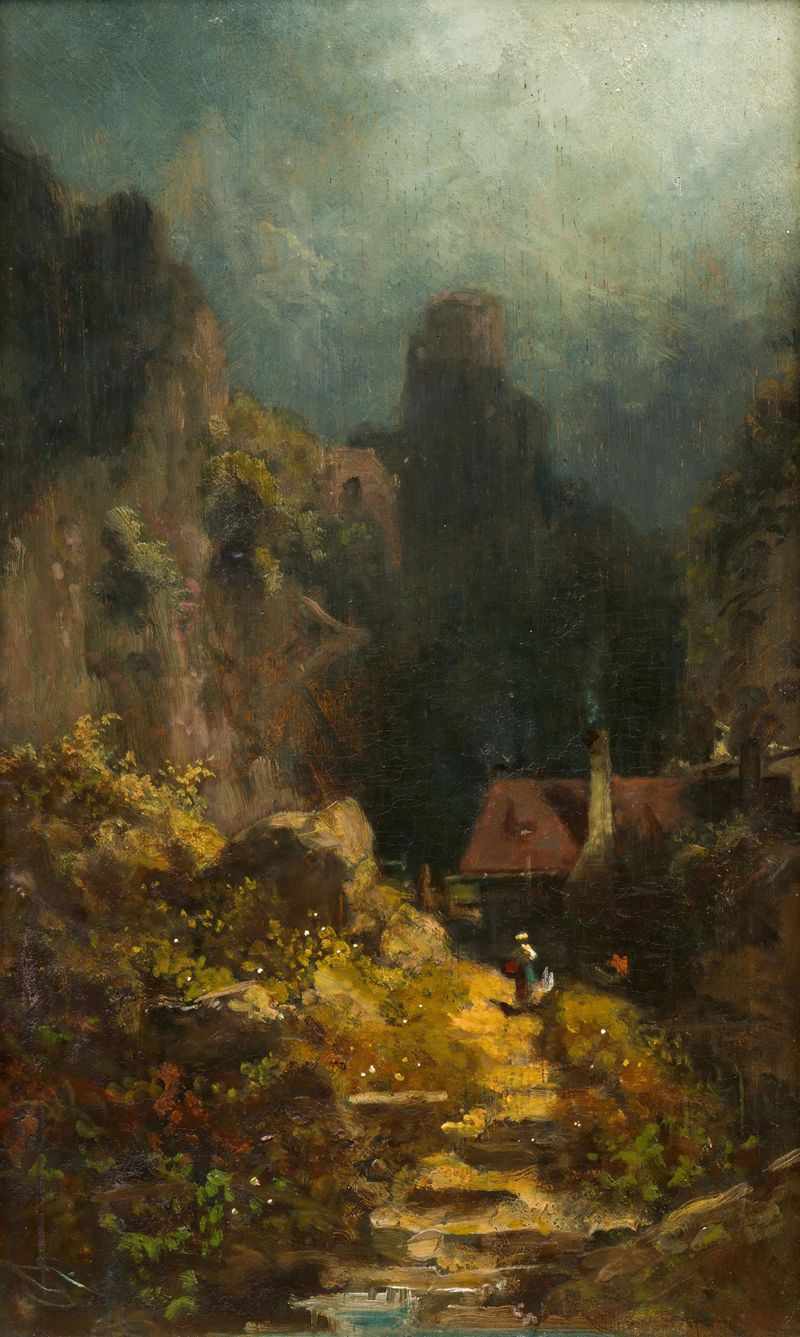
In der Schlucht
Carl Spitzweg
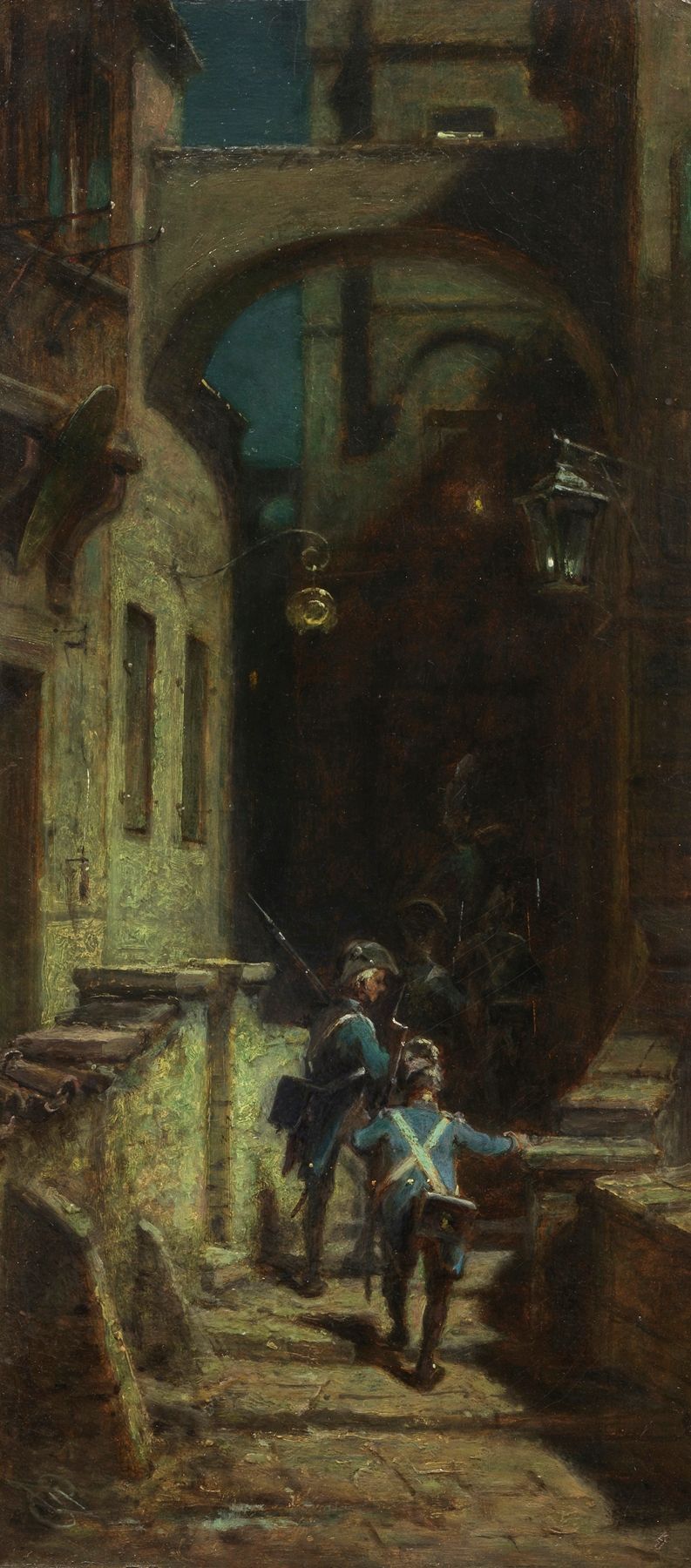
Die Scharwache
Carl Spitzweg

Einsiedler mit Mädchen
Carl Spitzweg

Lagernde Karrner (Rast der Streuner)
Carl Spitzweg
Im Walde
Carl Spitzweg
Moonlit Scene with Castle Ruins
Carl Spitzweg





