
Der Stierkampf bei Toledo — History & Facts
Did the painter know this moment would outlive them? In the throes of a bullfight, a dance of life and death unfolds; the air thick with tension, the fate of man and beast hanging precariously in the balance. The melancholy of the scene echoes long after the clash, a poignant reminder of human fragility and the relentless pursuit of glory. Look to the foreground where the matador, clad in vibrant costume, commands attention with his poised stance. His defiant gaze meets that of the bull, captured mid-charge, muscles taut and ready.
The artist employs a vivid palette—crimson reds and golden yellows juxtaposed against the deep earth tones of the arena, invoking a sense of urgency and heightened emotion. Notice how the interplay of light and shadow accentuates the contours of both figures, enhancing the dramatic tension that underscores this age-old spectacle. Within this charged tableau lies a rich tapestry of meanings. The bull, a symbol of raw power, contrasts sharply with the matador’s elegance, embodying the primal struggle between nature and human artistry.
The subtle expressions on the faces of the onlookers, caught in a moment of collective breath-holding, reflect the shared anticipation and dread, encapsulating the bittersweet nature of such violence in the name of tradition. This moment, caught between triumph and tragedy, resonates with the viewer, evoking reflections on mortality and legacy. In 1940, amidst the turbulence of war in Europe, Laske created Der Stierkampf bei Toledo while drawing inspiration from the cultural fervor of Spain. Living in a world where ideological battles raged, he turned to the spectacle of bullfighting as both a canvas of beauty and a stage for profound commentary.
This piece stands as a testament to the artist's contemplation of existence at a time when uncertainty loomed large, embedding a sense of melancholy that transcends the immediate violence of the scene.
More Artworks by Oskar Laske
Browse all →
Faschingsumzug am Stock im Eisen Platz
Oskar Laske

Schönbrunn (Winter)
Oskar Laske
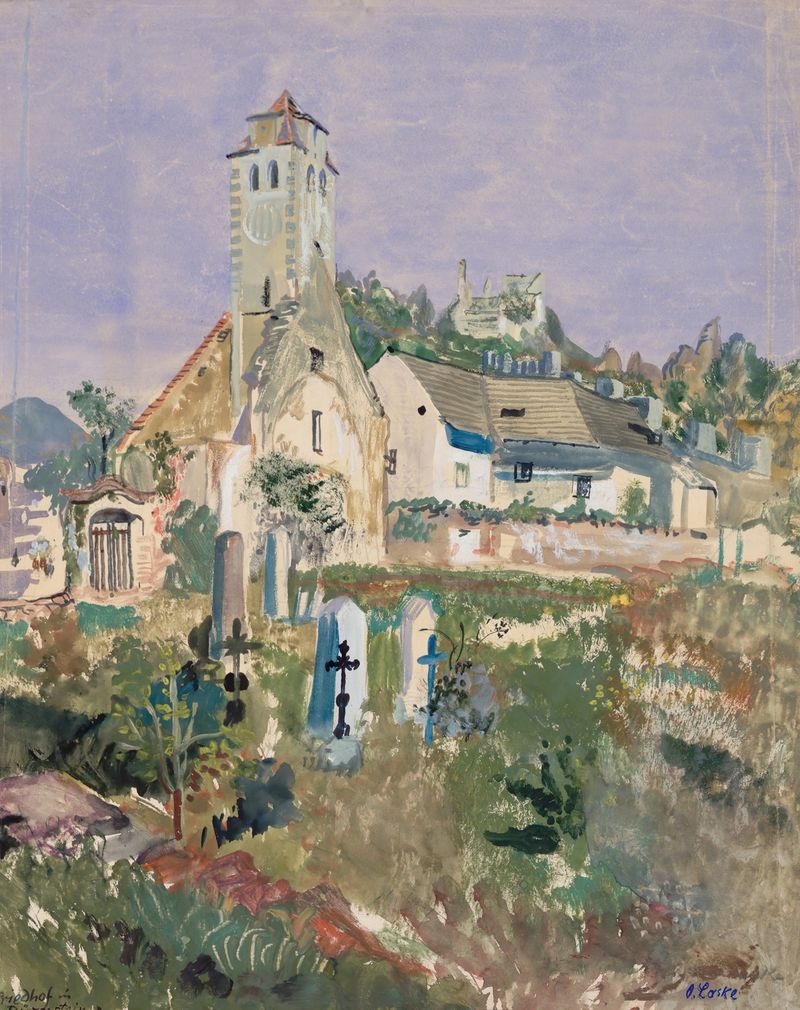
Friedhof in Dürnstein
Oskar Laske

Pratermotiv an der alten Donau
Oskar Laske

Frühjahrsnebel in Niederösterreich
Oskar Laske

Begräbnis des Wiener Bürgermeisters Dr. Karl Lueger
Oskar Laske

Maria Theresien-Denkmal mit Blick gegen das Burgtor
Oskar Laske
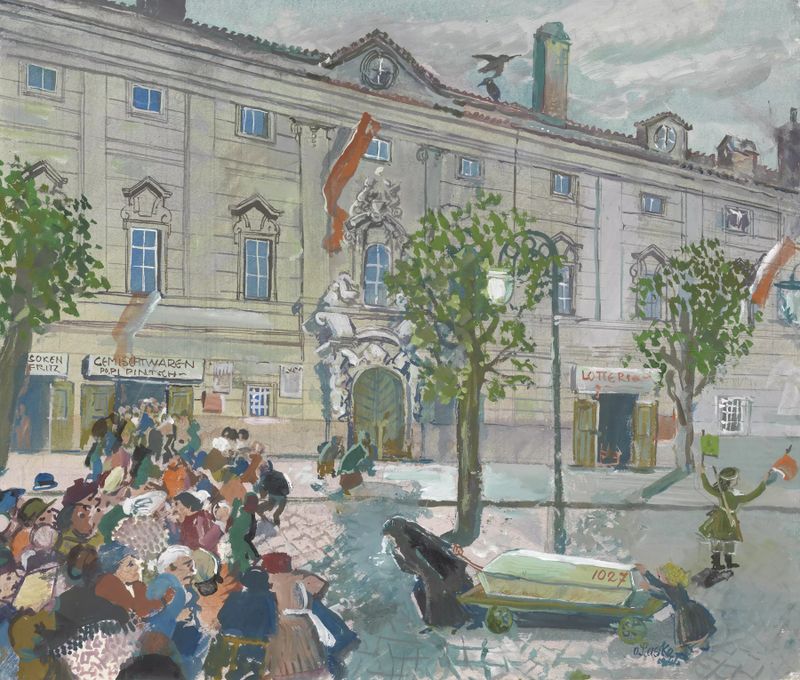
Wiener Straßenbild vom Mai 1945
Oskar Laske

Winterlandschaft in Pressbaum
Oskar Laske

Ansicht von Positano
Oskar Laske





