
Der umgekippte Puppenwagen — History & Facts
When Der umgekippte Puppenwagen first entered public collections, it was quickly embraced as a quintessential example of Felix Schlesinger’s ability to capture the world of children with both realism and gentle humor. Unlike many of his contemporaries, Schlesinger specialized in scenes of everyday childhood, and this work stands out for its unflinching yet affectionate portrayal of a mishap that any viewer can recognize. The painting’s title, which translates as "The Overturned Doll’s Pram," hints at the minor domestic drama at its heart—a subject rarely given such careful attention in 19th-century German painting. At the center of the canvas, a young girl stands frozen, her hands half-raised in surprise or dismay, as her cherished doll’s pram lies toppled on the floor.
The scattered toys and the doll’s limp form suggest both the chaos of play and the suddenness of the accident. Light falls warmly on the child’s face, highlighting her wide eyes and parted lips, while the darker background draws the viewer’s gaze to the small tragedy unfolding. The careful rendering of textures—the wooden floor, the soft fabric of the doll’s dress—invites comparison to Carl Spitzweg’s similarly intimate genre scenes, though Schlesinger’s focus remains firmly on the emotional world of his young subject rather than on gentle satire. The exact date and circumstances of Der umgekippte Puppenwagen’s creation remain uncertain, as do details about its early provenance.
Like much of Schlesinger’s work, it likely found its first home with a bourgeois family eager to celebrate the innocence and unpredictability of childhood. Over time, the painting has moved through several private collections before entering a museum, where it now stands as a representative piece of late 19th-century German genre painting. Today, it is valued not only for its technical skill but also for its rare empathy toward the everyday dramas of children—a theme that would become central to Schlesinger’s enduring reputation.
More Artworks by Felix Schlesinger

Fleißige Helfer in der Küche
Felix Schlesinger

Die Zeitungslektüre
Felix Schlesinger
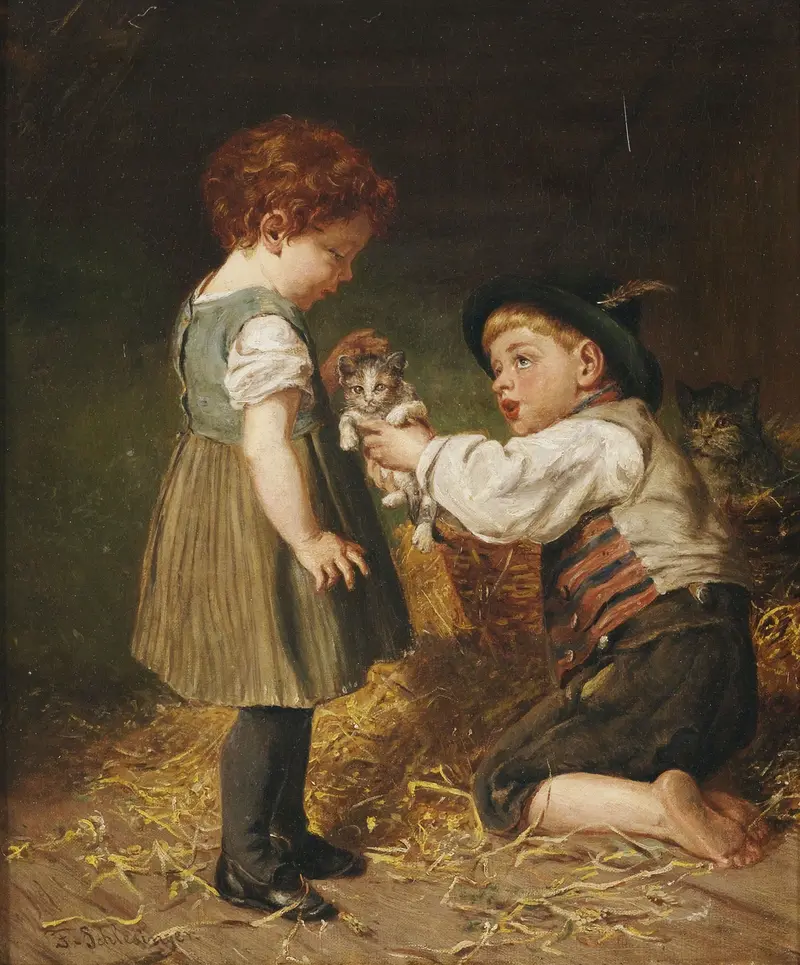
Zwei Kinder mit Kätzchen im Stall
Felix Schlesinger
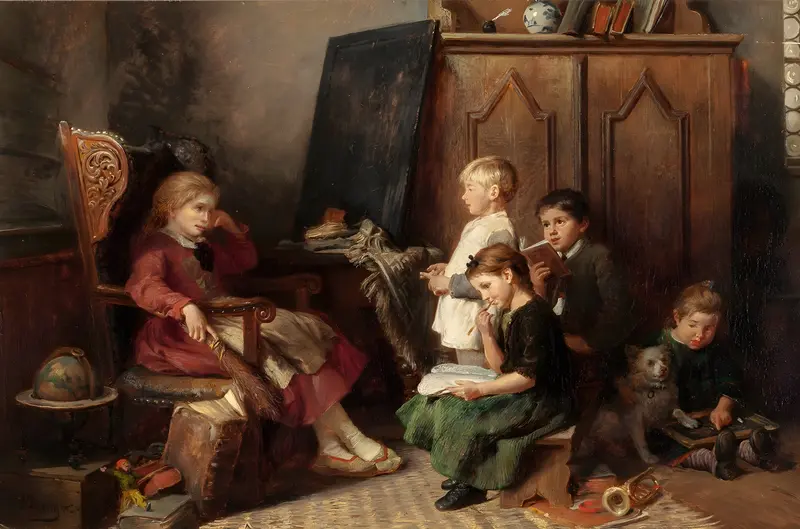
Children Reading
Felix Schlesinger
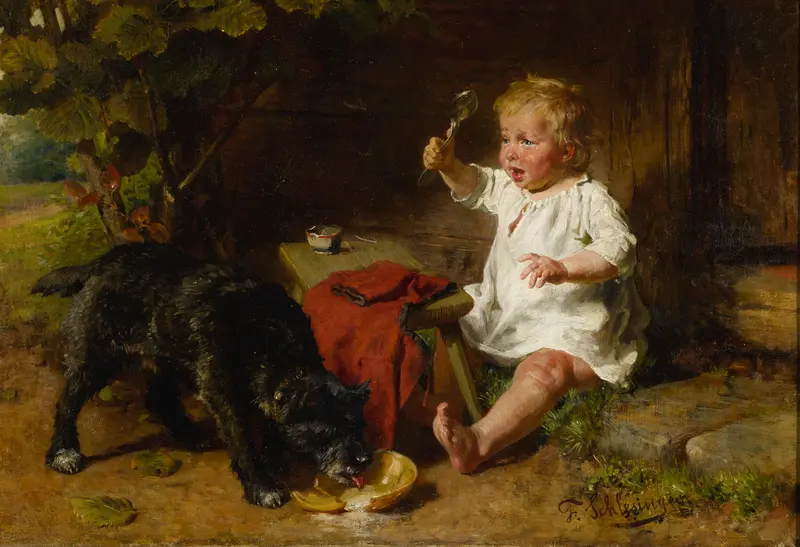
A Shared Meal
Felix Schlesinger
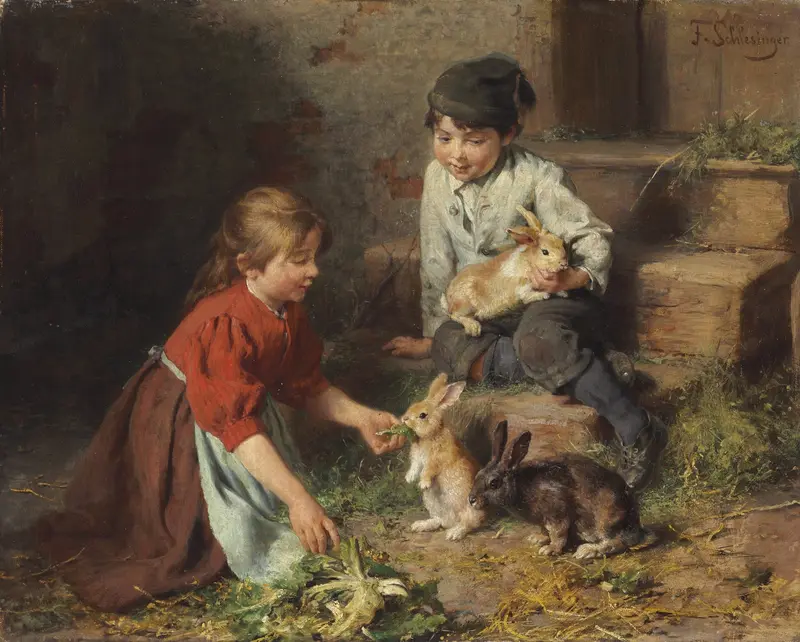
Fütterung Der Kaninchen
Felix Schlesinger
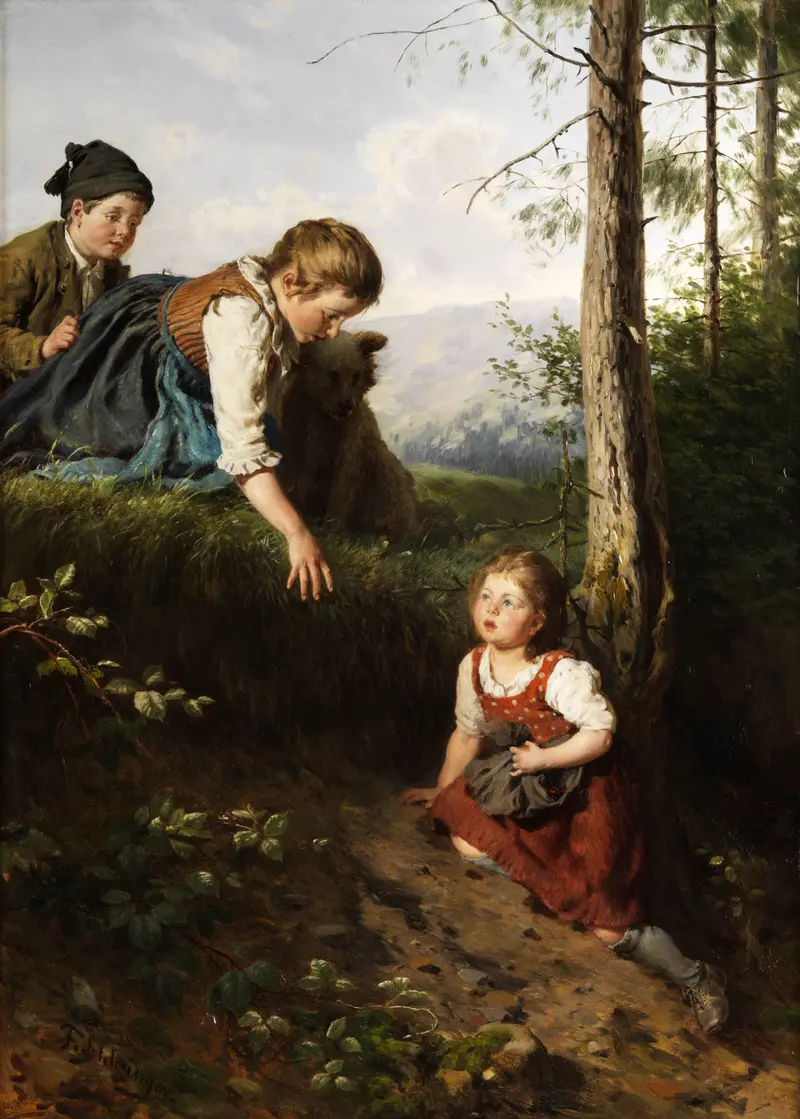
Drei Kinder im Wald beim Beerenpflücken
Felix Schlesinger
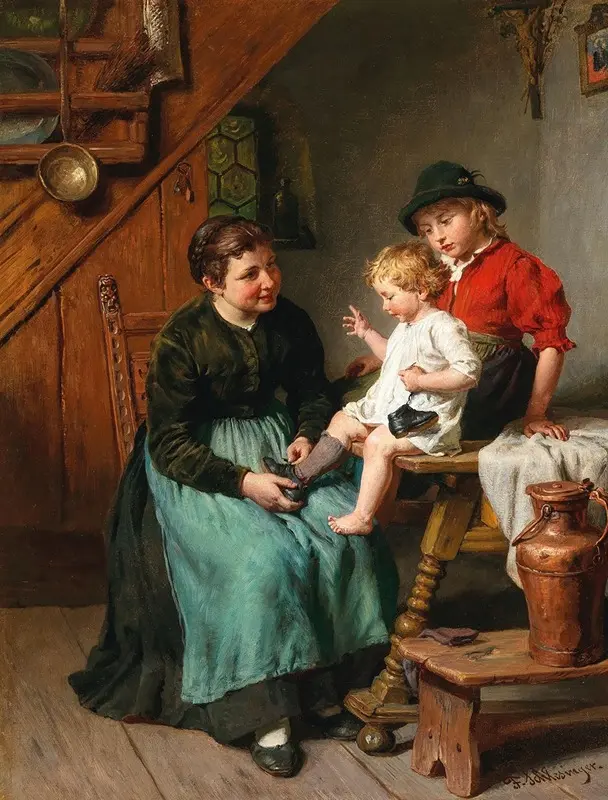
The First Shoe
Felix Schlesinger
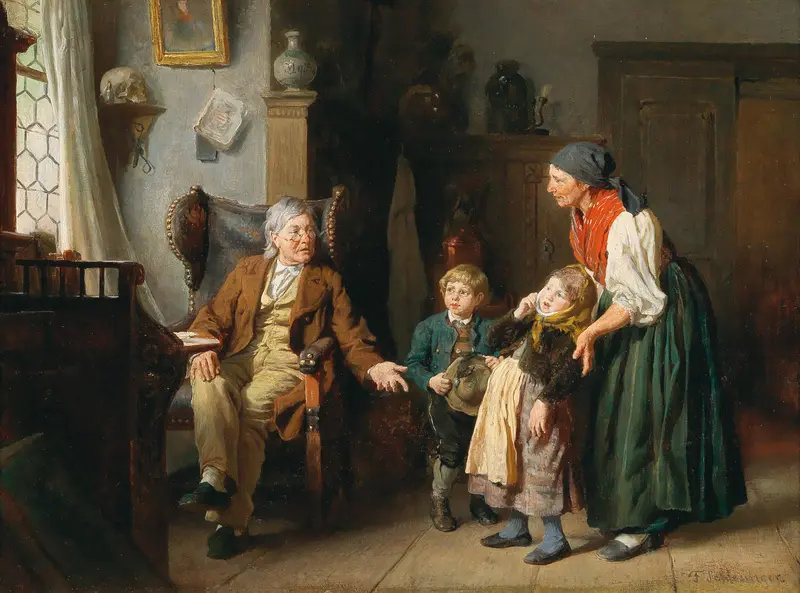
The village doctor
Felix Schlesinger
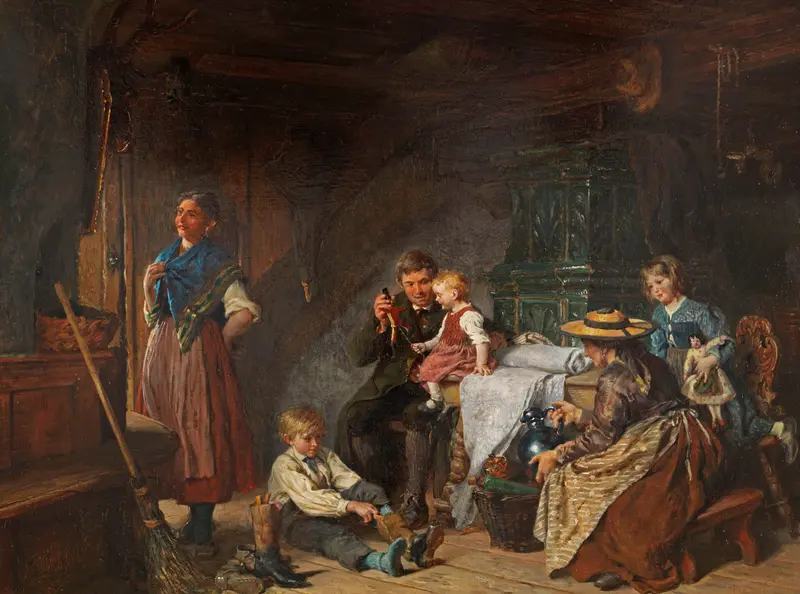
Familienszene
Felix Schlesinger
More Genre Scene Art

Banquet of the Officers of the St George Civic Guard
Frans Hals

Rembrandt and Saskia in the Scene of the Prodigal Son
Rembrandt van Rijn

Bal du moulin de la Galette
Pierre-Auguste Renoir

Quadrille at the Moulin Rouge
Henri de Toulouse-Lautrec

A Burial at Ornans
Gustave Courbet

When Will You Marry?
Paul Gauguin