
Dix lithographies au lavis (02) : Nature morte — History & Facts
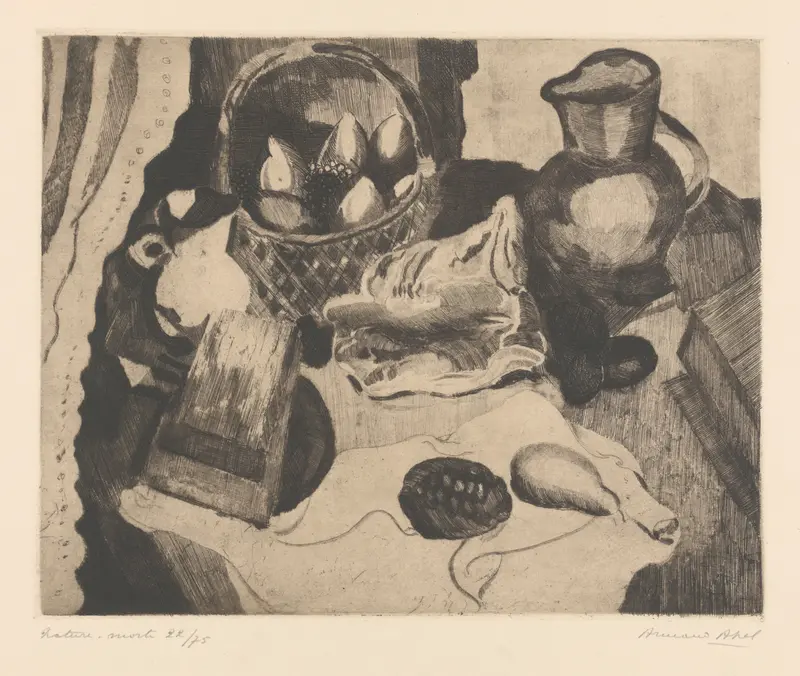
A cascade of shadow and light draws the viewer into the world of Dix lithographies au lavis (02) : Nature morte by Armand Apol. The table is alive with contrasts: the soft, almost liquid folds of a draped cloth, the sharp geometry of a book left open as if just abandoned, and the gleaming curve of a metallic jug. Every object seems to lean into the next, their forms overlapping and merging, as if caught in a gentle, silent conversation.
The flowers, rendered with a brisk, confident hand, rise from their vases, their pale faces catching the brightest highlights, while the background recedes into a deep, enveloping dusk. The eye is led in a slow spiral, from the heavy shadows at the edge, across the table’s cluttered surface, and up to the riot of blooms, inviting us to linger over each detail. Still lifes like this one flourished in the late nineteenth and early twentieth centuries, when artists across Europe began to experiment with new ways of seeing the everyday. Armand Apol, a Belgian artist, worked in a period when the boundaries between painting, printmaking, and drawing were dissolving, and the lithograph became a favored medium for capturing the fleeting effects of light and atmosphere.
This work, now in the Royal Library of Belgium, stands as a quiet testament to that era’s fascination with the poetry of the ordinary. History has kept few traces of the circumstances behind this particular print, but its restless energy and careful arrangement speak to a world in which the familiar was always worth a second glance.
Sources: Wikidata Q105198735 · Image source (Wikimedia Commons)
More Artworks by Armand Apol
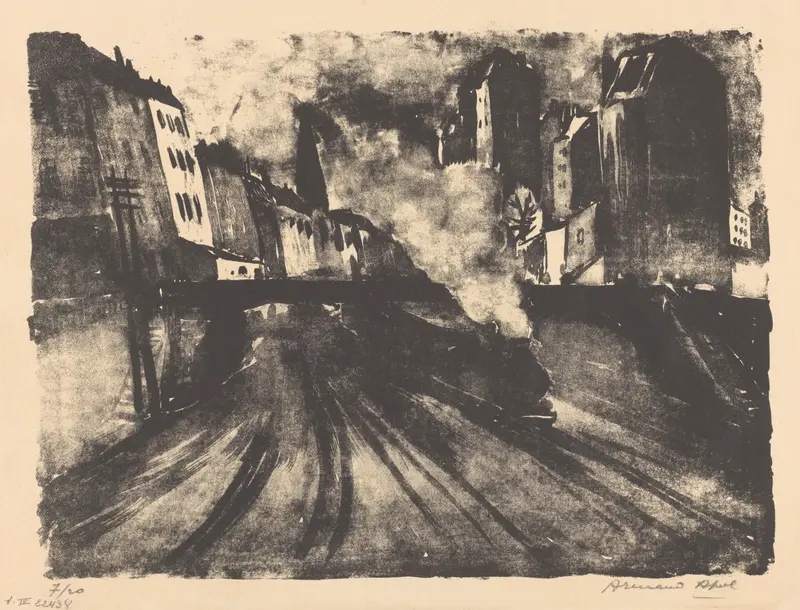
Chemin de fer de ceinture à Paris
Armand Apol
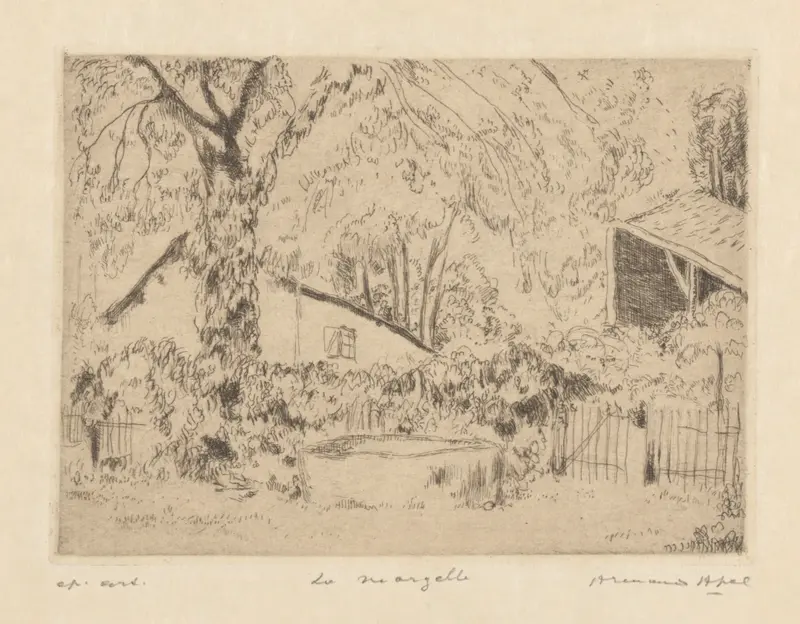
La margelle
Armand Apol
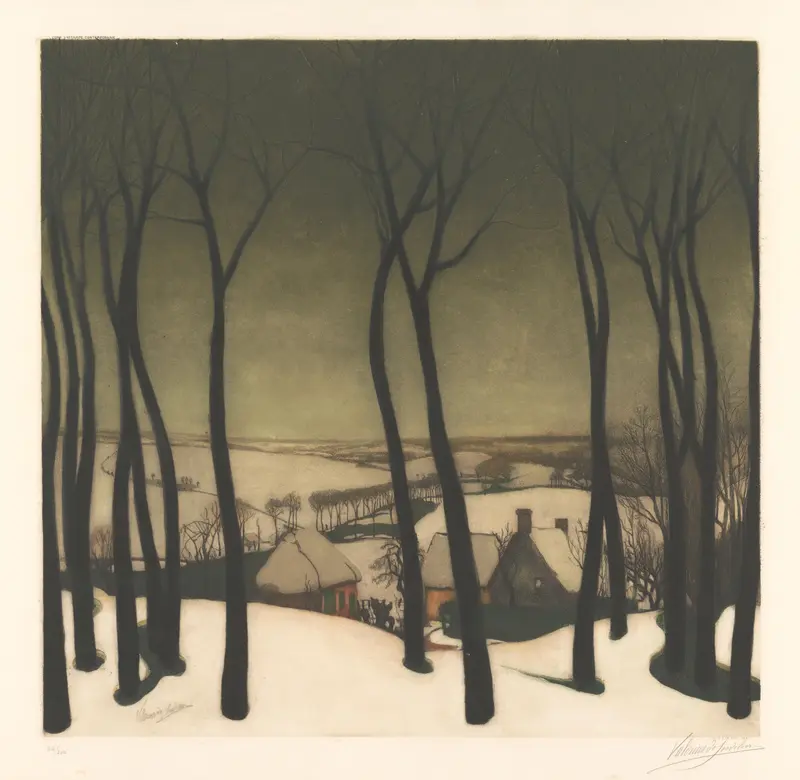
Album 8 estampes (en couleurs) (05) : Paysage
Armand Apol
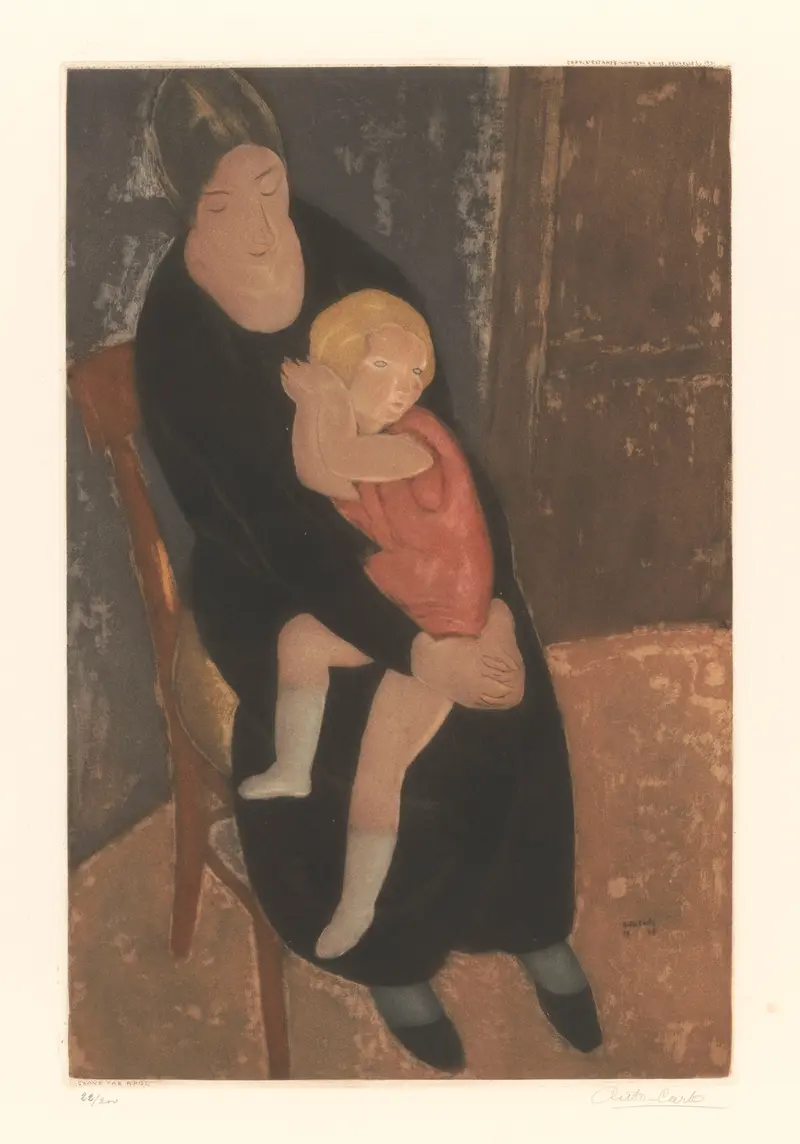
Album 8 estampes (en couleurs) (08) : Mère et enfant
Armand Apol

Dix planches (06) : La loge
Armand Apol
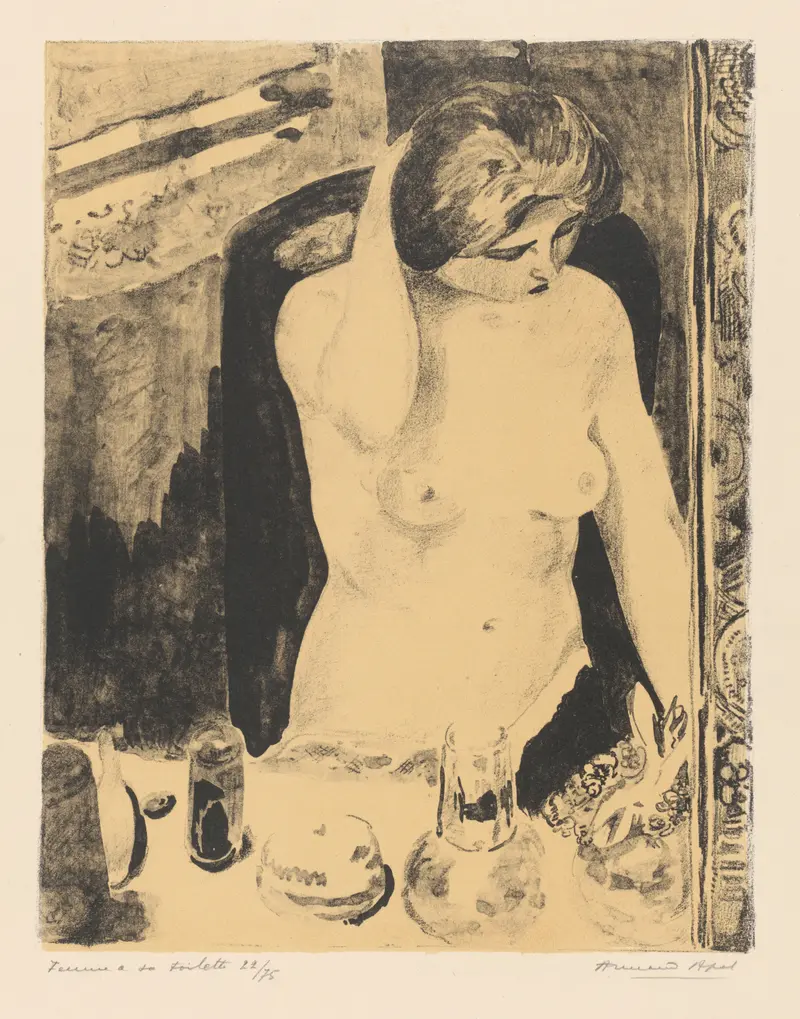
Dix planches (10) : Femme à sa toilette
Armand Apol
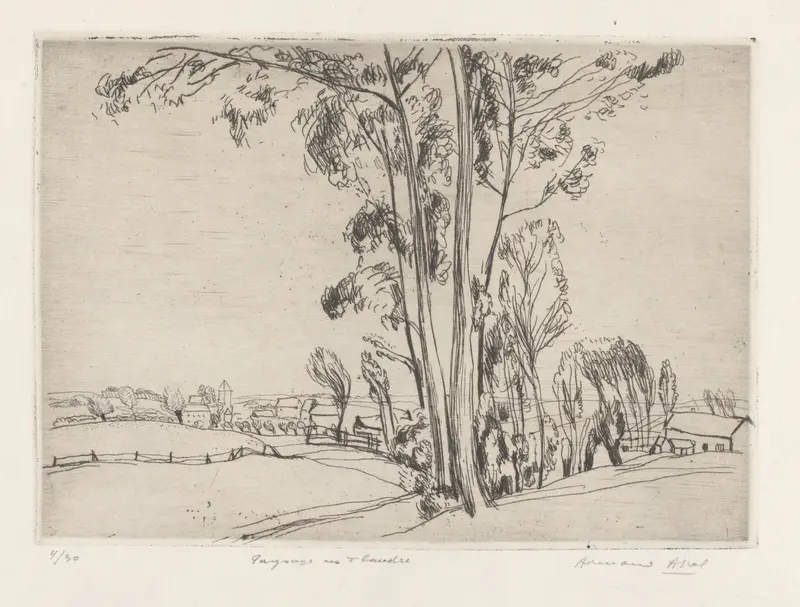
Paysage en Flandre (Etichove)
Armand Apol
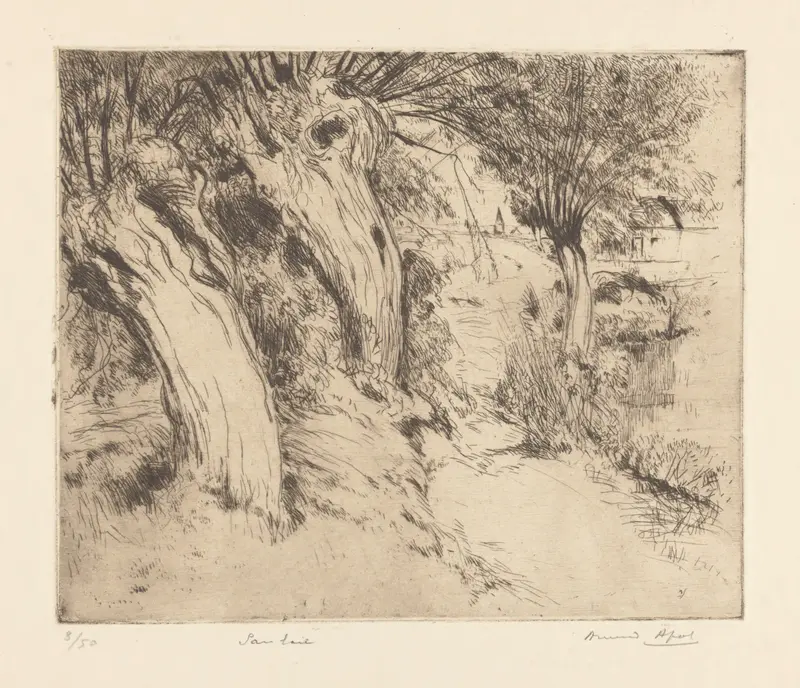
Saulaie
Armand Apol
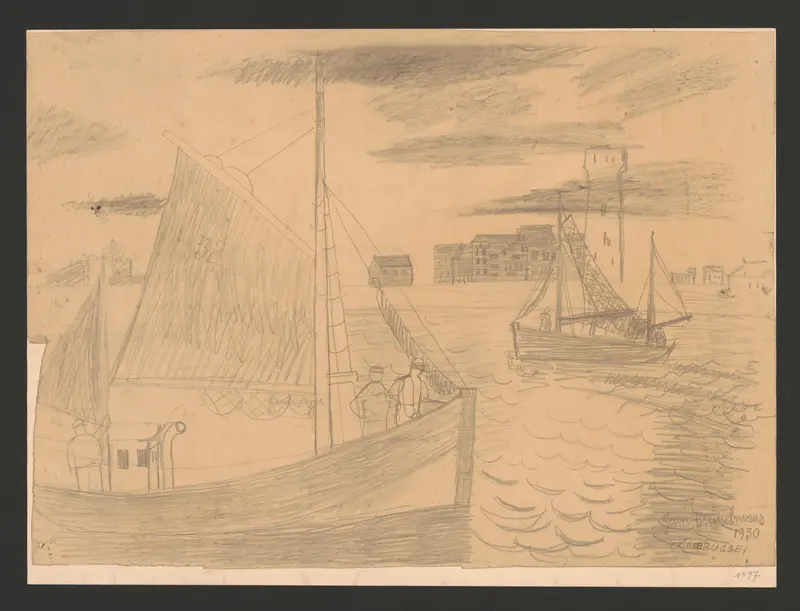
Zeebrugge
Armand Apol
Dix planches (08) : Nature morte
Armand Apol





