
Paysage en Flandre (Etichove) — History & Facts
A single stand of tall, slender trees commands the foreground, their trunks dividing the quiet sweep of fields and distant farmhouses. The eye is drawn upward, tracing the restless, sketch-like motion of branches that seem to flutter against an expansive, nearly empty sky. Below, the land rolls gently, its contours marked by quick, confident lines—fences, rooftops, and a church spire punctuate the horizon, hinting at a rural community just out of reach.
The spareness of the etching, with its restrained palette and minimal shading, invites the viewer to linger on the rhythm of the landscape itself: the way the trees anchor the scene, the way the emptiness above amplifies the hush below. Works like Paysage en Flandre (Etichove) by Armand Apol belong to a tradition of early twentieth-century Belgian landscape art, where the countryside is rendered not as a backdrop for grand events, but as a subject worthy of quiet attention. Artists of this period often produced such prints for collectors or as affordable art for a growing urban middle class, capturing the vanishing rhythms of rural life as modernization crept in. The Royal Library of Belgium preserves this piece, a testament to the enduring fascination with the Flemish landscape and the subtle power of line to evoke place.
The simplicity of Apol’s vision urges us to look again—what might seem empty at first reveals, with patience, a world alive with gentle movement and memory.
More Artworks by Armand Apol
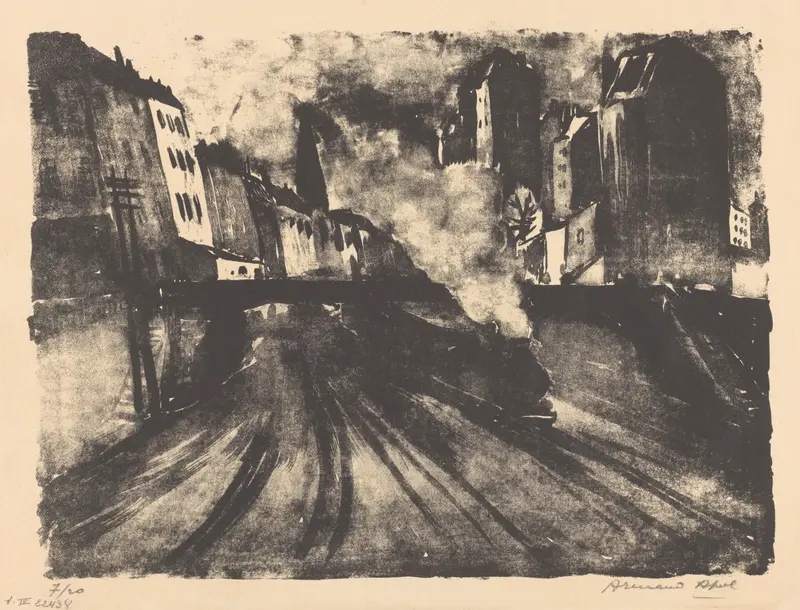
Chemin de fer de ceinture à Paris
Armand Apol
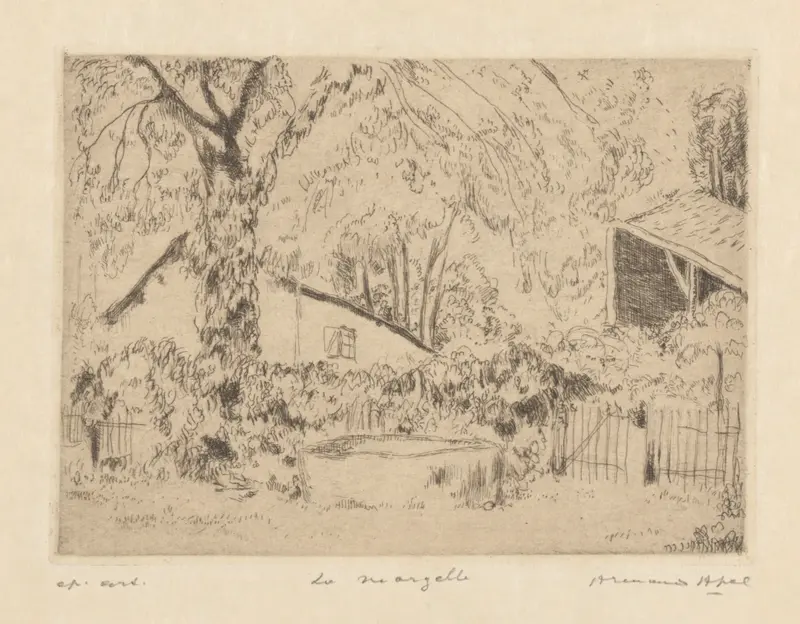
La margelle
Armand Apol
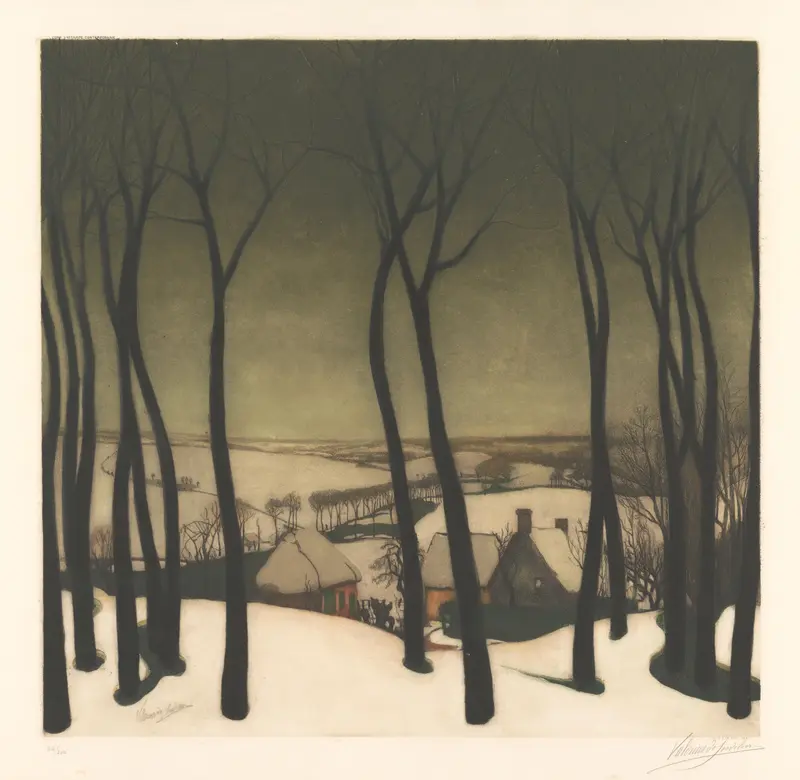
Album 8 estampes (en couleurs) (05) : Paysage
Armand Apol
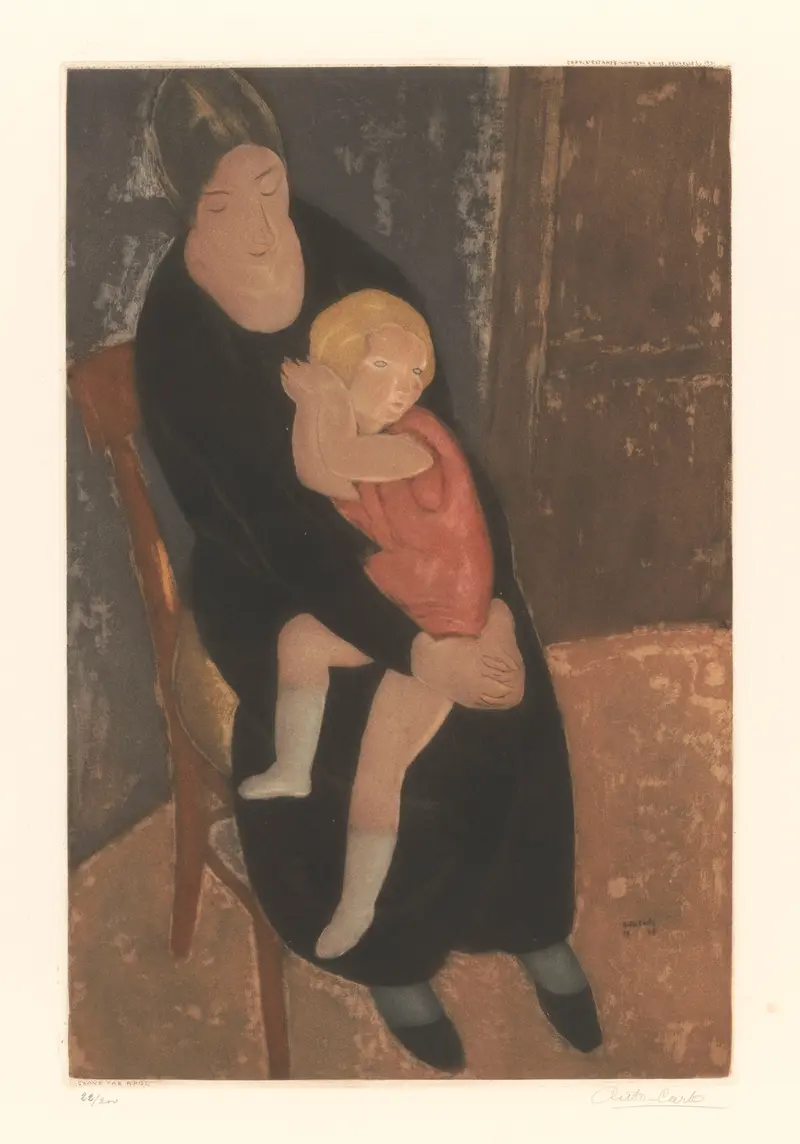
Album 8 estampes (en couleurs) (08) : Mère et enfant
Armand Apol
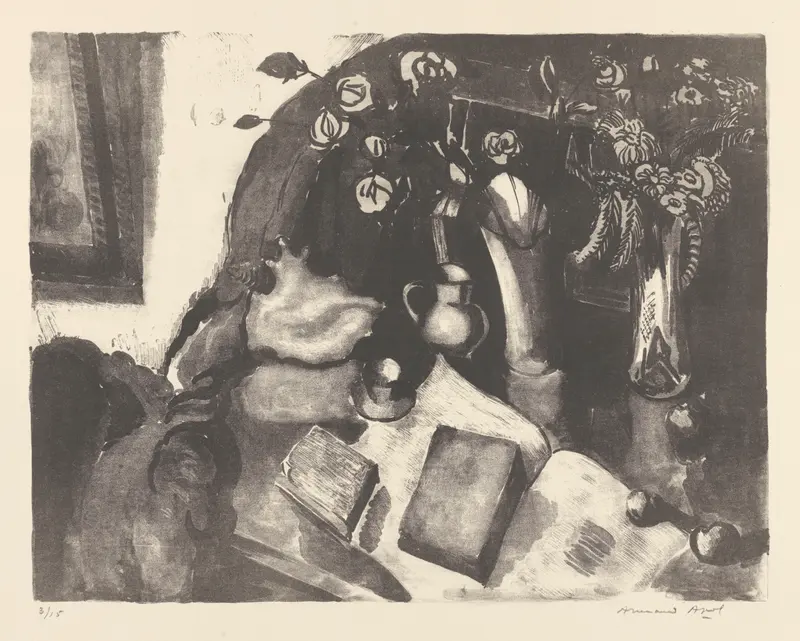
Dix lithographies au lavis (02) : Nature morte
Armand Apol

Dix planches (06) : La loge
Armand Apol
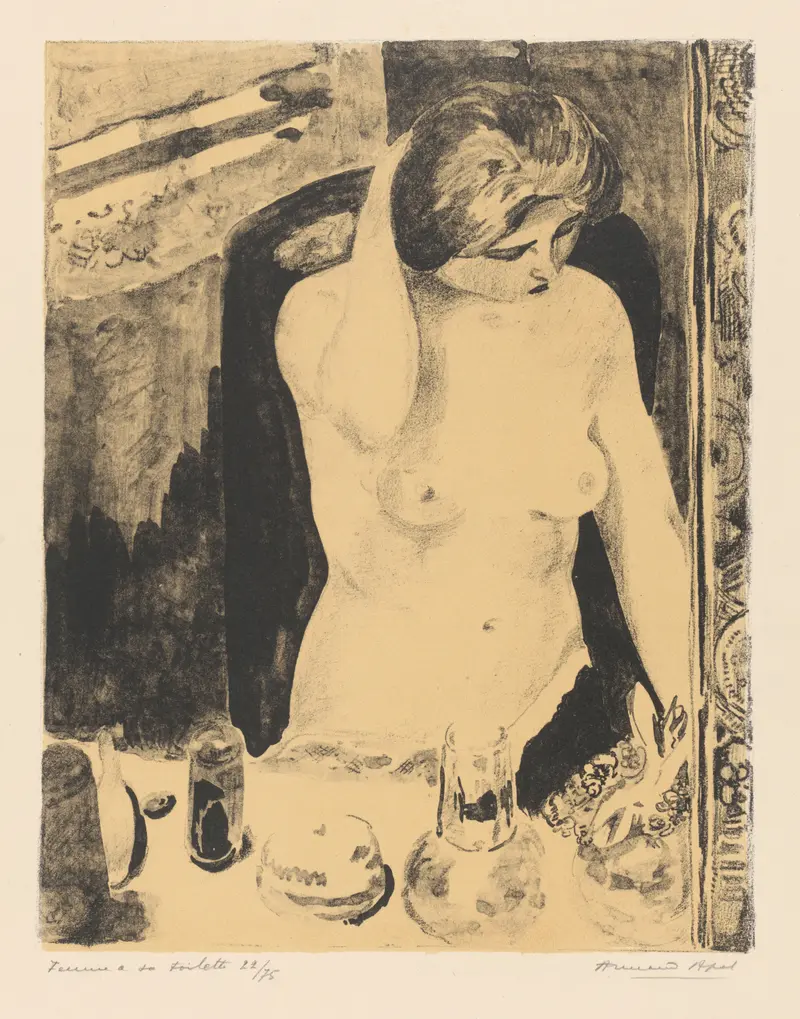
Dix planches (10) : Femme à sa toilette
Armand Apol
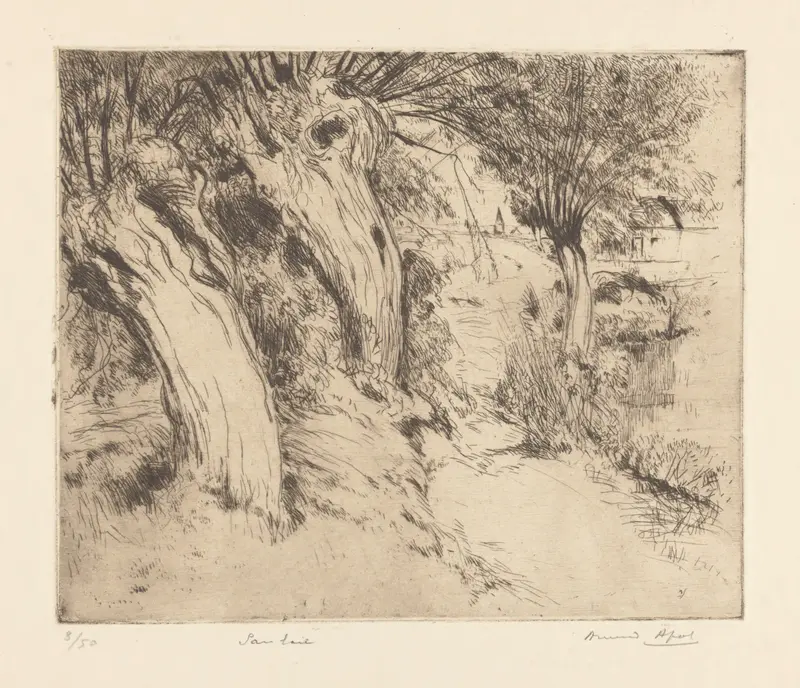
Saulaie
Armand Apol
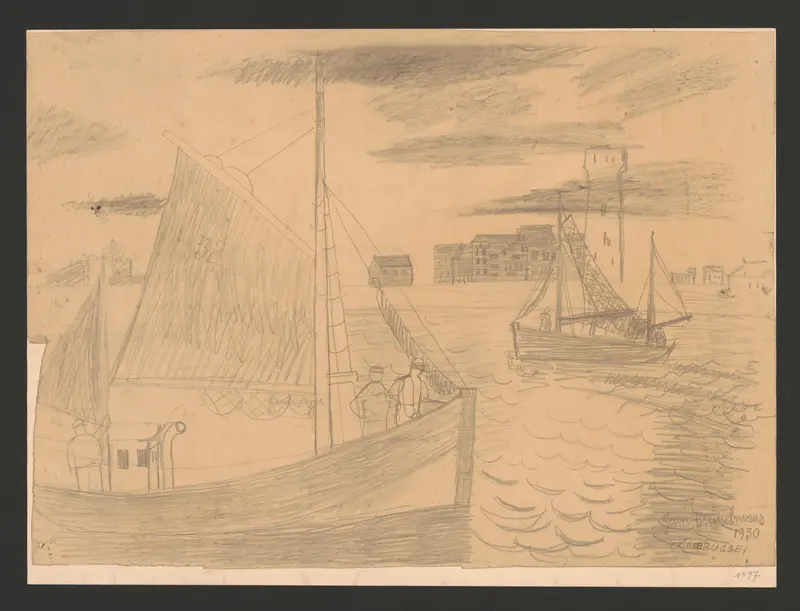
Zeebrugge
Armand Apol
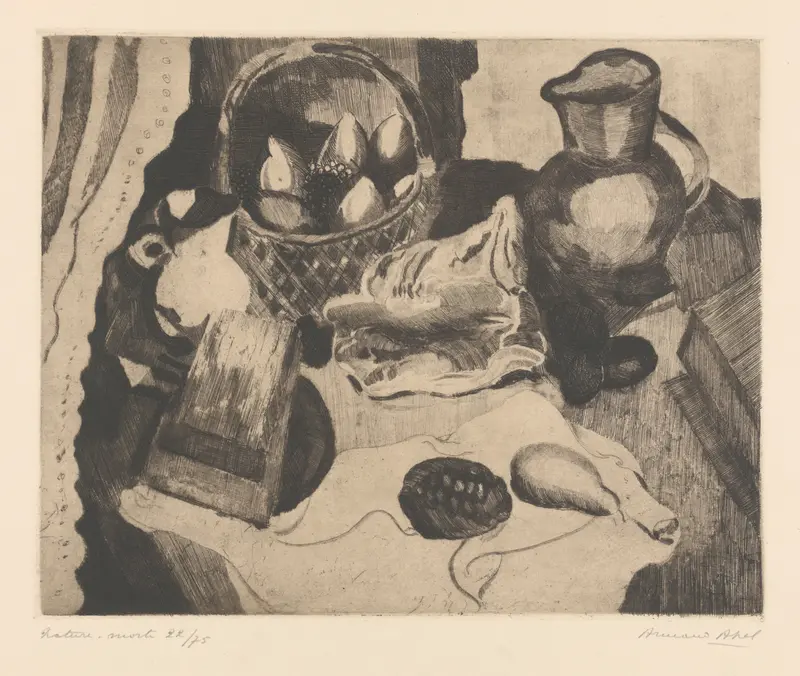
Dix planches (08) : Nature morte
Armand Apol
More Landscape Art

The Starry Night
Vincent van Gogh

View of Delft
Johannes Vermeer

Water Lilies
Claude Monet

The Grand Canal, Venice, looking north-west from the Ca' Corner to the Ca' Contarini degli Scrigni, with the campanile of Santa Maria della Carità
Canaletto

Windsor Castle
Canaletto

The Grand Canal looking North-East from the Palazzo Dolfin-Manin to the Rialto Bridge
Canaletto