
Dnieper by Kiev — History & Facts
What first seizes the eye in Dnieper by Kiev is the way the rooftops seem to break the surface of a living, tangled world—half-claimed by nature, half-built by human hands. The roofs, rendered in thick, angular strokes of blue and grey, jut out from a thicket of branches and autumn leaves, their geometry softened by the wildness that encroaches from every side. The lines of the branches, some bare, some still clutching their last leaves, cross the canvas like veins, drawing the viewer’s gaze back and forth between the built and the organic.
The river itself, pale and nearly featureless, forms a quiet backdrop, its stillness contrasting with the restless energy of the foreground. Painted between 1910 and 1913, this work sits at a crossroads of artistic change in Eastern Europe, when painters like Abraham Manievich were absorbing the lessons of Impressionism and Post-Impressionism, yet grounding them in the textures and landscapes of their own world. Works like this, with their focus on everyday corners rather than grand vistas, were often commissioned or collected by those who wanted to capture the changing face of their cities and countrysides. The painting’s current presence in an online collection speaks to the fate of many such works—history has kept few traces of their early journeys, but their energy remains, inviting us to lose ourselves in the thicket of color and line.
More Artworks by Abraham Manievich
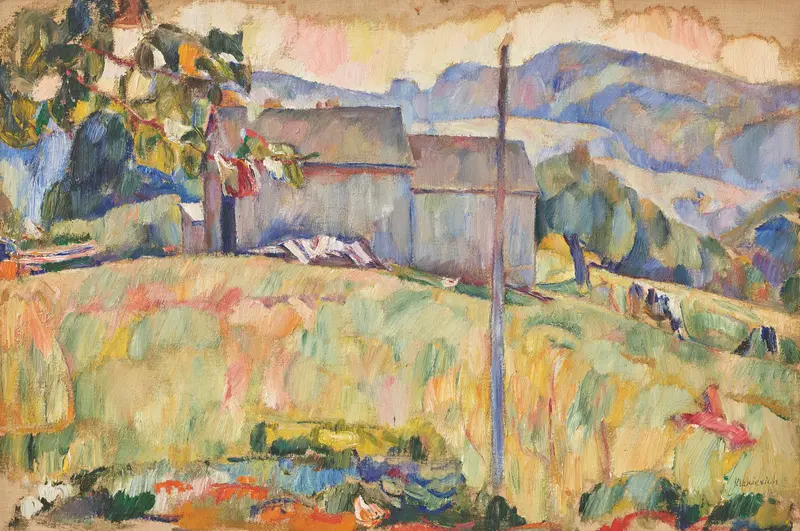
Summer landscape
Abraham Manievich

Early Spring
Abraham Manievich
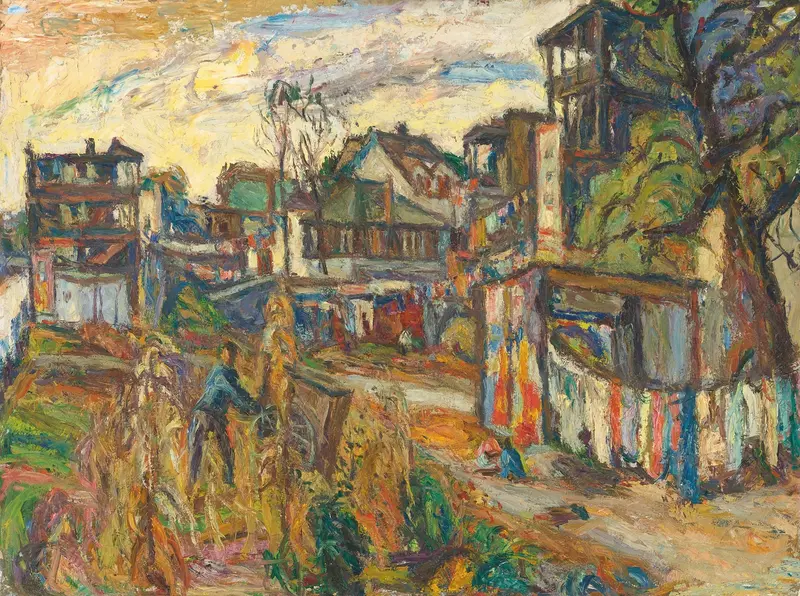
City Scene
Abraham Manievich
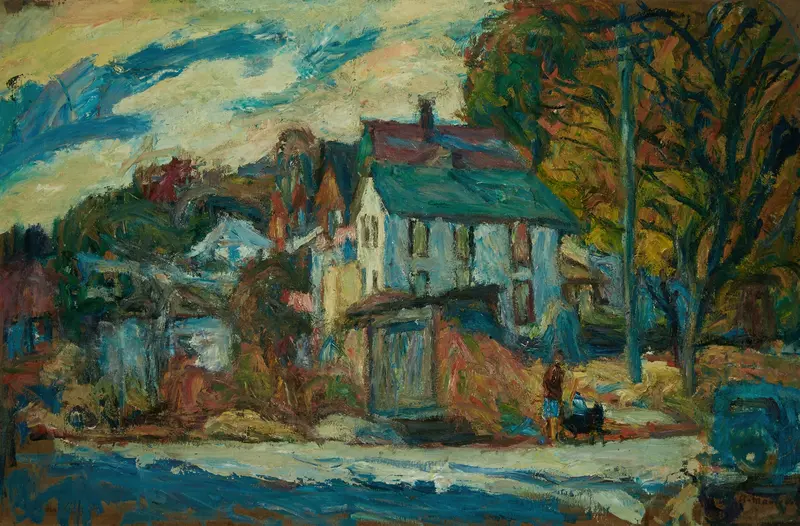
Autumn. White Plains
Abraham Manievich
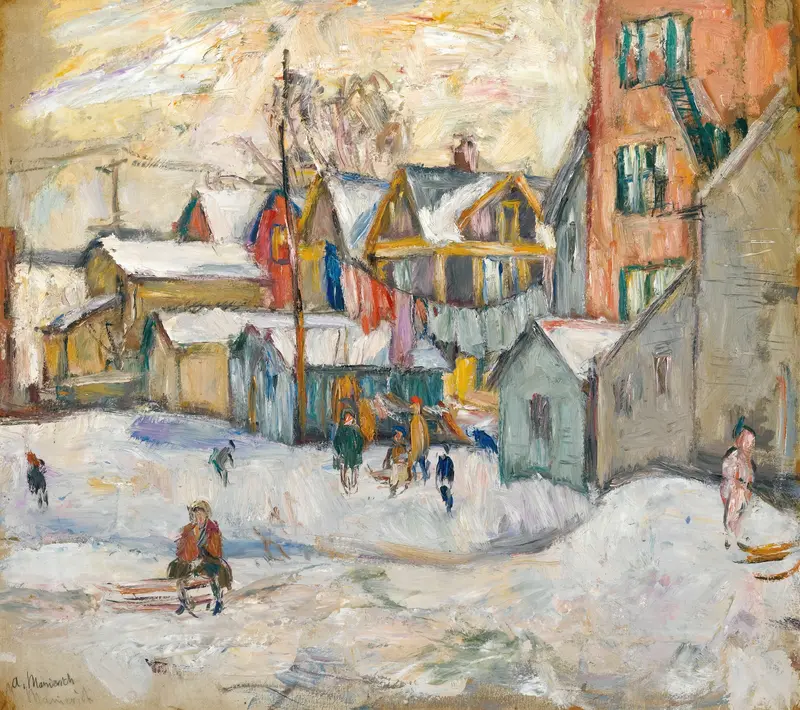
The Bronx
Abraham Manievich
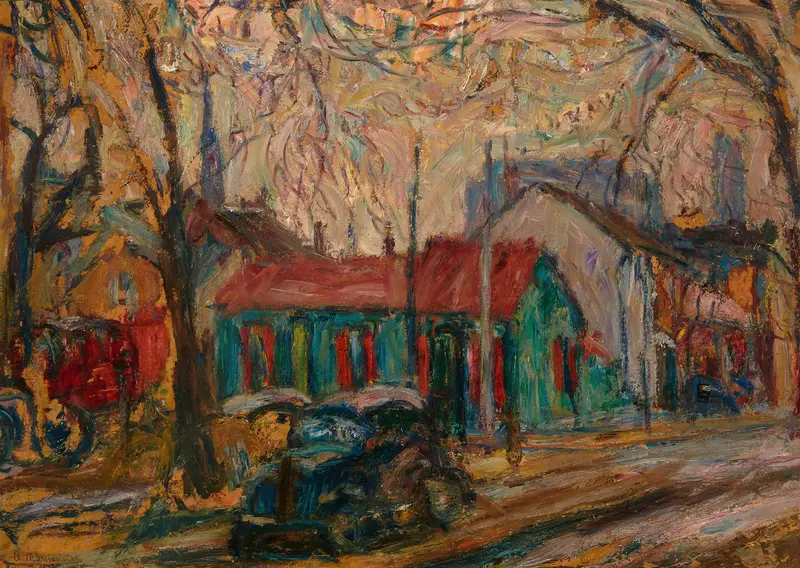
Quiet street
Abraham Manievich
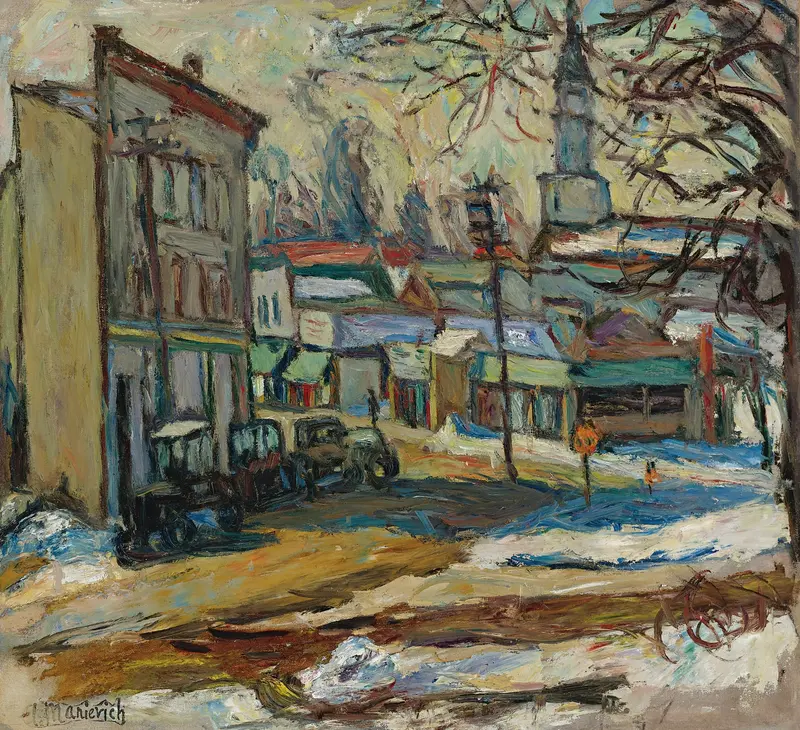
Bridgeport
Abraham Manievich
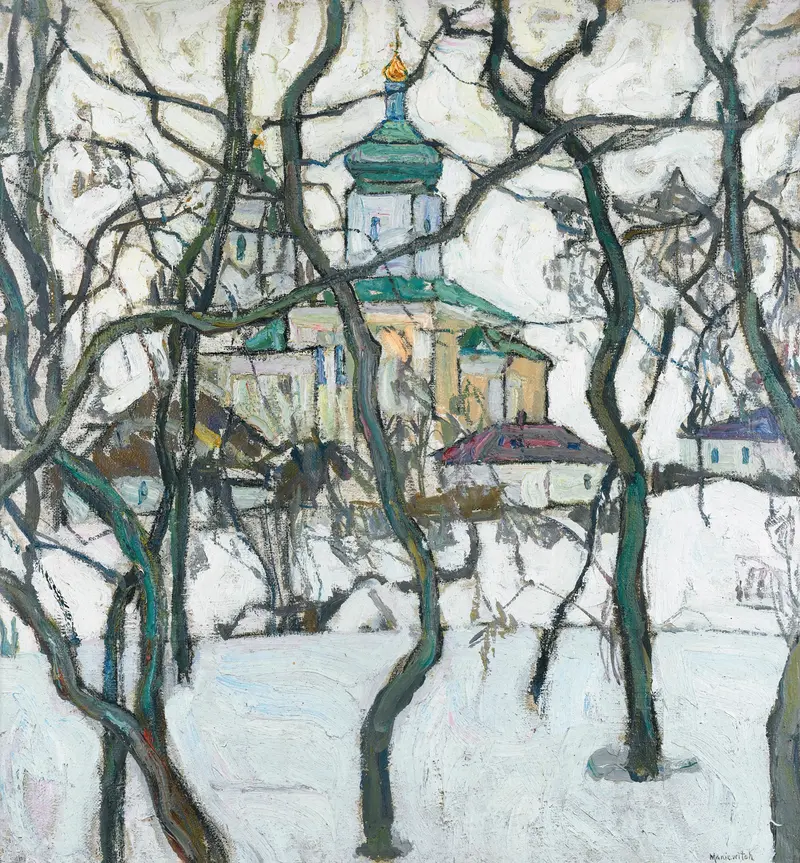
Winter Scene With Church
Abraham Manievich
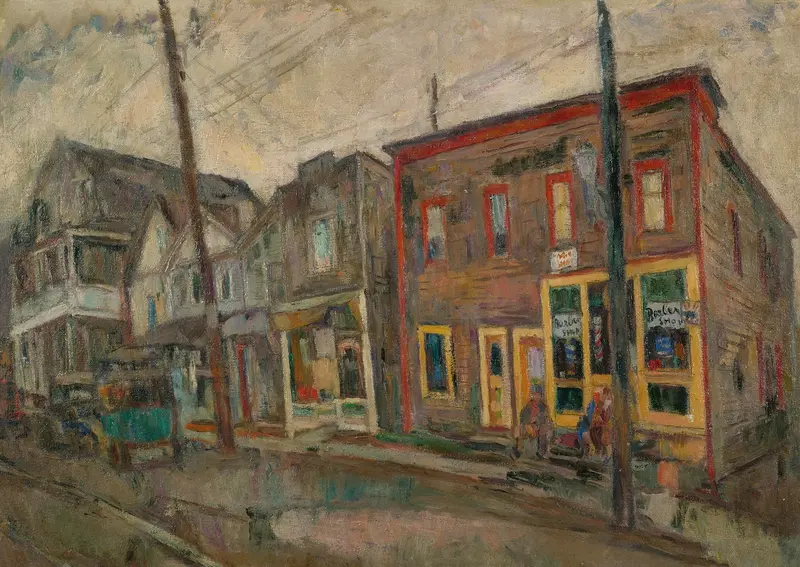
Street in the Bronx
Abraham Manievich
Birch Trees
Abraham Manievich
More Landscape Art

The Starry Night
Vincent van Gogh

View of Delft
Johannes Vermeer

Water Lilies
Claude Monet

The Grand Canal, Venice, looking north-west from the Ca' Corner to the Ca' Contarini degli Scrigni, with the campanile of Santa Maria della Carità
Canaletto

Windsor Castle
Canaletto

The Grand Canal looking North-East from the Palazzo Dolfin-Manin to the Rialto Bridge
Canaletto