
Dolce Far Niente — History & Facts
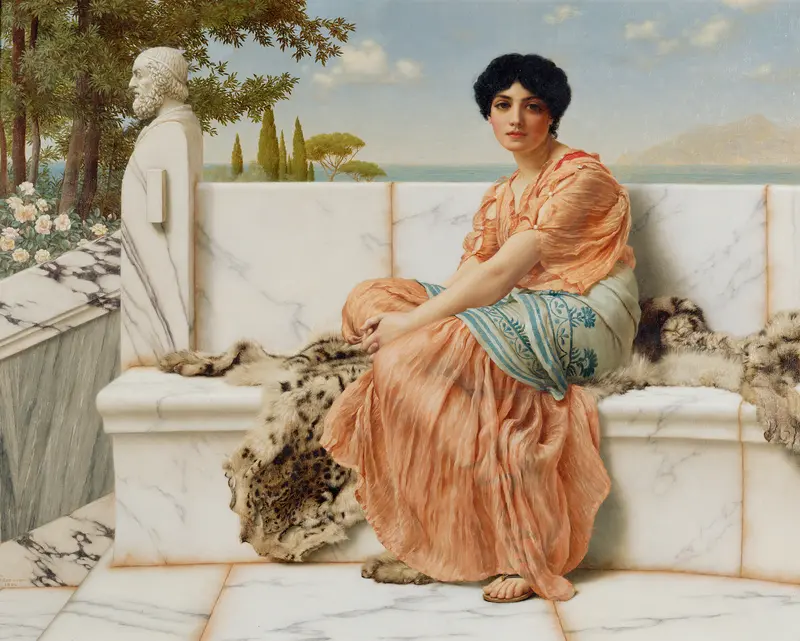
What holds the viewer first in Dolce Far Niente is the languid ease of the reclining figure, her body draped across cool marble as if she were both ornament and inhabitant of this imagined ancient world. The eye is drawn to the rich folds of her violet and crimson dress, the sheer fabric gathering light and shadow in a way that suggests both the warmth of the afternoon and the luxury of idleness. Her pose, with one arm flung behind her head and the other trailing languorously, is not just a gesture of rest but a declaration: here, leisure is an art form.
The leopard skin beneath her hints at exoticism and privilege, while the riot of pink oleanders frames her in a living tapestry, their blossoms echoing the palette of her gown. Beyond, the tranquil blue sea and distant islands promise a world untroubled by urgency. Painted in 1906 by John William Godward, this work belongs to the final flowering of the Victorian Neoclassical tradition, a genre that conjured up visions of ancient Greece and Rome for a modern audience hungry for beauty and escape. Artists like Godward created these scenes for collectors who wanted not history, but a dream of the past—an idealized world of marble, flowers, and languor, untouched by the industrial age outside their windows.
The painting’s presence in a Sotheby’s sale (Lot 9) attests to its enduring appeal, even as history has kept few traces of its journey since it left the artist’s studio. The title itself, meaning “sweetness of doing nothing,” invites us to linger, to imagine ourselves in that sunlit terrace, and to savor a moment suspended between reality and reverie.
More Artworks by John William Godward

Eighty and eighteen
John William Godward
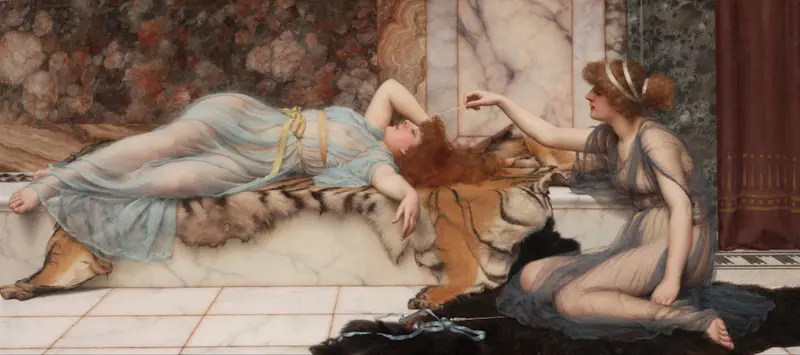
Mischief and Repose
John William Godward
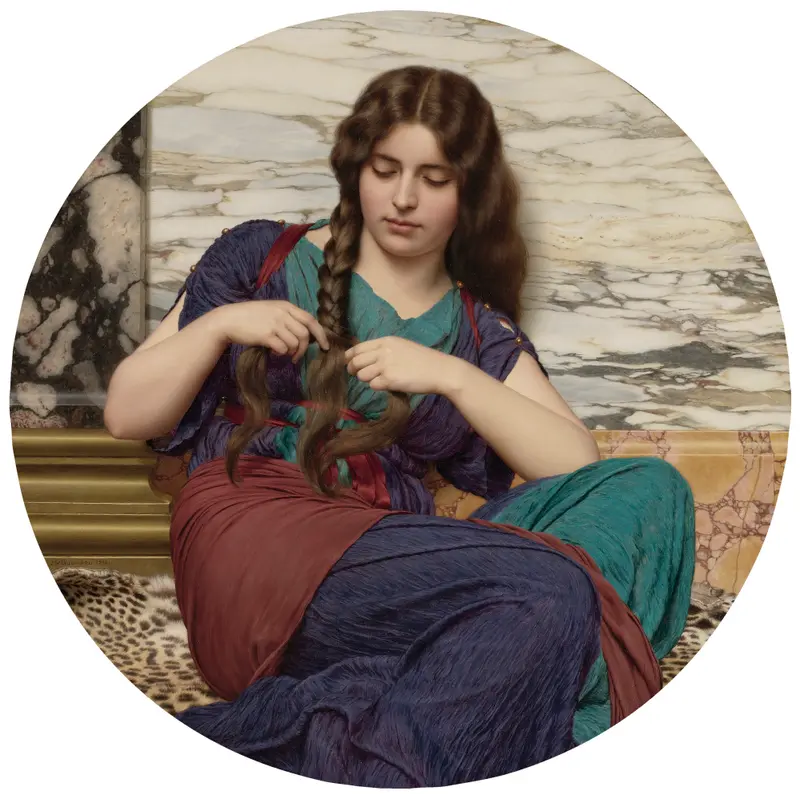
A Congenial Task
John William Godward
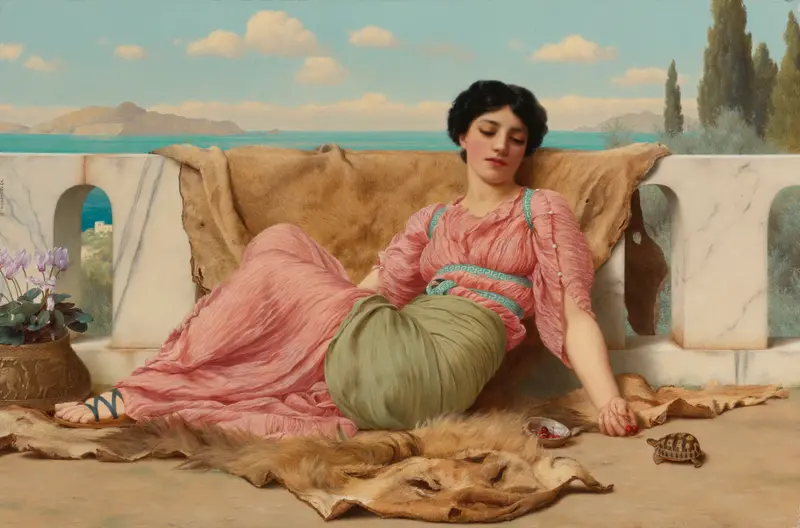
The Quiet Pet
John William Godward
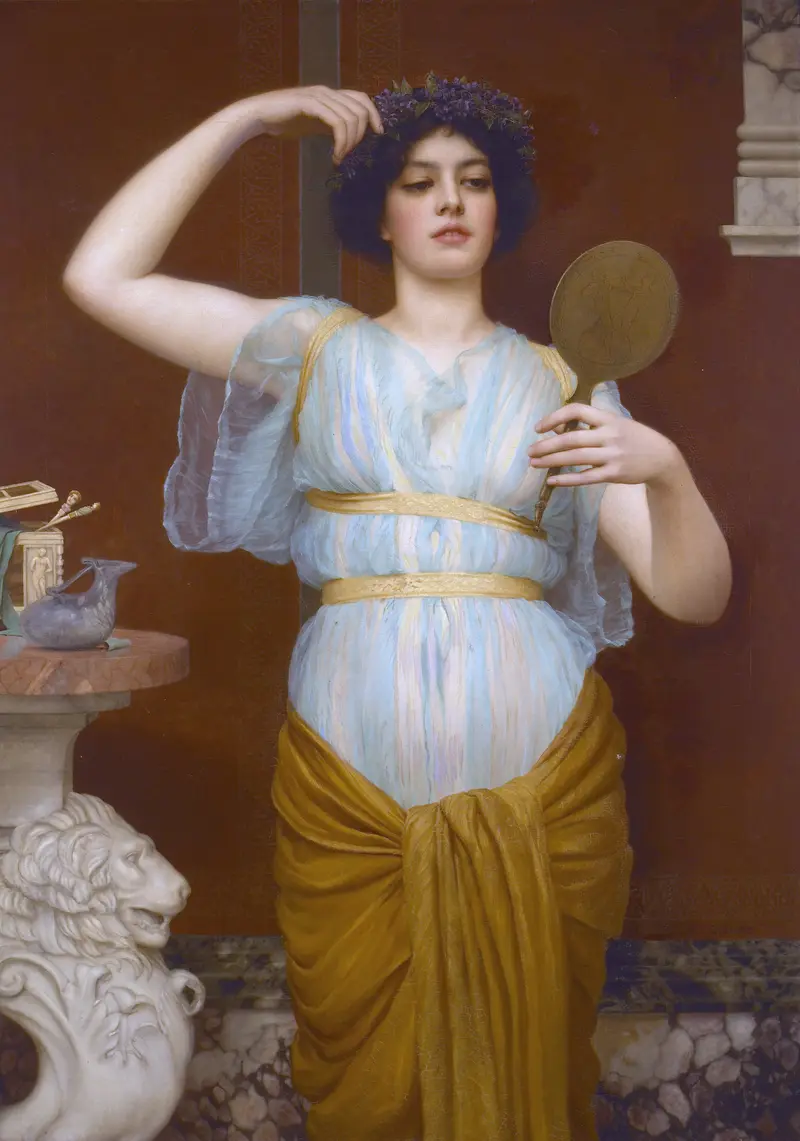
Ione
John William Godward
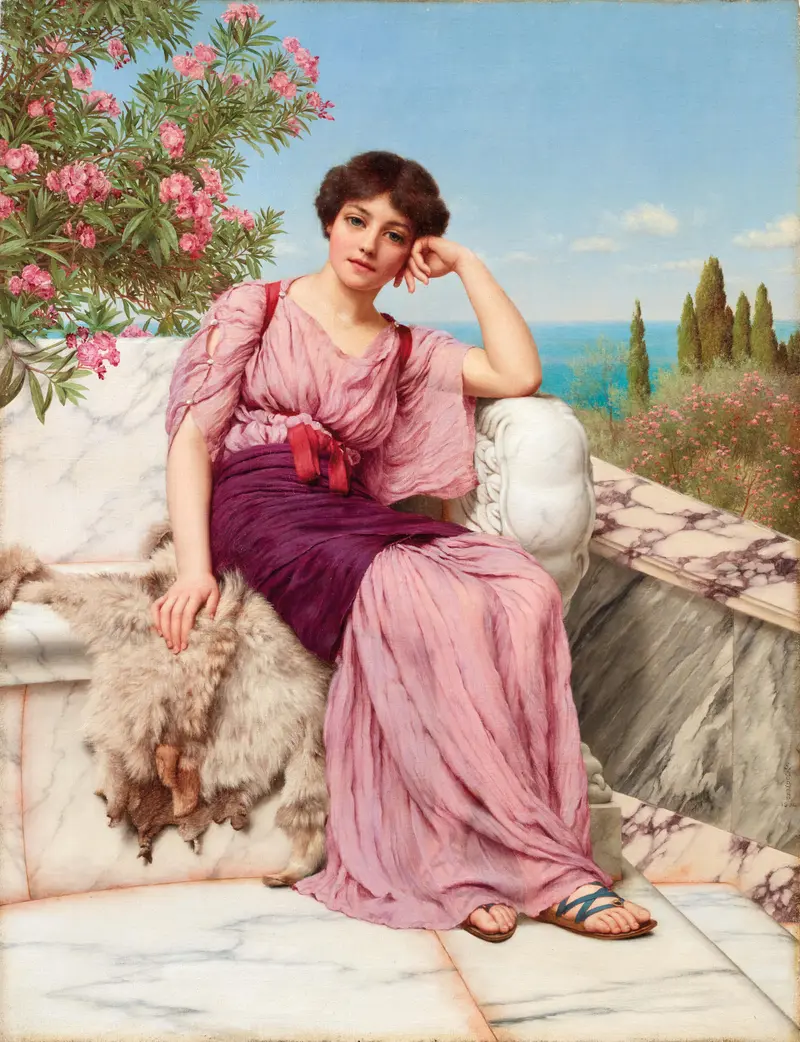
Sweet Dreams
John William Godward
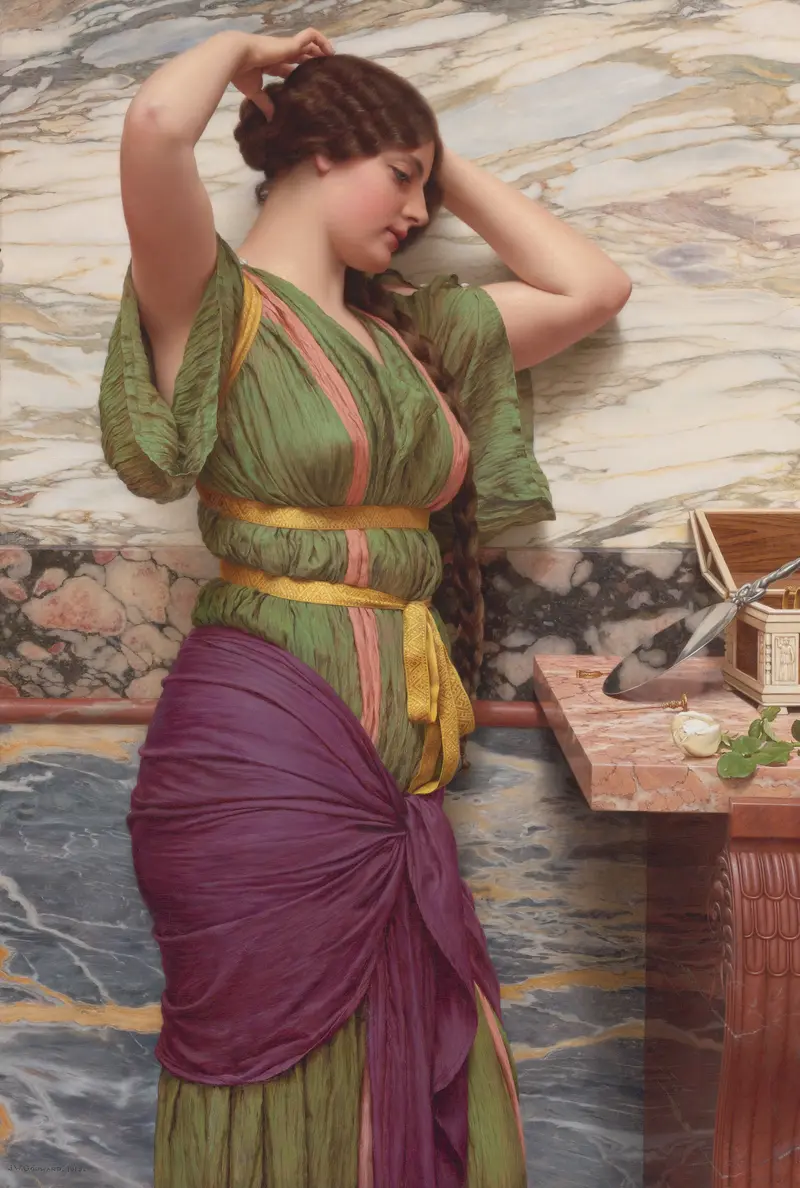
A Fair Reflection
John William Godward
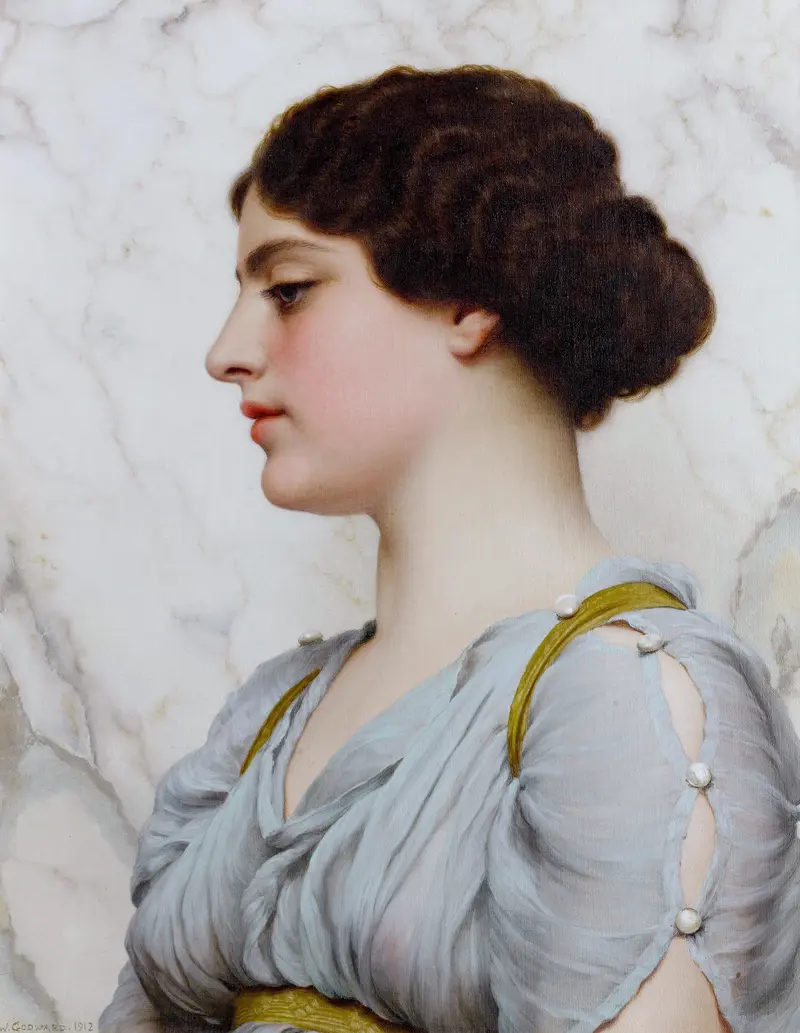
A Roman Beauty
John William Godward
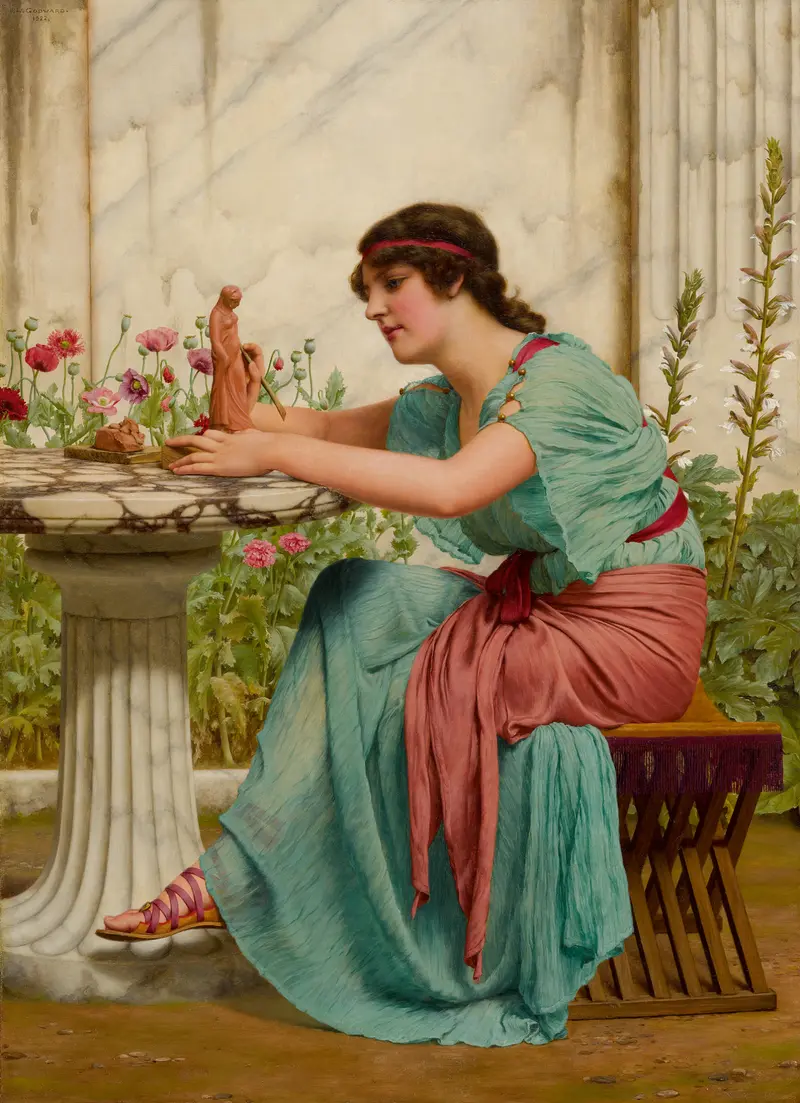
A Dilettante
John William Godward
Reverie
John William Godward



