
Dusk in the Rushes — History & Facts
Could beauty survive in a century of chaos? In Dusk in the Rushes, the viewer is invited into a moment that teeters on the brink of illumination and obscurity, capturing the essence of fragility within nature's embrace. Look to the lower left corner, where the intricately detailed rushes rise in delicate defiance, their slender forms bending slightly in the whisper of a breeze. Notice how the warm hues of sunset paint the sky in a gradient that transitions from soft lavender to deep amber, spilling its light across the tranquil water. The deft brushstrokes create a sense of movement; the ripples in the water mirror the subtle agitation of the reeds, embodying a dance between stillness and the approach of night. There lies a poignant contrast within this serene tableau: the day’s end promises both beauty and its inevitable departure.
The shadows creeping in herald the night, reminding us of the transient nature of the moment. Each rush, though seemingly robust, reveals its vulnerability as dusk envelops them, echoing a deeper connection to life’s fleeting experiences. This delicate balance evokes a sense of melancholy, suggesting that beauty, while powerful, is always accompanied by the specter of loss. Created in Alexandria Bay during a time of personal and artistic transformation in 1885, the artist was deeply engaged in exploring American landscapes through impressionistic techniques.
At this point, Inness had already shifted away from the strict realism of his earlier works, embracing a more emotive interpretation of nature. His intention was to convey not only the beauty of the American environment but also its ephemeral qualities, mirroring the tumultuous changes in society during that era.
More Artworks by George Inness
Browse all →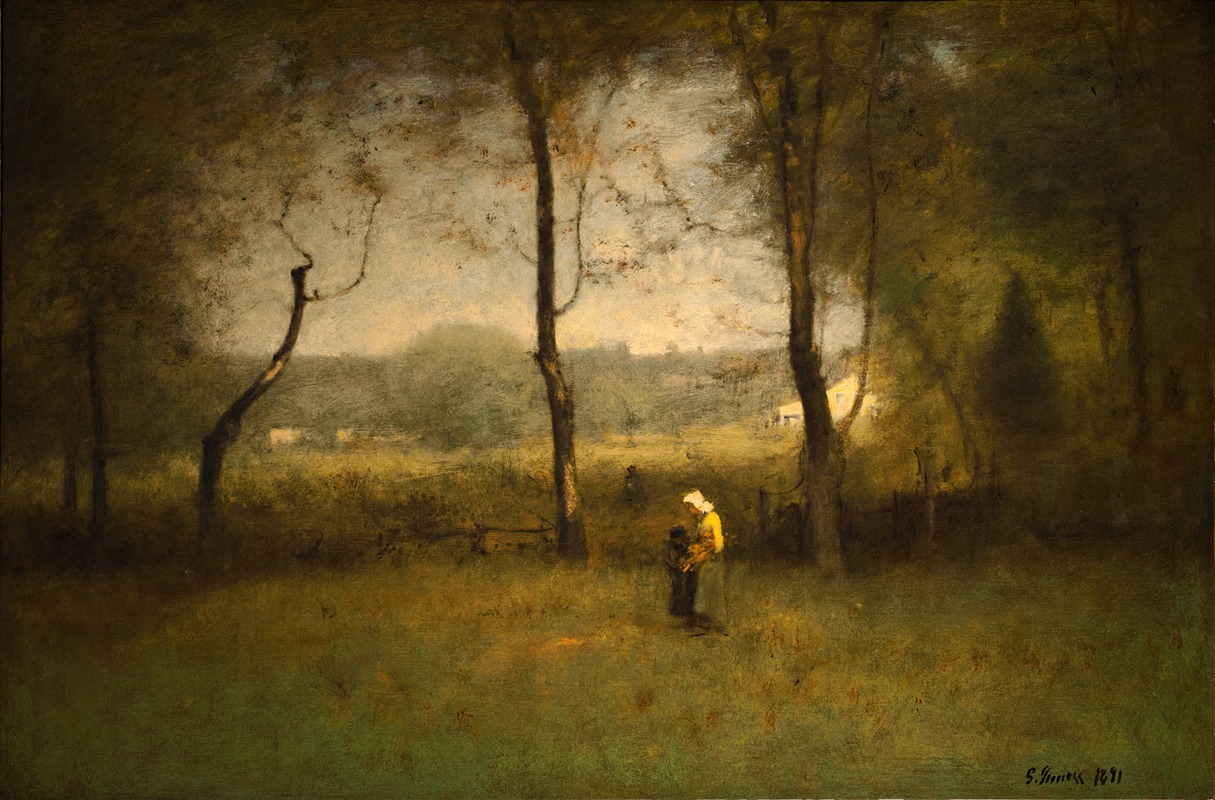
Autumn Woods
George Inness
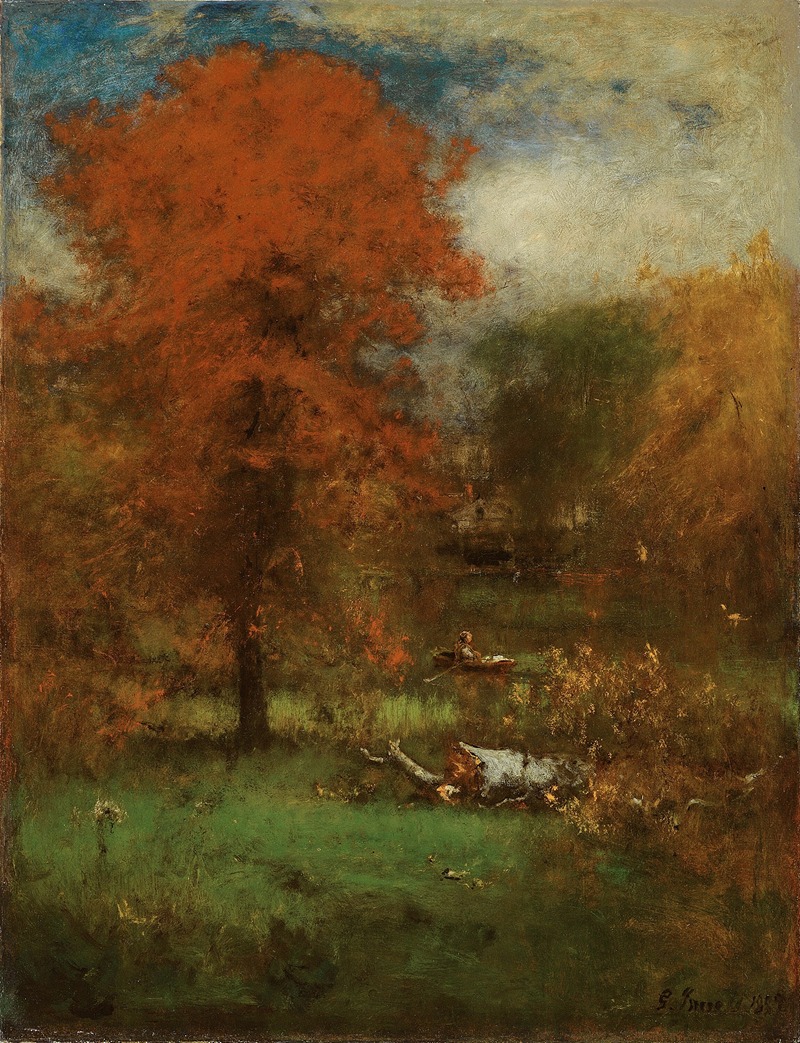
The Mill Pond
George Inness
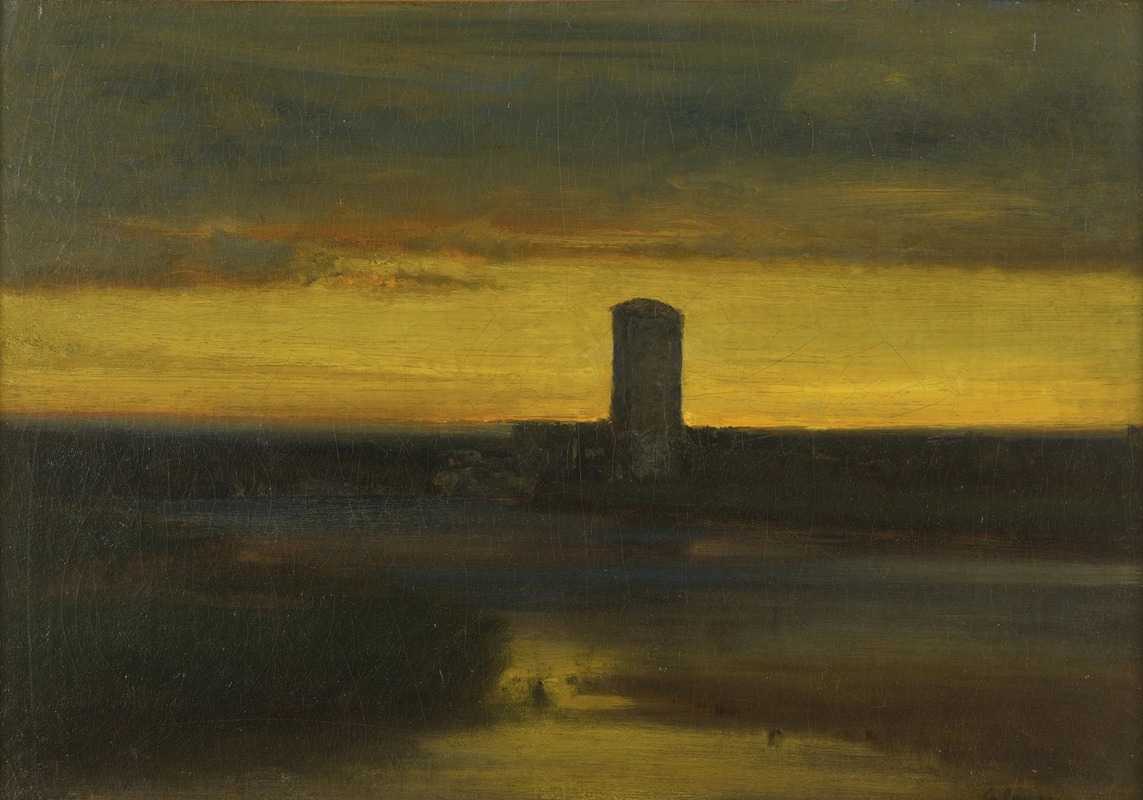
Afterglow
George Inness
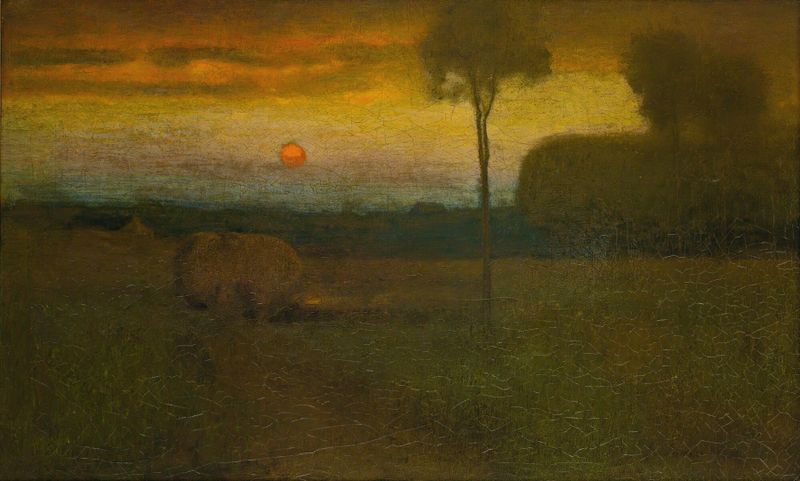
Landscape (Evening Landscape)
George Inness

Montclair
George Inness

View in Berkshire County, Massachusetts, Clearing Off after a September Storm
George Inness

October
George Inness
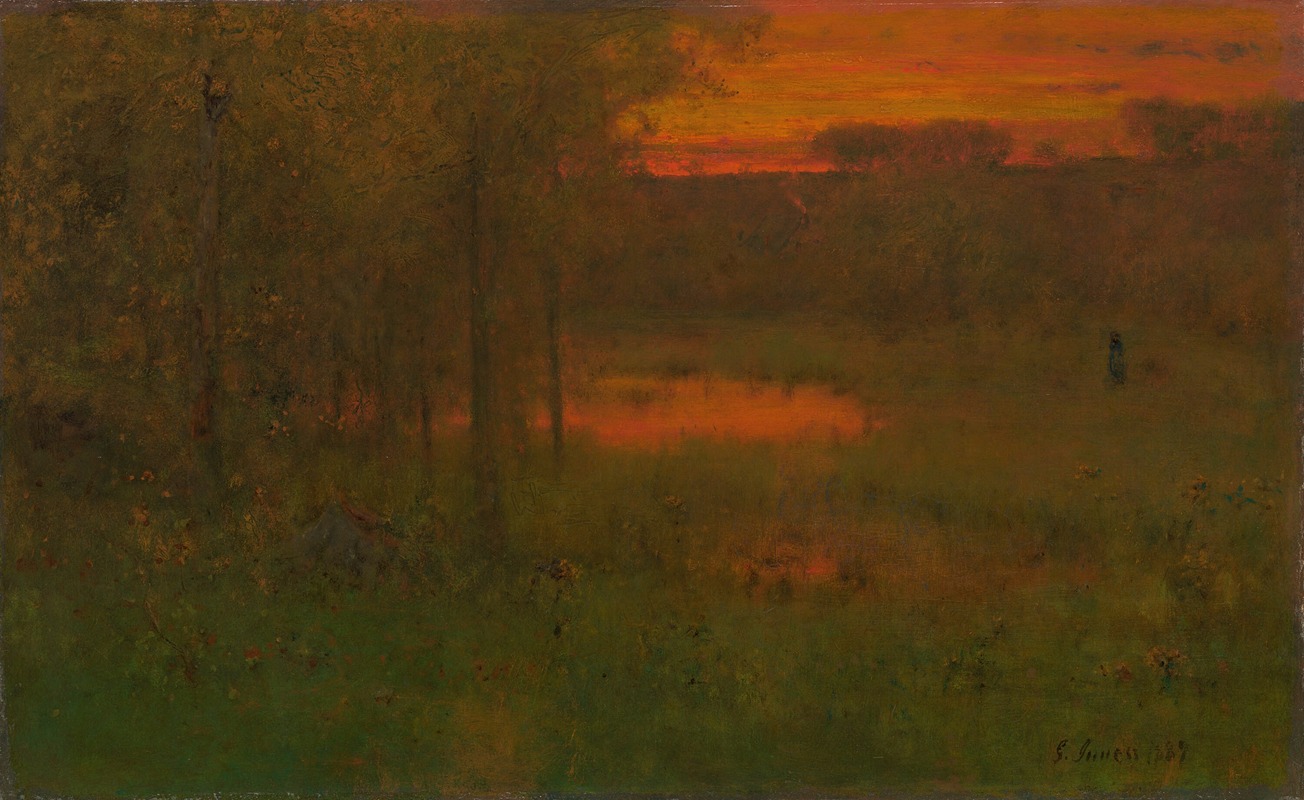
Landscape, Sunset
George Inness
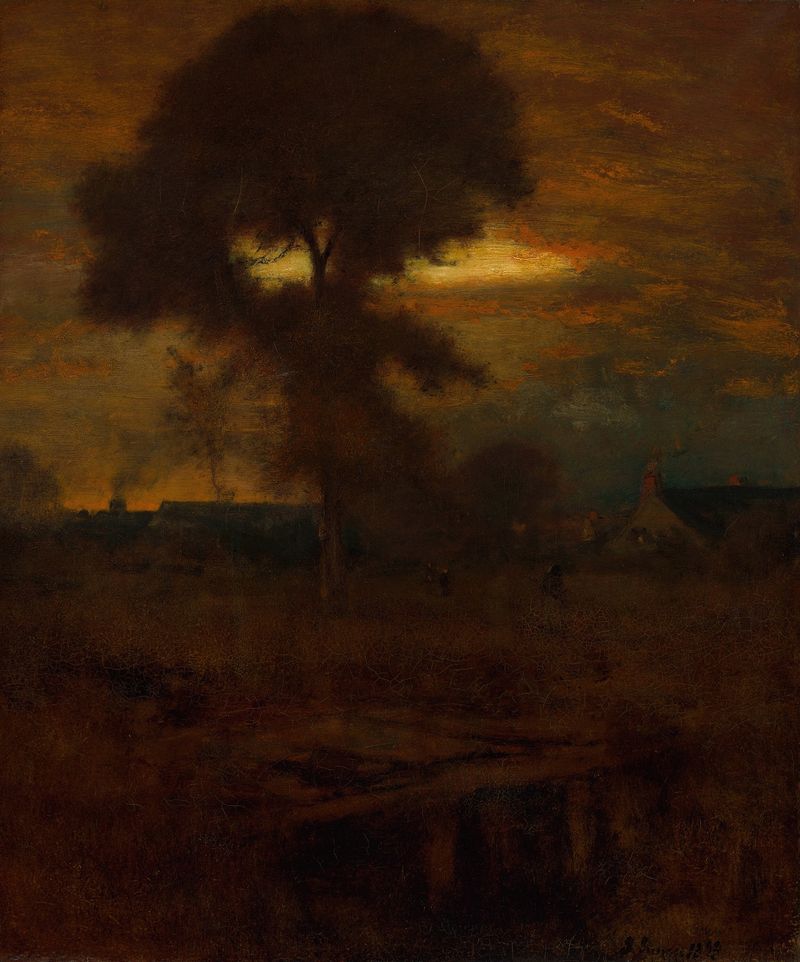
Afterglow
George Inness
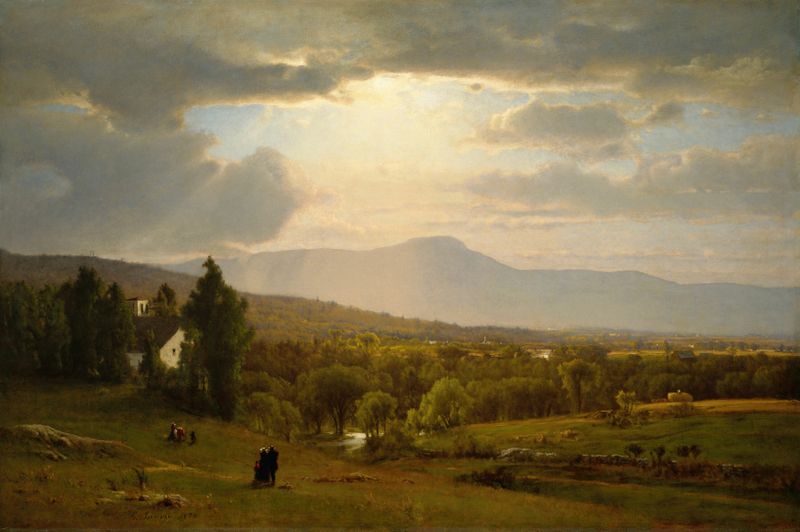
Catskill Mountains
George Inness





