
Dutch River Scene — History & Facts
A patch of sunlight drifts across the riverbank, drawing your gaze to two figures paused in conversation, their gestures casual yet purposeful. The world around them feels suspended: a flock of sheep grazes quietly, their wool catching the same golden light that glances off the sails of boats gliding across the water. The low horizon gives the sky an expansive presence, its billowing clouds echoing the gentle rhythm of daily life along the Dutch waterways.
Every detail — the tilt of a shepherd’s staff, the crisp reflection of a mast — is chosen to guide the eye from the intimacy of land to the openness of river and sky, inviting the viewer to linger in this moment of calm exchange. Works like this, painted by Aelbert Cuyp between 1640 and 1645, belong to the flowering of Dutch landscape painting, when artists captured the prosperity and quiet pride of a nation shaped by water. Such scenes were prized by the new merchant class, who sought images of their land’s bounty and the steady pulse of commerce and agriculture. The Dordrechts Museum now houses this piece, a reminder of how painters like Cuyp balanced observation with atmosphere, turning ordinary encounters into scenes of harmony and order.
Look again at the way the river draws the eye toward the horizon — a silent promise of journeys beyond, even as the land holds its ground.
More Artworks by Aelbert Cuyp

The Maas at Dordrecht
Aelbert Cuyp
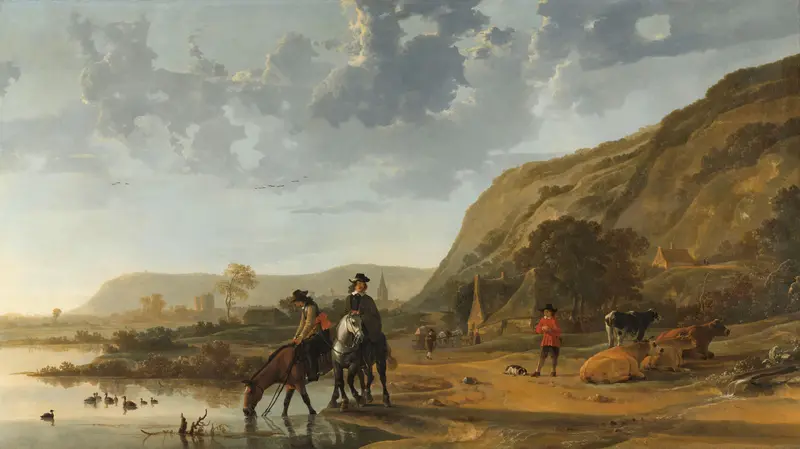
River Landscape with Riders
Aelbert Cuyp

The Maas at Dordrecht
Aelbert Cuyp
Gezicht op Dordrecht
Aelbert Cuyp
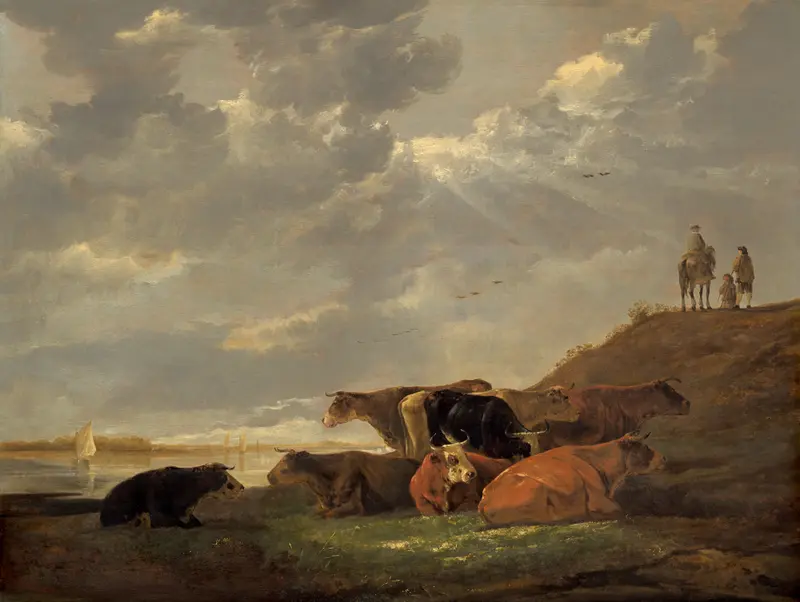
River Landscape with Cows
Aelbert Cuyp
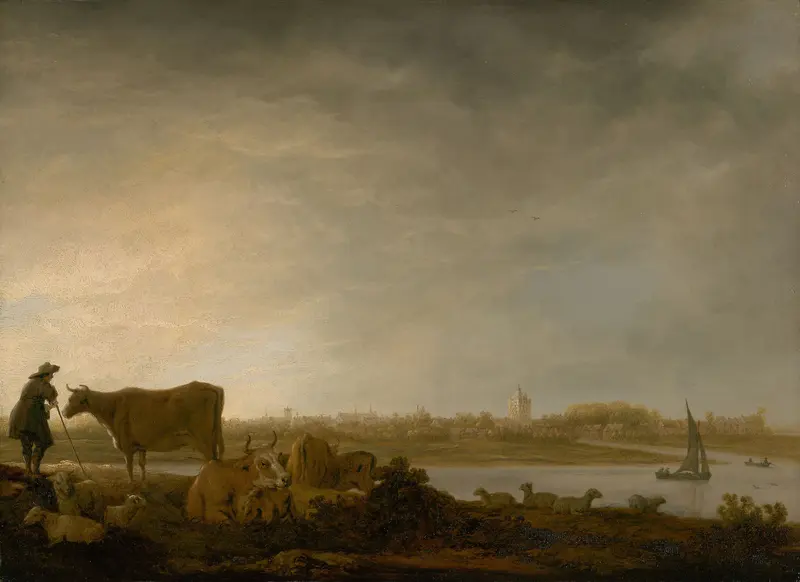
A View of Vianen with a Herdsman and Cattle by a River
Aelbert Cuyp
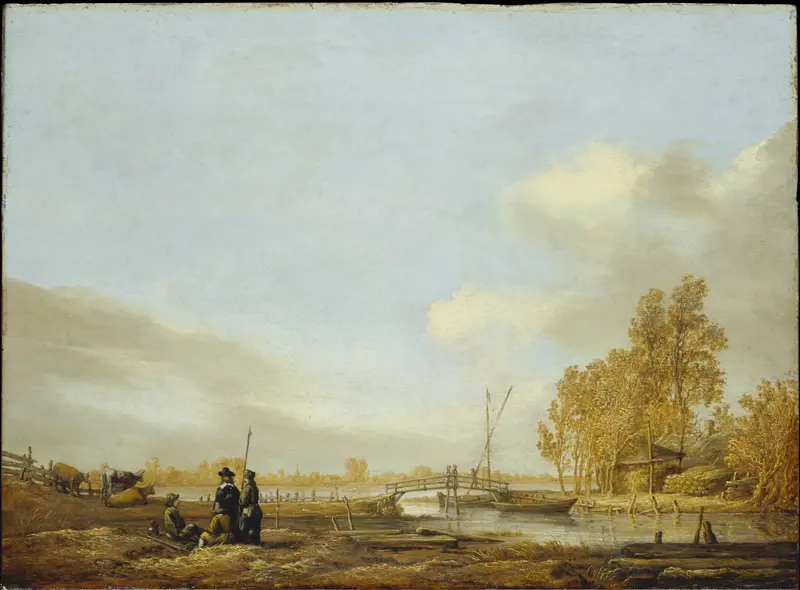
River Landscape with Footbridge
Aelbert Cuyp
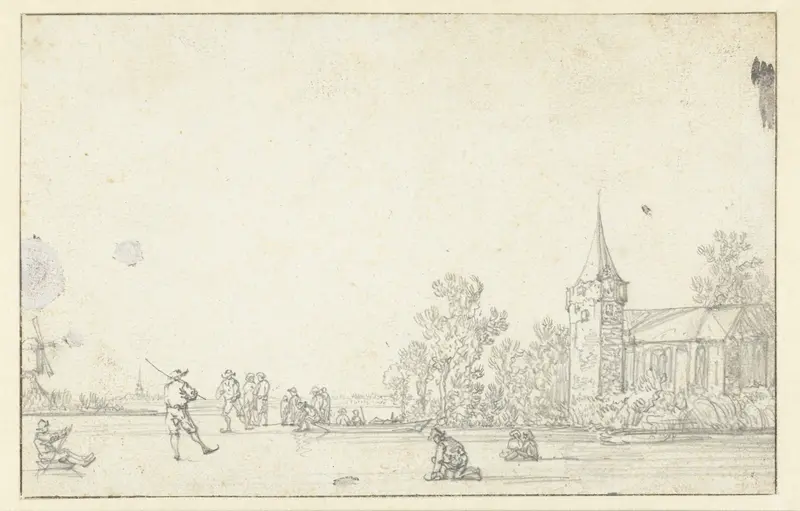
Bevroren rivier met schaatsers bij een kerk
Aelbert Cuyp

Cattle near a River
Aelbert Cuyp
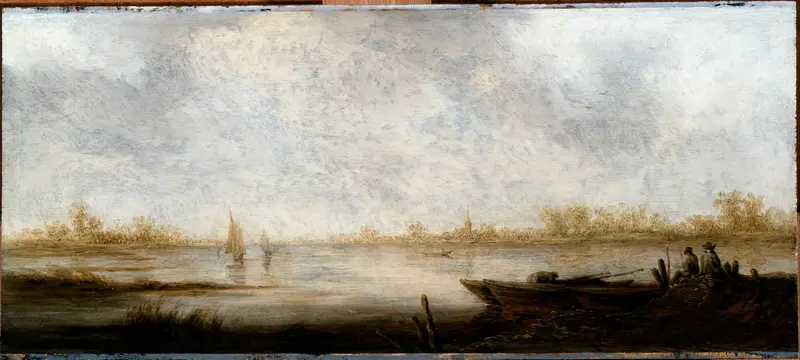
River Landscape
Aelbert Cuyp
More Landscape Art

The Starry Night
Vincent van Gogh

View of Delft
Johannes Vermeer

Water Lilies
Claude Monet

The Grand Canal, Venice, looking north-west from the Ca' Corner to the Ca' Contarini degli Scrigni, with the campanile of Santa Maria della Carità
Canaletto

Windsor Castle
Canaletto

The Grand Canal looking North-East from the Palazzo Dolfin-Manin to the Rialto Bridge
Canaletto