
Eastern marketplace — History & Facts
Few paintings by Tadeusz Ajdukiewicz have sparked as much curiosity as Eastern marketplace, largely because its date and commission remain shrouded in mystery. The work is often cited as a prime example of the artist’s fascination with the cultures of the Ottoman Empire, which he visited in the late 19th century. Ajdukiewicz, a Polish painter known for his cosmopolitan travels, was captivated by the spectacle of daily life in the East, and this painting is frequently referenced in studies of Orientalism in Polish art.
The absence of a signature or precise date has led some to speculate whether it was a private commission or a study for a larger, lost work. At the heart of Eastern marketplace is a bustling bazaar scene, frozen at the moment when a merchant offers a bolt of richly patterned cloth to a veiled woman. Around them, a tapestry of figures—traders, camels, children—spill into the sunlit square, each absorbed in their own transactions. Ajdukiewicz’s attention to costume and gesture is meticulous: the merchant’s outstretched hand, the woman's cautious posture, the glint of brass vessels and the interplay of shadow and light all serve to immerse the viewer in the sensory overload of the market.
Unlike the more theatrical compositions of Jean-Léon Gérôme, whose Orientalist works often staged the exotic, Ajdukiewicz’s approach is grounded in observation, lending the scene a sense of immediacy and lived experience. The physical history of Eastern marketplace is as elusive as its subject. While its current location is not firmly established, the painting has passed through several private collections in Central Europe, surfacing occasionally in auction catalogues but never for long. It stands as a testament to Ajdukiewicz’s versatility, created during a period when he moved between portraits of European nobility and scenes from his travels.
Though less widely exhibited than his equestrian portraits, Eastern marketplace remains a touchstone for those interested in the crosscurrents of East and West in 19th-century art, and a reminder of how much remains to be discovered about both the artist and his oeuvre.
More Artworks by Tadeusz Ajdukiewicz
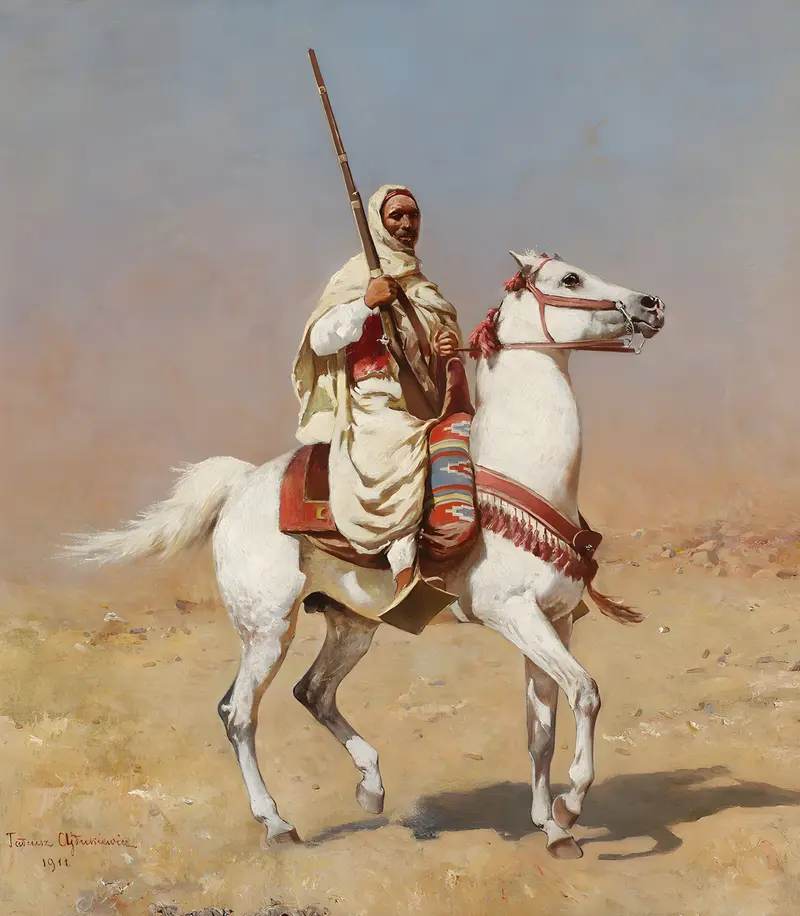
Arab on a grey horse
Tadeusz Ajdukiewicz
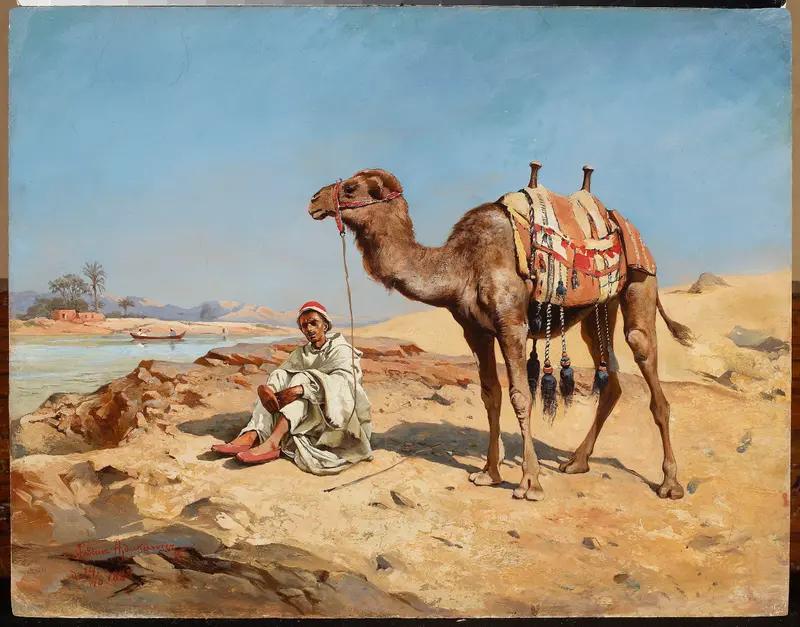
Arab in the desert
Tadeusz Ajdukiewicz
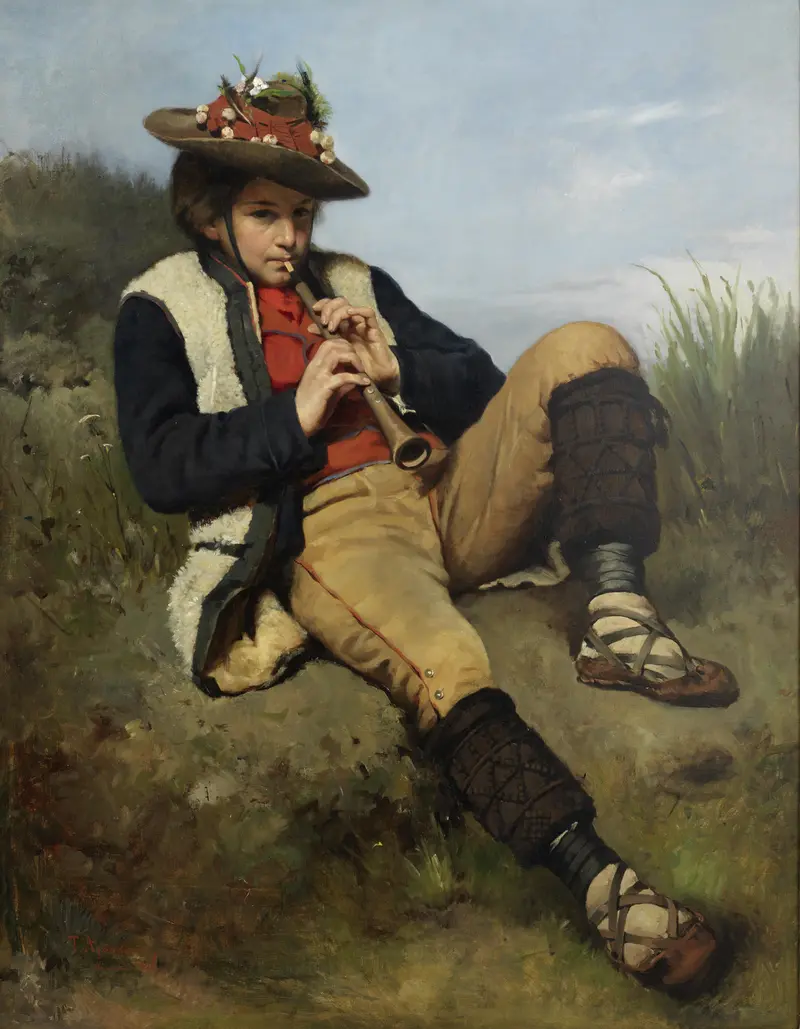
The shepherd boy
Tadeusz Ajdukiewicz

A Parforce Rider in the Forest
Tadeusz Ajdukiewicz
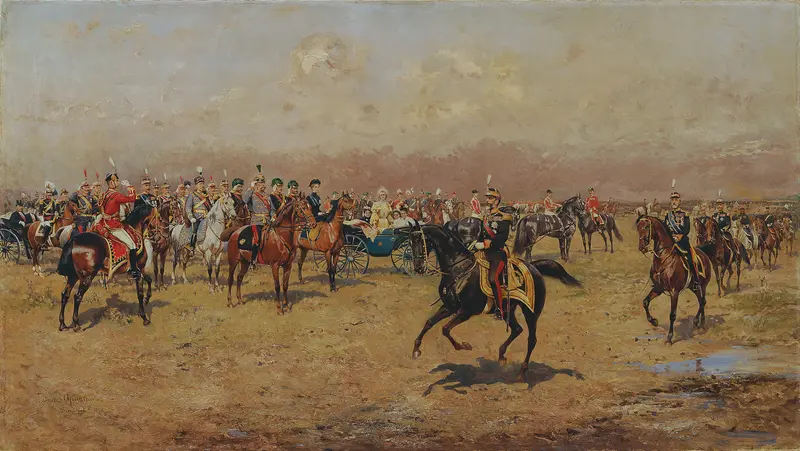
Militärparade vor Kaiser Franz Joseph I.
Tadeusz Ajdukiewicz
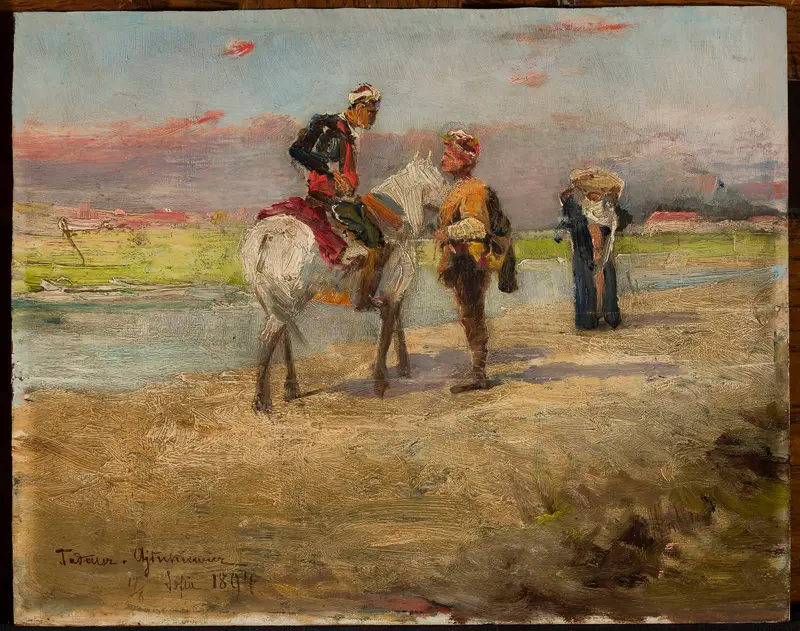
Eastern scene against a landscape
Tadeusz Ajdukiewicz
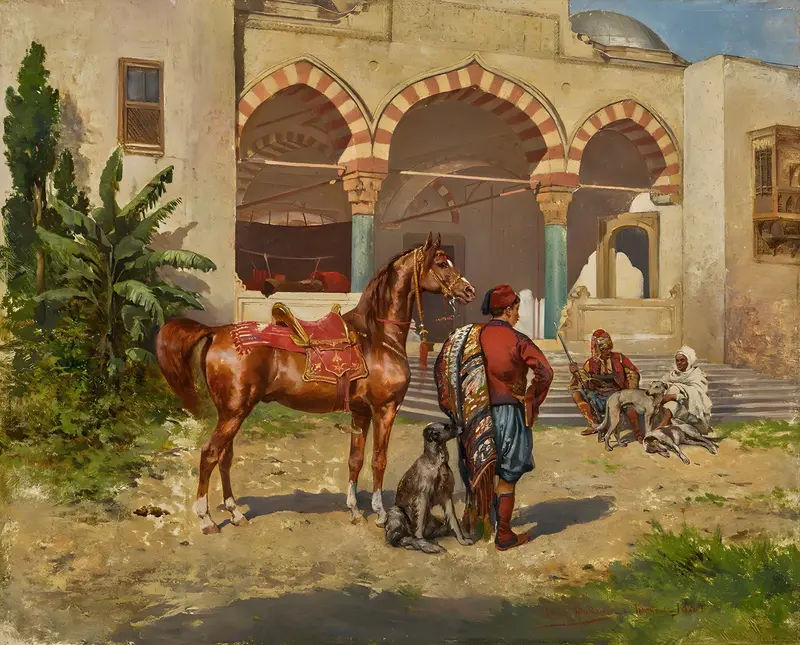
A turkish courtyard
Tadeusz Ajdukiewicz
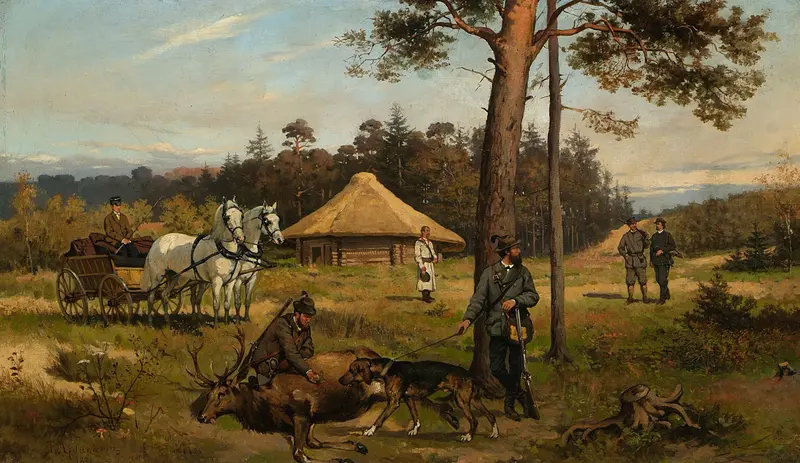
After hunting for a deer
Tadeusz Ajdukiewicz
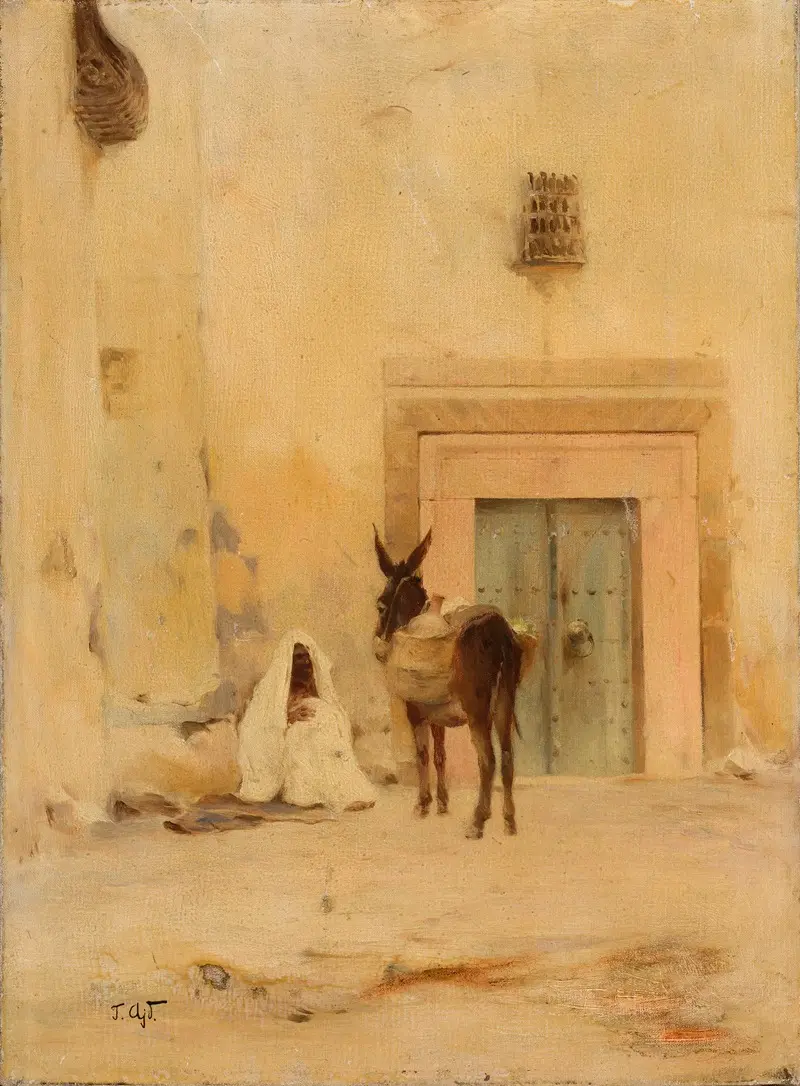
Arab and a donkey at the wall of a house
Tadeusz Ajdukiewicz
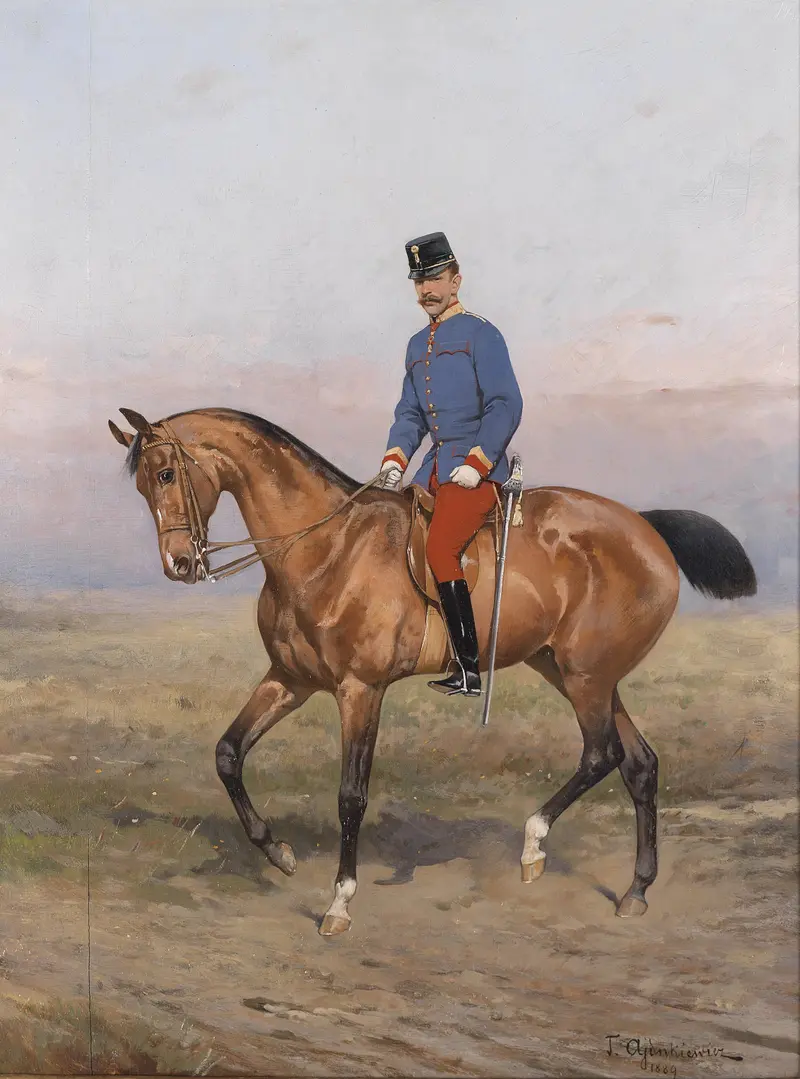
Kronprinz Rudolf zu Pferd
Tadeusz Ajdukiewicz
More Genre Scene Art

Banquet of the Officers of the St George Civic Guard
Frans Hals

Rembrandt and Saskia in the Scene of the Prodigal Son
Rembrandt van Rijn

Bal du moulin de la Galette
Pierre-Auguste Renoir

Quadrille at the Moulin Rouge
Henri de Toulouse-Lautrec

A Burial at Ornans
Gustave Courbet

When Will You Marry?
Paul Gauguin