
Elf Ground — History & Facts
Who listens when art speaks of silence? In Elf Ground, the stillness resonates deeply, inviting contemplation and reflection in a world often too loud. Look to the foreground where a serene landscape unfolds, dotted with delicate grass and wildflowers. The soft hues of greens and browns meld into one another, while the distant trees stand watch like ancient sentinels. Notice how the diffused light casts a gentle glow across the scene, imbuing it with a dreamlike quality that beckons the viewer to step closer and breathe in the quietude. Hidden beneath the surface of this tranquil setting are layers of emotional tension.
The contrast between the vibrant blooms and the muted earth suggests life's transient beauty, while the solitude of the scene evokes feelings of loneliness and introspection. Each brushstroke seems to whisper secrets about nature's quiet moments, reminding us how stillness can both comfort and provoke thought. In the year 1860, George Inness was exploring his unique vision of American landscapes, moving away from strict realism toward a more emotive interpretation. He painted this work during a pivotal time in his career, grappling with personal loss and the spiritual undercurrents of nature.
This period marked a shift in both his life and the broader art world, as impressionism began to take root, forever transforming the landscape of artistic expression.
More Artworks by George Inness
Browse all →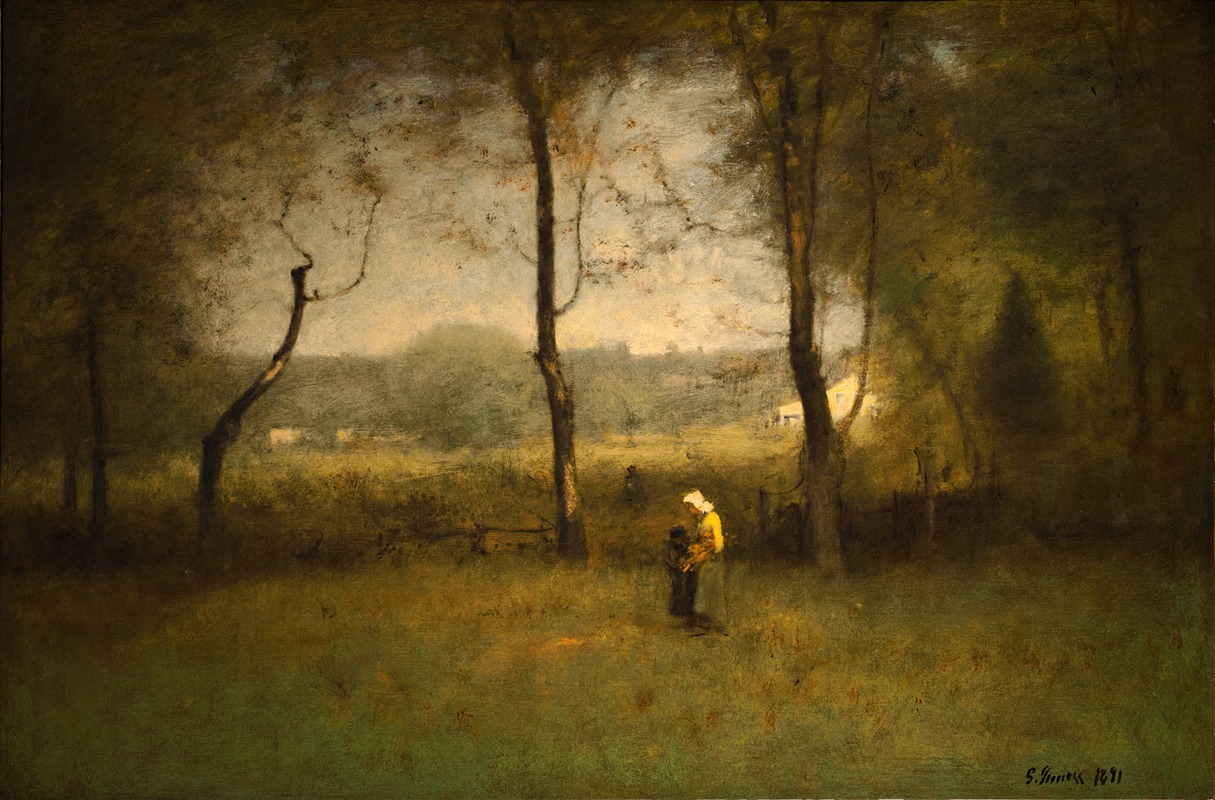
Autumn Woods
George Inness
The Mill Pond
George Inness
Afterglow
George Inness
Landscape (Evening Landscape)
George Inness

Montclair
George Inness

View in Berkshire County, Massachusetts, Clearing Off after a September Storm
George Inness

October
George Inness
Landscape, Sunset
George Inness
Afterglow
George Inness
Catskill Mountains
George Inness





